Syllable identification Grammar Worksheets for Ages 3-8
5 filtered results
-
From - To
Discover our engaging Syllable Identification Grammar Worksheets, designed for children ages 3-8. These colorful and interactive resources help young learners understand syllables in a fun, dynamic way. Each worksheet is crafted to enhance phonemic awareness, improving pronunciation, reading skills, and vocabulary. With exciting themes, activities, and exercises, kids stay captivated while mastering foundational grammar. Ideal for both classroom and home use, our worksheets support early literacy development, ensuring children build strong language skills from the start. Visit Kids Academy to unlock endless learning adventures and give your child the advantages of early syllable identification practice!
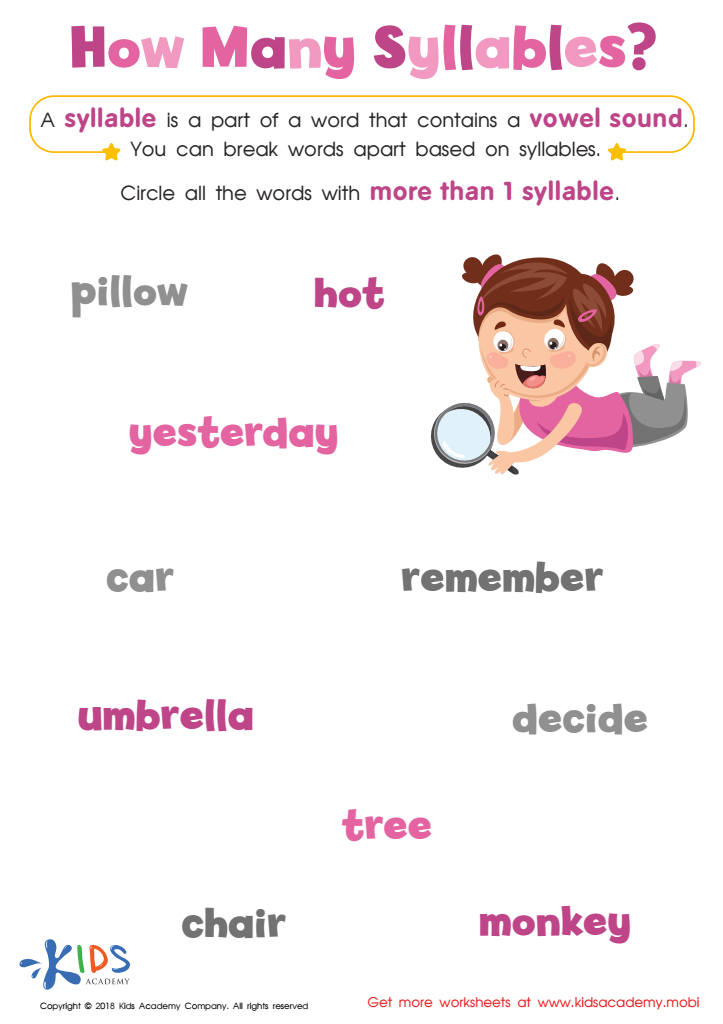
Reading: How Many Syllables Worksheet
 Assign to My Students
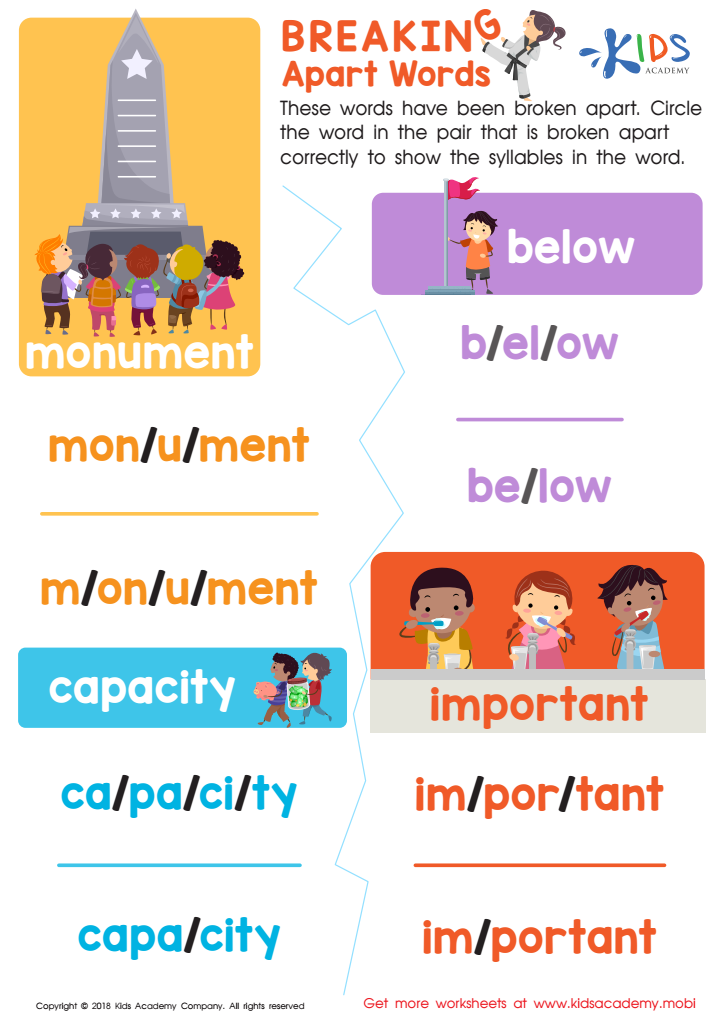
Breaking Apart Words Worksheet
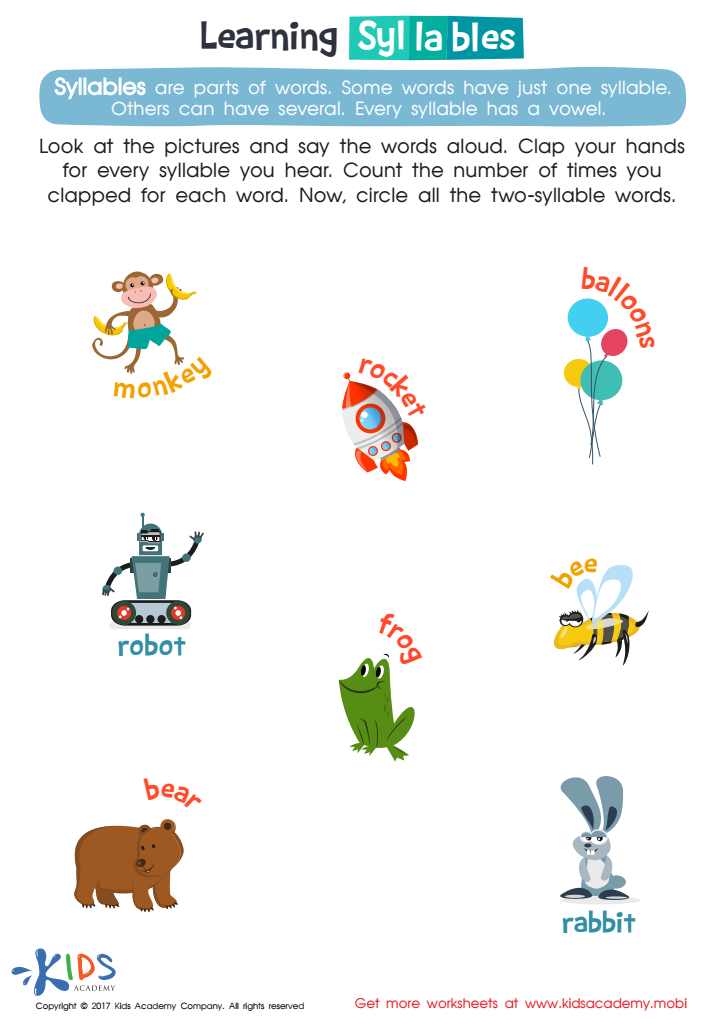
Learning Syllables Word Structure Worksheet
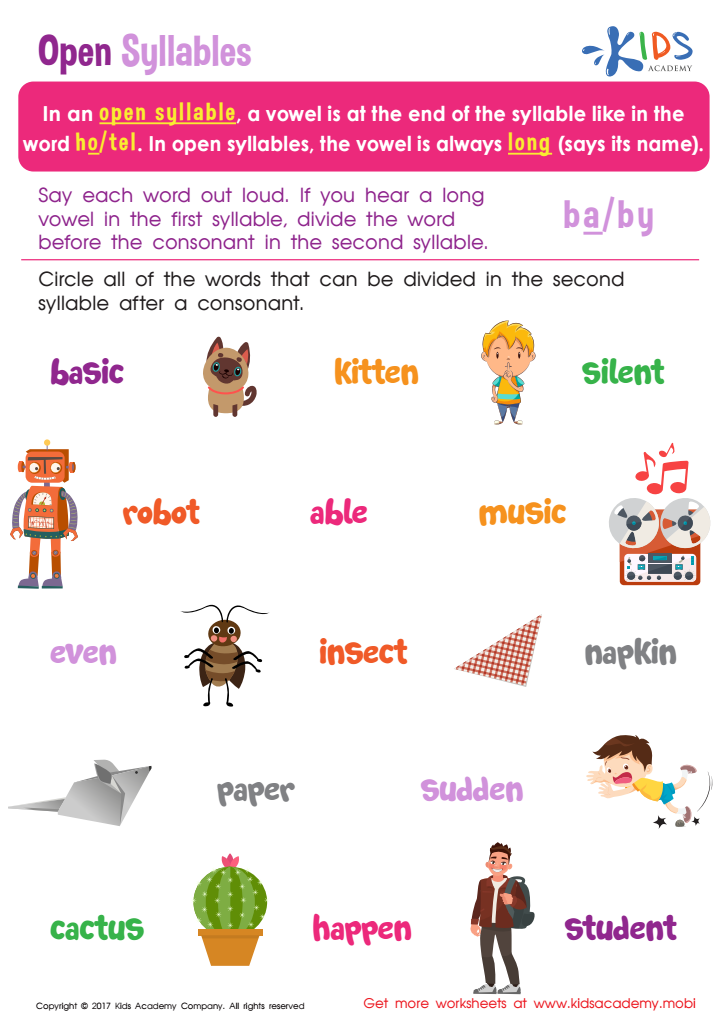
Open Syllable Printable Worksheet
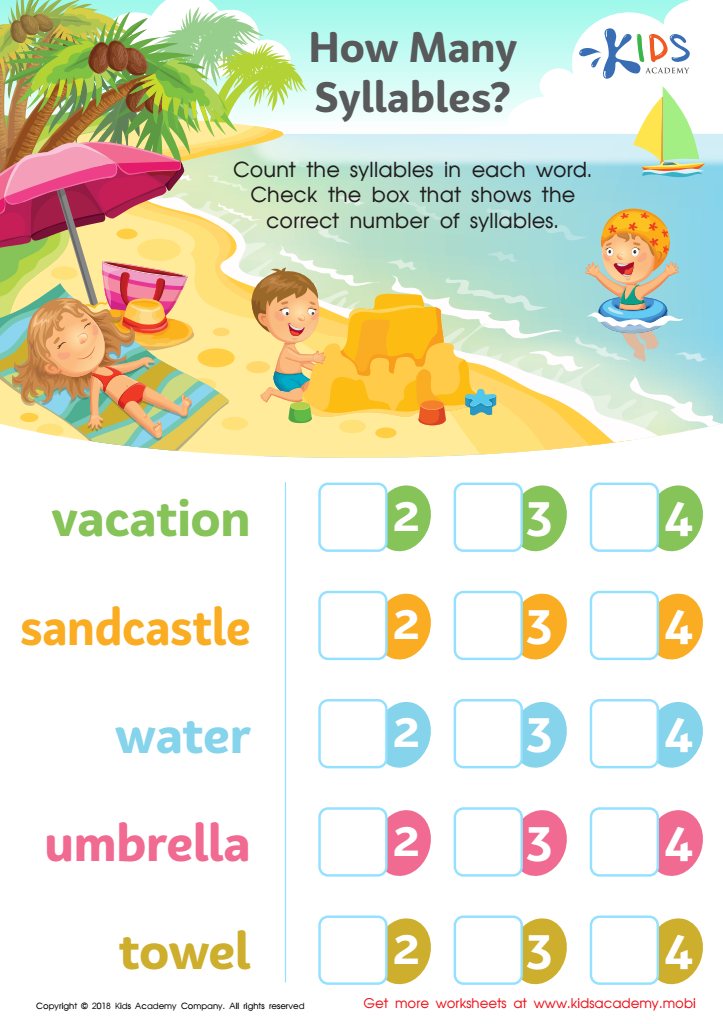
How Many Syllables Worksheet





Syllable identification and basic grammar skills are essential building blocks for children ages 3-8, playing a crucial role in their linguistic and cognitive development. At this formative stage, young children are highly receptive to understanding the sounds within words (phonological awareness), which directly influences their ability to decode words, a fundamental skill in reading. By breaking words into syllables, children can approach reading with more confidence and recognize patterns within words, making them more adept at spelling and pronunciation.
Additionally, early grammar instruction helps children form coherent sentences, enhancing their communication skills. Understanding basic grammar, such as subject-verb agreements and the proper use of tenses, equips children with the tools necessary to express themselves clearly and accurately. This forms a strong foundation for more complex language tasks in the future.
For parents and teachers, fostering these skills through engaging activities, such as clapping for each syllable or playing simple grammar games, not only accelerates literacy but also boosts children’s enthusiasm for learning. The crucial period between ages 3-8 is ripe for setting these fundamental skills, which will support future academic achievements and effective communication. Investing time in syllable identification and grammar creates a strong linguistic base that benefits children throughout life.








