Enhance your child's early literacy skills with our Alphabet Recognition Writing Worksheets, designed for ages 3-8! Our engaging and interactive worksheets help young learners identify and write letters, building a solid foundation for reading and writing success. With colorful illustrations and fun activities, kids will enjoy practicing both uppercase and lowercase letters while developing fine motor skills. Perfect for home or classroom use, these worksheets promote recognition of letter shapes and sounds, fostering confidence in young writers. Explore our resource-rich page today and empower your child’s journey to literacy with accessible and effective learning tools!

Check out this FREE Trial Lesson on Writing for age 3-8!

Spaces Between Words

Favorites
With answer key
Interactive
  • 3-8
  • Alphabet Recognition
  • Writing
Letter Spacing Practice Worksheet

Letter Spacing Practice Worksheet

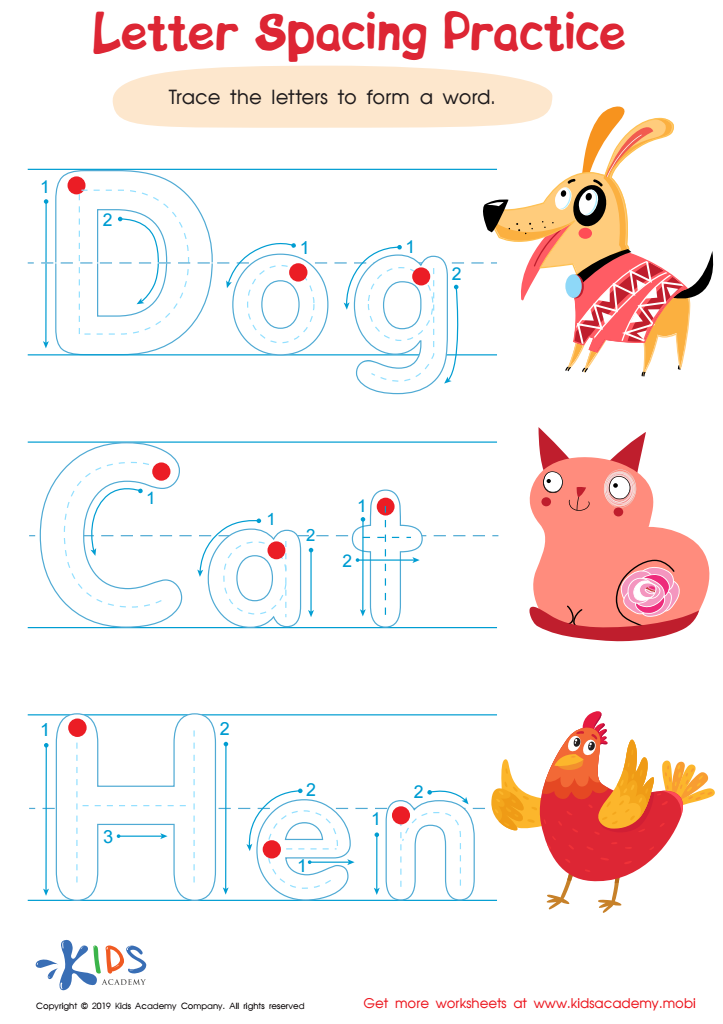
Encourage your preschoolers to practice writing with this worksheet. Ask them to identify the animals in the picture and help them trace the letters to form the words. It'll help develop their writing skills and even if they make mistakes, you can guide them with a helping hand.
Letter Spacing Practice Worksheet
Worksheet
Cursive ABCs: Lowercase d

Cursive ABCs: Lowercase d

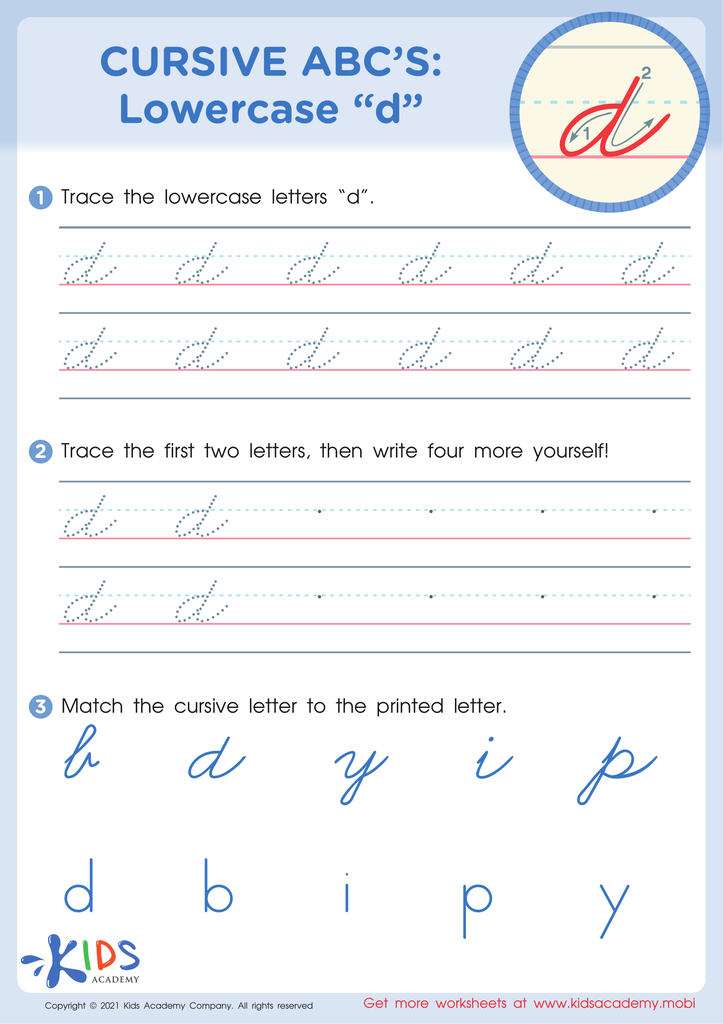
To make learning fun, introduce colorful worksheets! These help young learners perfect their cursive lowercase 'd'. By the end, they'll be better at writing and identifying the letter. It's an easy and enjoyable exercise for kids!
Cursive ABCs: Lowercase d
Worksheet
Cursive ABCs: Uppercase E

Cursive ABCs: Uppercase E

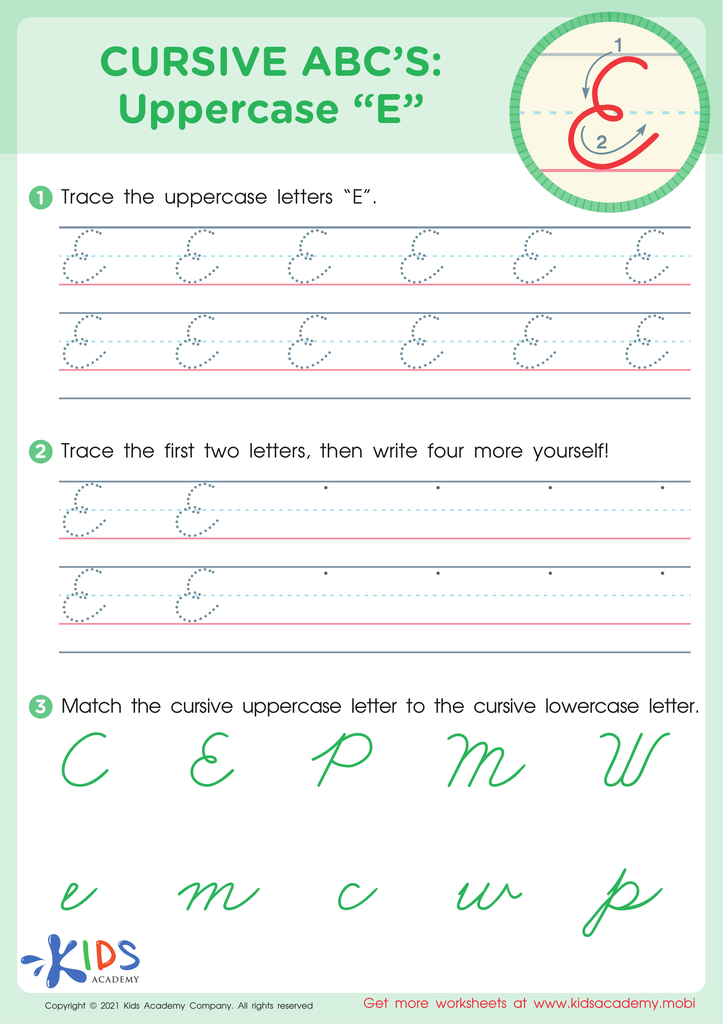
Ask your child if they can identify the letter 'E' and give examples. Each letter is unique, so provide coaching. Have them trace cursive 'E' to become familiar and boost confidence. Then, ask them to write it on their own.
Cursive ABCs: Uppercase E
Worksheet
Cursive ABCs: Uppercase G

Cursive ABCs: Uppercase G

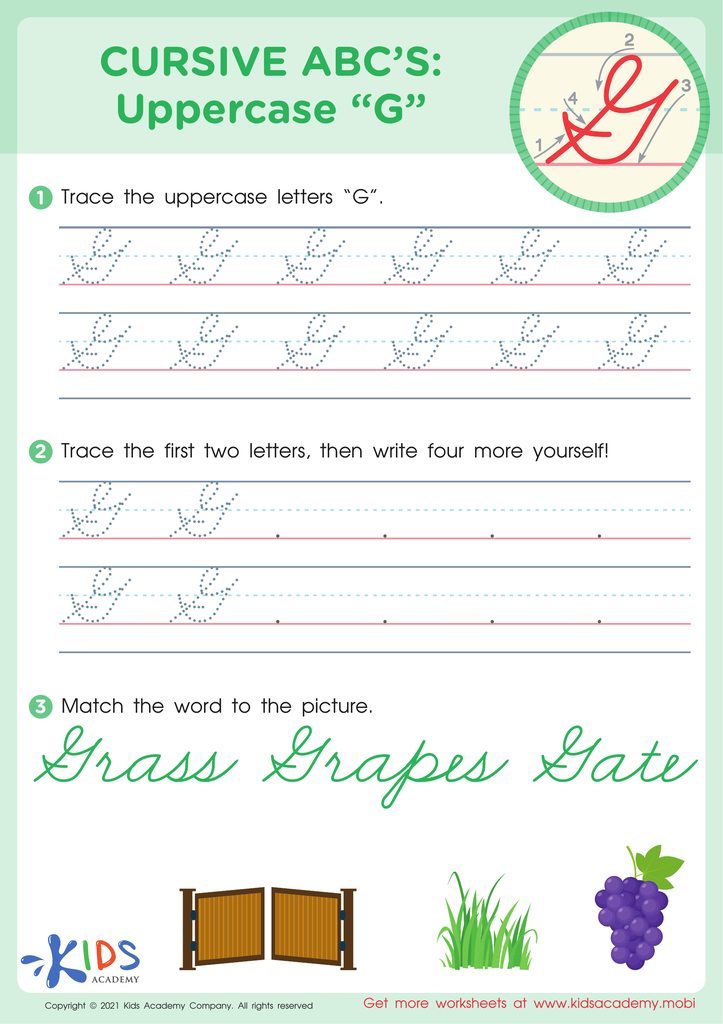
Remind your kids of words beginning with 'G' like 'girl' and 'goat'. Ask them to give examples too. Use this tracing worksheet to help your kids practice writing the cursive uppercase 'G'. It'll help them perfect their motor skills and get better at cursive letters.
Cursive ABCs: Uppercase G
Worksheet
Lowercase Letters d e f Worksheet

Lowercase Letters d e f Worksheet

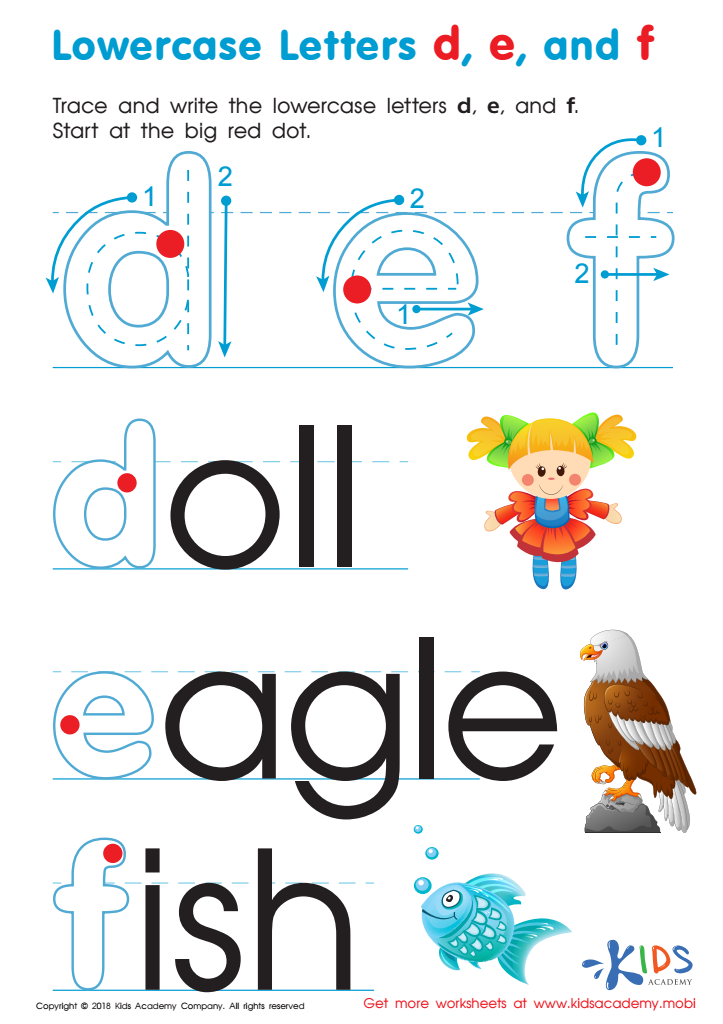
Help your child learn the alphabet letters by tracing and writing the lowercase letters d, e, and f. Begin at the big red dot and follow the dots. This worksheet will help your little one gain a better understanding of the letters.
Lowercase Letters d e f Worksheet
Worksheet
Missing Letters Worksheet

Missing Letters Worksheet

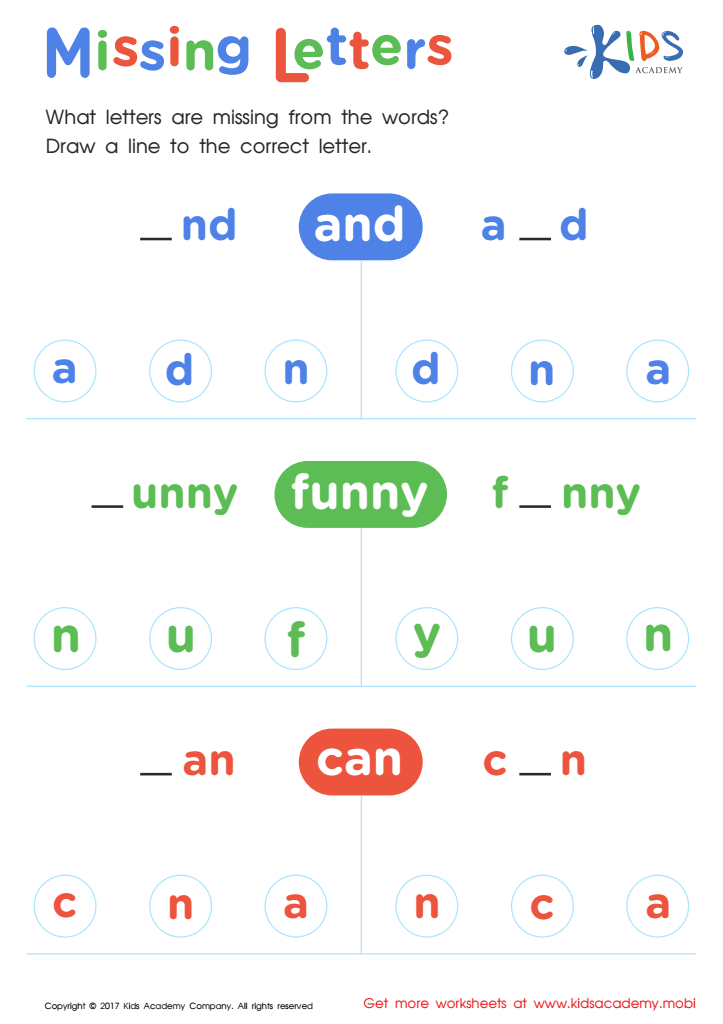
Review sight words with this fun matching worksheet from Kids Academy! Look at the sight words in the middle, read them aloud and find the missing letter on each side for each word. Draw a line to the correct letter to complete the sheet!
Missing Letters Worksheet
Worksheet
Cursive ABCs: Lowercase c

Cursive ABCs: Lowercase c

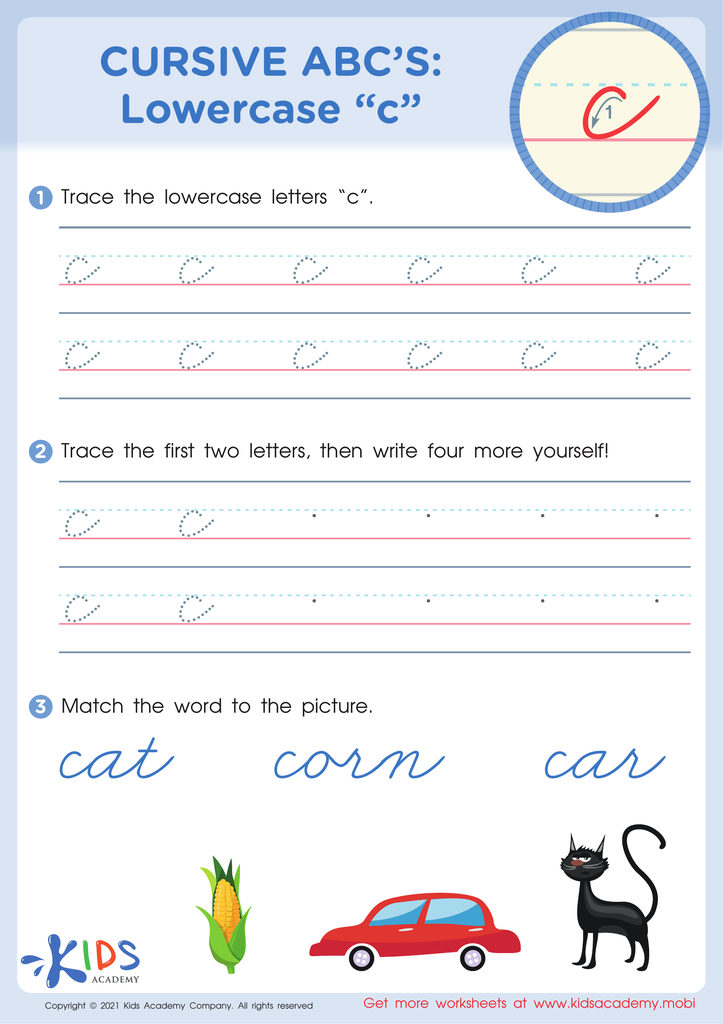
Once your child has successfully printed their letters, help them learn to recognize and write the alphabet in cursive. Struggling? This worksheet is perfect to assist them. Writing is an essential skill for kids to learn, so do all you can to help them. Use these tracing worksheets and guide them as they write the lowercase letter 'c' in cursive.
Cursive ABCs: Lowercase c
Worksheet
Letter or Word? Worksheet

Letter or Word? Worksheet

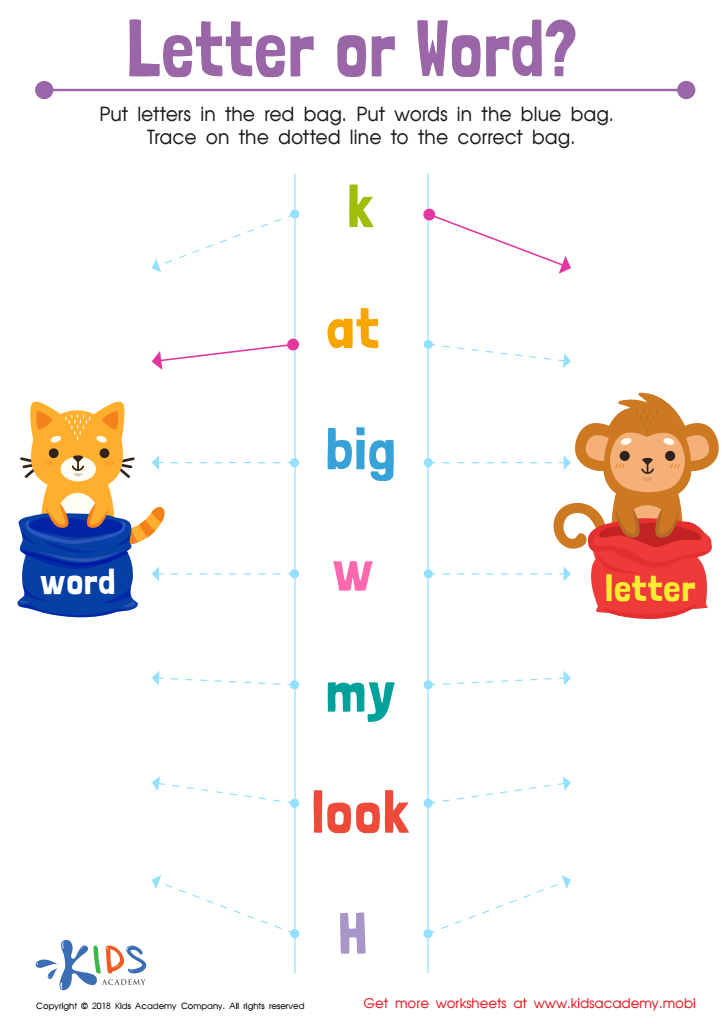
Help your kids differentiate between words and letters. If they can recite their alphabets and identify common words, this tracing sheet will be a breeze. Have them trace on the dotted lines to place the letters in the red bag with the kitten, and the words in the blue bag with the monkey.
Letter or Word? Worksheet
Worksheet
Cursive ABCs: Lowercase b

Cursive ABCs: Lowercase b

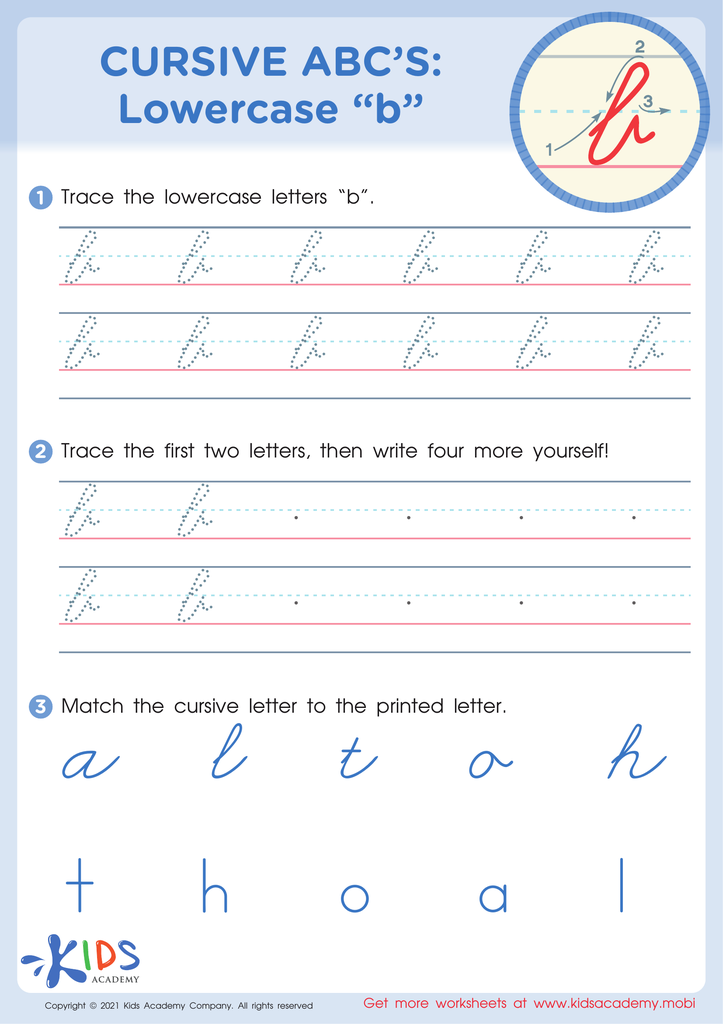
Trace two lines of lowercase b's with your kids. Guide them through the loops and swirls to help them learn cursive handwriting. Then let them practice writing the letter b themselves in the last two lines. With this exercise, your kids should become better at writing and recognizing the lowercase cursive b.
Cursive ABCs: Lowercase b
Worksheet
Cursive ABCs: Uppercase A

Cursive ABCs: Uppercase A

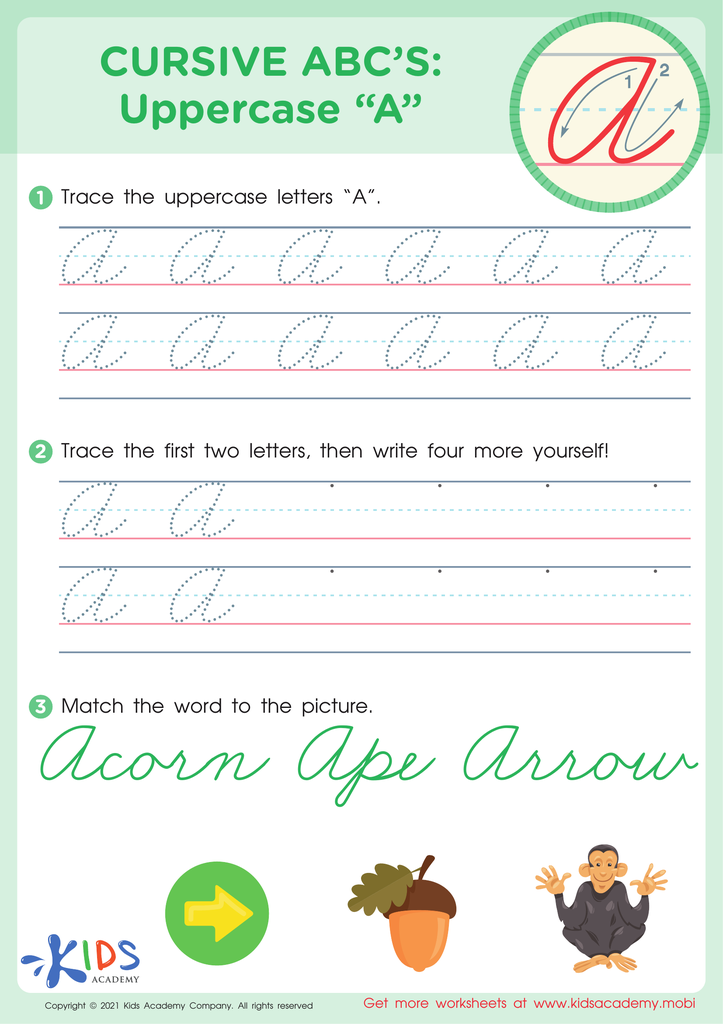
Help your kids develop their writing skills with our great tracing sheets. Improve their motor skills, as well as their vocabulary, by guiding them through tracing the dotted lines for the uppercase letters of the alphabet. When they are ready, let them practice writing the letters on their own for improved confidence.
Cursive ABCs: Uppercase A
Worksheet
Cursive ABCs: Uppercase H

Cursive ABCs: Uppercase H

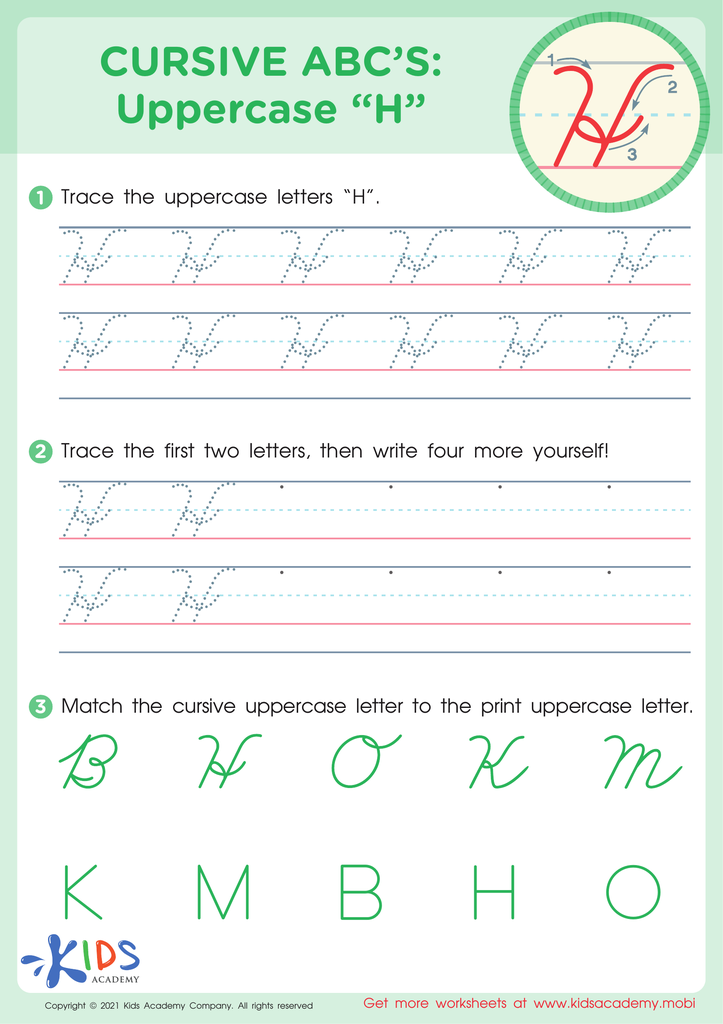
Have your child recite the alphabet and give you words beginning with H. This tracing sheet is perfect to help them improve their handwriting. Guide their hands as they trace the uppercase H, then have them practise writing it alone. At the bottom is an exercise to check their letter recognition.
Cursive ABCs: Uppercase H
Worksheet


Alphabet recognition writing is a critical foundational skill for children aged 3-8, making it essential for parents and teachers to prioritize this aspect of literacy development. Recognizing letters is the first step in a child's journey to reading and writing, which are vital lifelong skills. When children can identify letters, they build confidence in their ability to communicate and express themselves.

Furthermore, being adept in recognizing letters enhances phonemic awareness – understanding that letters represent sounds, a key component in decoding words. This skill promotes early reading success, setting the stage for academic achievement as children progress through school.

Engaging in alphabet recognition activities, such as naming letters, tracing them, or creating letter crafts, can foster a love for learning and enhance fine motor skills. Moreover, it allows for interactive parent-child or teacher-child bonding time that builds social and emotional development.

In today’s world, where literacy is crucial for future opportunities, ensuring that children master the alphabet prepares them for advanced learning and effective communication. As such, both parents and teachers play a vital role in nurturing these skills, guiding children toward becoming confident, literate individuals.