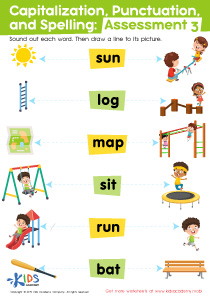
Phonics recognition Writing Worksheets for Ages 3-8
5 filtered results
-
From - To
Unlock your child's potential with our Phonics Recognition Writing Worksheets, designed specifically for ages 3-8. These engaging worksheets help young learners develop essential phonics skills, crucial for reading and writing success. Each worksheet incorporates fun activities that reinforce sound-letter associations, improve handwriting, and enhance vocabulary comprehension. Perfect for at-home practice or classroom instruction, our resources ensure children grasp the fundamentals of phonics in an enjoyable and interactive way. Foster a love for learning while building confidence in literacy skills. Explore our collection and make phonics fun and accessible for your little ones today!
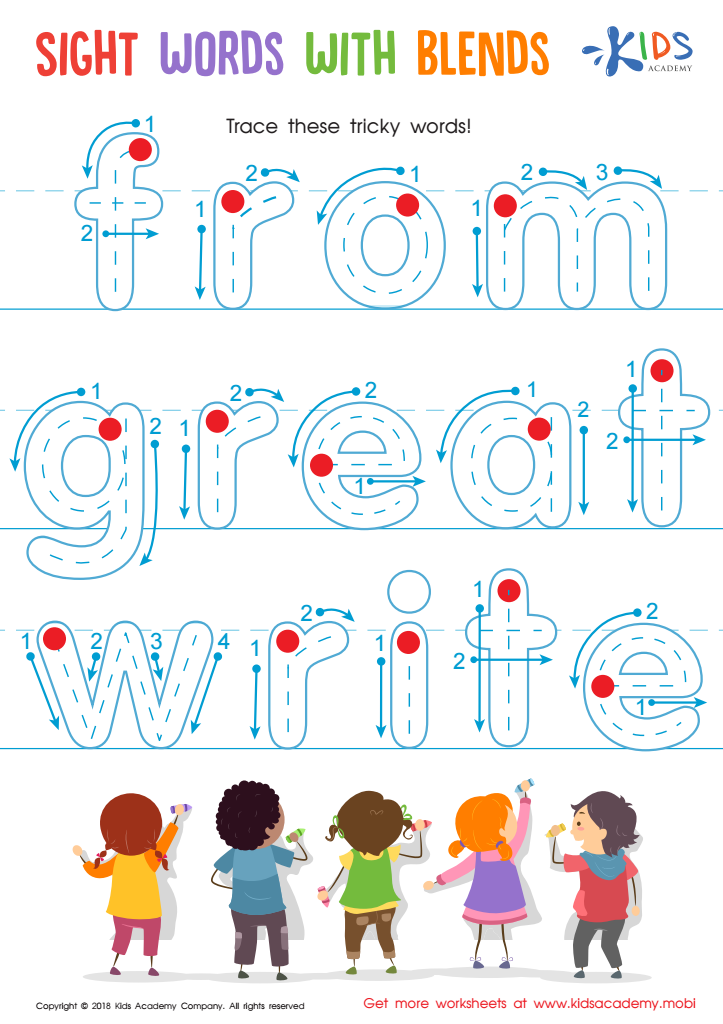
Sight Words with Blends Worksheet
 Assign to My Students
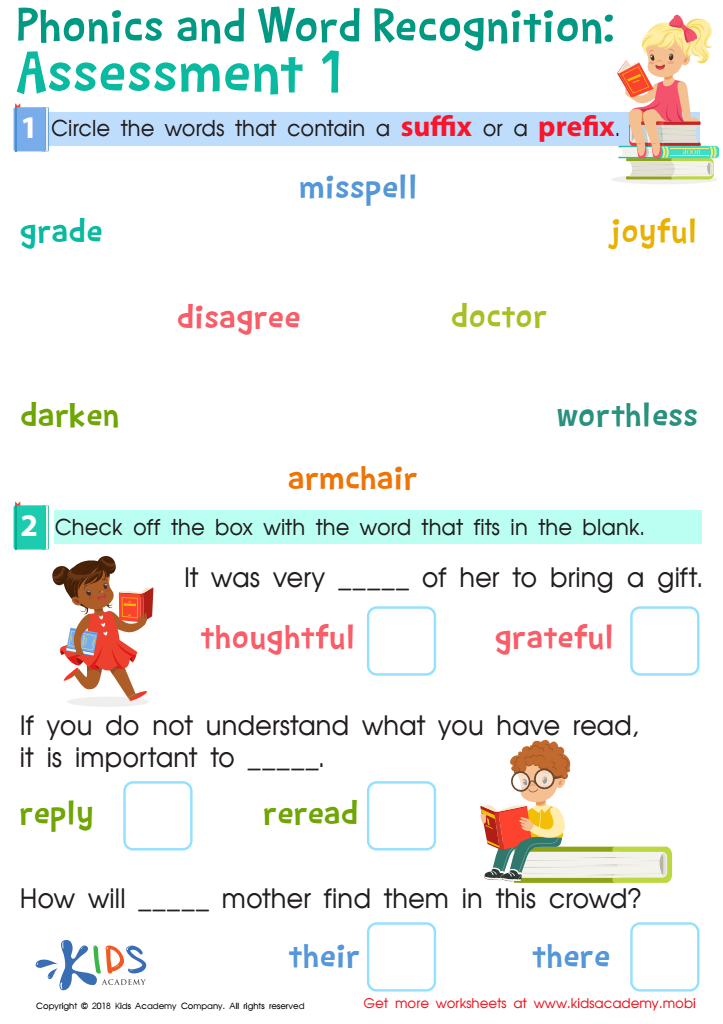
Phonics and Word Recognition: Assessment 1 Worksheet
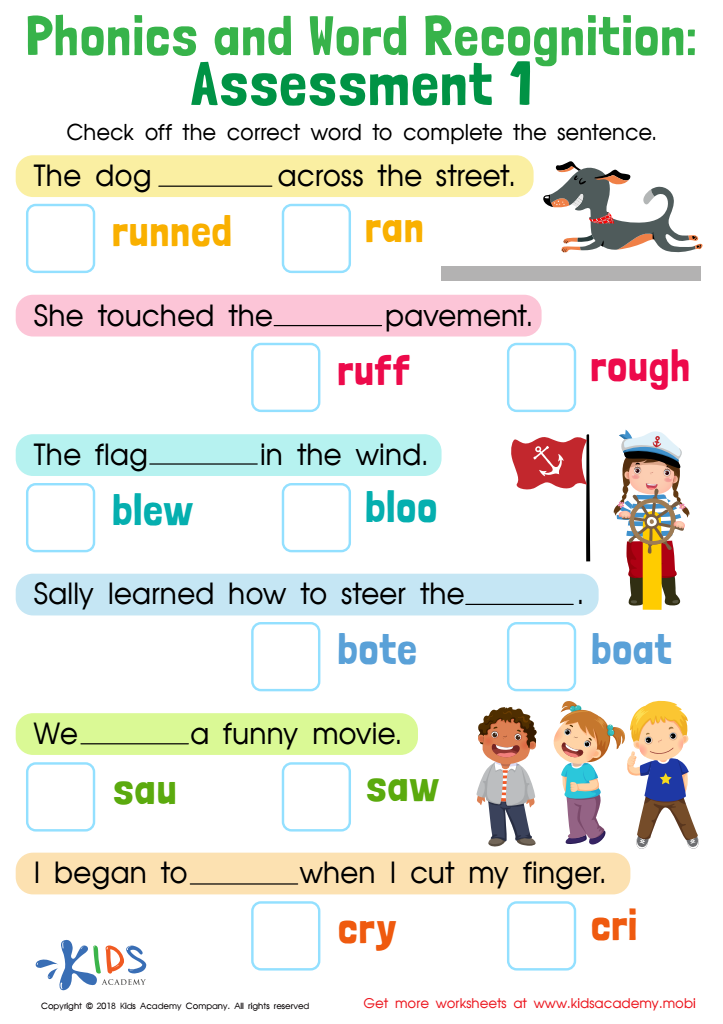
Phonics and Word Recognition: Assessment 1 Worksheet
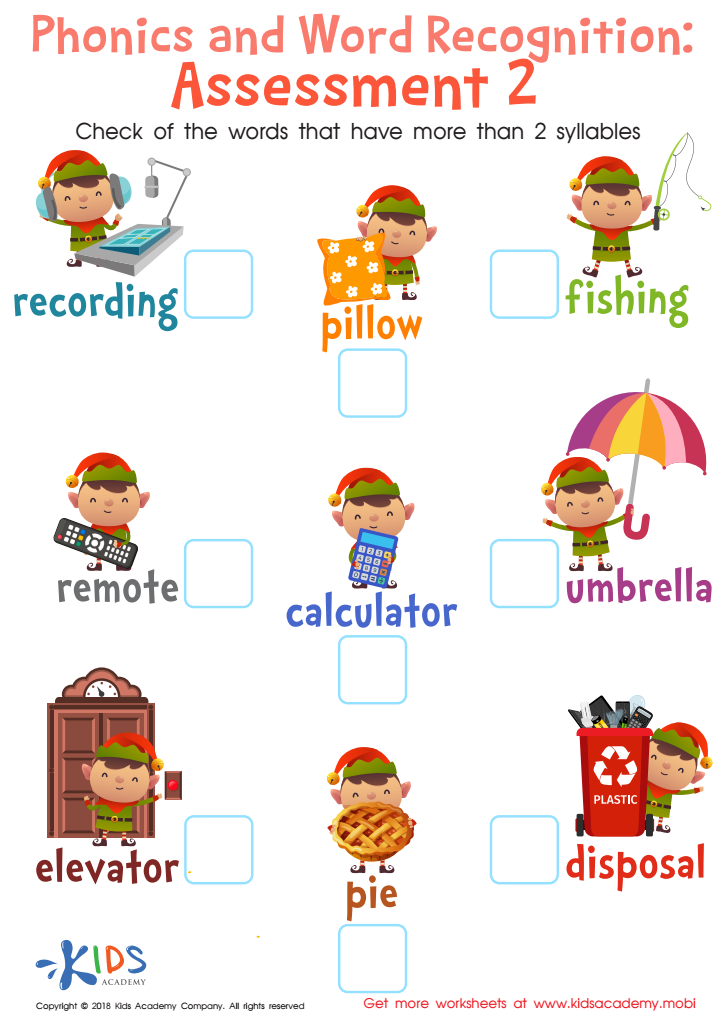
Phonics and Word Recognition: Assessment 2 Worksheet
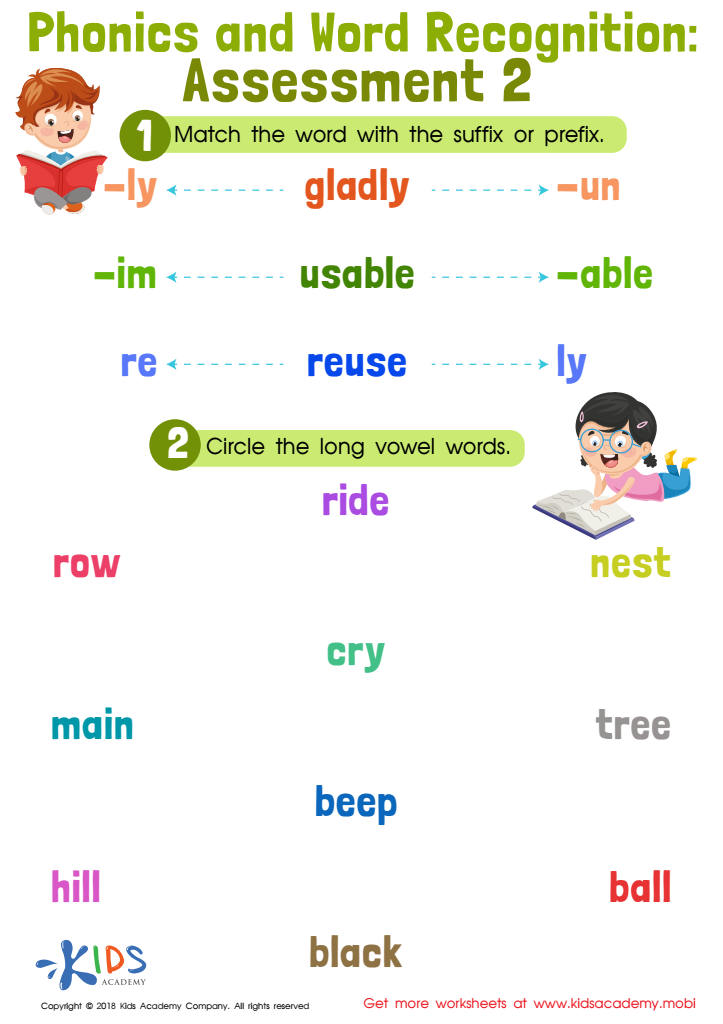
Phonics and Word Recognition: Assessment 2







Phonics recognition is crucial for children aged 3-8 as it lays the foundation for effective reading and writing skills. At this developmental stage, children are increasingly exposed to letters and sounds, and understanding phonics helps them decode words independently. This foundational skill boosts their confidence and fosters a love of reading, which is essential for academic success.
Parents and teachers should prioritize phonics recognition because it directly impacts literacy development. With early phonics education, children learn to connect sounds with corresponding letters, enabling them to sound out words rather than memorizing them. This skill not only enhances their reading abilities but also supports their writing, allowing them to spell and express themselves more accurately.
Moreover, phonics recognition is linked to cognitive development; it promotes critical thinking and problem-solving skills as children learn to identify patterns in language. By focusing on phonics, educators and parents can create an engaging and supportive learning environment, ultimately preparing children for future academic challenges.
In summary, phonics recognition is a vital component of early literacy that supports reading and writing, nurtures a child's enthusiasm for language, and contributes to overall cognitive development, making it essential for parents and educators to emphasize this skill.