
Syllable identification Writing Worksheets for Ages 3-8
5 filtered results
Difficulty Level
Grade
Age
-
From - To
Subject
Activity
Standards
Boost your child's literacy skills with our engaging Syllable Identification Writing Worksheets, tailored especially for ages 3-8. These fun, colorful activities focus on helping young learners break down words into syllables, enhancing their phonemic awareness. Our wide range of exercises includes visual aids, interactive tasks, and creative assignments designed to make learning enjoyable. Ideal for classroom or at-home practice, these worksheets foster confidence in reading and writing fluency. Whether you have a preschooler just starting out or an elementary student looking to improve, our resources offer structured support for every learning stage. Unlock the joy of learning with us!
Favorites
With answer key
Interactive
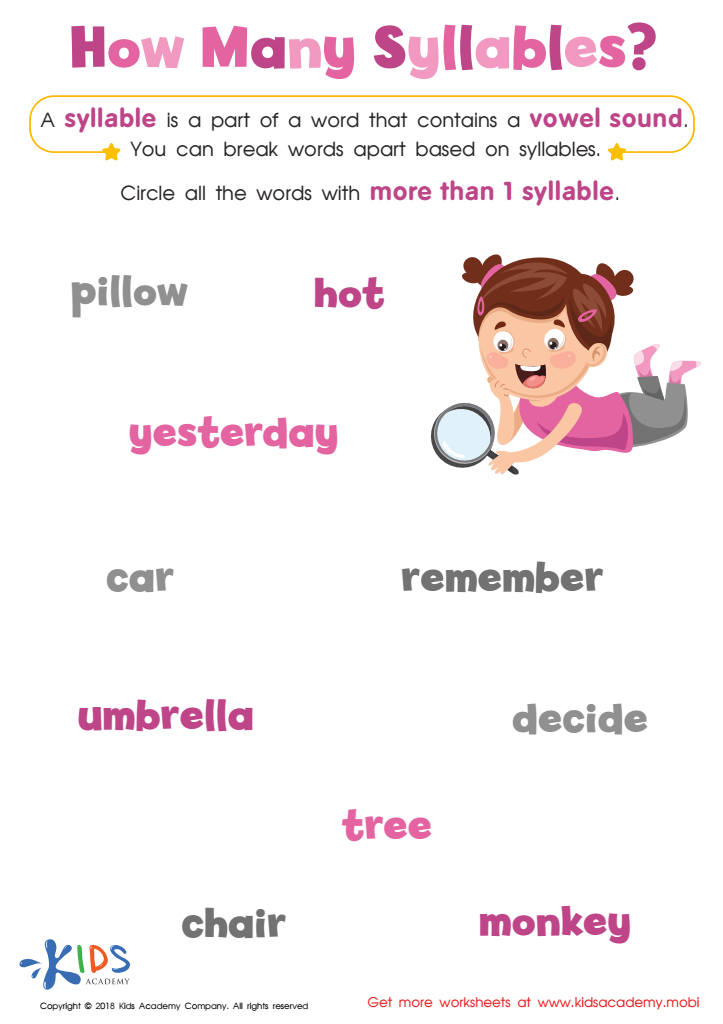
Reading: How Many Syllables Worksheet
This worksheet helps students practice counting syllables. They read each word, count the syllables, and circle single-syllable words. Mastering this skill helps with fluency and comprehension, so it's worth the effort! Use this printout to clear up any confusion.
 Assign to My Students
Reading: How Many Syllables Worksheet
Worksheet
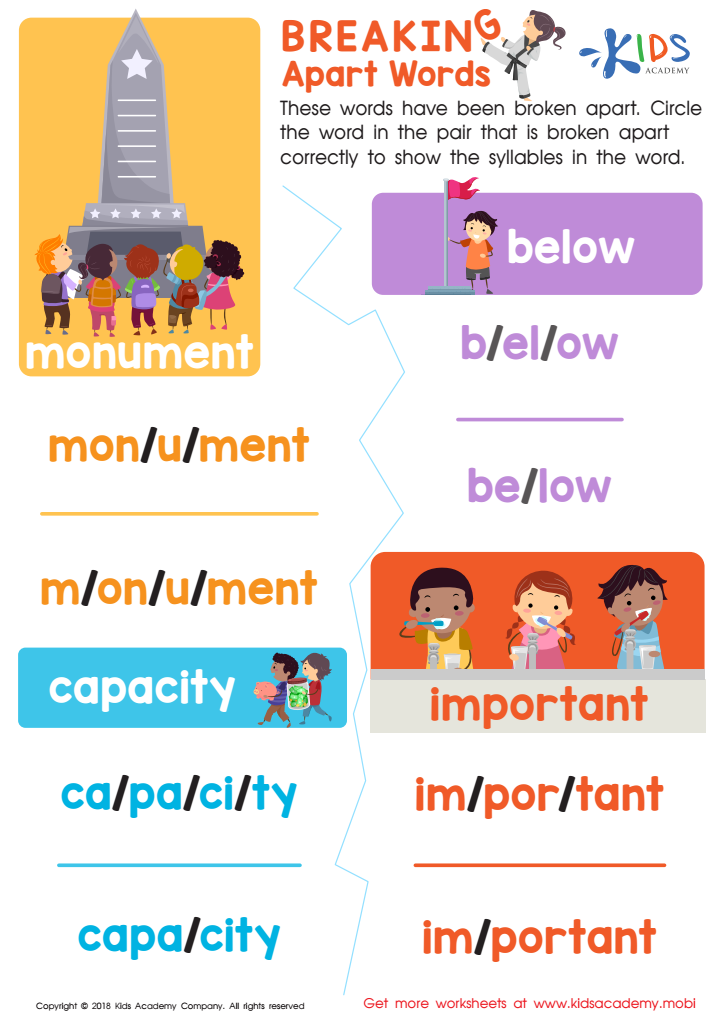
Breaking Apart Words Worksheet
Break words into syllables to make them easier to say correctly. Say each word carefully aloud and get kids to circle the correctly broken apart word in the pair to show the syllables. This worksheet has four words to practice with.
Breaking Apart Words Worksheet
Worksheet
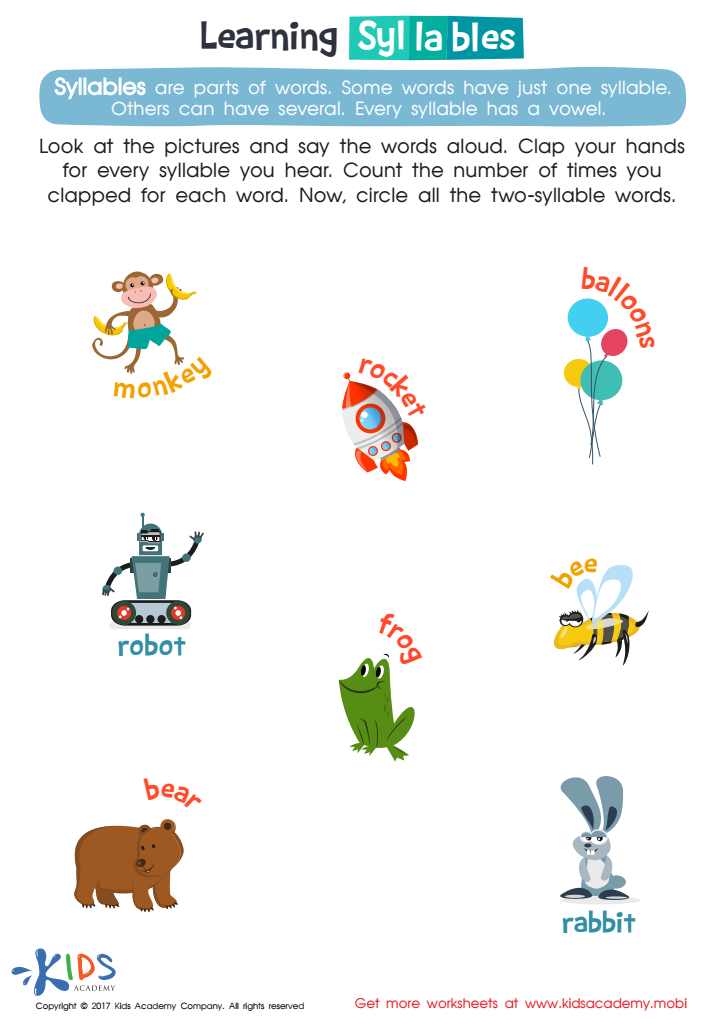
Learning Syllables Word Structure Worksheet
Teach kids to read and spell with our fun Learning Syllables worksheet. Kids will have a blast clapping and saying familiar words while counting syllables. Colorful and catchy, it's a great way to make learning enjoyable!
Learning Syllables Word Structure Worksheet
Worksheet
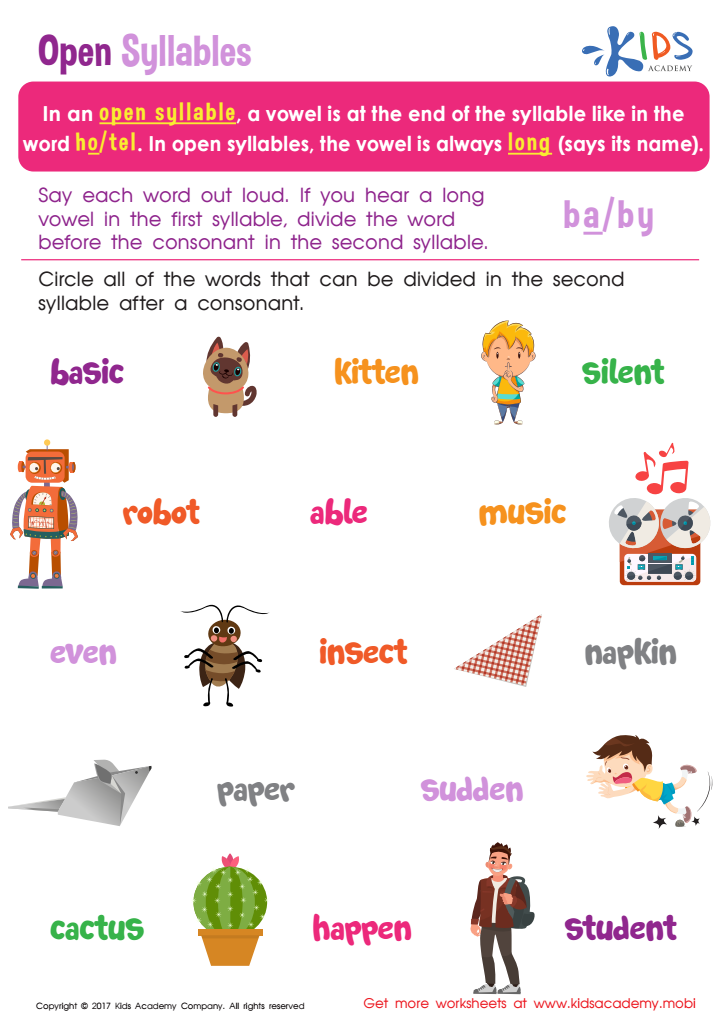
Open Syllable Printable Worksheet
Kids will have fun recognizing open syllables with this colorful worksheet. All they have to do is look for long vowel sounds and read each word aloud. With cute illustrations, they can easily discover the right answers!
Open Syllable Printable Worksheet
Worksheet
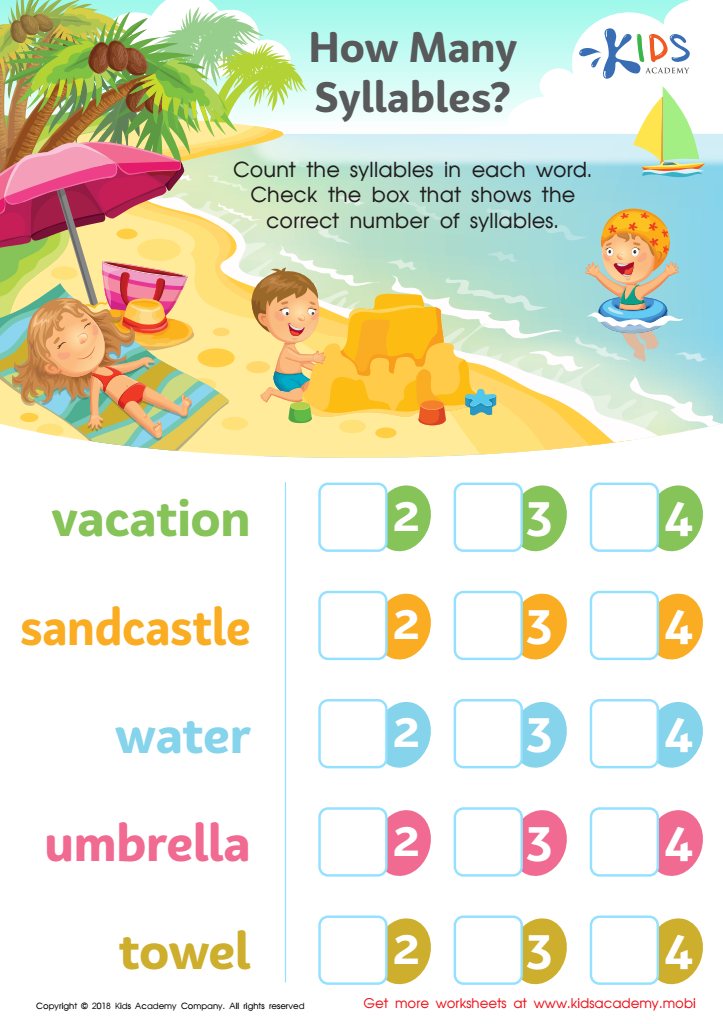
How Many Syllables Worksheet
Draw up memories of sunny beach days with your child. Ask them to tell you their favourite activities, objects seen. Read the words in the picture aloud and help them count the syllables. Then check the box with the right number of syllables.
How Many Syllables Worksheet
Worksheet
Join Kids Academy for Free
Who is primarily going to use this learning content?








Syllable identification is crucial in the early developmental stages of literacy for children aged 3-8. Recognizing syllables is a foundational skill that enhances phonological awareness—the understanding of sound structures within words, which is essential for reading and writing proficiency. When children can break words into manageable syllable units, they can decode unfamiliar words more easily, fostering greater confidence and motivation to read.
Moreover, syllable identification aids spelling. By understanding that words are composed of different syllable units, children can better predict and apply common spelling patterns. This early skill not only contributes to accurate spelling but also helps in understanding word meaning and usage, which is important for vocabulary development.
From a speech and language perspective, grasping syllables helps children articulate words more clearly, improving both verbal and written communication. It supports memory retention, too, as chunking information into smaller, more digestible parts—like syllables—can make information easier to recall.
Lastly, focusing on syllable identification nurtures a love for language through engaging practices like rhyming games and clapping out syllables, making learning both fun and effective. Therefore, investing time in syllable identification can have profound long-term benefits for children’s overall literacy development.








