Unlock young minds with our immersive Word Identification Writing Worksheets, tailored for ages 3-8. Designed to build foundational literacy skills, these engaging worksheets help children recognize, write, and spell common words. Through playful and interactive exercises, kids enhance their vocabulary, boost reading confidence, and develop fine motor skills. Perfect for both classroom and home learning, our worksheets support early learners in identifying familiar words, reinforcing knowledge through repetition and practice. Ensure your child’s early reading success with our expertly crafted educational tools. Transform learning into an exciting adventure with Kids Academy's interactive resources for young readers!

Check out this FREE Trial Lesson on Writing for age 3-8!

Identify Individual Words

Favorites
With answer key
Interactive
  • 3-8
  • Word identification
  • Writing
Learn to Spell Worksheet

Learn to Spell Worksheet

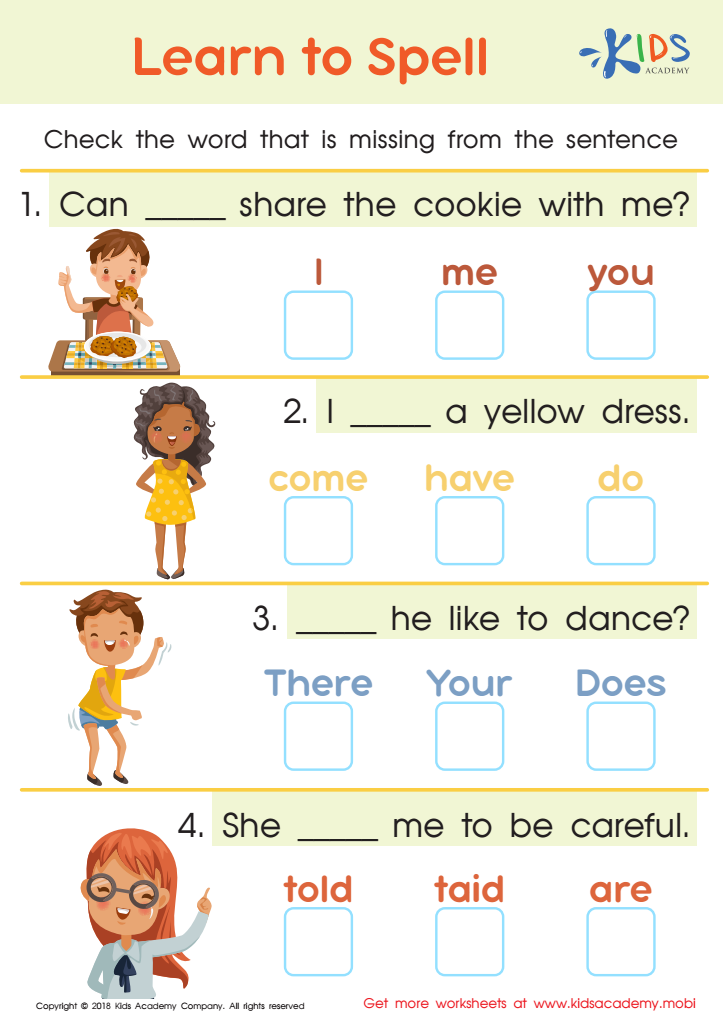
Help sharpen spelling skills with a simple worksheet. Read sentences aloud and show which word is missing. Ask students to pick the correct word from the options. Ensure they check the missing word for accuracy.
Learn to Spell Worksheet
Worksheet
Adjective Maze Worksheet

Adjective Maze Worksheet

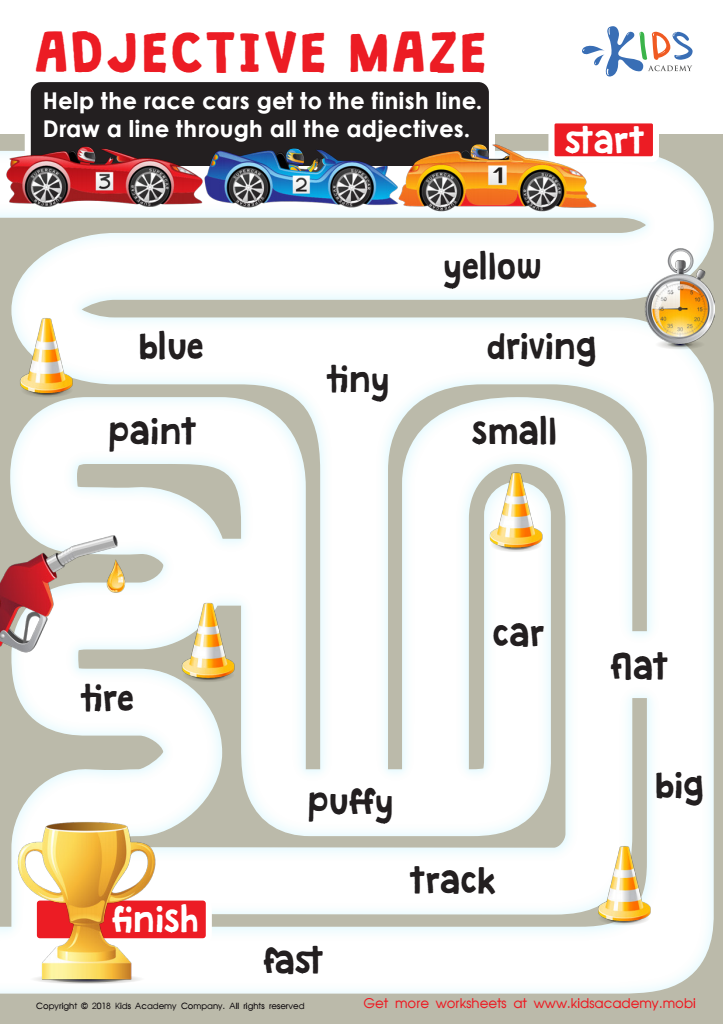
Race your pencil to the finish line with Kids Academy's exciting maze worksheet! Remind your little racer that adjectives describe nouns - looks, sounds, and more. On your mark, get ready - zoom through the track and circle each adjective you see!
Adjective Maze Worksheet
Worksheet
Identify Individual Words Worksheet

Identify Individual Words Worksheet

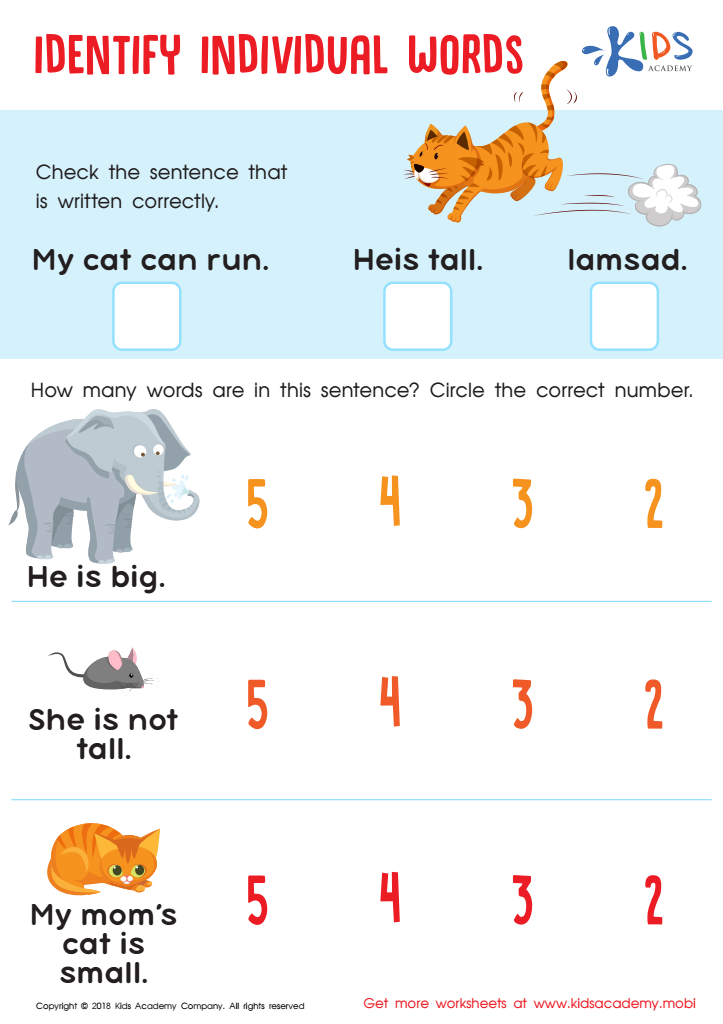
Does your child have trouble constructing sentences? Check out this worksheet! It will help them identify words that make up sentences and assess how well they can read and answer questions. The first part tests how well they can recognize a written sentence. The second part has them read questions and circle the correct number of words. Give it a try!
Identify Individual Words Worksheet
Worksheet
Phonics and Word Recognition: Assessment 1 Worksheet
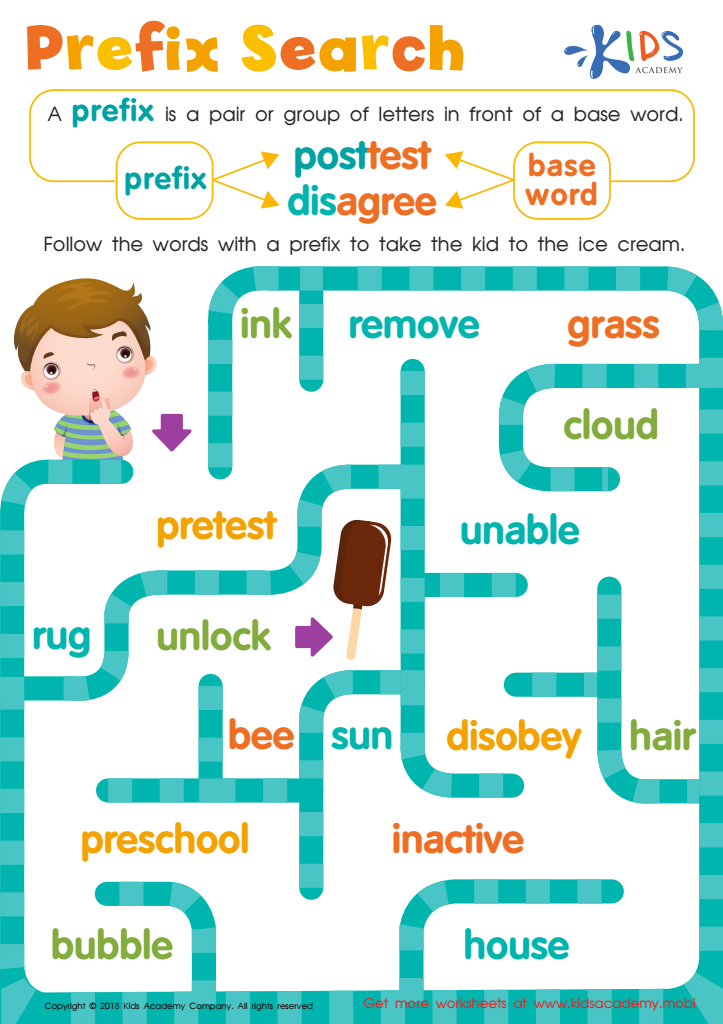

Phonics and Word Recognition: Assessment 1 Worksheet

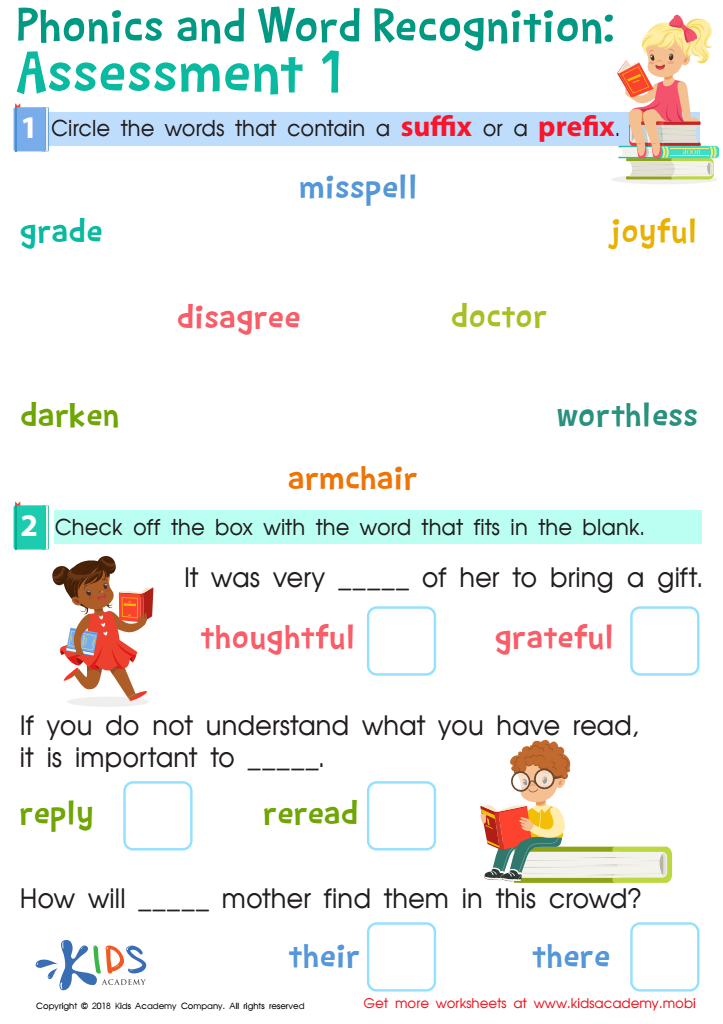
Explain prefixes (words added to start of another word to give it a new meaning) and suffixes (added to end of word to change its meaning) to your kids with examples like 'unhappy' (prefix) and 'forgetful' (suffix). Now, help your child complete this worksheet, including circling words and checking boxes.
Phonics and Word Recognition: Assessment 1 Worksheet
Worksheet
Reading: Prefix Search Worksheet
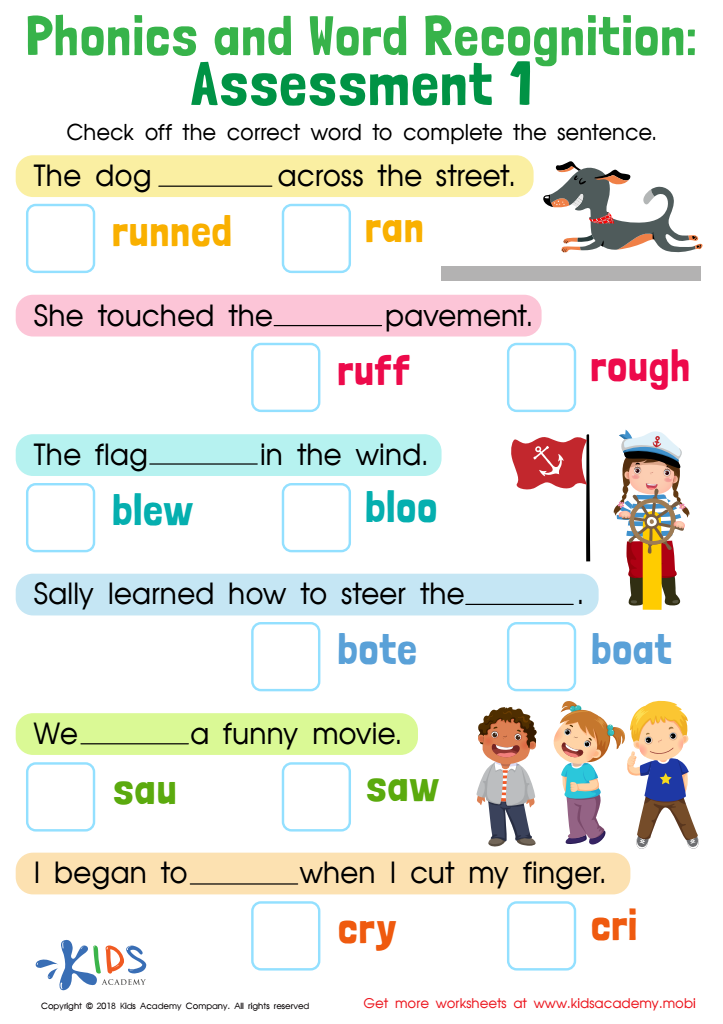

Reading: Prefix Search Worksheet

Maze your way through prefixes! This worksheet helps students practice reading new words with a prefix and figuring out the base word. An understanding of prefixes gives students the skills to comprehend new words. A fun and useful activity for the reading classroom!
Reading: Prefix Search Worksheet
Worksheet
Phonics and Word Recognition: Assessment 1 Worksheet
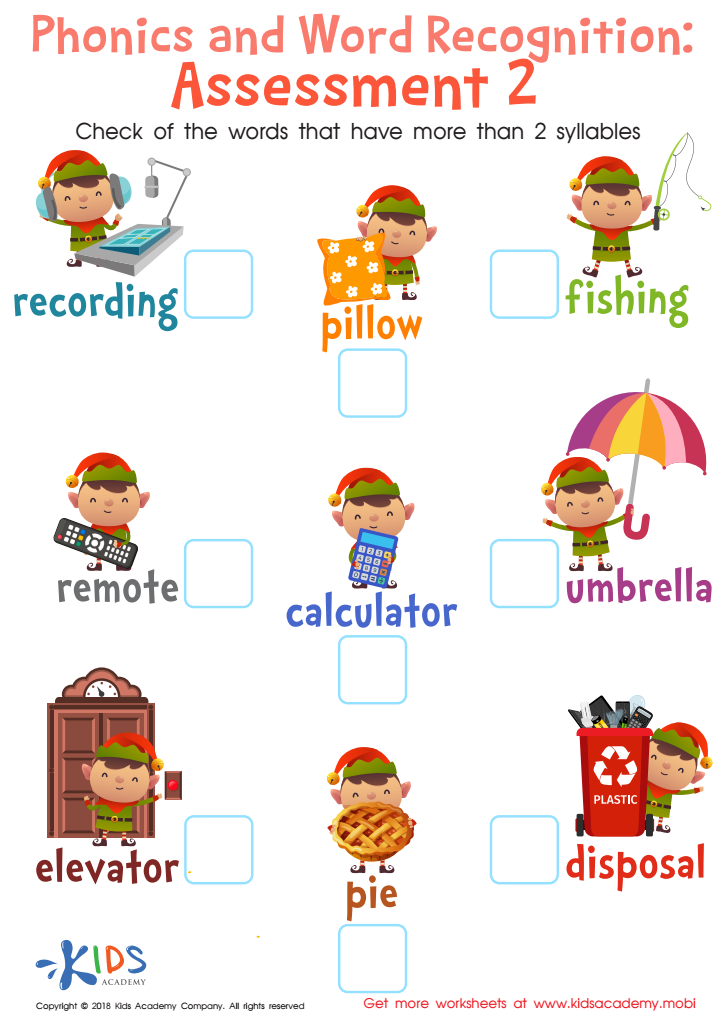

Phonics and Word Recognition: Assessment 1 Worksheet

This worksheet tests phonetics and word recognition. Students should be familiar with past tense verbs. Read incomplete sentences, then read multiple options and help students select the correct one.
Phonics and Word Recognition: Assessment 1 Worksheet
Worksheet
Phonics and Word Recognition: Assessment 2 Worksheet
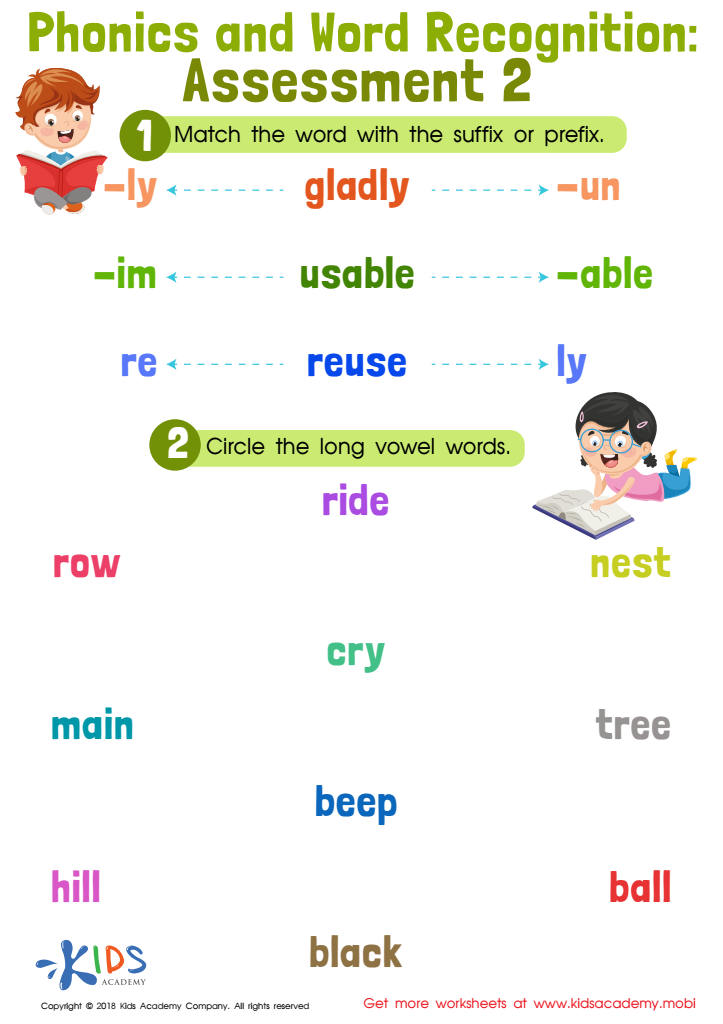

Phonics and Word Recognition: Assessment 2 Worksheet

Help your kids learn proper pronunciation by counting syllables. Most words they'll encounter have 1-3 syllables, making them simple to say. Have them repeat the words in your worksheet after you. Focus on longer words with more than two syllables.
Phonics and Word Recognition: Assessment 2 Worksheet
Worksheet
Phonics and Word Recognition: Assessment 2


Phonics and Word Recognition: Assessment 2

Give kids common examples of suffixes and prefixes, such as "un-," "unhappy," "ness," "happyness." Ask them to match each word in the word recognition exercise to the correct suffix or prefix. Test phonetic understanding by having them circle the long vowel sounds.
Phonics and Word Recognition: Assessment 2
Worksheet


Parents and teachers play a critical role in a child's early literacy development, and word identification writing is a pivotal component for children aged 3-8. During these formative years, children are in a sensitive period for language acquisition, meaning their ability to absorb and learn new words is at its peak. Word identification—the ability to recognize and understand written words—is fundamental to reading fluency, comprehension, and overall academic achievement.

Engaging children in word identification writing exercises stimulates cognitive development by challenging their memory, phonemic awareness, and vocabulary. As they learn to identify and write words, they begin to make connections between spoken and written language, which is crucial for effective communication. This sets the foundation for successful reading skills, essential for learning across all subjects.

Moreover, proficient word identification skills bolster confidence and enthusiasm for learning. Children who can effortlessly recognize and write words are less likely to struggle with more complex literacy tasks as they progress in their education. Investing time and resources in this area ultimately equips children with the tools necessary for sustained academic success, making it imperative for both parents and teachers to prioritize word identification writing in early literacy instruction.

By nurturing these skills from an early age, we promote a lifelong love of reading and learning, ultimately shaping well-rounded, literate individuals.