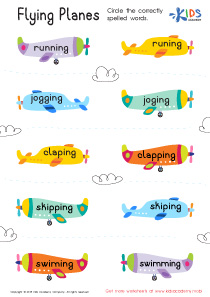
Phonological awareness Elementary Phonics Worksheets for Ages 3-9
9 filtered results
-
From - To
Boost your child's reading skills with our Phonological Awareness Elementary Phonics Worksheets, specially designed for ages 3-9! These engaging, printable worksheets are perfect for helping young learners develop vital phonemic awareness through fun activities. From rhyming games to sound matching exercises, each worksheet fosters essential skills that lay the foundation for effective reading and writing. Our resources are aligned with educational standards, ensuring a comprehensive and interactive learning experience. Whether at home or in the classroom, these worksheets support kids’ literacy journeys while promoting confidence and enjoyment in learning. Explore our collection today and watch your child flourish in phonics!
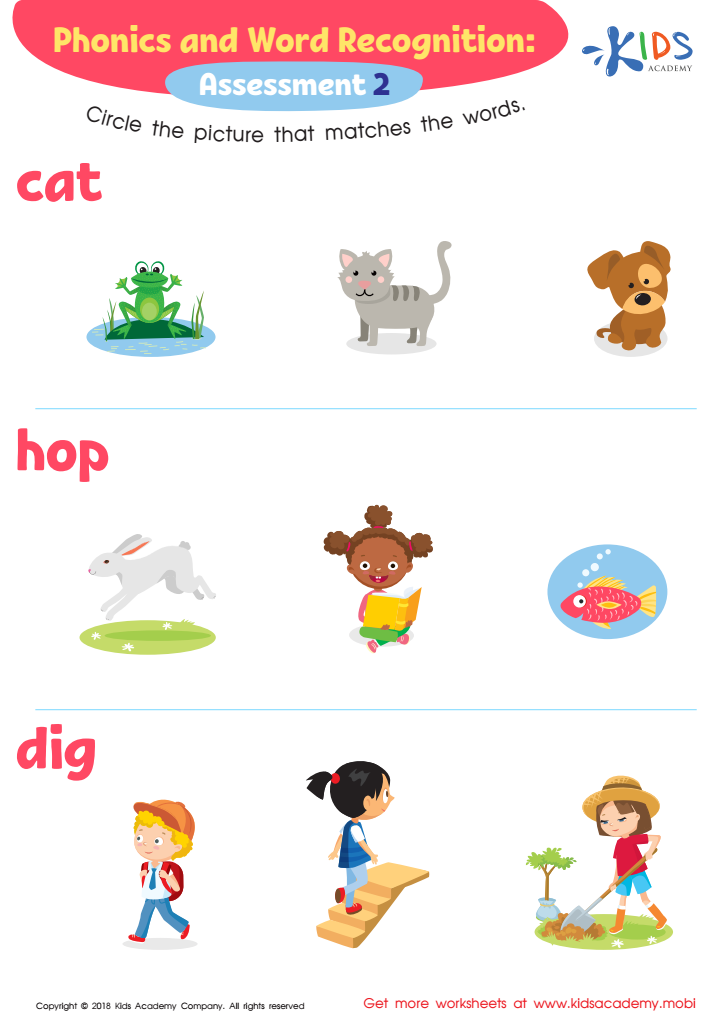
Phonological Awareness: Assessment 2 ELA Worksheet
 Assign to My Students
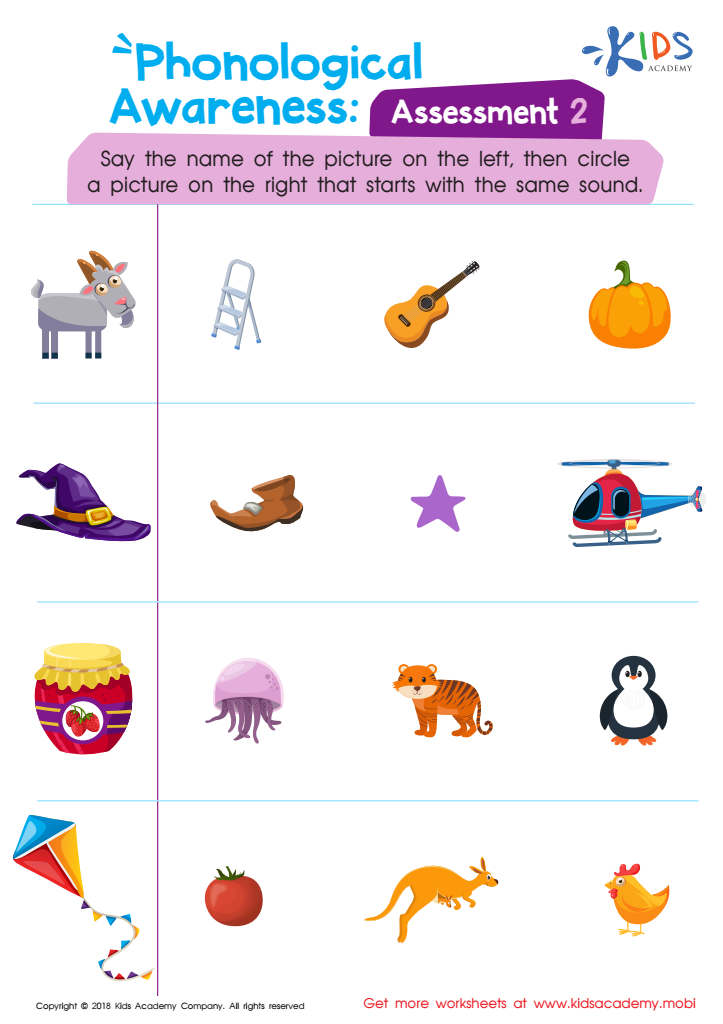
Phonological Awareness: Assessment 2 Worksheet
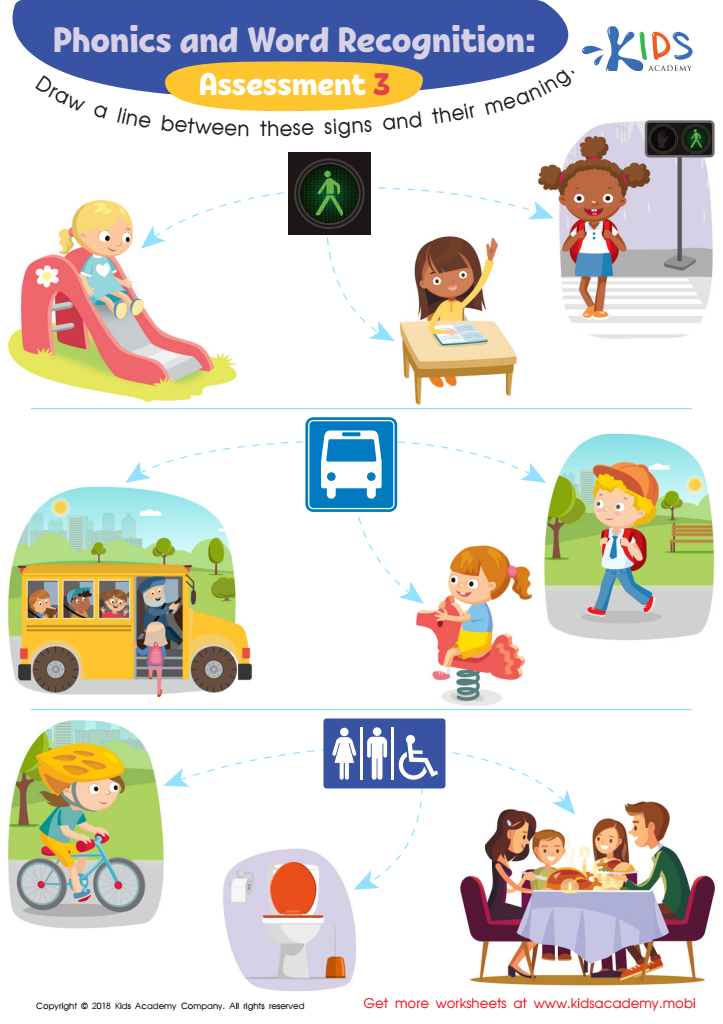
Phonological Awareness: Assessment 3 ELA Worksheet
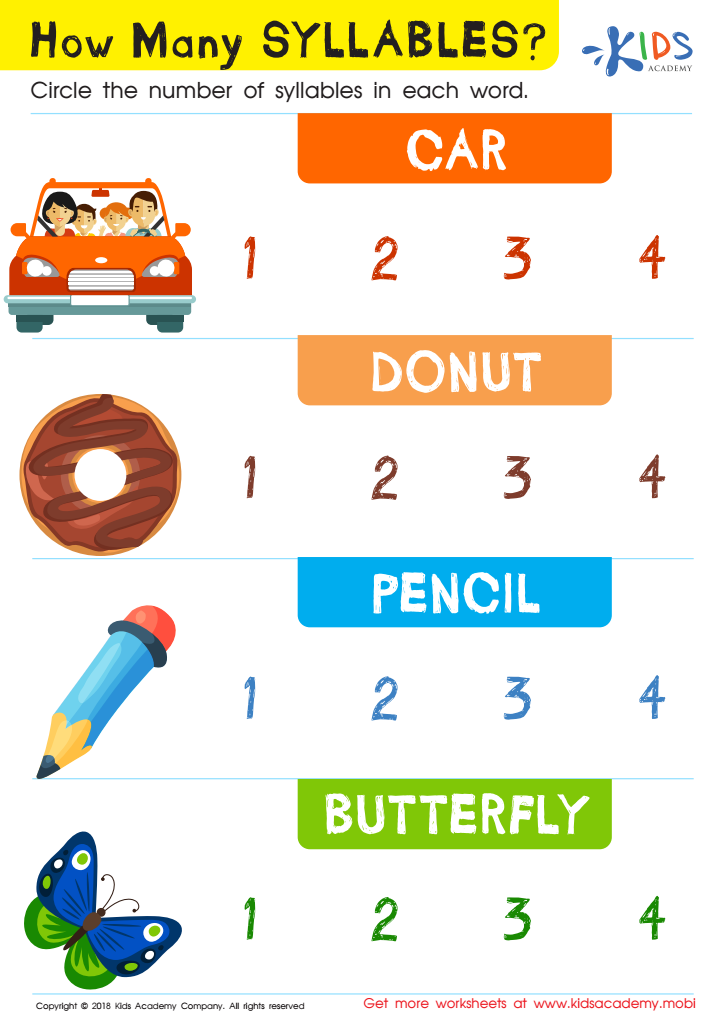
How Many Syllables? Worksheet
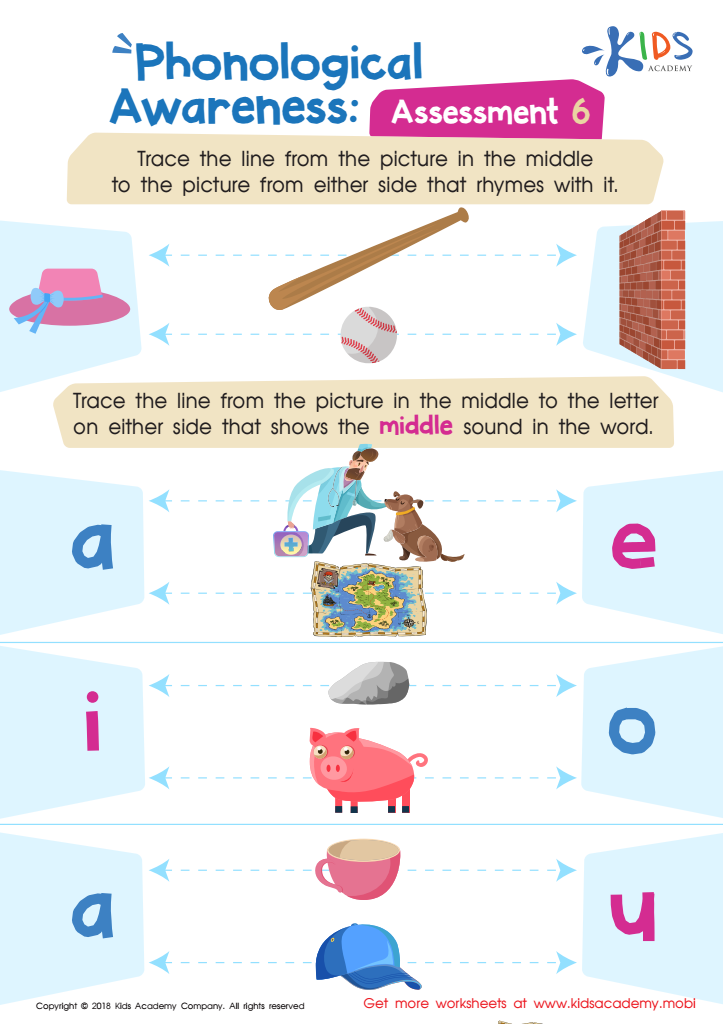
Phonological Awareness: Assessment 6 Worksheet
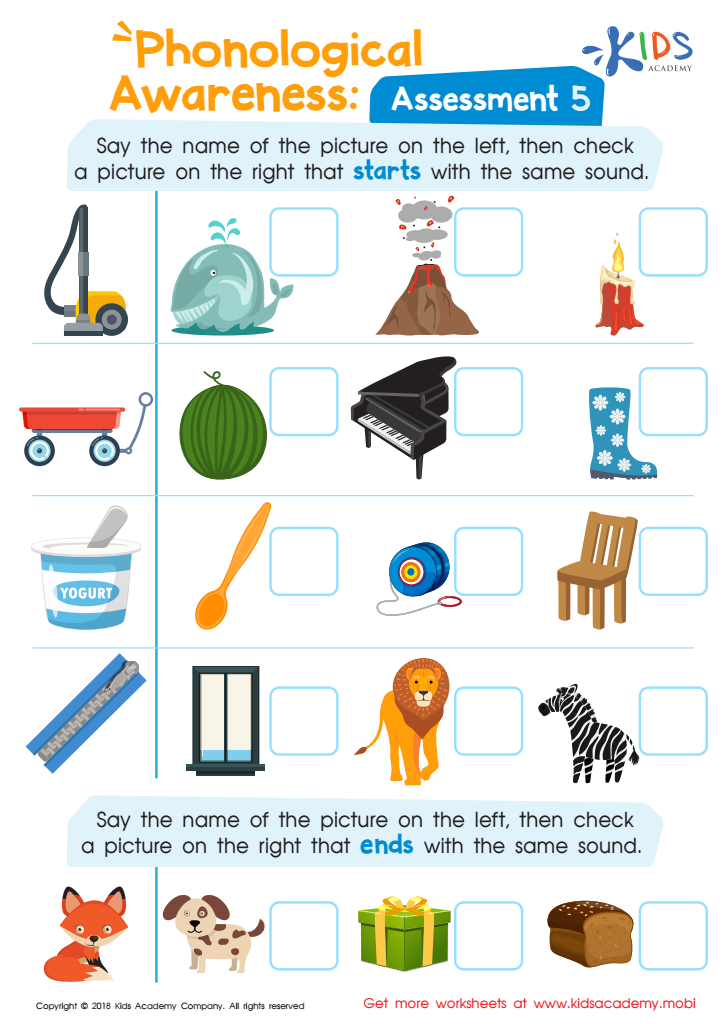
Phonological Awareness: Assessment 5 Worksheet
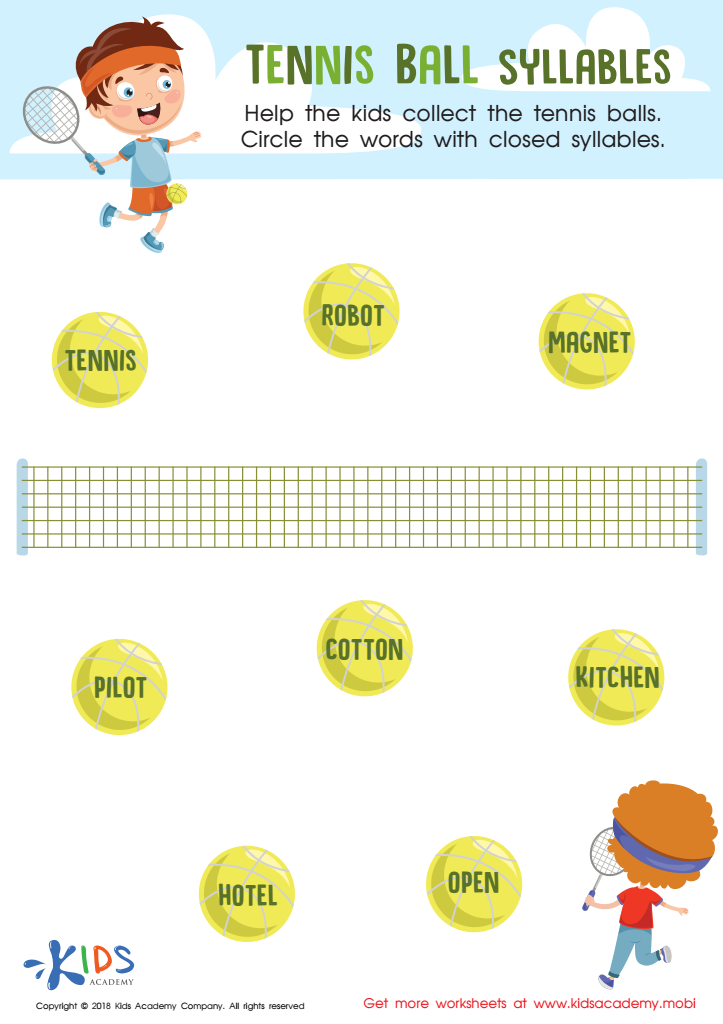
Tennis Ball Syllables Worksheet
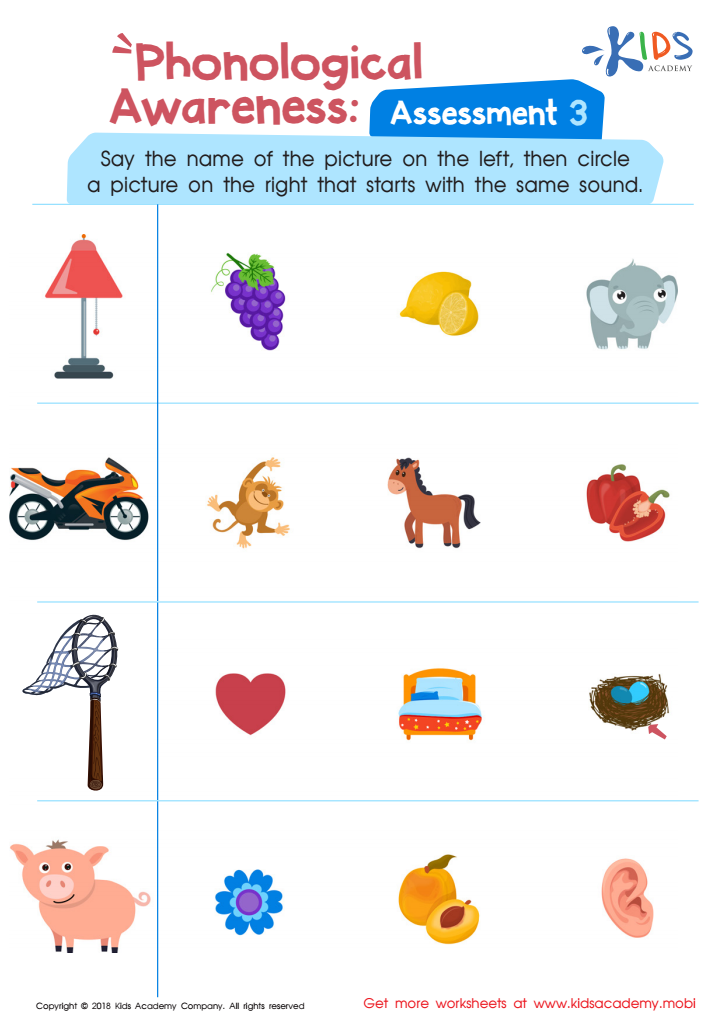
Phonological Awareness: Assessment 3 Worksheet
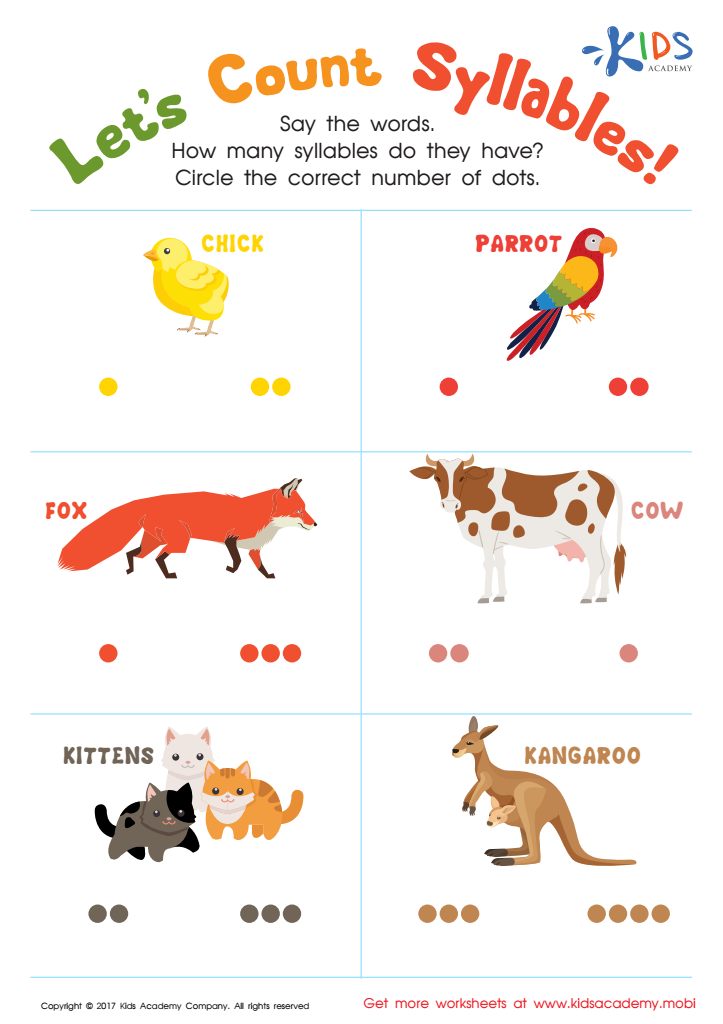
Lets Count Syllables Worksheet




Phonological awareness is a crucial foundational skill for literacy development in young children. It encompasses the ability to recognize and manipulate sounds in language, including the ability to identify rhymes, syllables, and individual phonemes. For parents and teachers, nurturing phonological awareness in children aged 3-9 is vital for several reasons.
Firstly, strong phonological awareness skills greatly enhance a child's ability to decode words, a primary function of reading. Children who can identify and manipulate sounds are more adept at sounding out الكلمات، typically leading to better reading fluency and comprehension.
Moreover, early investment in phonological awareness can help prevent reading difficulties later on. Research indicates that children who struggle with phonological skills are more likely to experience challenges in reading and spelling as they grow. By focusing on these skills early, educators and parents can create a supportive environment that fosters literacy and boosts children’s confidence.
Additionally, phonological awareness activities, such as singing, rhyming games, and sound matching, can make learning fun and engaging. This interactive approach not only strengthens reading skills but also enhances a child's overall language proficiency, laying the groundwork for lifelong learning. Therefore, prioritizing phonological awareness is essential for fostering literacy success in young learners.