Fine motor development Alphabet Worksheets for Ages 3-9
3 filtered results
-
From - To
Boost your child's fine motor skills with our engaging Alphabet Worksheets, specifically designed for ages 3-9. These printable worksheets feature fun activities that promote the development of dexterity and hand-eye coordination essential for writing. Children can practice tracing letters, matching upper and lowercase characters, and Coloring delightful images related to the alphabet. Each worksheet is designed to hold children's attention while fostering crucial pre-writing skills. Perfect for home or classroom use, our resources help young learners build the foundation for effective communication. Visit us now to download our fun and interactive worksheets that make learning the alphabet a delightful experience!
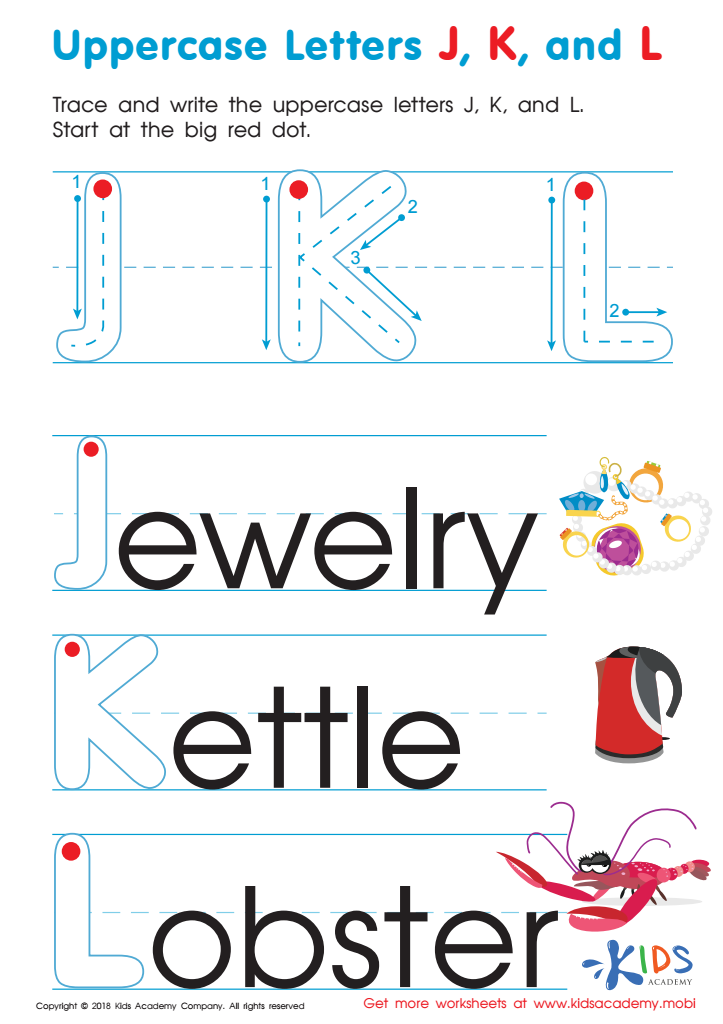
Uppercase Letters J, K, and L Worksheet
 Assign to My Students
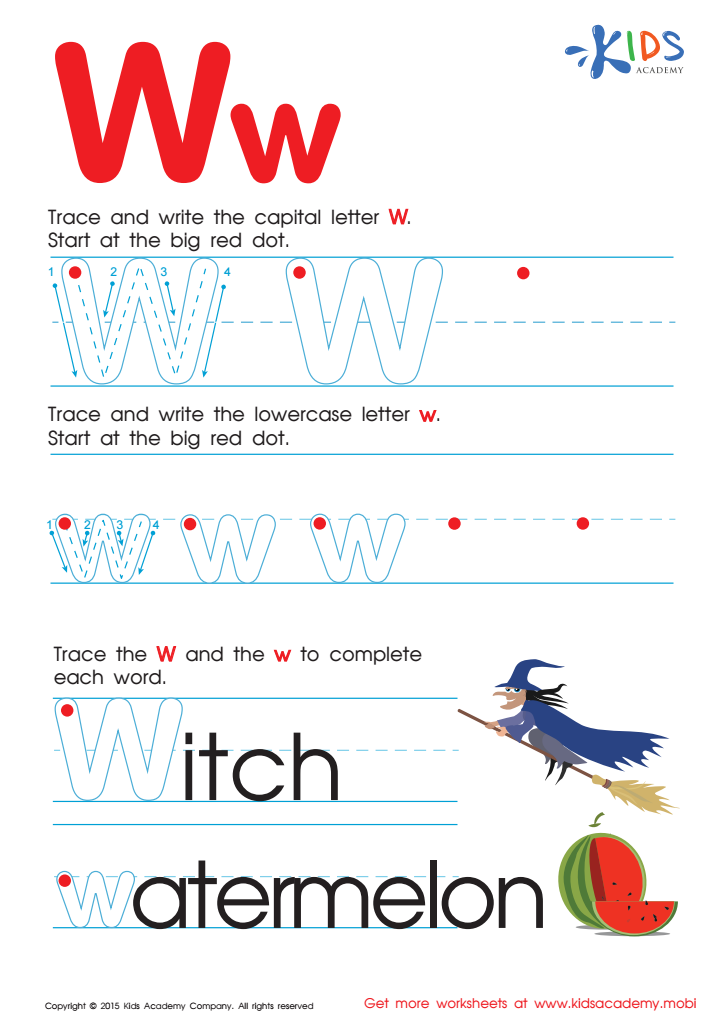
Letter W Tracing Page
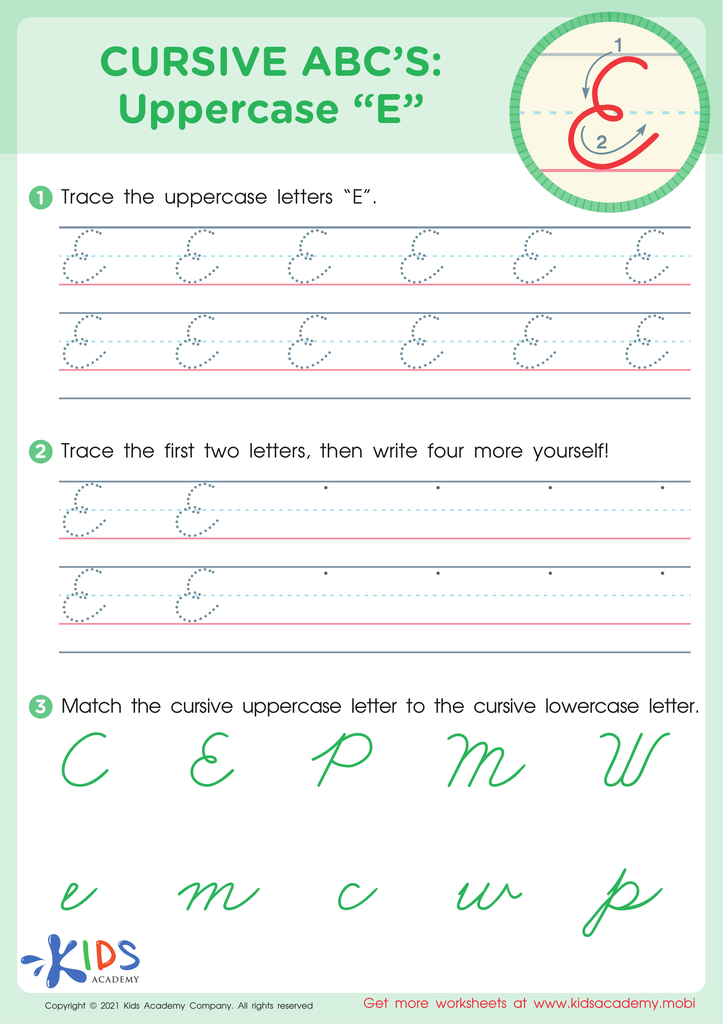
Cursive ABCs: Uppercase E






Parents and teachers should care about fine motor development in children aged 3-9 because it lays the foundation for essential skills used in academic and everyday activities. Fine motor skills involve the use of small muscles in the hands and fingers to perform tasks like writing, cutting, and threading. These skills are crucial for effectively learning the alphabet and developing literacy.
As children engage in activities that promote fine motor skills, they enhance their hand-eye coordination, dexterity, and hand strength, all of which are necessary for writing letters and numbers. Proper grip and control when holding a pencil or crayon are vital for creating legible letters and fostering a positive attitude towards writing.
Moreover, fine motor development is linked to cognitive growth. Manipulating objects and engaging in creative play enhances problem-solving skills, concentration, and spatial understanding. Ultimately, strong fine motor skills boost a child's confidence and independence, allowing them to participate actively in classroom activities.
By supporting fine motor development through educational games, crafts, and activities, parents and teachers can mitigate potential learning difficulties, enabling children to thrive in their early learning environments. Investing in fine motor skills now paves the way for lifelong academic success and functional independence.







