Unlock the joy of learning with our "Reading Readiness Alphabet Worksheets" designed for ages 3 to 9! These engaging, printable activities help children recognize letters, build phonemic awareness, and foster early reading skills. Our expertly crafted worksheets incorporate fun games, coloring, and tracing exercises, making letter learning interactive and enjoyable. Perfect for young learners at home or in the classroom, these resources are tailored to fit diverse learning styles, ensuring every child finds success and confidence in their reading journey. Start your child's literacy adventure today with worksheets that make learning the alphabet exciting!

Check out this FREE Trial Lesson on Alphabet for age 3-9!

Review

Favorites
With answer key
Interactive
  • 3-9
  • Reading readiness
  • Alphabet
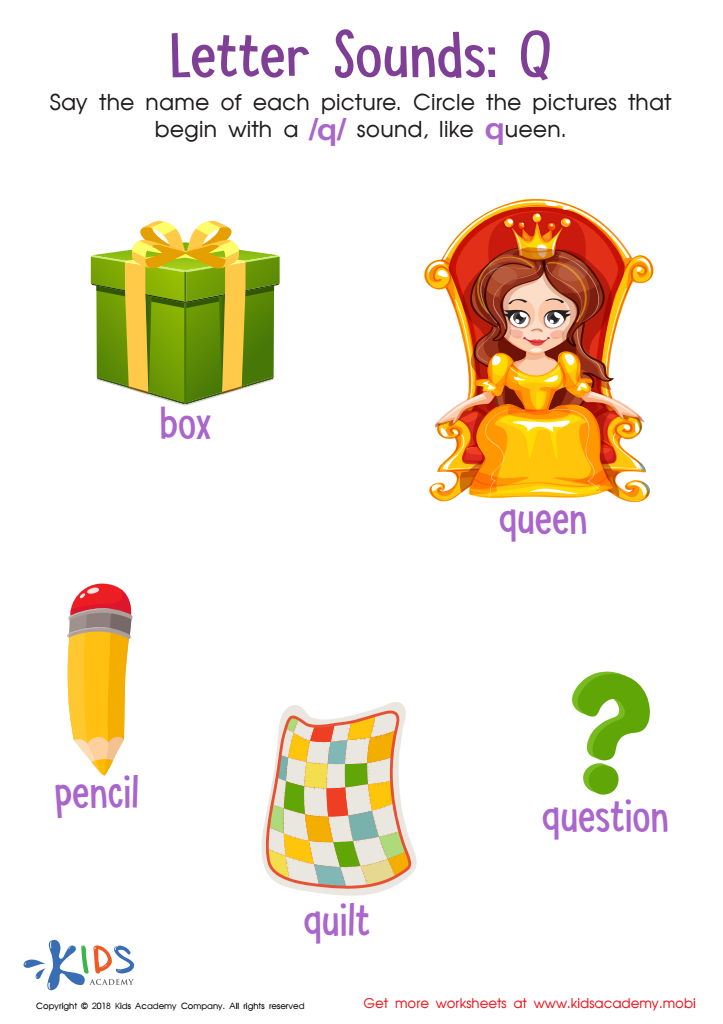
Letter Q Sounds Worksheet

Letter Q Sounds Worksheet

Kids can get confused between "K" and "Q" sounds. Help them learn with this phonics worksheet. They'll name each image and read the word underneath. Point out that words with "Q" also have a "U" which affects how it sounds. Have them circle the matching pictures and watch as they learn this unique letter sound.
Letter Q Sounds Worksheet
Worksheet
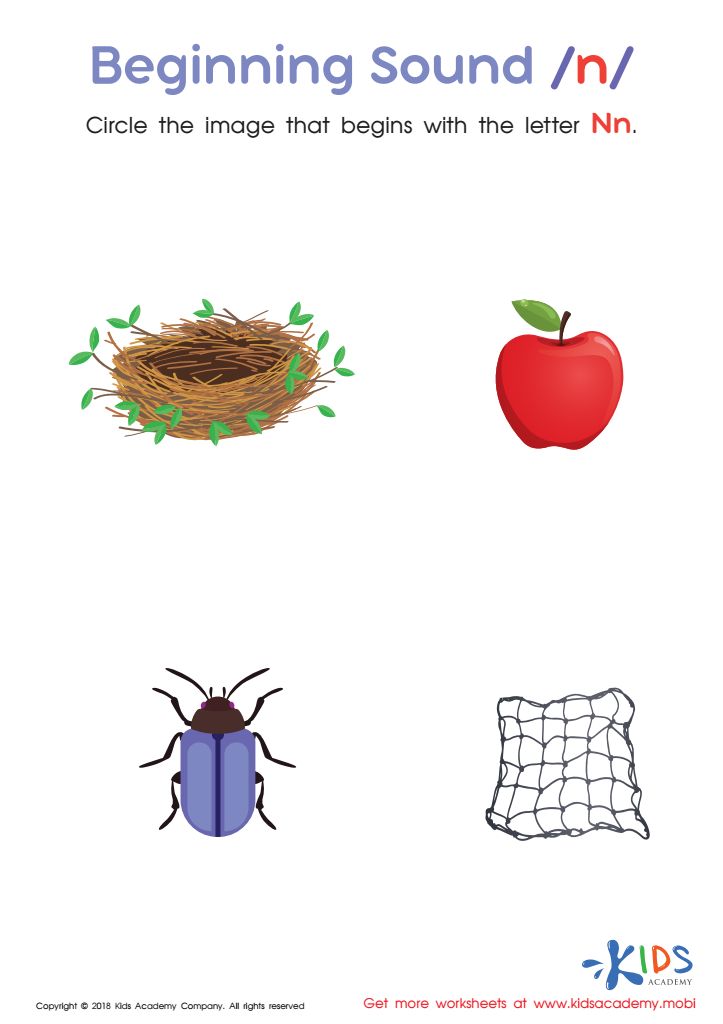
Beginning Sound «n» Worksheet

Beginning Sound «n» Worksheet

Help your emerging reader learn the initial «n» sound with this free PDF worksheet! Strengthen fine motor skills by tracing circles around words beginning with «n». Pictures are clear and engaging, giving beginning Phonics learners the right amount of practice and the confidence to succeed.
Beginning Sound «n» Worksheet
Worksheet
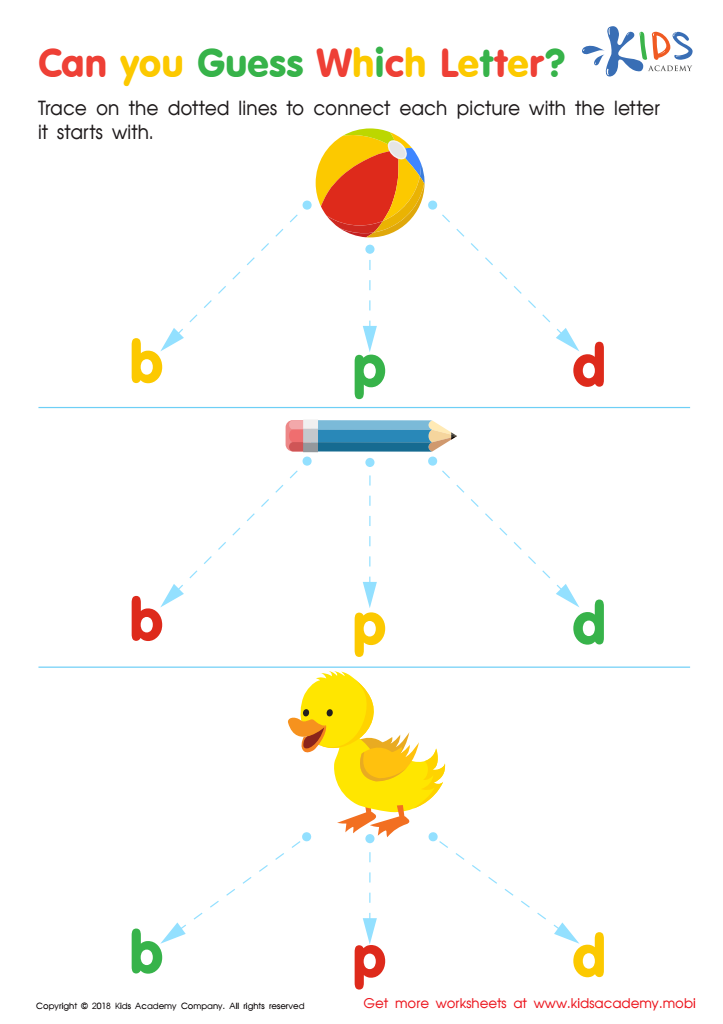
Can you Guess Which Letter? Worksheet

Can you Guess Which Letter? Worksheet

Connect the pictures with their corresponding letters with this fun worksheet! Ask your child what each picture is, then what letter it begins with. Download the PDF for colorful images and engaging texts to hold their attention, making learning an enjoyable activity.
Can you Guess Which Letter? Worksheet
Worksheet
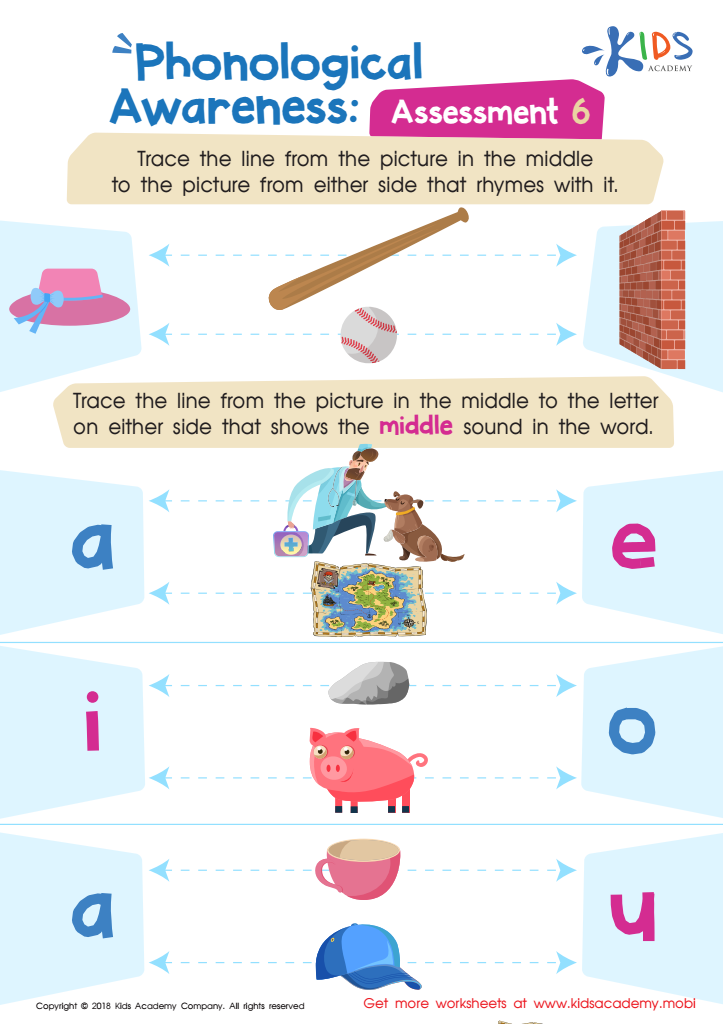
Phonological Awareness: Assessment 6 Worksheet

Phonological Awareness: Assessment 6 Worksheet

Check your child's ability to recognize middle word sounds using this free worksheet. Help them learn phonics by practicing with rhyming. Trace the line from the image to its rhyming match then encourage them to name each image aloud to identify which letter matches the sound. It's a great way to assess letter and sound recognition.
Phonological Awareness: Assessment 6 Worksheet
Worksheet
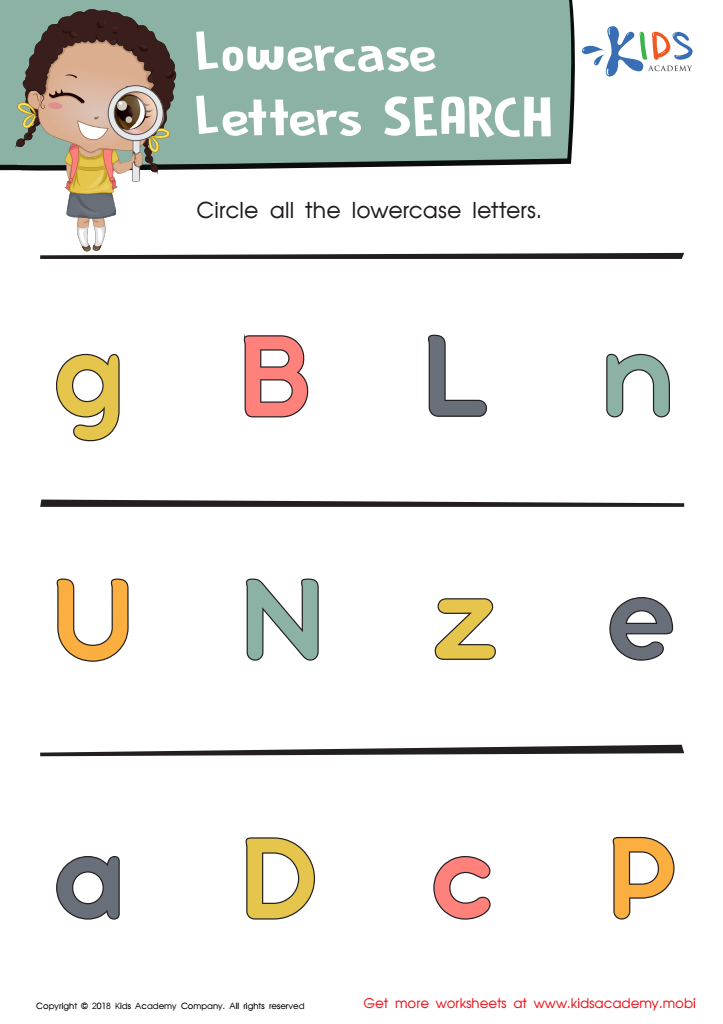
Lowercase Letters Search: Assessment Worksheet

Lowercase Letters Search: Assessment Worksheet

Circle all the lowercase letters in this worksheet. Identify them among a mix of uppercase and lowercase letters. Your child will have fun with this exercise thanks to its bright primary colors. Enjoyment and learning go hand-in-hand!
Lowercase Letters Search: Assessment Worksheet
Worksheet
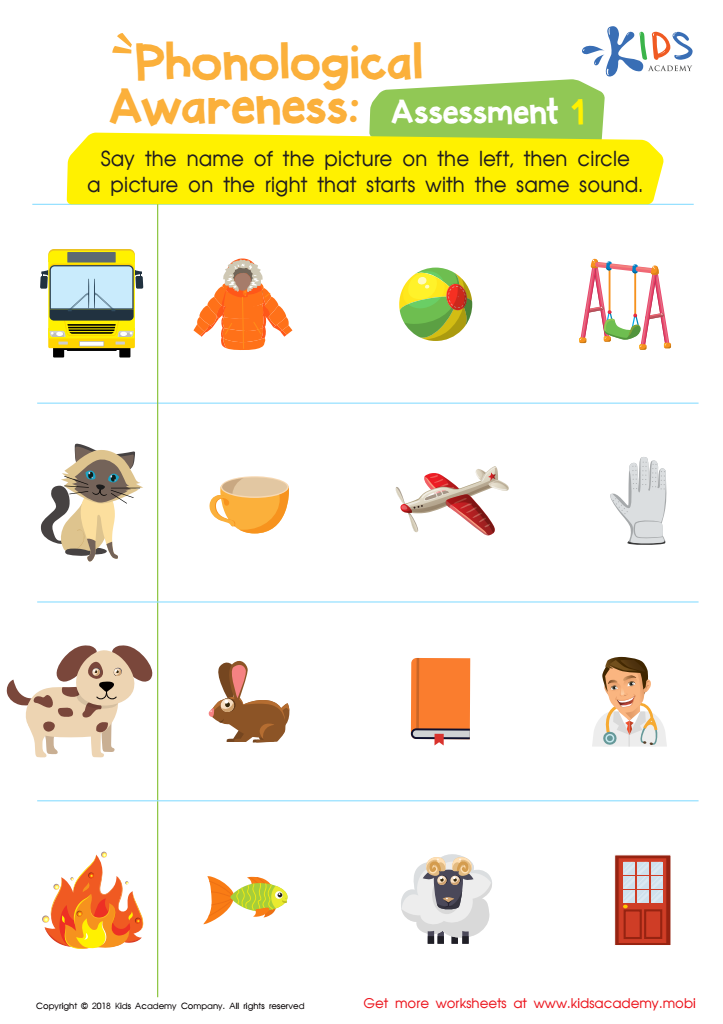
Phonological Awareness: Assessment 1 Worksheet

Phonological Awareness: Assessment 1 Worksheet

This worksheet helps kids build key phonics skills for pre-reading. They say each picture name aloud, focusing on the starting sound. Then, they match the sound with an image in the same row. Use as a checkpoint for kindergarten or grade 1 phonics readiness.
Phonological Awareness: Assessment 1 Worksheet
Worksheet
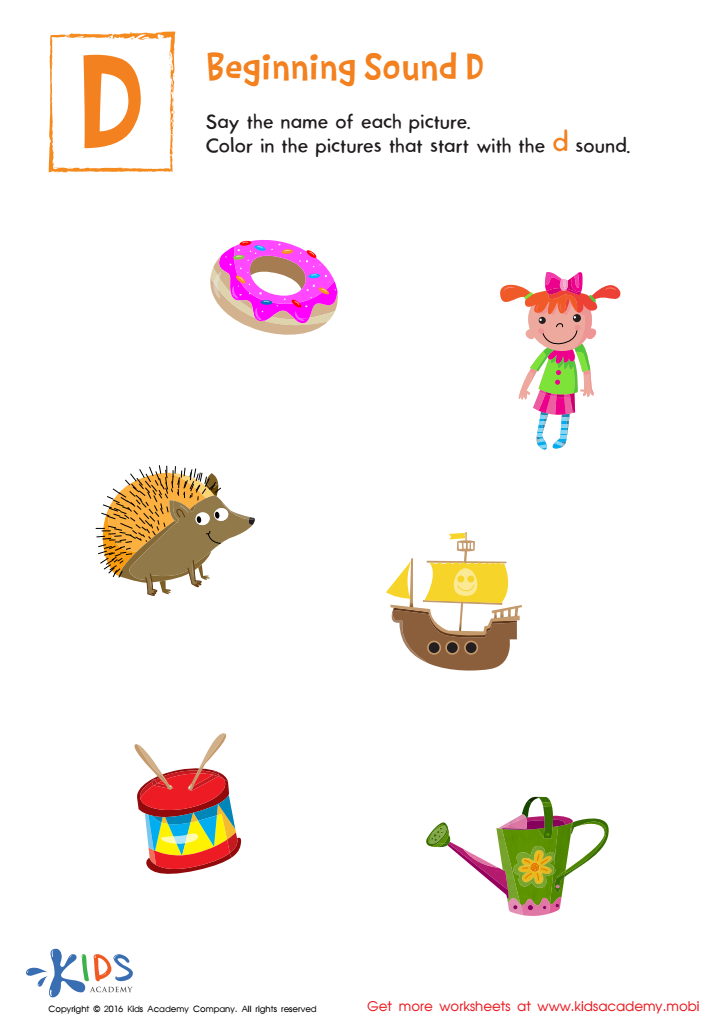
Beginning sound d worksheet

Beginning Sound D Worksheet

Reinforce phonics with this vibrant beginning sound d worksheet! Pictures help kids identify words beginning with 'd' and develop early reading skills. Sounding out each word increases literacy!
Beginning Sound D Worksheet
Worksheet


Reading readiness is a critical aspect of early childhood development, particularly for children aged 3-9. During these formative years, children are developing foundational skills that will influence their lifelong learning abilities. Parents and teachers should care about reading readiness and the alphabet for several essential reasons.

Firstly, familiarity with the alphabet is the cornerstone of literacy. Knowing the letters and their corresponding sounds (phonics) allows children to begin decoding words, which is essential for reading fluency. Early reading skills set the stage for later academic success across all subjects, including math, science, and social studies, as most learning activities are text-based.

Secondly, developing reading readiness fosters a love for learning. When children feel confident in their reading abilities, they are more likely to be engaged and enthusiastic about school. This sense of confidence and curiosity can lead to a more positive attitude toward education as a whole.

Moreover, early reading readiness contributes to cognitive development. It helps improve memory, concentration, and vocabulary, enabling better verbal and written communication skills. Children with strong reading skills are often better equipped to process and understand new information, enhancing their overall academic performance.

Therefore, promoting reading readiness through alphabet recognition is an invaluable investment in a child's future, ensuring they acquire essential skills that will support their academic journey and beyond.