Analog Clock Understanding Worksheets for Ages 3-9
3 filtered results
-
From - To
Boost time-telling skills with our engaging Analog Clock Understanding Worksheets for Ages 3-9. Designed to simplify the concept of reading clocks, these printable resources offer fun and interactive exercises tailored for young learners. Children will learn to recognize clock faces, understand hour and minute hands, and correctly tell the time through a variety of thought-provoking activities. Perfect for classroom use or homeschooling, these worksheets promote critical thinking and fine motor skills while making learning time enjoyable. Accelerate your child’s ability to confidently read an analog clock with our vibrant, expertly-crafted resources.
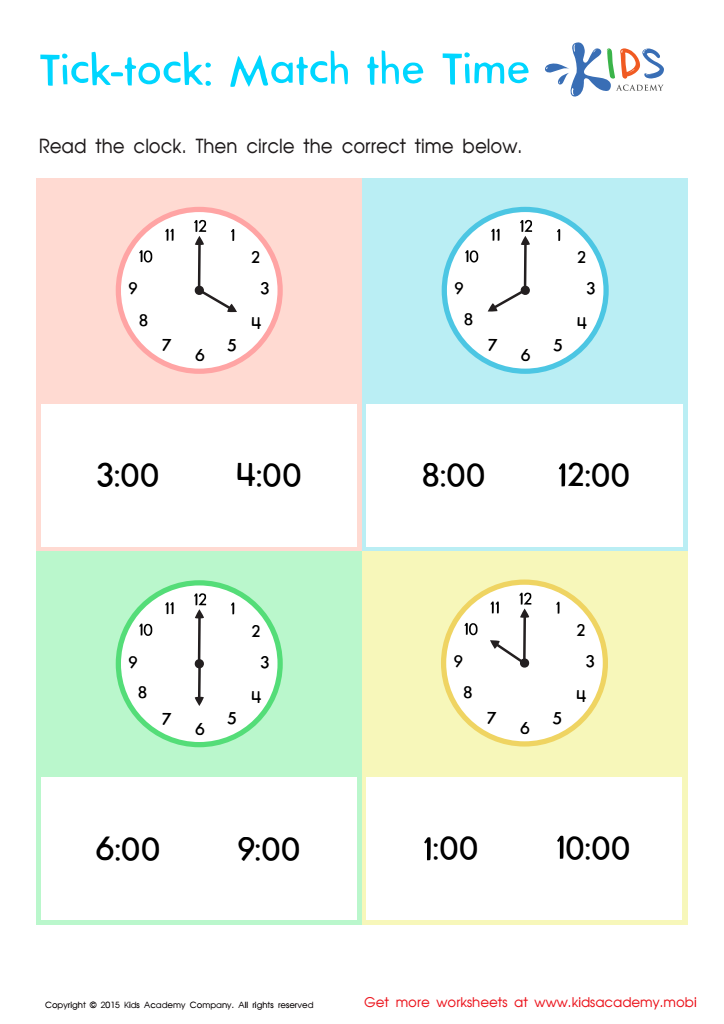
Telling The Time Worksheet: Part 4
 Assign to My Students
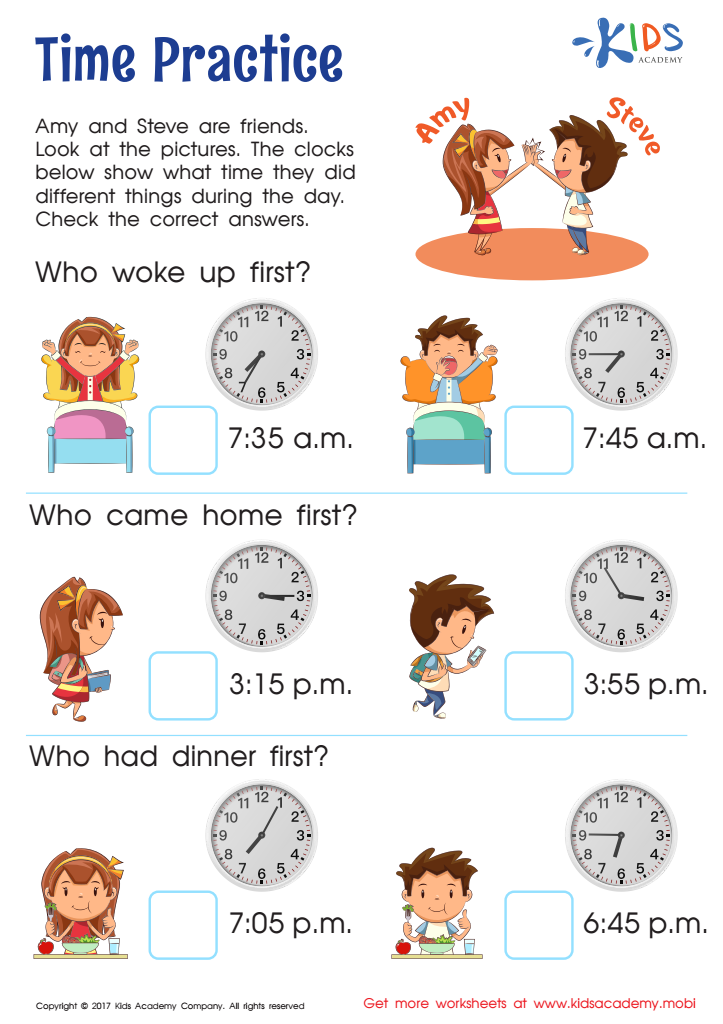
Time Practice Worksheet
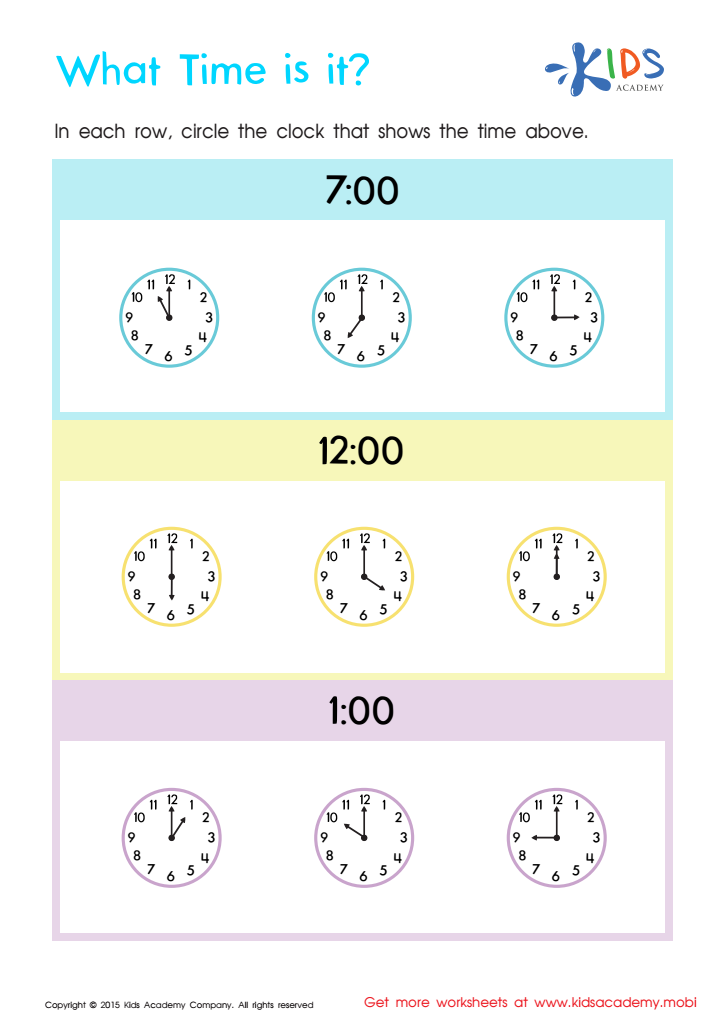
Telling The Time Worksheet: Part 3








Parents and teachers should prioritize analog clock understanding for children ages 3-9 for several compelling reasons. Firstly, learning to read an analog clock enhances a child's cognitive development. Unlike digital clocks, analog clocks require children to understand the concept of "half-past," "quarter to," and other terms that promote a deeper grasp of fractions and spatial reasoning. This foundational skill aids mathematical comprehension, which supports their overall academic success.
Secondly, mastering an analog clock fosters a concrete understanding of the passage of time. This can build a child's time-management skills and self-discipline, crucial attributes for academic and life success. By connecting the visual representation of time with daily activities, children better understand how to allocate time effectively.
Furthermore, despite the prevalence of digital technology, analog clocks are ubiquitous in many school settings, on public buildings, and on wristwatches. Familiarity with analog clocks ensures that children are well-prepared to navigate various environments; this practical literacy combats dependency solely on digital devices.
Lastly, reading analog clocks can enhance fine motor skills when youngsters move clock hands manually on learning tools. It also fosters patience and attention to detail. Comprehending both analog and digital time builds well-rounded, confident, and competent individuals equipped to handle the modern world's demands.








