Basic arithmetic skills Worksheets for Ages 3-9 - Page 2
30 filtered results
-
From - To
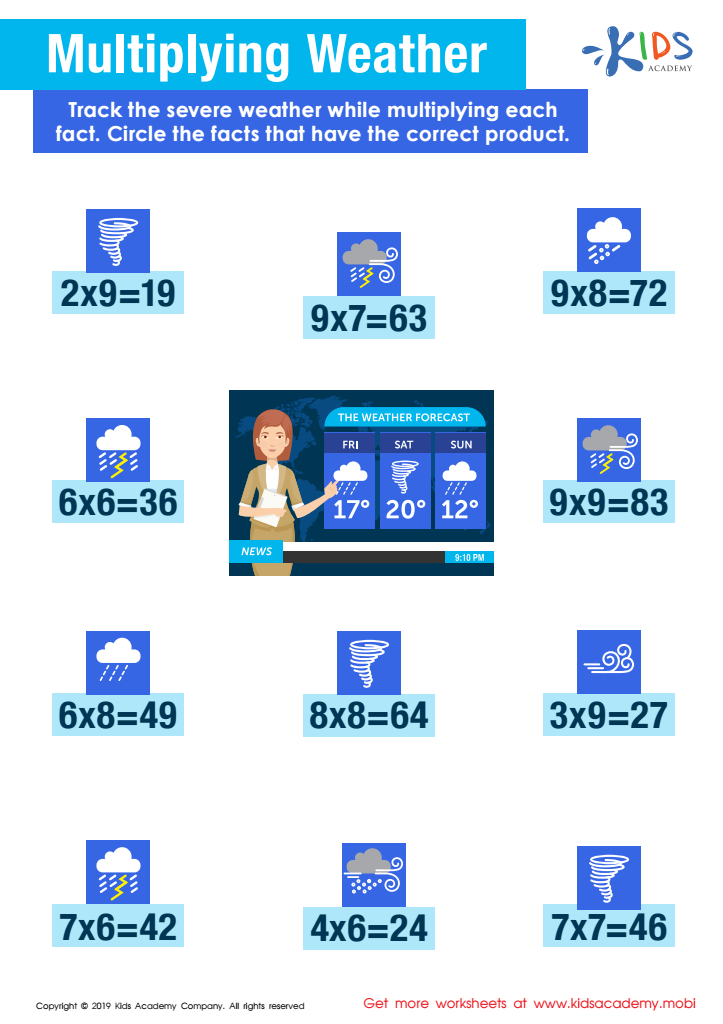
Multiplying Weather Worksheet
 Assign to My Students





.jpg)
.jpg)

Basic arithmetic skills are essential for children aged 3-9 as they lay the foundation for future academic success and everyday problem-solving. During these formative years, children are like sponges, absorbing information quickly and developing cognitive abilities that influence their lifelong learning. Mastery of basic arithmetic, such as addition and subtraction, helps build number sense, which is crucial for understanding more complex math concepts later on.
Furthermore, arithmetic skills promote critical thinking. When children engage with numbers, they learn to analyze situations, reason through problems, and cultivate the confidence to tackle challenges. These skills extend beyond math; they enhance decision-making and analytical abilities in various aspects of life, from budgeting their allowance to making sense of time.
Parents and teachers who focus on developing arithmetic skills in early childhood foster not only academic growth but also enhance children's social-emotional development. Children who feel confident in their math abilities are more likely to participate in classroom activities and engage with peers. Ultimately, nurturing these skills enables a love for learning, setting the stage for success in school and beyond. By investing time in basic arithmetic, caregivers create pathways for future opportunities for their children.








