Enhancing logical thinking Worksheets for Ages 3-9
11 filtered results
-
From - To
Enhance your child's logical thinking skills with our engaging worksheets designed for ages 3-9! Our carefully crafted activities help young learners develop critical reasoning, problem-solving abilities, and creativity through fun challenges. Each worksheet targets different aspects of logical thinking, making it easier for parents and educators to identify and support individual learning needs. With colorful illustrations and interactive exercises, your child will cultivate their cognitive skills while enjoying the process. Transform playtime into productive learning moments and build a strong foundation for future academic success. Explore our diverse collection of worksheets and watch your child's confidence and analytical abilities grow!
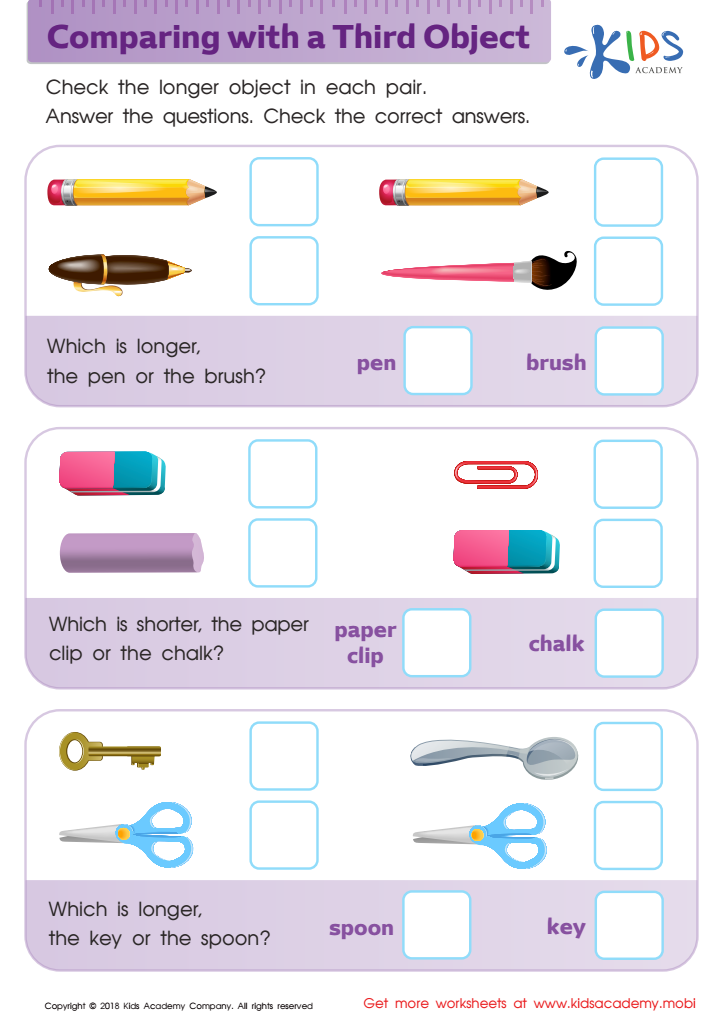
Comparing with a Third Object Worksheet
 Assign to My Students
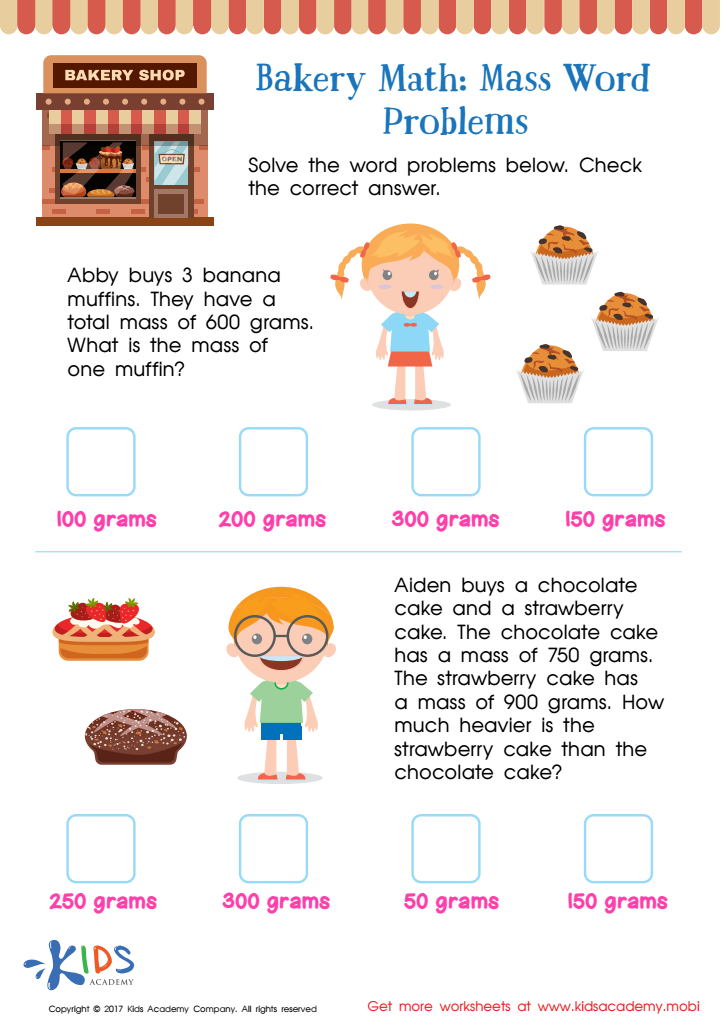
Mass Word Problems Worksheet
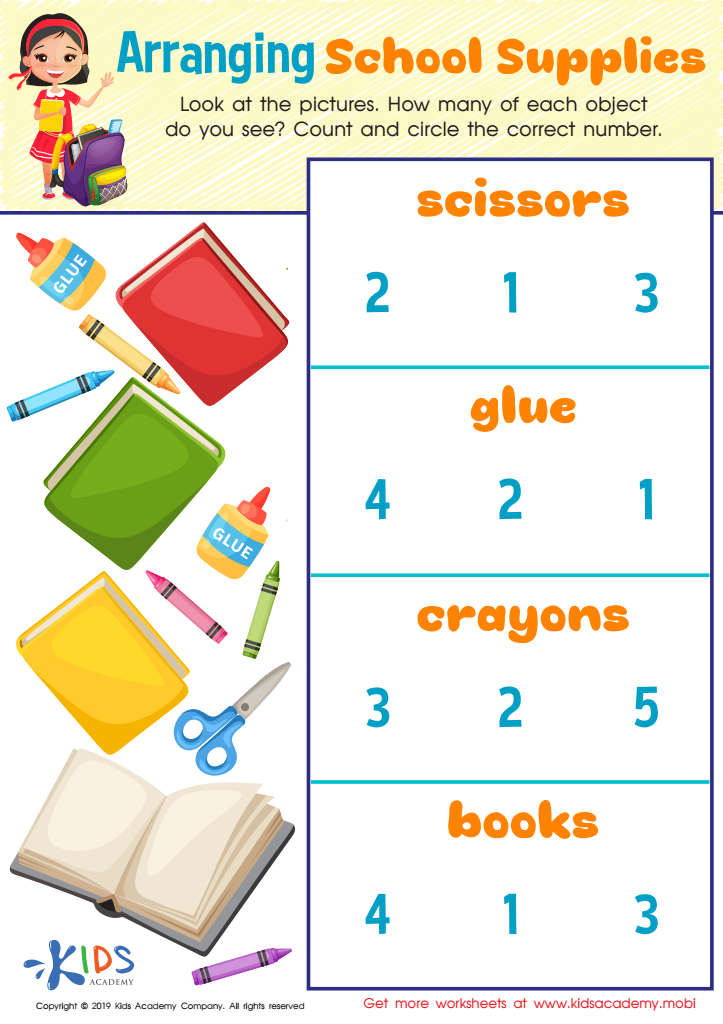
Arranging School Supplies Worksheet
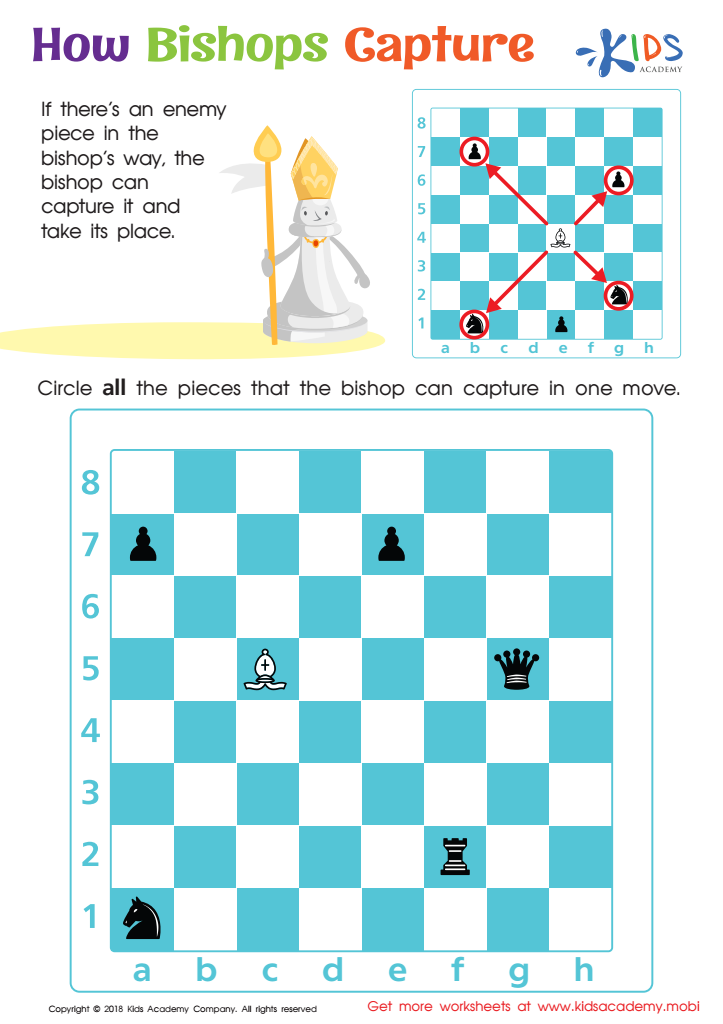
How Bishops Capture Worksheet
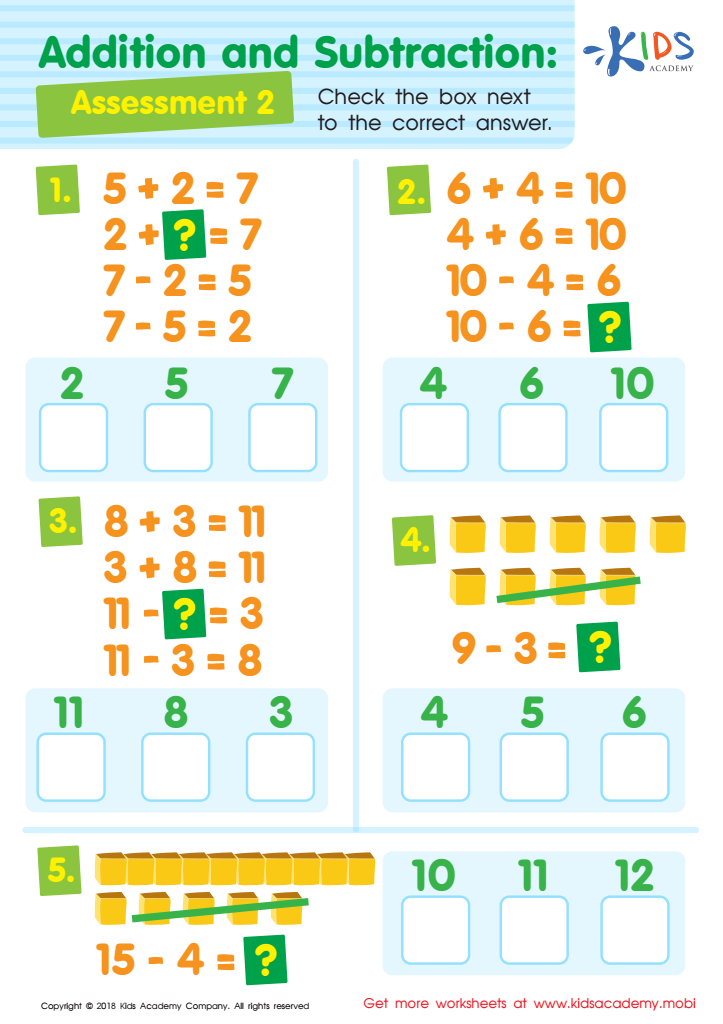
Addition and Subtraction Assessment 2 Worksheet
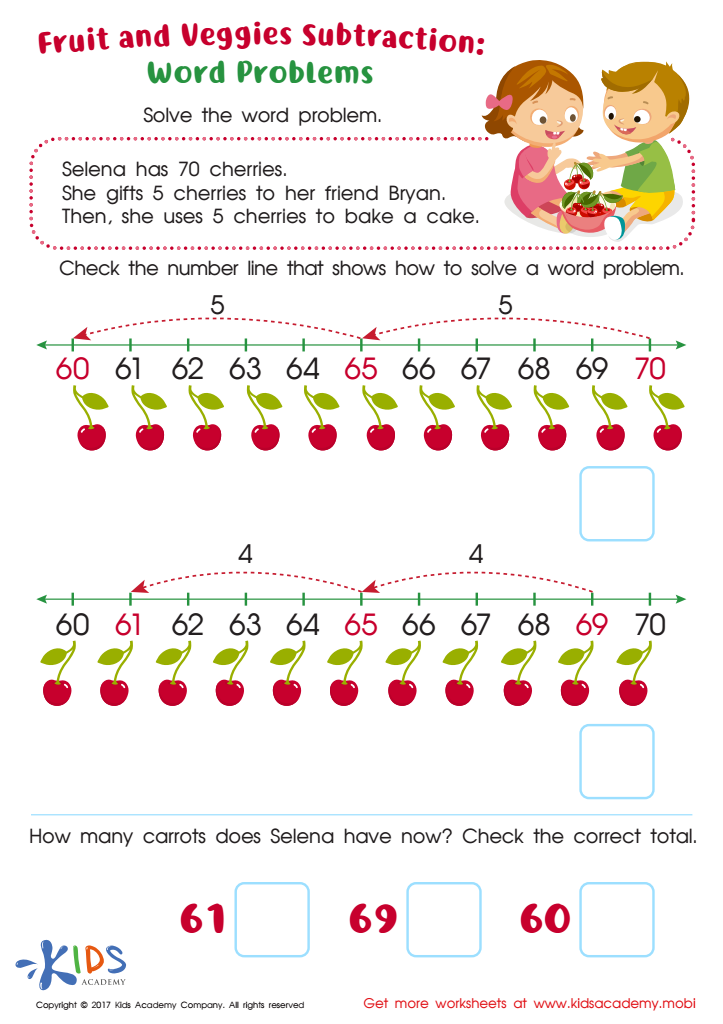
Subtraction Word Problems Free Printable
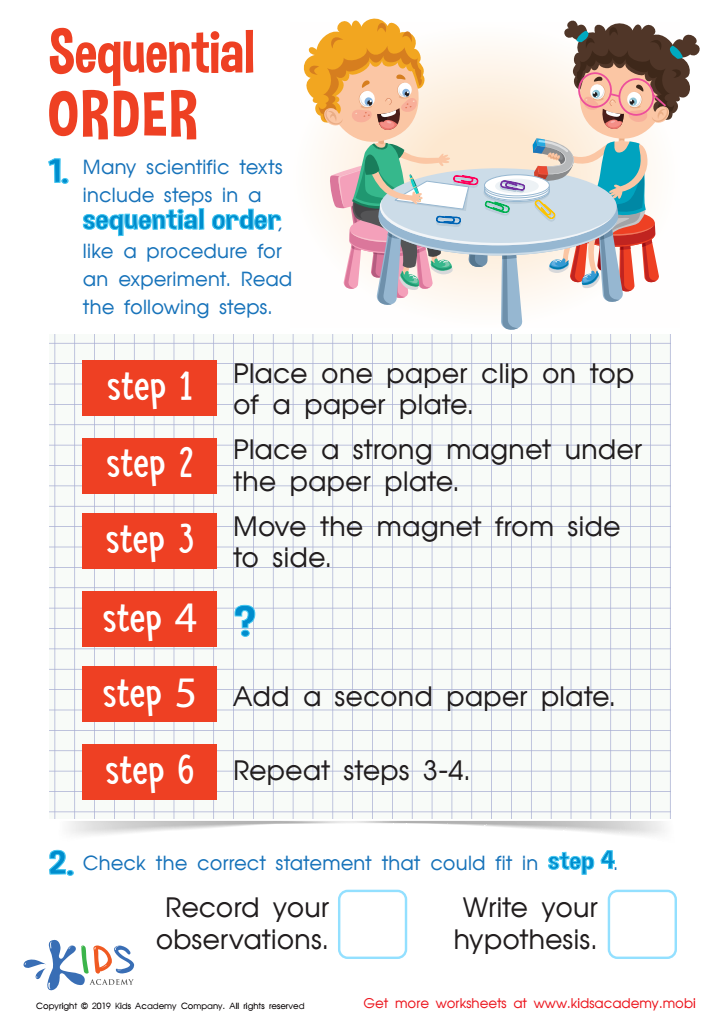
Sequencential Order Worksheet
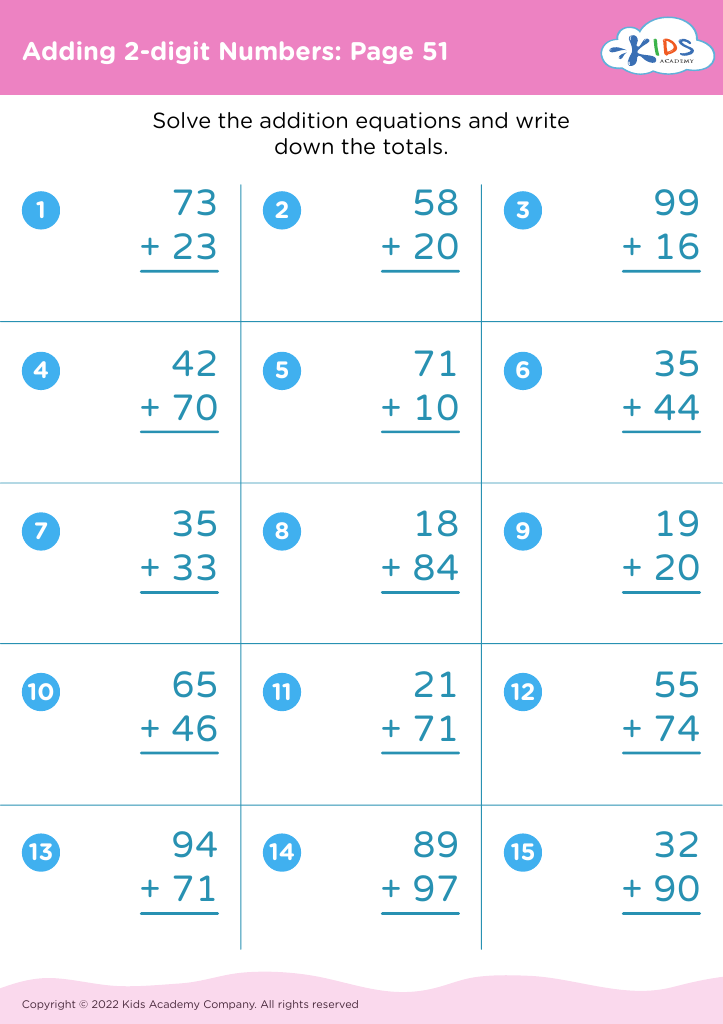
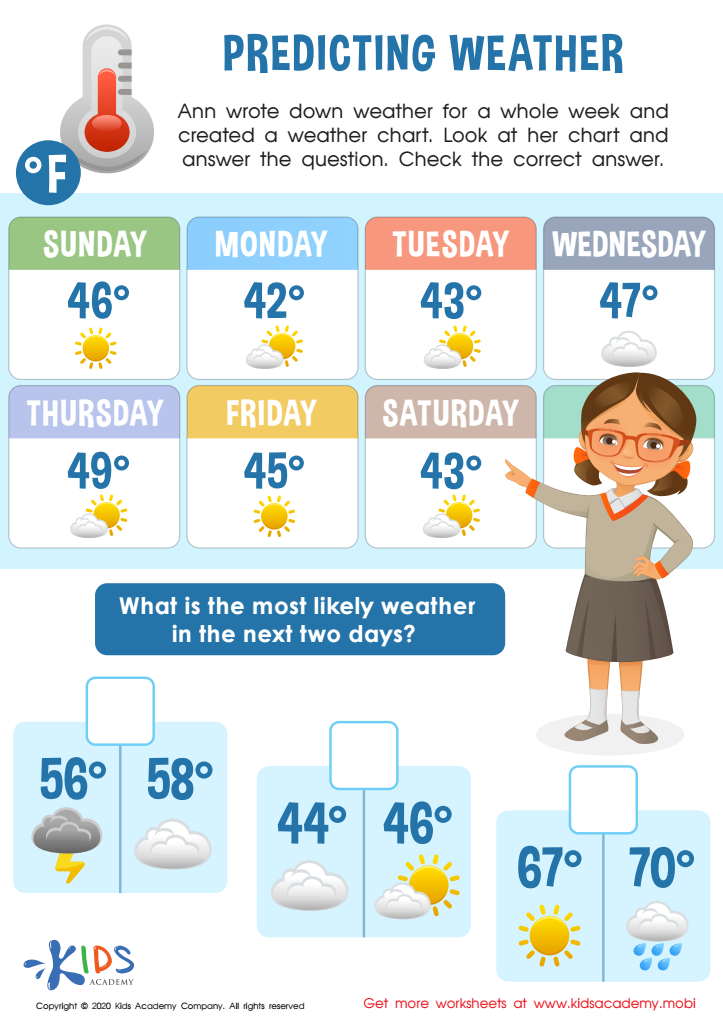
Predicting Weather Worksheet
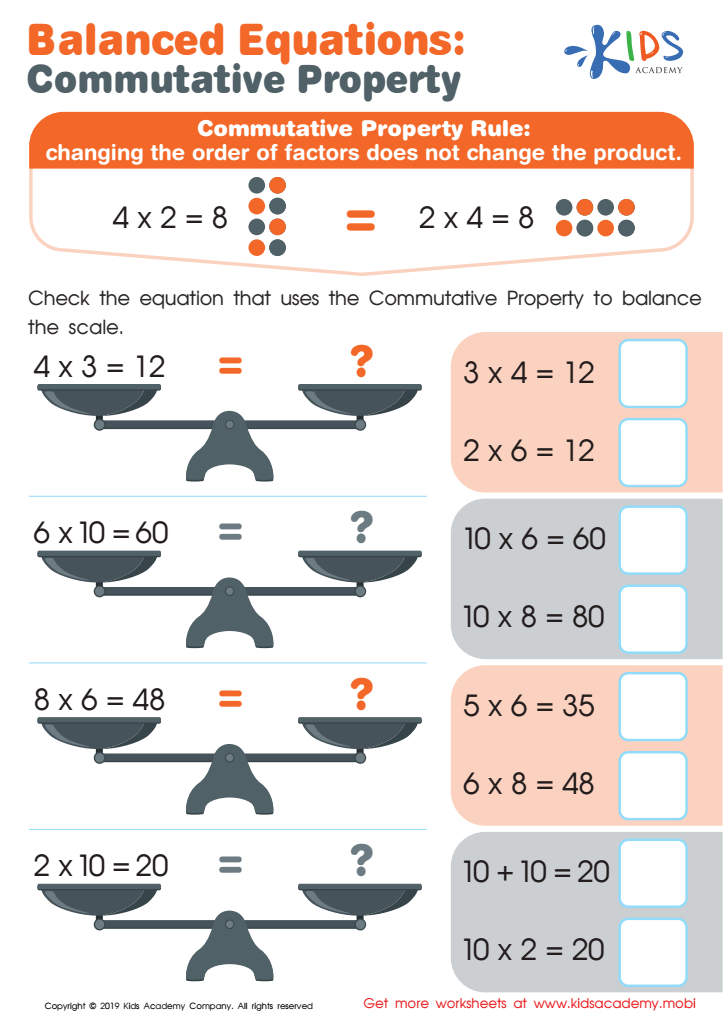
Balanced Equations: Commutative Property Worksheet
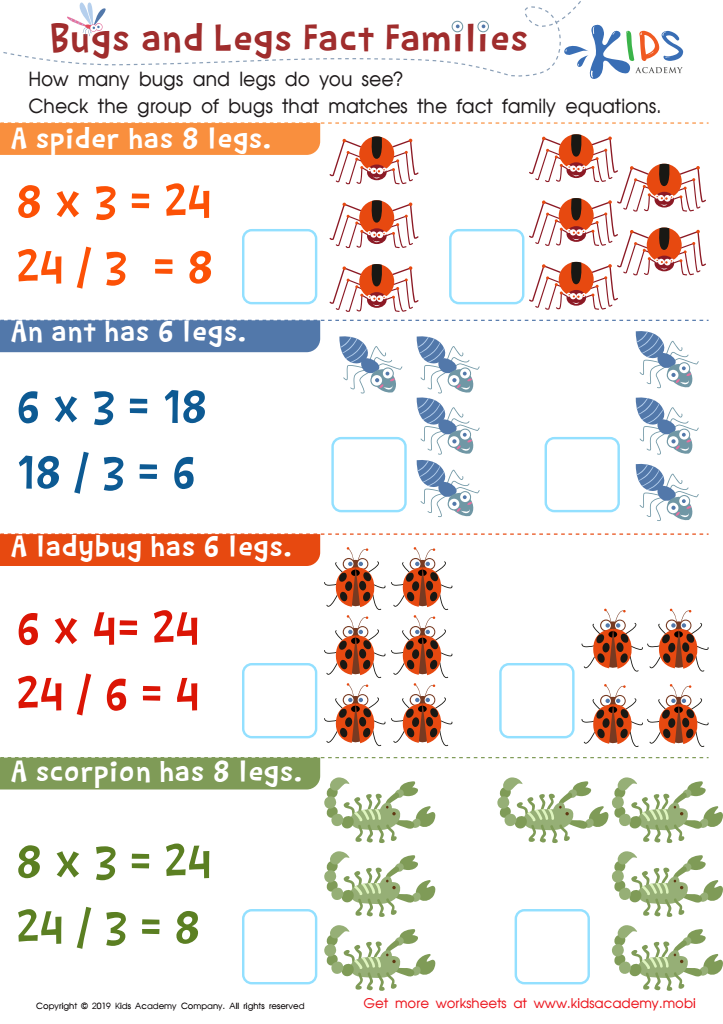
Bugs and Legs Fact Families Worksheet






Enhancing logical thinking in children aged 3-9 is crucial as it lays the foundation for problem-solving and critical reasoning skills that will benefit them throughout their lives. At this early age, children's brains are highly adaptable, making it an optimal time for fostering cognitive abilities. Logical thinking helps children learn how to make connections, recognize patterns, and understand cause-and-effect relationships. These skills are essential not just in academics, but also in everyday decision-making.
By nurturing logical thinking, parents and teachers can cultivate curiosity and encourage a love for learning. Engaging children in activities like puzzles, games, and age-appropriate challenges stimulates their ability to think sequentially and critically analyze situations. This early development is linked to enhanced academic performance, particularly in subjects like math and science.
Moreover, logical thinking promotes emotional intelligence as children begin to understand different perspectives and the reasoning behind others’ actions. In a rapidly evolving world, these skills contribute to a child's ability to navigate social complexities, enhancing their interaction with peers and adults. Overall, prioritizing logical thinking equips children with essential life skills that pave the way for their future success, making it imperative for parents and teachers to engage in these formative learning experiences.








