Multiplication practice Worksheets for Ages 3-9 - Page 4
83 filtered results
-
From - To
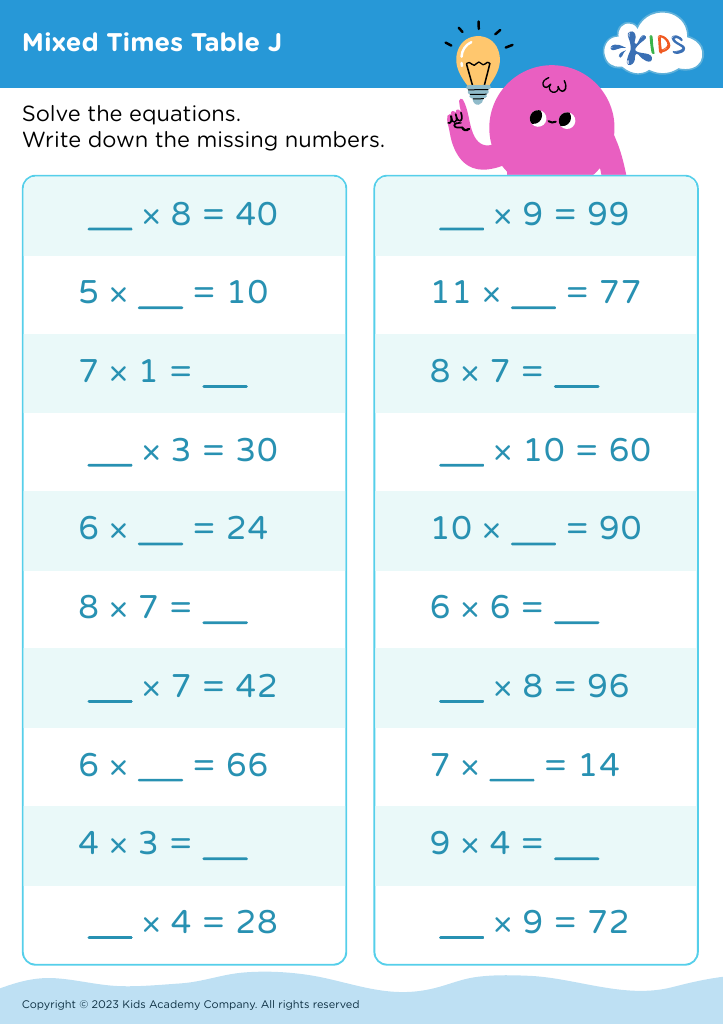
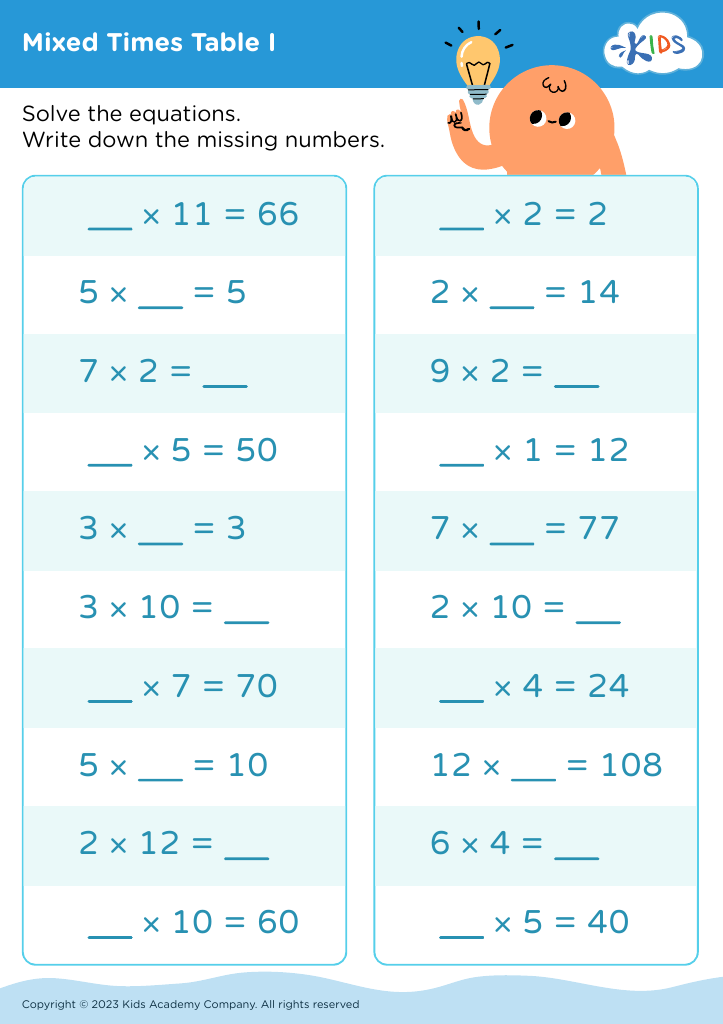
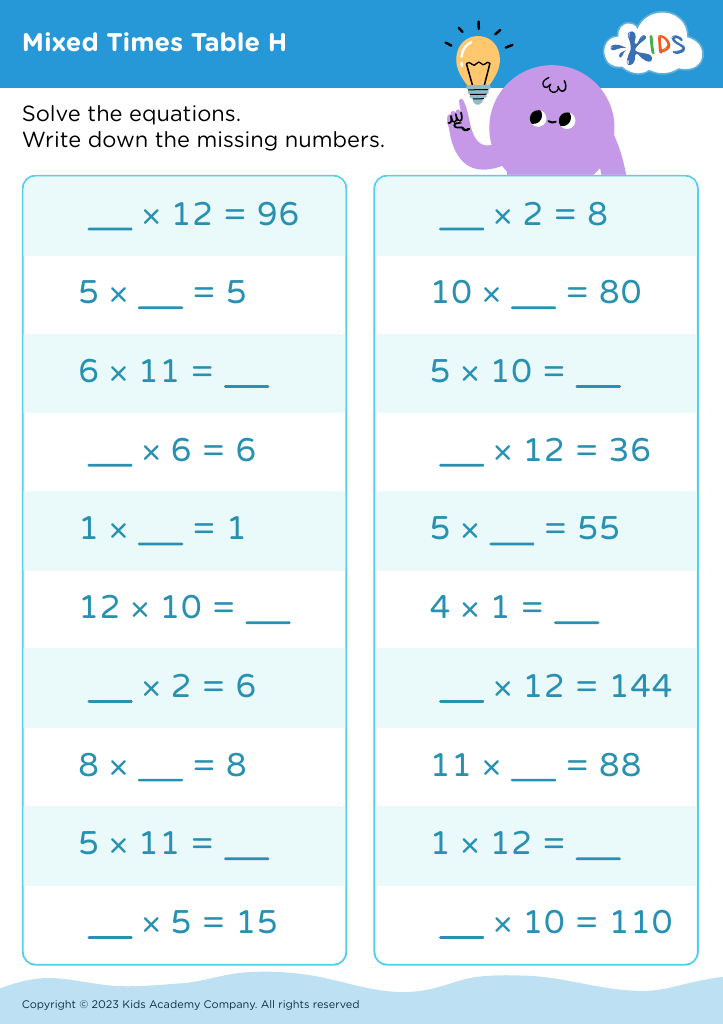
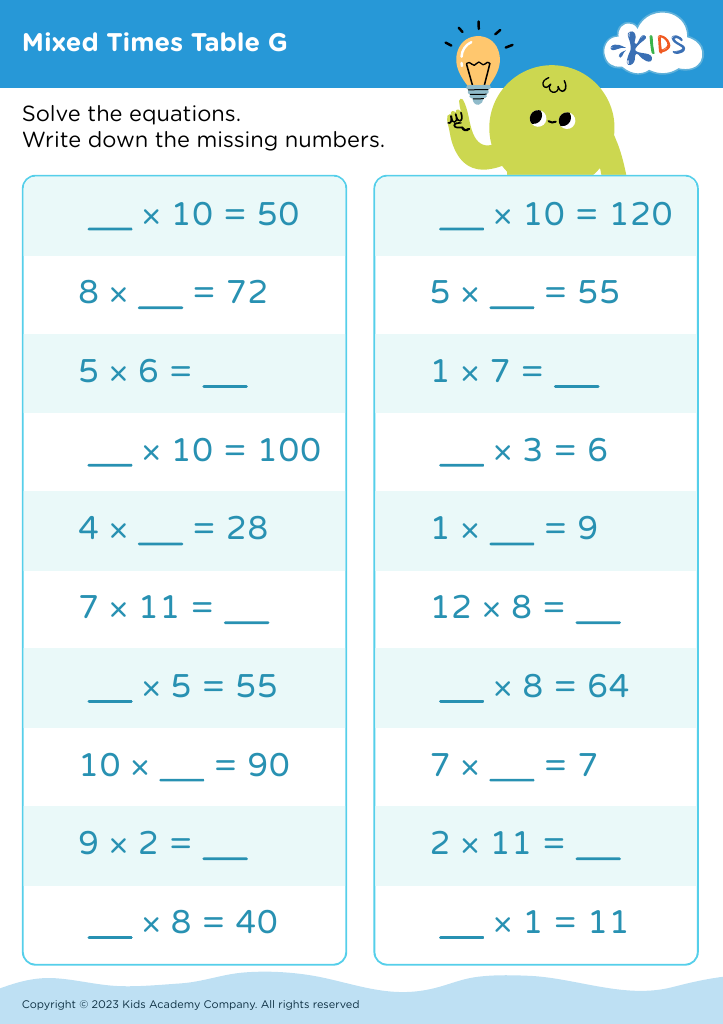
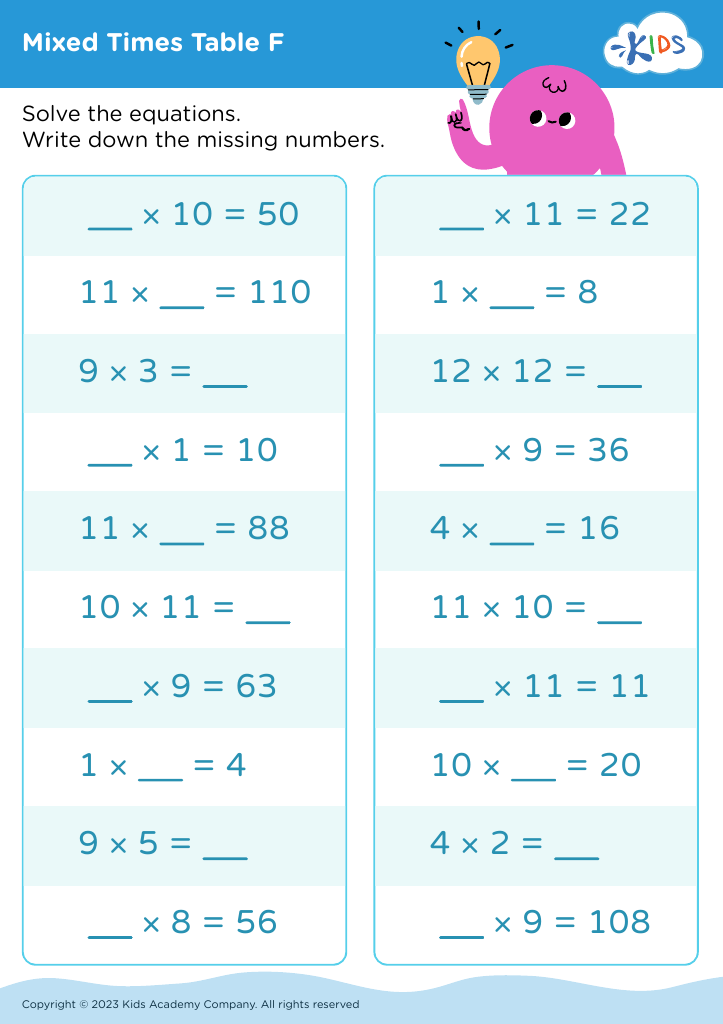
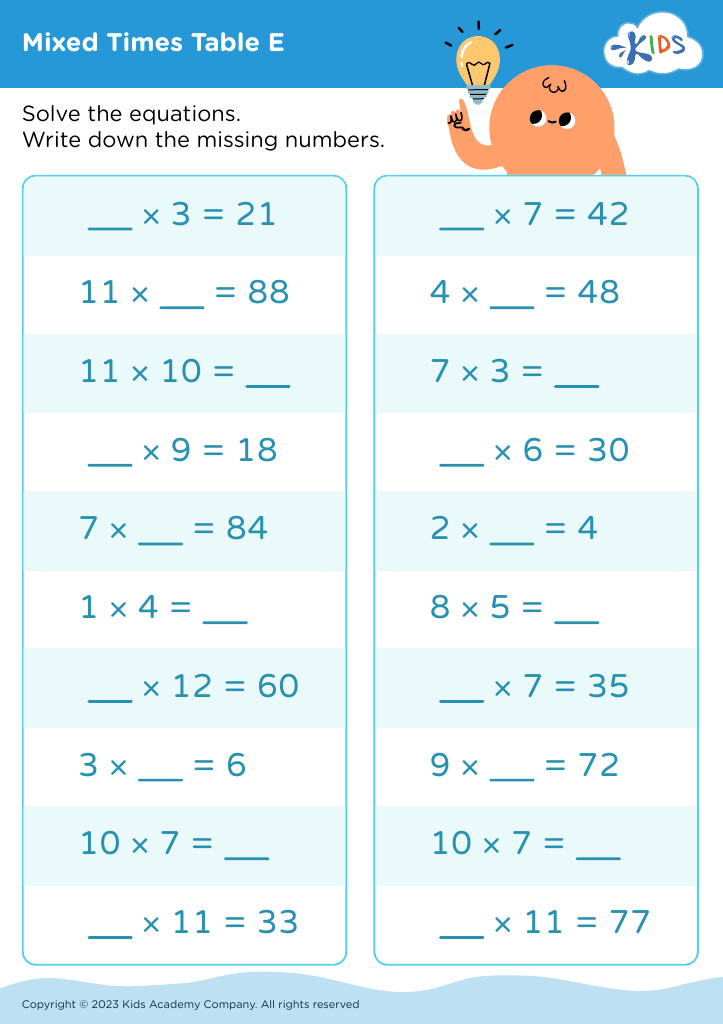
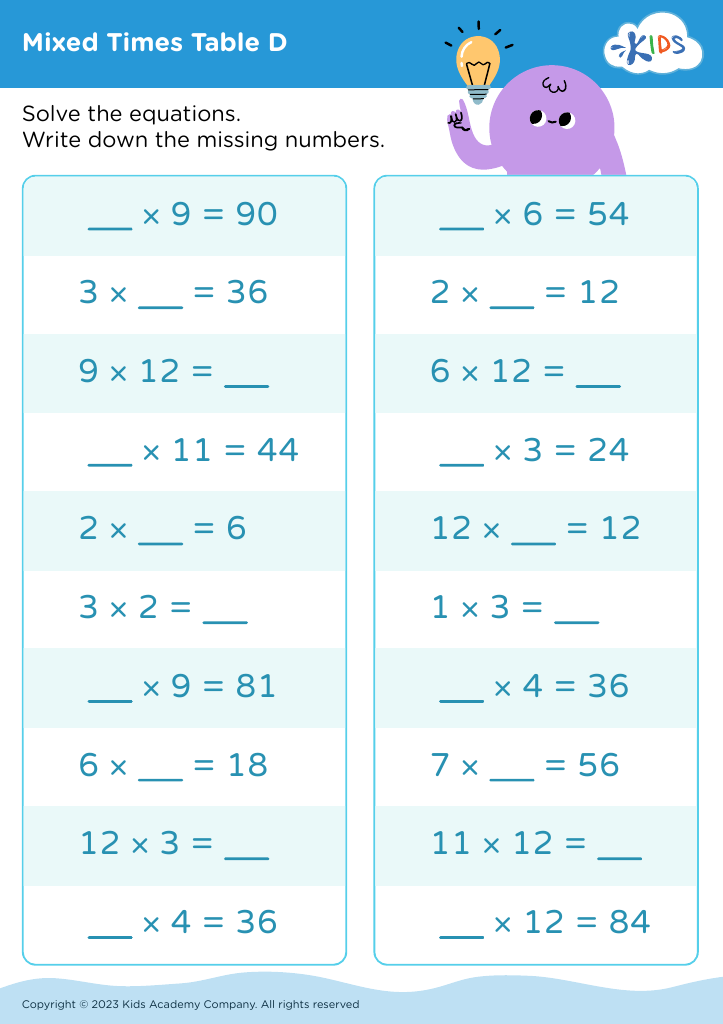
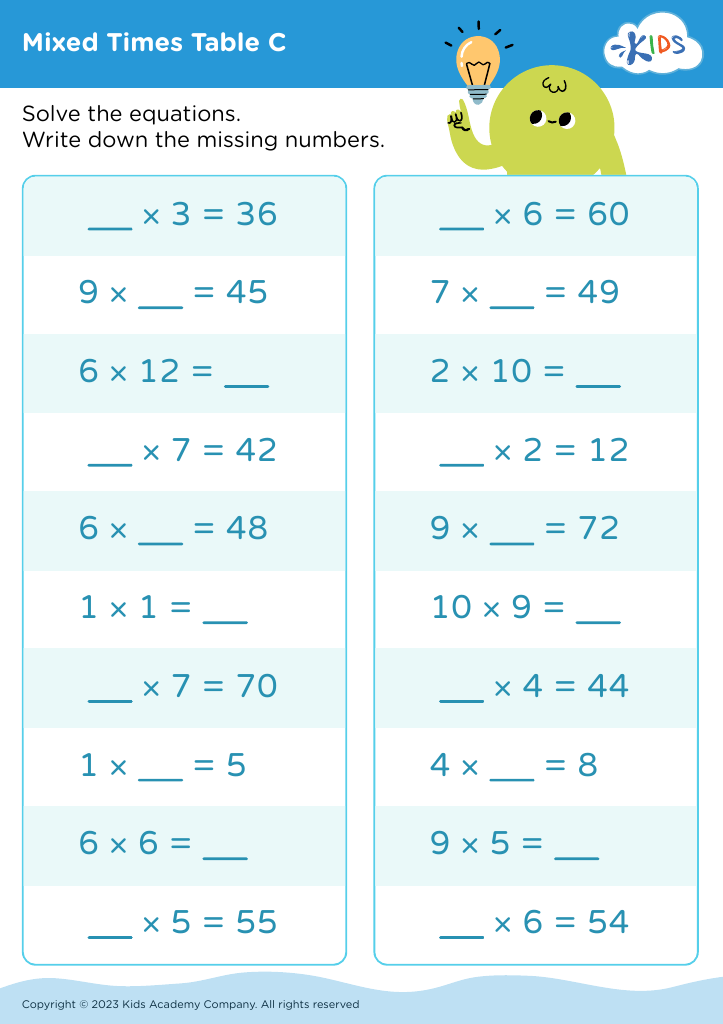








Multiplication practice for ages 3-9 is essential for building a strong foundation in mathematics for several reasons. Firstly, understanding multiplication creates a basis for more advanced math topics, such as division, fractions, and algebra, which students will encounter in later grades. Learning to multiply early helps children develop problem-solving skills, logical thinking, and pattern recognition, all of which are vital not only in math but in everyday decision-making and critical thinking.
Regular multiplication practice also boosts confidence. As children master basic mathematical concepts, they feel more capable and motivated to tackle new challenges, both in academics and other spheres. This sense of accomplishment promotes a growth mindset, encouraging perseverance and a positive attitude towards learning in general.
Incorporating multiplication in daily routines makes math feel less daunting. Games, visual aids, and interactive activities turn learning into fun, making the concepts less abstract and more relatable. This early familiarity ensures that when children encounter more complex problems later on, they have a solid grasp of the basics to refer back to.
For parents and teachers, promoting consistent multiplication practice is not just about math; it's about equipping children with essential life skills. Math competency opens up a world of opportunities, fostering curiosity, resilience, and a lifelong love for learning.








