Number ordering Worksheets for Ages 3-9
3 filtered results
-
From - To
Discover a wide range of engaging number ordering worksheets designed for kids ages 3 to 9 at Kids Academy. Perfect for preschool to elementary students, these worksheets help build crucial math skills by teaching young learners to arrange numbers sequentially. Each worksheet features fun and interactive activities that make learning intuitive and enjoyable. From simple counting tasks for toddlers to more complex number sequences for older kids, our number ordering worksheets foster numerical comprehension and boost confidence in little learners. Download today and nurture your child’s math skills in a playful, effective way!
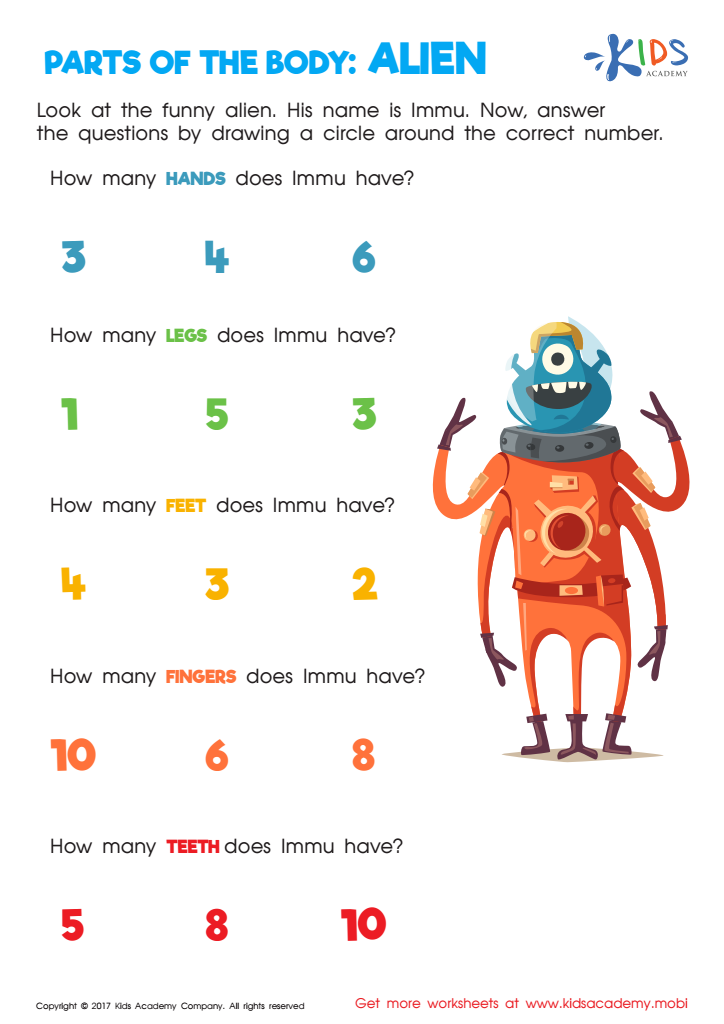
Alien Worksheet
 Assign to My Students


.jpg)



.jpg)
Caring about number ordering in ages 3-9 is crucial for several reasons. During these formative years, children develop foundational mathematical skills that are vital for their future education. Understanding number order helps young learners grasp the concept of quantity and develop number sense, which is the ability to understand, relate, and connect numbers.
Number ordering enables children to learn basic arithmetic operations such as addition and subtraction. For instance, recognizing that 5 is greater than 3 helps them understand why 5 minus 3 equals 2. This foundational knowledge is essential for tackling more complex mathematical problems later on.
It also plays a significant role in improving cognitive skills. Ordering numbers enhances logical thinking, sequencing ability, and problem-solving skills, which are critical for academic success across various subjects. Additionally, mastering number order can boost a child's confidence in their abilities, fostering a positive attitude towards math.
From a practical standpoint, number ordering is essential for day-to-day tasks such as telling time, understanding calendars, and even managing money. It instills a sense of structure and order, making it easier for children to navigate the world around them.
In summary, prioritizing number ordering for children aged 3-9 lays the groundwork for their future academic success and equips them with essential life skills.








