
Phonics understanding Worksheets for Ages 3-9
8 filtered results
Difficulty Level
Grade
Age
-
From - To
Subject
Activity
Standards
Discover our engaging Phonics Understanding Worksheets for ages 3-9! Specially designed to enhance early literacy skills, these printable worksheets help young learners grasp the fundamentals of phonics. Our expertly crafted exercises make learning fun, incorporating colorful visuals and interactive activities to keep children engaged. Ideal for both classroom and home use, these resources support reading proficiency by teaching letter sounds, word recognition, and pronunciation. With our phonics worksheets, children build a strong foundation for reading success and a lifelong love of learning. Visit us to explore our collection and support your child’s early literacy journey today!
Favorites
With answer key
Interactive
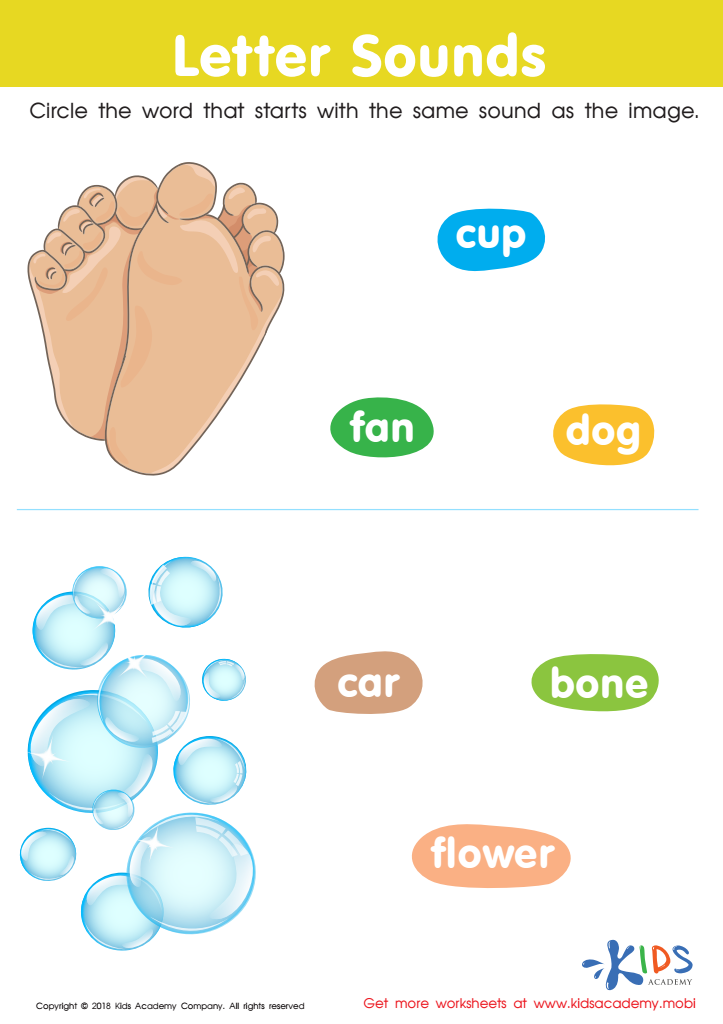
letter sounds Worksheet
Test your child's letter recognition skills with this worksheet. Match words to pictures and challenge them to say each image out loud and sound out the words beside it. Ask: Which word starts with the same letter as the picture? Then let them circle the right answer. Quick and easy!
 Assign to My Students
letter sounds Worksheet
Worksheet
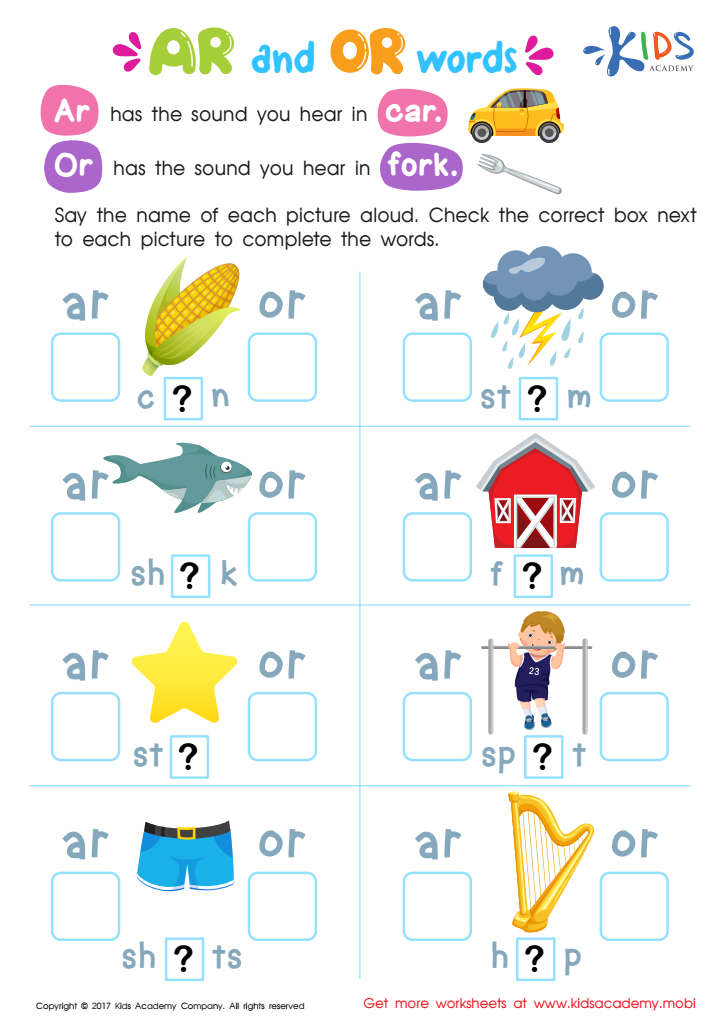
Ar and Or Words Phonics Worksheet
Master the distinct digraphs 'ar' and 'or' with this fun phonics worksheet from Kids Academy! With meaningful illustrations, it'll guide your child to choose the right one. Get ready for the great results!
Ar and Or Words Phonics Worksheet
Worksheet
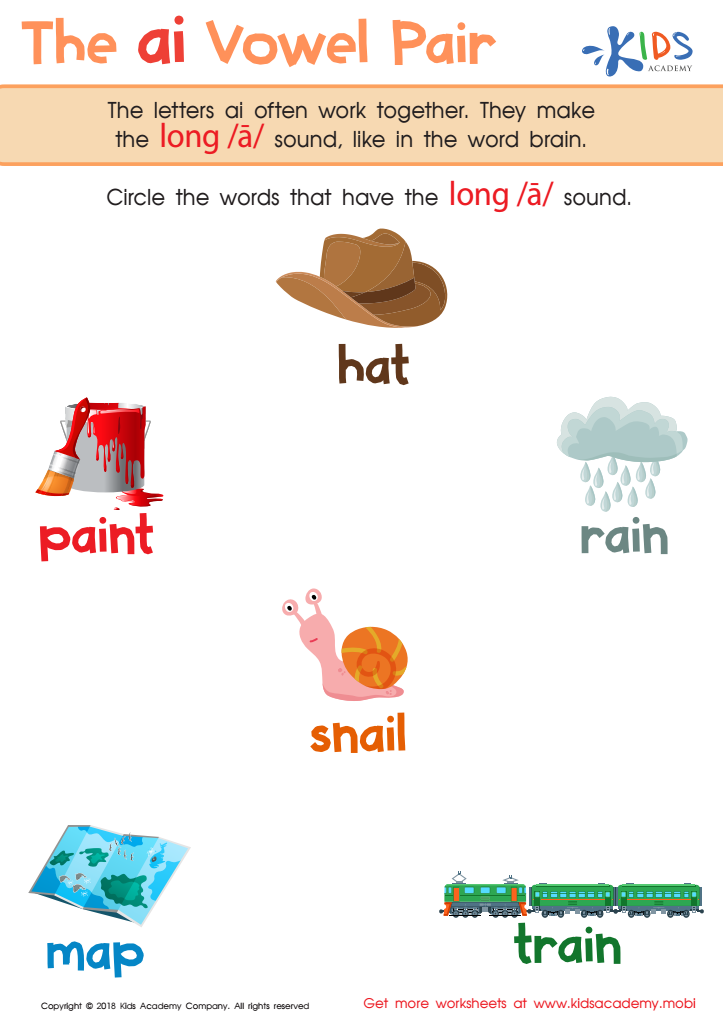
The AI Vowel Pair Worksheet
Vowel pairs make different sounds than individual letters. The 'ai' combination often forms the long /a/ sound, like in 'brain' and 'strain'. Get your kids to look at the pictures in the worksheet, identify each and say the name aloud. Help them circle the words with the long /a/ sound.
The AI Vowel Pair Worksheet
Worksheet
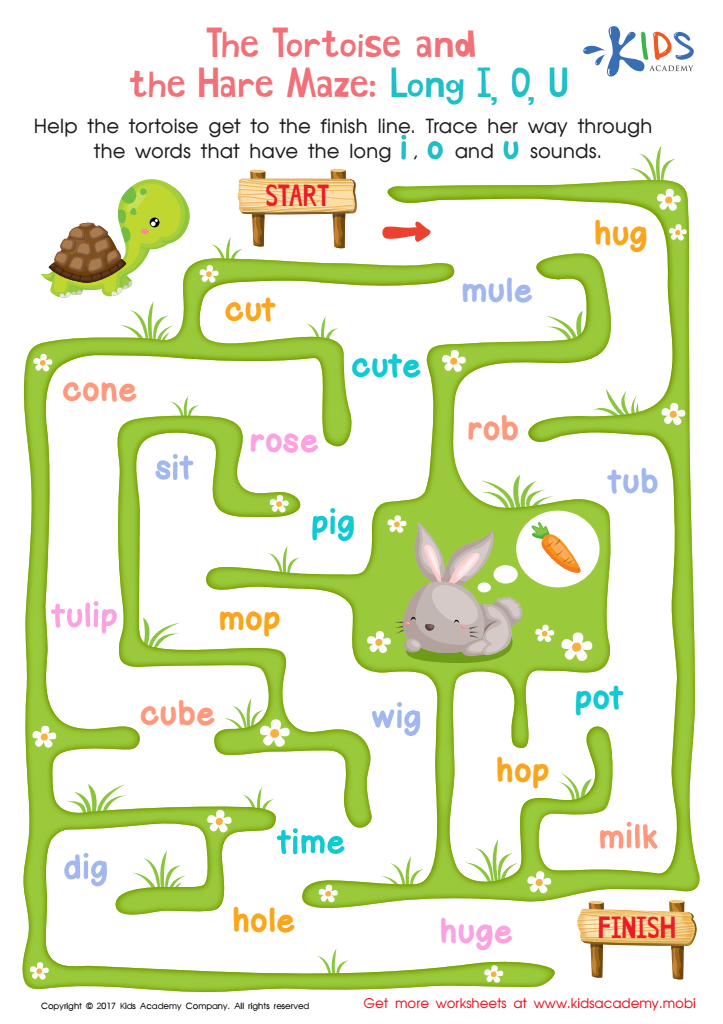
Long I, O, U Words Worksheet
This fun phonics worksheet has your child race the tortoise and hare to the finish line. Find all the long vowel sounds to win! It'll help your child's recognition of long I, O, and U words without him realizing it!
Long I, O, U Words Worksheet
Worksheet
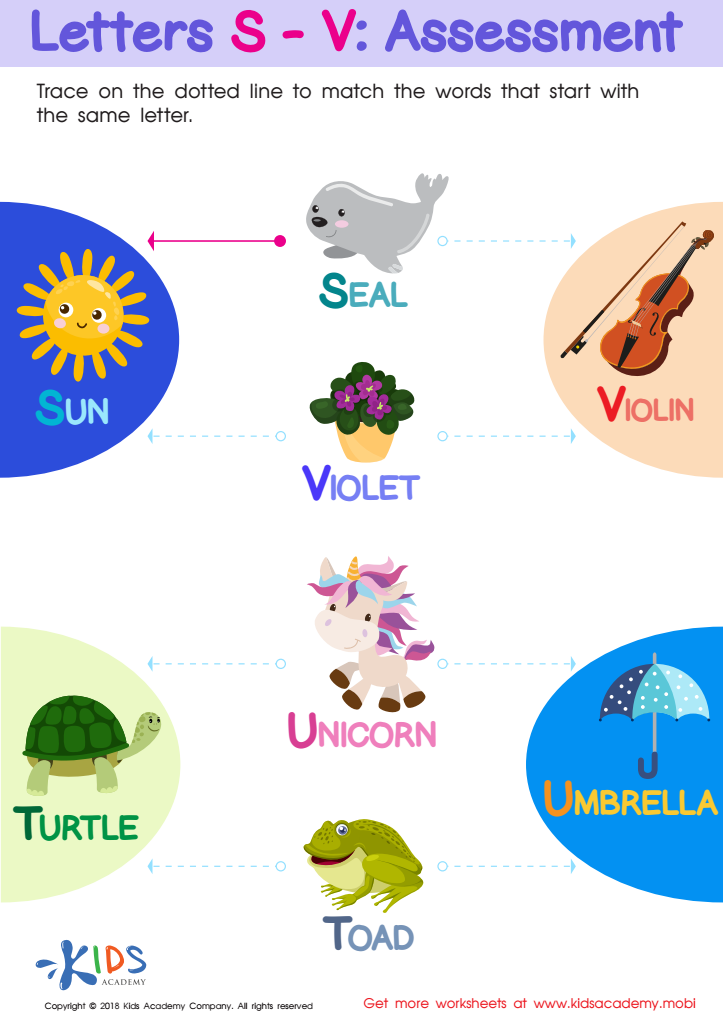
Letters S - V Tracing Worksheet
Kids can have fun learning phonics and reading with this PDF! Trace the lines of letters S-V to match words that start with the same letter. With easy directions and bright pictures, any young learner will love it!
Letters S - V Tracing Worksheet
Worksheet
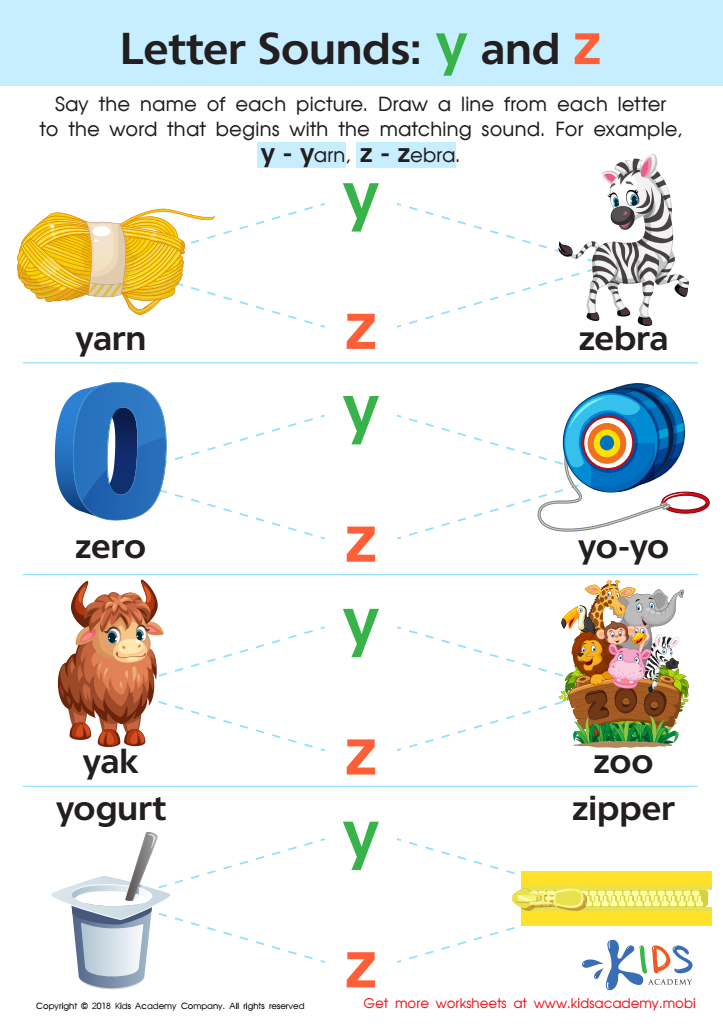
Letter Y and Z Sounds Worksheet
Y and Z can be tricky for kids to learn. Kids Academy has the answer with a great worksheet. "Yo-yo", "yak" and "zebra" help kids recognize, say and trace each letter. Plus, they can read the words and match them to images! Let your child try and help them master phonics at the end of the alphabet.
Letter Y and Z Sounds Worksheet
Worksheet
Join Kids Academy for Free
Who is primarily going to use this learning content?






Parents and teachers should prioritize phonics understanding for children ages 3-9 because it is a foundational aspect of reading development that directly influences a child's ability to read fluently and comprehend text effectively. Phonics instruction helps children understand the relationship between letters and sounds, enabling them to decode words by blending sounds together. This skill is crucial as it allows children to read new and unfamiliar words independently.
Early mastery of phonics sets the stage for lifelong literacy. Research shows that children who develop strong phonics skills early on tend to perform better in reading and writing throughout their academic careers. This does not only enhance their ability to enjoy and engage with books, but also supports success across all other subjects, as reading is integral to learning.
In addition, phonics instruction boosts children’s confidence. When a child can independently decode words, they feel a sense of accomplishment and are more likely to enjoy reading. This positive attitude towards reading can encourage a lifelong love of learning.
Phonics also plays a critical role in early language development by strengthening awareness of sounds, improving vocabulary, and enhancing the understanding of sentence structures. Therefore, strong phonics instruction within this critical age window builds essential literacy skills that benefit children's overall educational growth and success.








