Time calculation skills Worksheets for Ages 3-9
3 filtered results
-
From - To
Discover the perfect resource for enhancing time calculation skills in children aged 3-9 with our engaging worksheets! These child-friendly activities focus on fundamental concepts like reading clocks, understanding time intervals, and basic addition related to time. Designed to cater to various learning levels, our worksheets combine play and education, making learning fun and interactive. Each worksheet encourages critical thinking while reinforcing essential time concepts. Ideal for both classroom and home learning environments, these resources help young learners build confidence in their time management skills. Download our worksheets today and watch your child shine in their understanding of time!
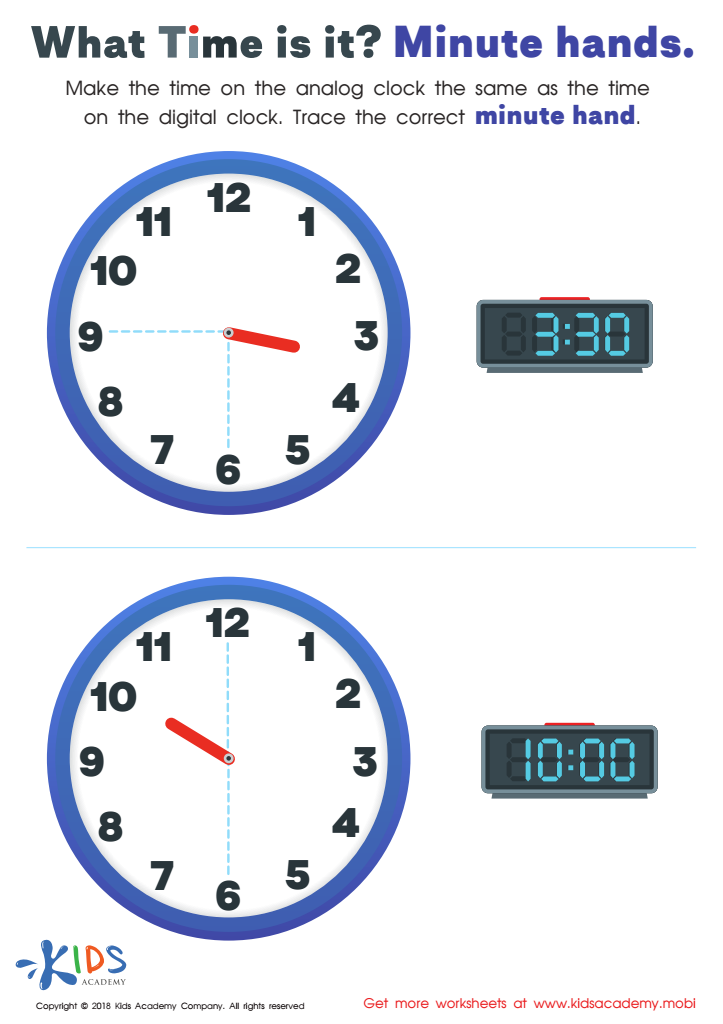
What Time Is it? Minute Hands Worksheet
 Assign to My Students
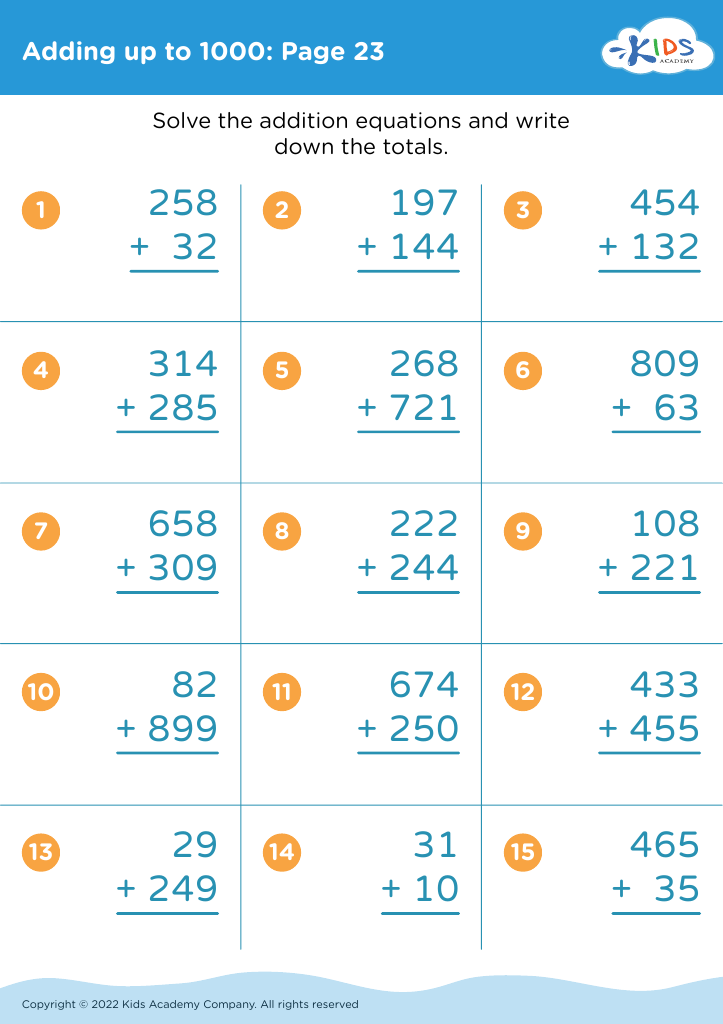
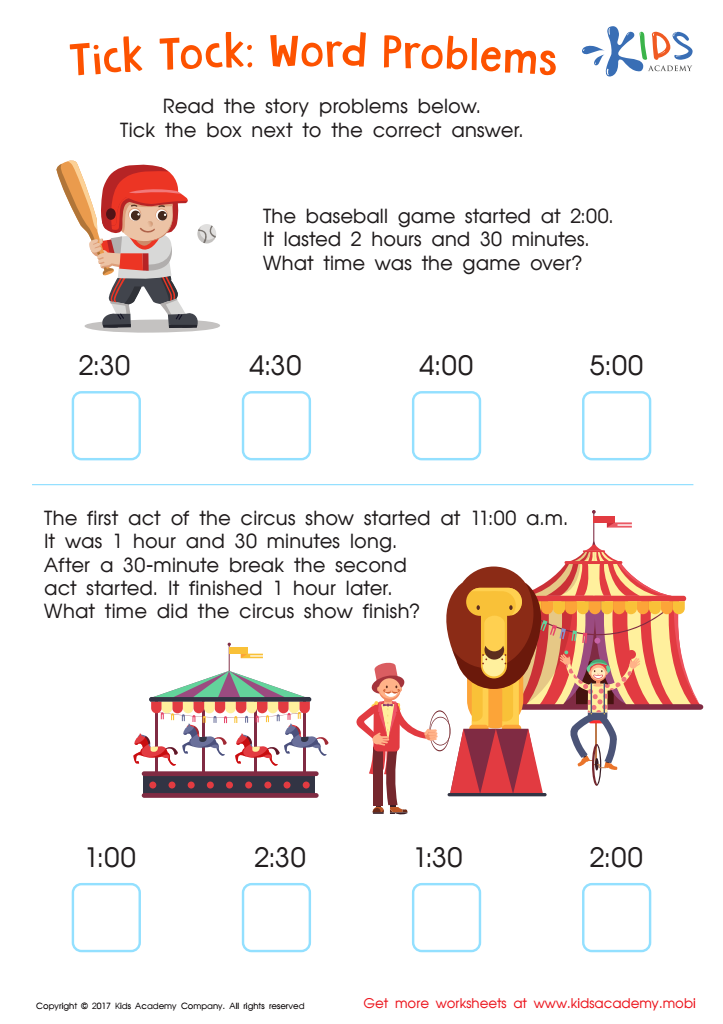
Tick Tock Word Problems Time Worksheet






Time calculation skills are essential for children aged 3-9 as they lay the groundwork for understanding and managing daily activities. At this developmental stage, children begin to grasp the concepts of time, which enhances their cognitive skills, problem-solving abilities, and sense of responsibility. By learning to tell time and perform basic time calculations, children develop a better understanding of schedules and the concept of routines, which are crucial for classroom success and personal organization.
Parents and teachers should care about time calculation skills because these skills foster independence and time management, encouraging children to plan their day and anticipate transitions between activities. As children learn to calculate time, they also enhance their mathematical reasoning—one of the foundational skills for all future learning. Engaging in time-related activities can bolster critical thinking, as children learn how to measure durations, make comparisons, and even relate time to growth patterns in their lives.
Moreover, in today’s fast-paced world, timely decision-making is key. Developing time calculation skills early strengthens a child's ability to navigate social interactions and academic requirements. Investing in these foundational skills supports their overall development, ensuring they become balanced, informed, and responsible individuals.








