Understanding area Worksheets for Ages 3-9
3 filtered results
-
From - To
Welcome to our "Understanding Area Worksheets" page, designed specifically for children ages 3-9! These engaging resources help young learners grasp the concept of area through fun and interactive activities. Our worksheets include a variety of hands-on exercises that promote critical thinking skills while helping children visualize how to measure and compare space. From coloring shapes to measuring objects and counting units, these activities make learning about area an enjoyable experience. Perfect for home or classroom use, these worksheets foster foundational math skills in a playful, accessible way. Let’s make learning about area exciting for your little ones today!
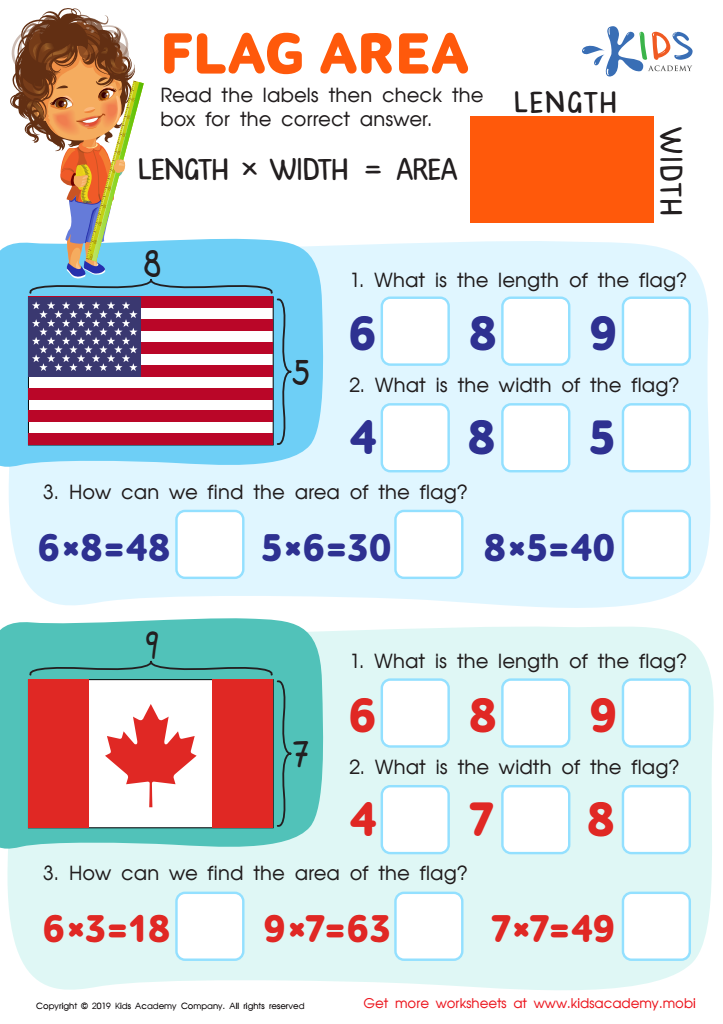
Flag Area Worksheet
 Assign to My Students
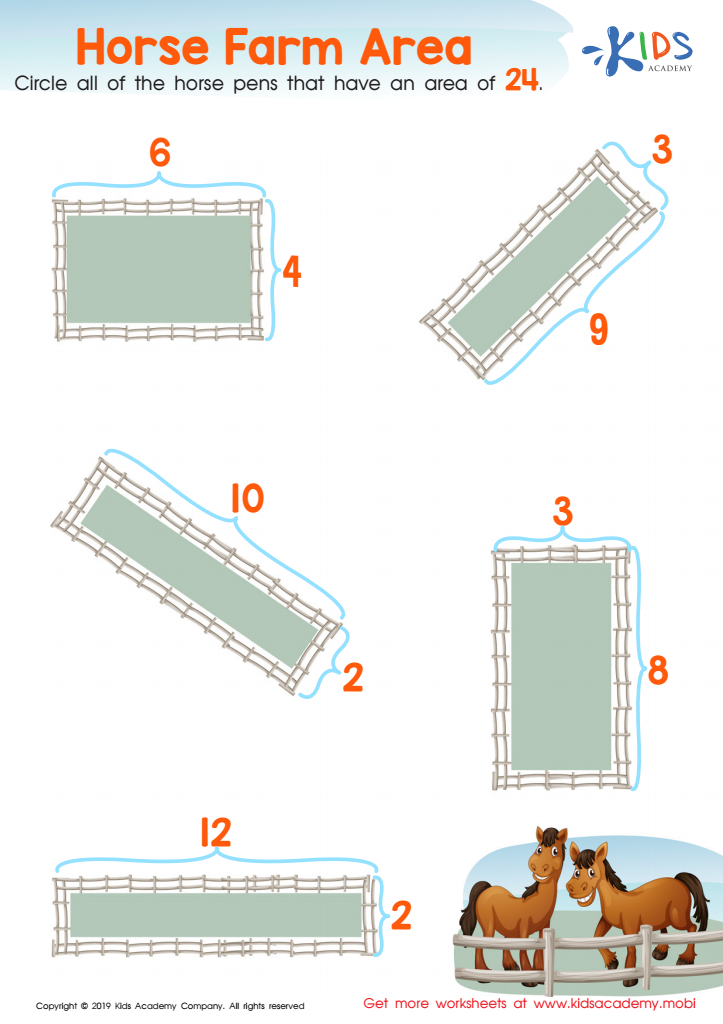
Horse Farm Area Worksheet
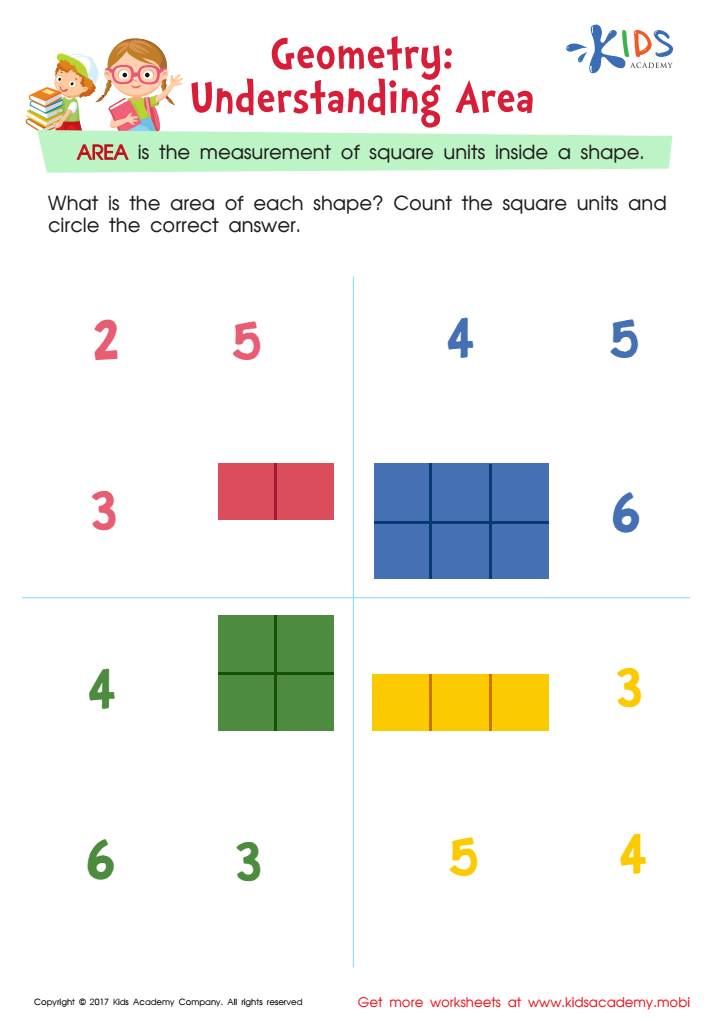
Understanding Area Worksheet





.jpg)
.jpg)

Understanding area is crucial for children aged 3-9, as it lays the foundation for various essential skills in mathematics and everyday life. At an early age, grasping the concept of area helps children understand space, measurement, and relevance in geometry. This knowledge supports skills in problem-solving and critical thinking, nurturing a sense of analytical reasoning.
Parents and teachers should emphasize area as it fosters spatial awareness, enhancing children's ability to relate shapes, sizes, and proportions effectively. Engaging activities that involve measuring and comparing areas can make learning interactive and fun, increasing motivation and enthusiasm for math.
Additionally, knowing about area impacts practical daily life scenarios—like calculating the space for furniture in a room or understanding distance covered in outdoor play. It enriches children's communication skills using mathematical language and concepts, allowing them to articulate their understanding clearly.
By promoting an early understanding of area, parents and teachers equip children with valuable life skills, while simultaneously igniting a passion for learning that can extend into future academic endeavors. Ultimately, they nurture confident learners who see math as an accessible and enjoyable subject, pivotal for lifelong success.








