Understanding division Worksheets for Ages 3-9
9 filtered results
-
From - To
Discover the foundation of division with our "Understanding Division Worksheets" designed for ages 3-9! These engaging, age-appropriate activities help young learners grasp the concept of division through fun visuals and relatable examples. Our carefully crafted worksheets encourage kids to share and group items, making math relatable and enjoyable. By using hands-on exercises, children build essential skills and confidence in their mathematical abilities. The worksheets support various learning styles, ensuring every child can succeed. Join us in making division a fun and rewarding experience for your little one! Explore our resources and watch them thrive in their mathematical journey.
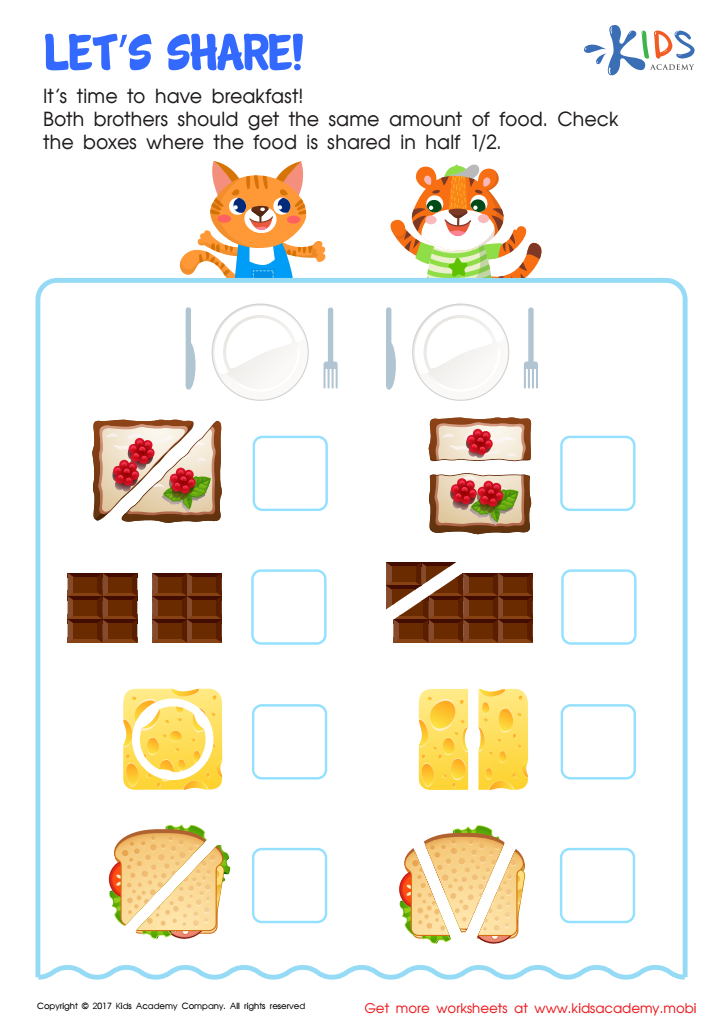
Let's Share Worksheet
 Assign to My Students
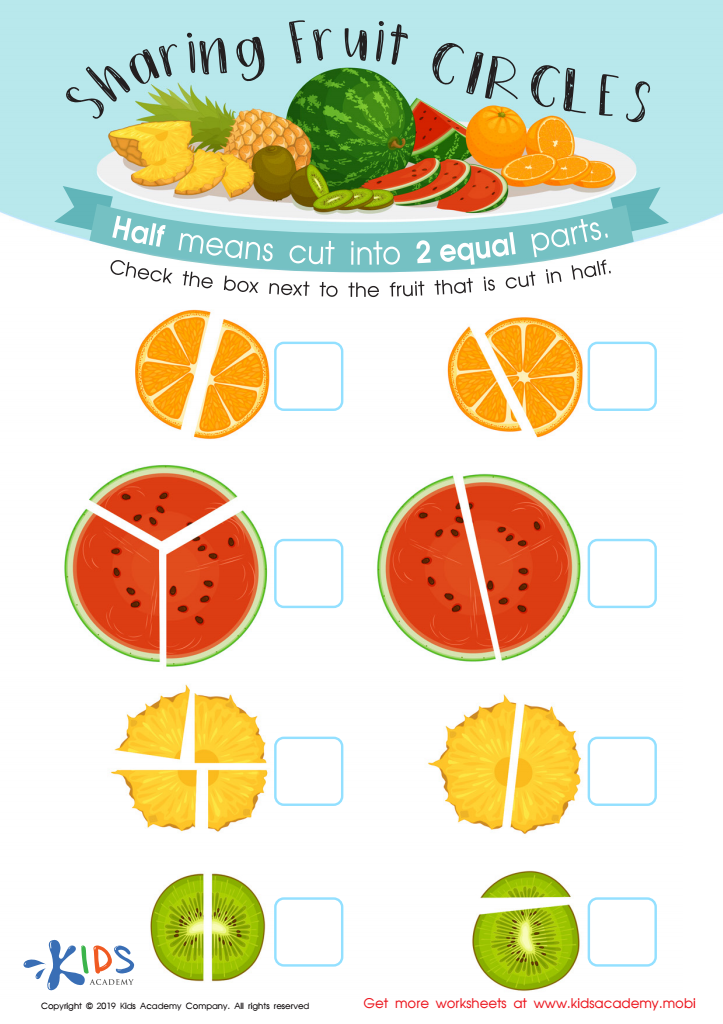
Sharing Fruit Circles Worksheet
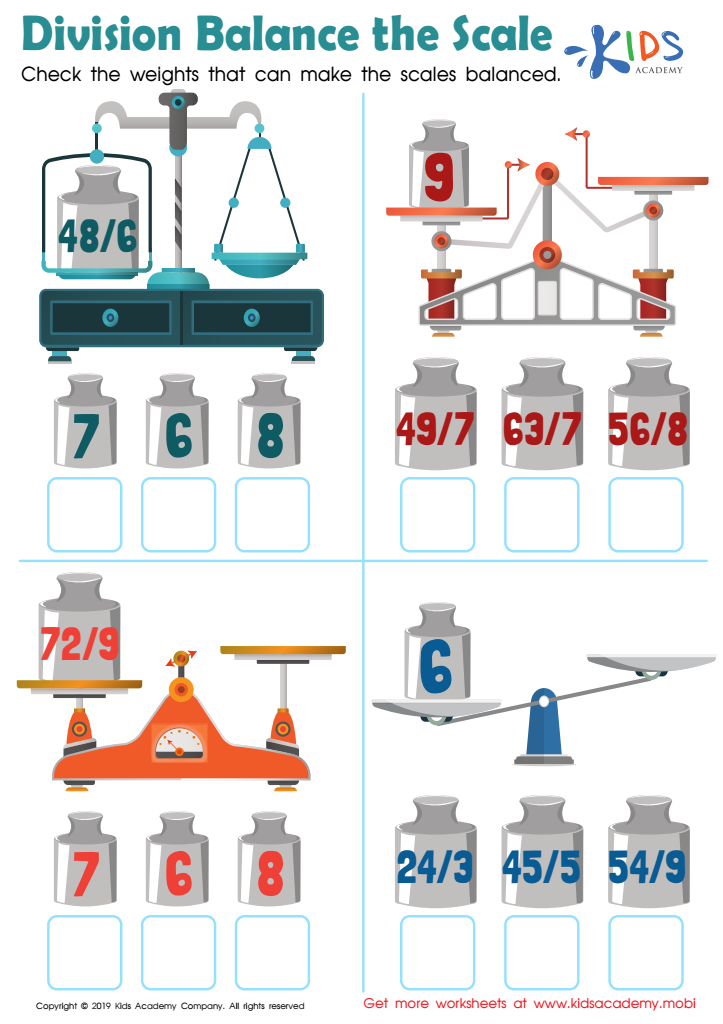
Division Balance the Scale Worksheet




.jpg)


Understanding division is crucial for children aged 3-9, as it lays the foundation for their future mathematical skills and problem-solving abilities. At this developmental stage, children are naturally curious and eager to learn about concepts like sharing and grouping, which directly relate to division. By introducing division early, parents and teachers can help children grasp the idea of splitting items into equal parts, which is not only fundamental in math but also enhances critical thinking and cognitive development.
Moreover, division is closely linked to real-life experiences, such as sharing snacks among friends or dividing toys. These practical applications make learning meaningful and engaging for young learners. Early exposure to division concepts can promote a strong number sense, enabling students to identify patterns and relationships between numbers, which are vital for advancing to more complex mathematical concepts in later grades.
Lastly, a solid understanding of division fosters confidence in mathematics, reducing the anxiety that many students face as they progress in their studies. By cultivating these skills through play, hands-on activities, and supportive conversations, parents and teachers can ensure children develop a positive attitude toward math, setting them up for long-term success.








