Understanding Sequences Worksheets for Ages 3-9 - Page 2
29 filtered results
-
From - To
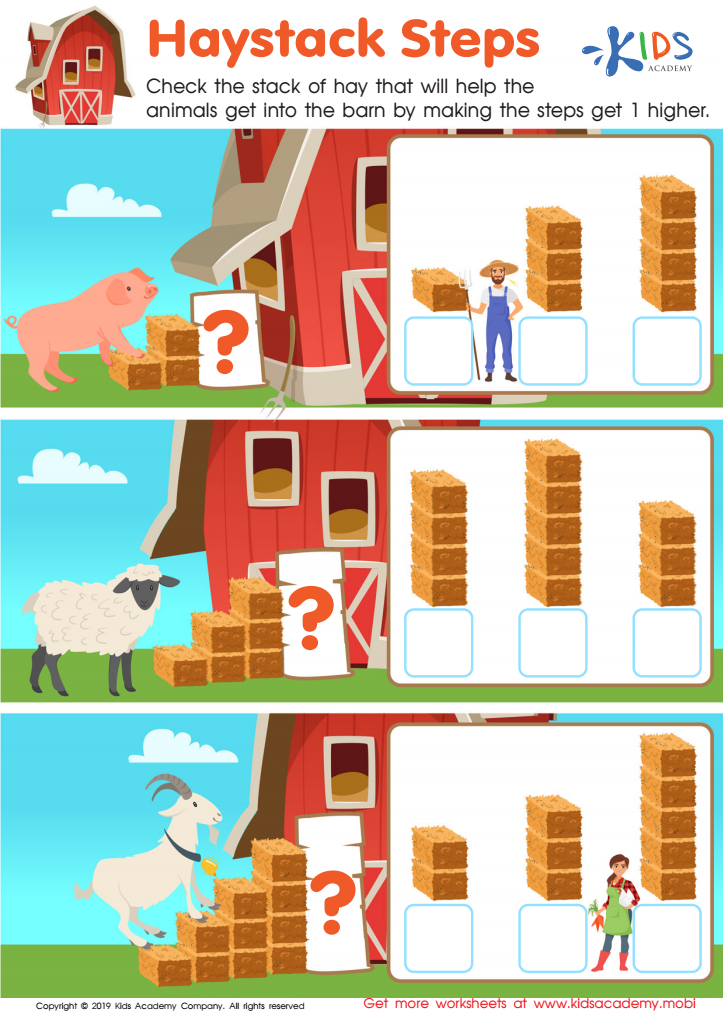
Haystack Steps Worksheet
 Assign to My Students







Understanding sequences is a vital cognitive skill for children ages 3-9, and parents and teachers should prioritize this learning process. Sequences serve as the building blocks of logical reasoning and critical thinking, essential skills that students will rely on throughout their academic lives. Engaging with sequences helps children understand patterns, which lays the foundation for mathematical reasoning and problem-solving. For instance, recognizing what comes next in a sequence teaches children to predict and make decisions based on previous information, fostering strong analytical skills.
Moreover, proficiency in sequences aids in literacy development; it enhances reading comprehension as kids learn to grasp and follow storylines and plots. As children learn to sequence events, whether through storytelling or everyday activities, they become more adept at organizing their thoughts and communicating effectively. This skill transfers to writing, helping them create coherent narratives.
Additionally, sequencing activities promote fine motor skills through hands-on learning experiences, such as putting pictures in order or using manipulatives. Encouraging an understanding of sequences enhances a child’s confidence and lays a robust groundwork for future learning across subjects. By prioritizing this skill, parents and educators not only support current academic success but also prepare children for lifelong learning.








