Word formation understanding Worksheets for Ages 3-9
3 filtered results
-
From - To
Explore our engaging Word Formation Understanding Worksheets designed for children ages 3-9! These worksheets facilitate early literacy skills by helping young learners recognize and form words using various techniques, including prefixes, suffixes, and root words. Our printable activities are colorful and interactive, making learning fun while building vocabulary, spelling, and reading abilities. Perfect for both classroom and home use, these worksheets promote critical thinking and creativity. Encourage your child's love for words and language with our thoughtfully crafted resources. Dive into our collection today and watch your child thrive in their journey toward literacy!
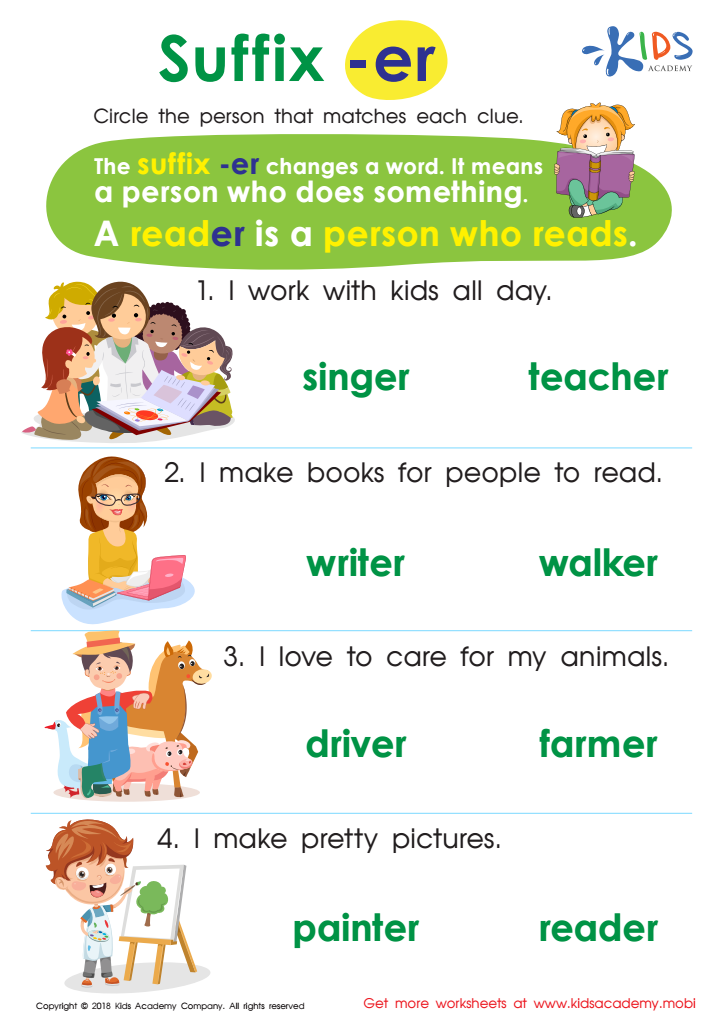
Suffix –er Printable Worksheet
 Assign to My Students
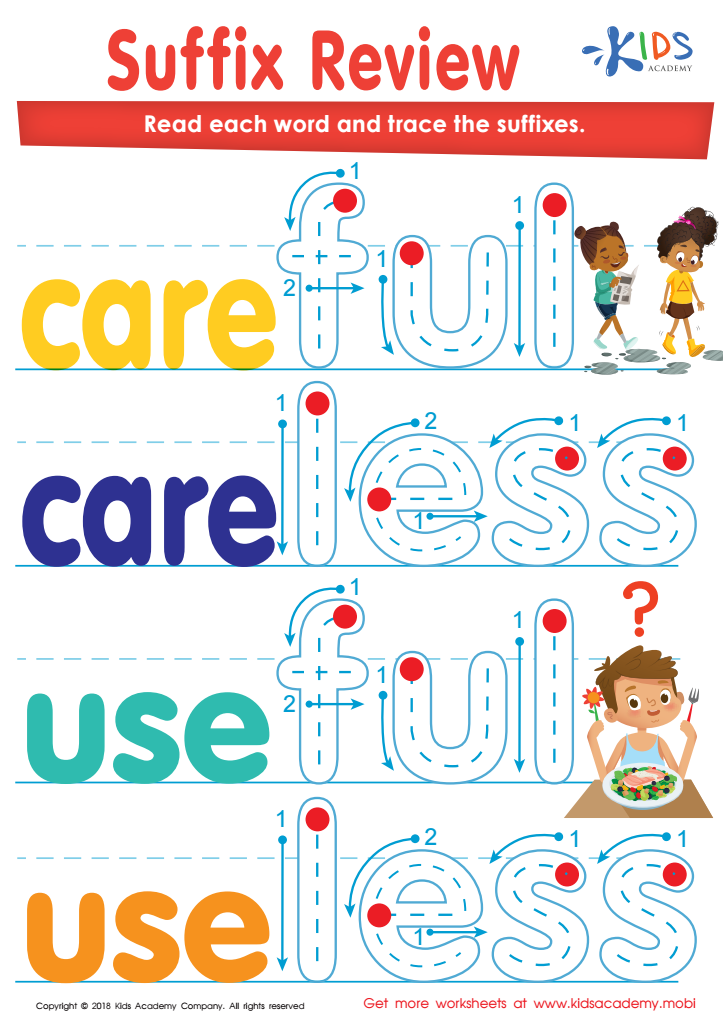
Suffix Review Worksheet
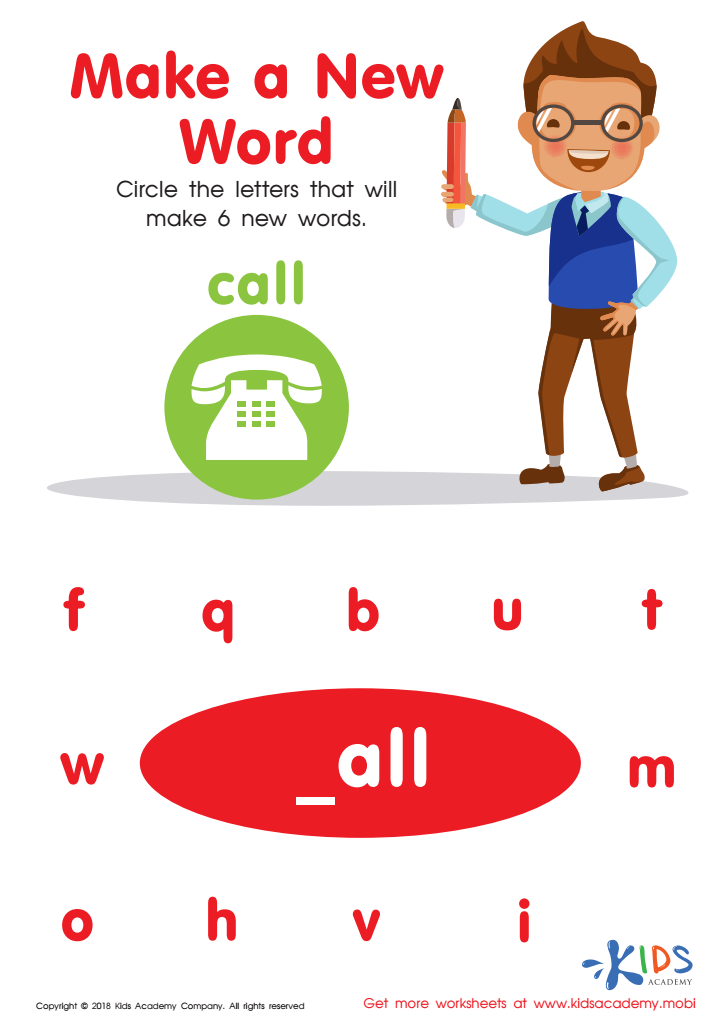
Make a New Word Worksheet








Word formation understanding is essential for children aged 3-9, as it plays a crucial role in their language development, literacy skills, and overall cognitive growth. During these formative years, children begin to grasp the building blocks of language, which include the roots, prefixes, and suffixes that help create words. This knowledge enables them to decode unfamiliar words, fostering a love for reading and enriching their vocabulary.
Parents and teachers should care about this aspect of language acquisition because a solid foundation in word formation enhances comprehension skills. Children familiar with how words are constructed can make educated guesses about unclear terms and understand their meanings in context. This skill not only aids in reading comprehension but also helps in expressive language development, allowing children to articulate their thoughts more clearly.
Moreover, integrating word formation activities into learning at home or in the classroom promotes critical thinking. Children learn to analyze and manipulate language, which contributes to better problem-solving abilities. Encouraging this understanding through games, storytelling, and hands-on activities can spark interest in language, ultimately leading to becoming confident readers and effective communicators. In short, fostering word formation understanding is vital for children’s developmental success.








