Comparing shapes 2D Shapes Worksheets for Ages 3-9
4 filtered results
-
From - To
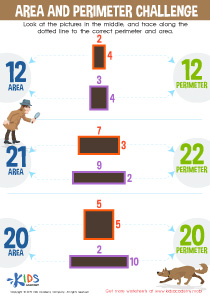
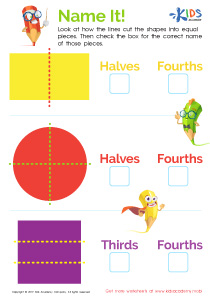
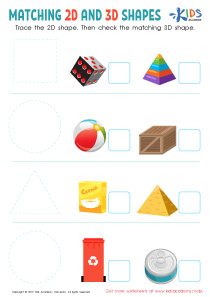
Explore our engaging "Comparing 2D Shapes Worksheets" designed for children ages 3-9! These worksheets feature colorful graphics and interactive activities to help young learners identify, compare, and contrast various two-dimensional shapes, such as circles, squares, triangles, and rectangles. With easy-to-understand exercises, kids will enhance their shape recognition skills and develop critical thinking as they assess relationships between different shapes. Perfect for homeschooling or classroom use, these resources offer a fun way to integrate math concepts into early learning. Spark your child's curiosity and encourage a love for math with our thoughtfully crafted worksheets that make learning shapes enjoyable and effective!
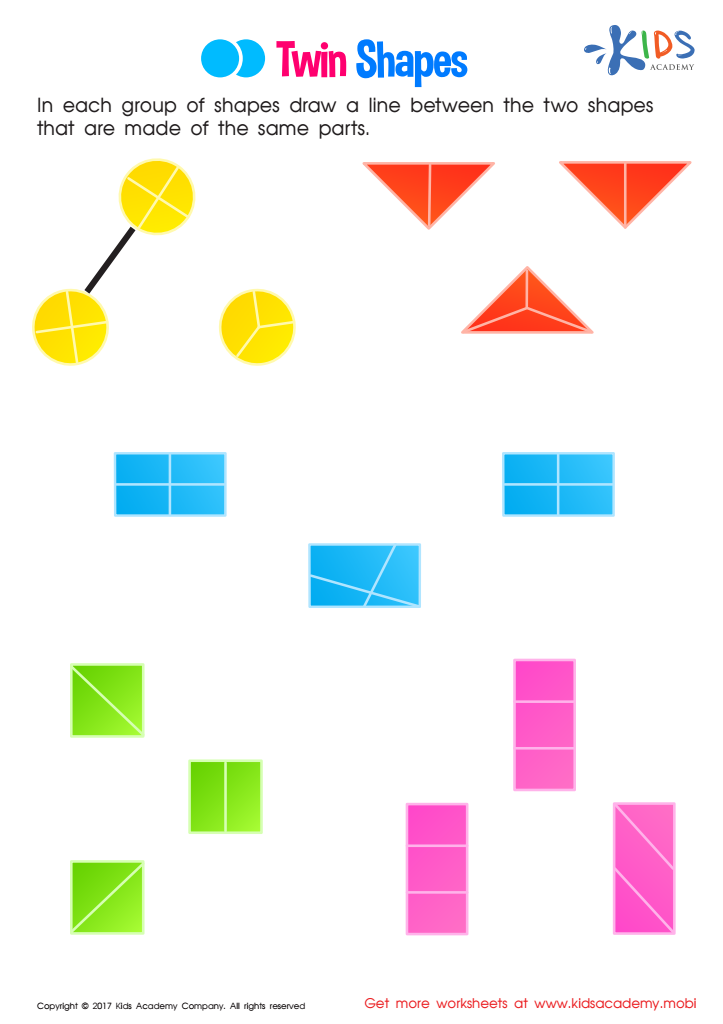
Twin Shapes Worksheet
 Assign to My Students


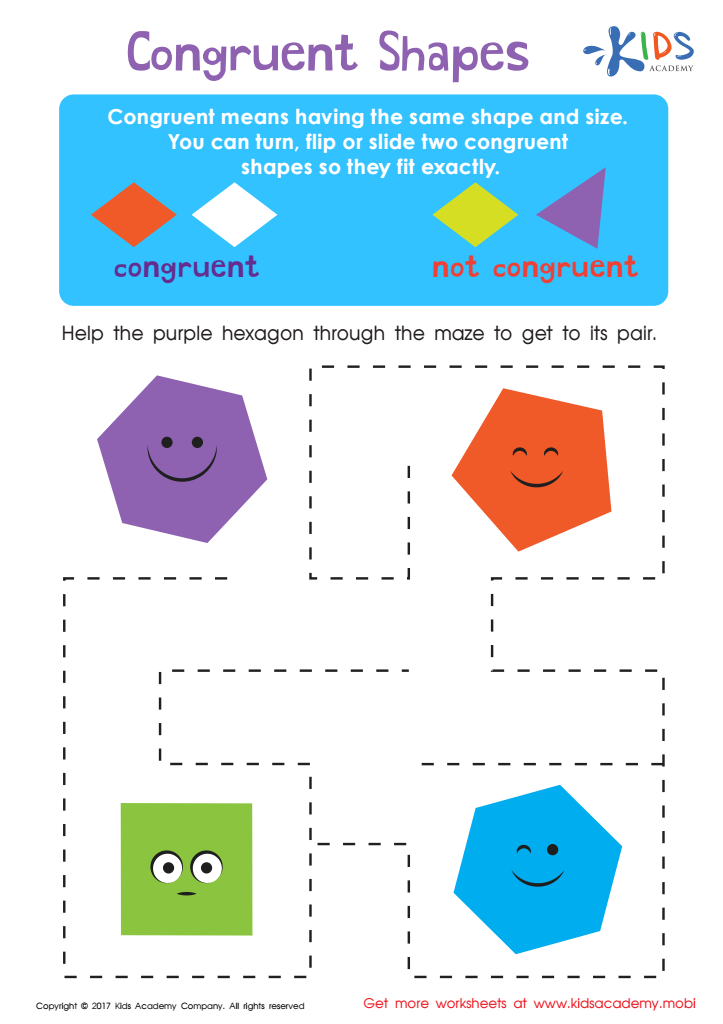
Congruent Shapes Worksheet
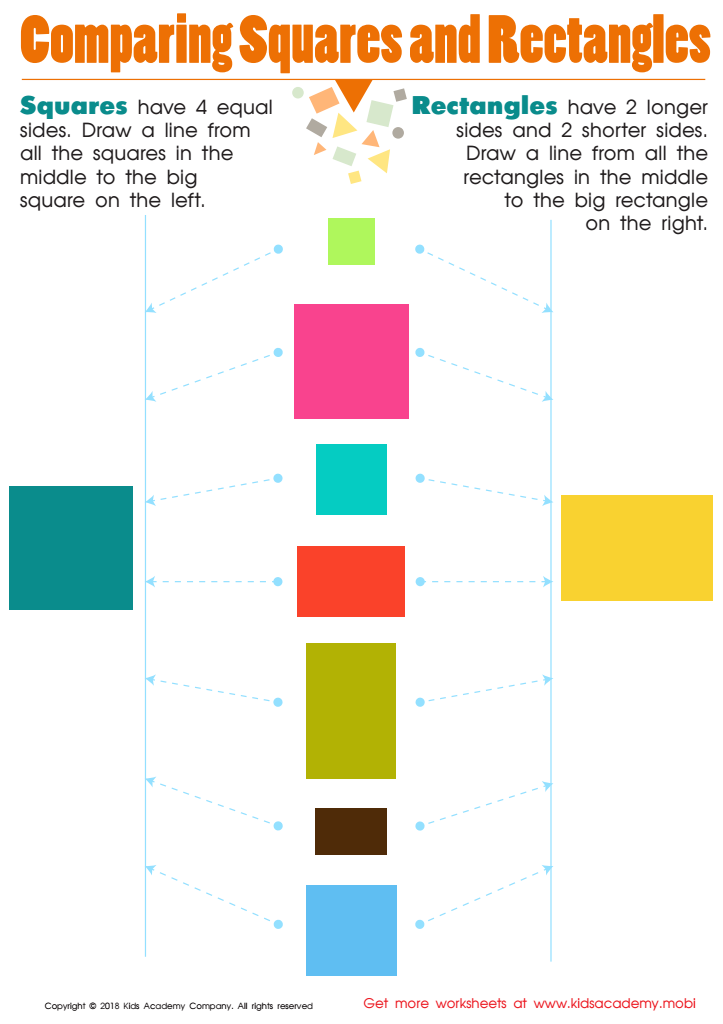
Comparing Squares Rectangles Worksheet
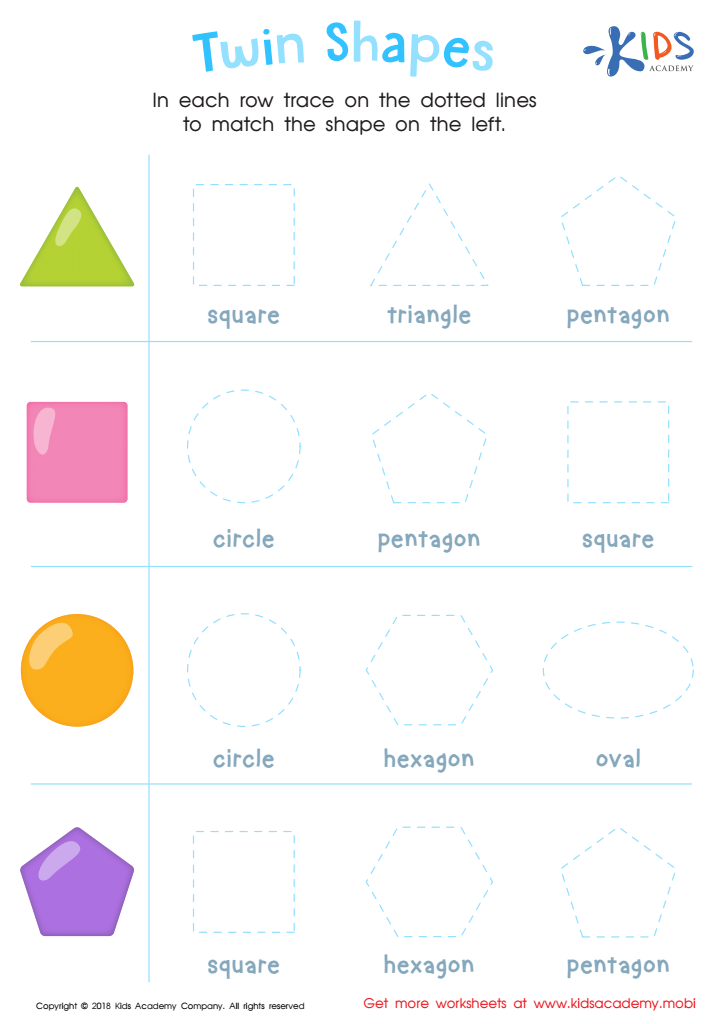
Twin Shapes Dot-to-Dot Worksheet








Comparing 2D shapes is a fundamental skill that helps young learners aged 3-9 develop critical thinking and spatial reasoning abilities. Understanding shapes is not only a precursor to mathematics but also enhances cognitive development and problem-solving skills. When parents and teachers engage children in shape comparison, they encourage them to notice differences and similarities, fostering observational skills and an appreciation for geometric properties.
Learning to compare shapes supports language development as children learn to articulate their observations using descriptive vocabulary like "bigger," "smaller," "round," or "square." This engagement creates opportunities for conversations that develop communication skills.
Moreover, comparing shapes aids in instilling foundational math concepts necessary for higher-level learning. Children develop an understanding of classification and grouping, which are critical for later mathematical concepts such as fractions, symmetry, and area.
Engaging children in activities that involve analyzing and comparing 2D shapes also promotes creativity and imagination. It allows them to visualize everyday objects, enhancing their understanding of the world around them. By prioritizing shape comparison, parents and teachers set the stage for mathematical success, confidence in problem-solving, and a lifelong appreciation for learning.