Visual Perception Skills 2D Shapes Worksheets for Ages 3-9
3 filtered results
Difficulty Level
Grade
Age
-
From - To
Subject
Activity
Standards
Enhance your child’s learning journey with our engaging Visual Perception Skills 2D Shapes Worksheets, designed specifically for ages 3-9. These printables help young learners develop crucial visual perception skills through interactive activities that focus on recognizing, identifying, and differentiating various 2D shapes. Our expertly crafted worksheets combine fun with education, making learning enjoyable for both children and educators. By using these engaging resources, your child will not only improve their shape recognition but also boost their overall cognitive development. Equip your little ones with essential skills while fostering a love for learning. Explore our collection today and watch their confidence soar!
Favorites
With answer key
Interactive
Shapes of All Sizes Worksheet
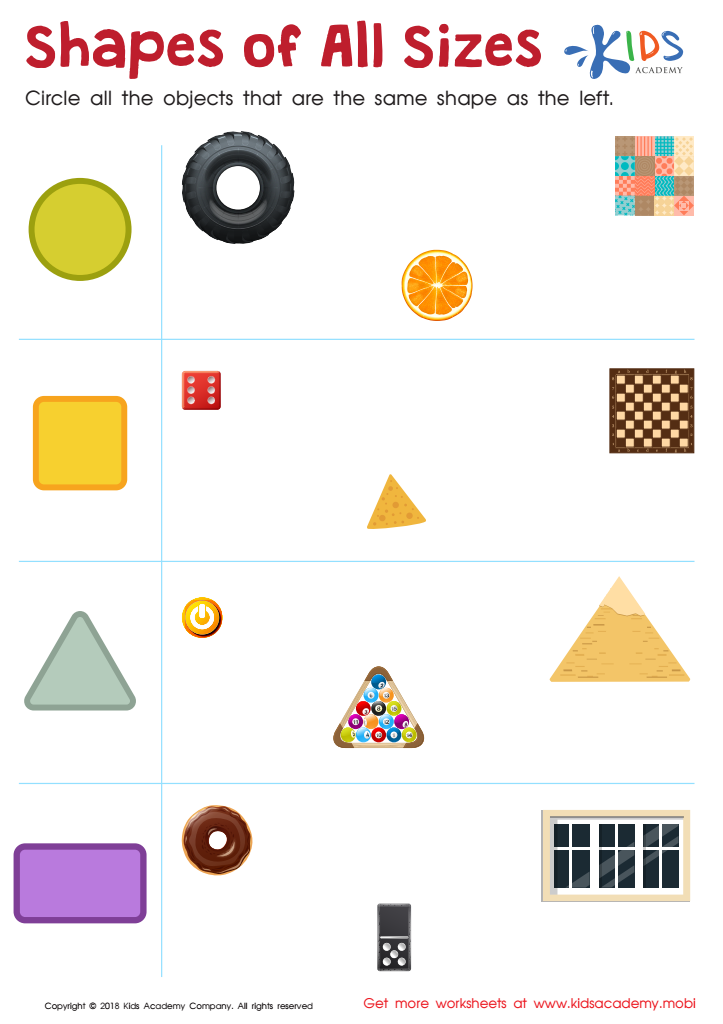
Students will have fun comparing basic shapes to familiar objects with this worksheet. It's an excellent way to help them recognize similarities in geometric shapes, building strong foundations for understanding congruence and similarity.
 Assign to My Students
Shapes of All Sizes Worksheet
Worksheet











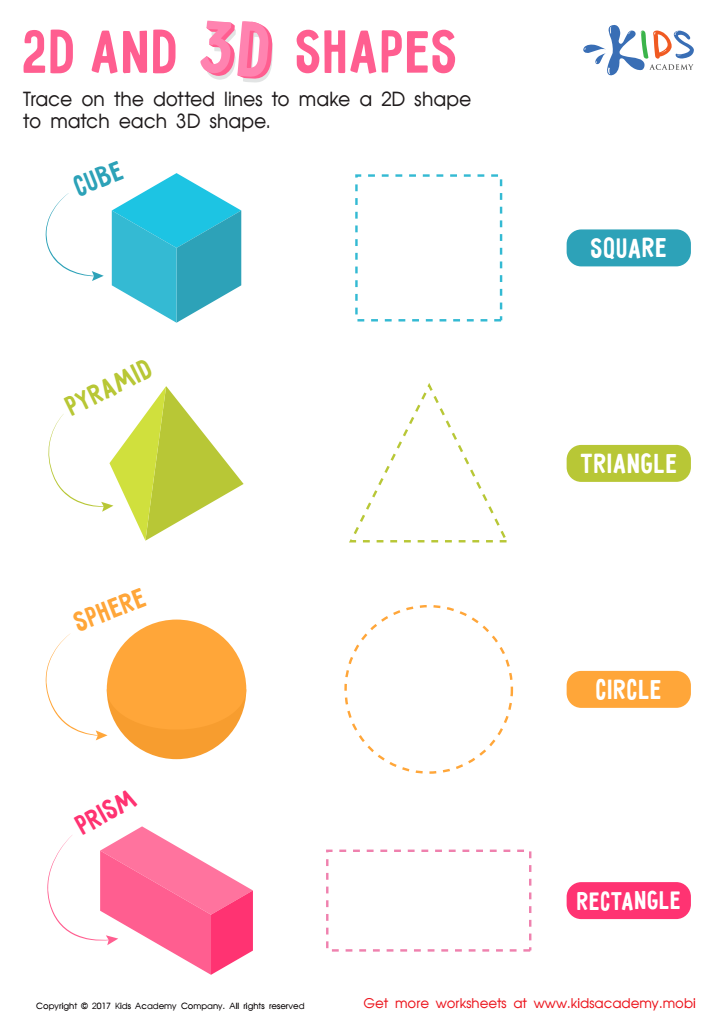
2D and 3D Shapes Worksheet
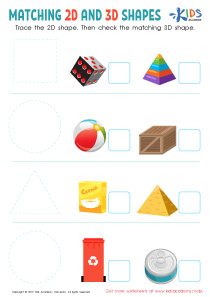
Introduce your child to 3D and 2D with this traceable worksheet. With dotted lines, help them trace and make a 2D shape for each 3D shape: square, triangle, rectangle, and circle. Show them there's more than one way to draw! You may have taken them to a 3D movie, or they've seen some fantastic 3D art. Now they can wonder no more.
2D and 3D Shapes Worksheet
Worksheet
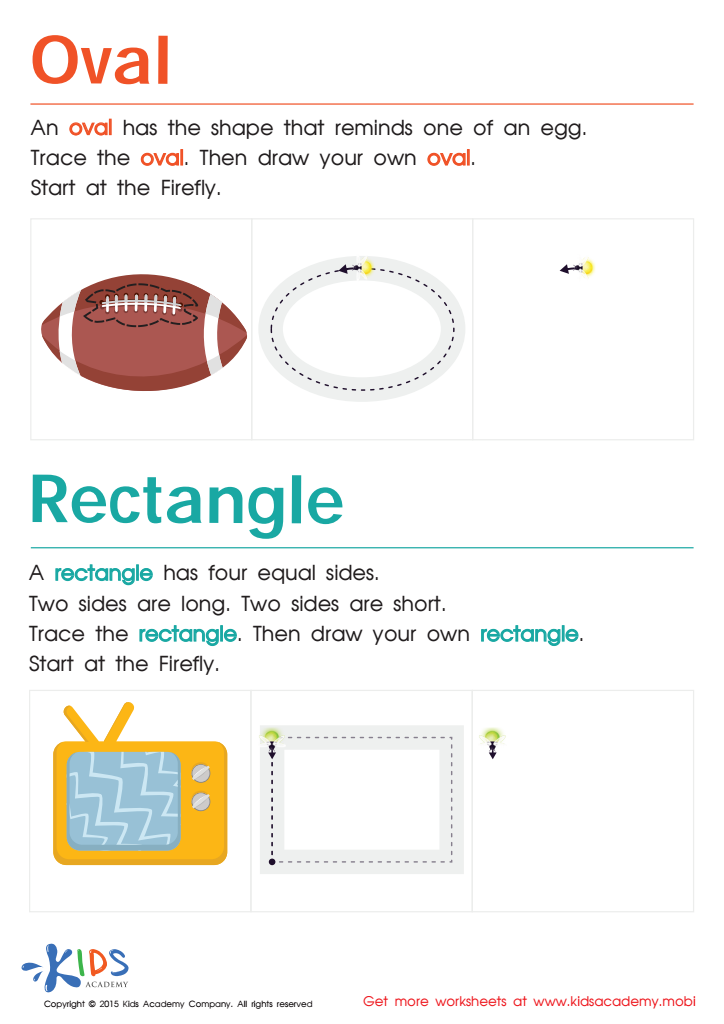
Easy Drawing of Ovals And Rectangles Worksheet
Kids Academy offers free geometry worksheets to make learning more fun and interesting. Trace an oval, rectangle, and many other shapes!
Easy Drawing of Ovals And Rectangles Worksheet
Worksheet
Join Kids Academy for Free
Who is primarily going to use this learning content?








Visual perception skills, particularly regarding 2D shapes, are essential for children aged 3-9 as they lay the foundation for various learning processes. Parents and teachers should prioritize these skills because they are pivotal to a child's cognitive development, impacting areas such as mathematics, reading, and other literacy-related activities. 2D shape recognition helps children categorize and identify objects in their environment, facilitating better understanding of spatial relationships and enhancing problem-solving abilities.
Moreover, strong visual perception skills contribute to your child’s ability to read and write effectively. Recognizing letters, numbers, and words requires a keen understanding of visual differences and similarities. As children progress in their education, these foundational skills will support their ability to visualize and manipulate ideas, essential for subjects like geometry and art.
Finally, nurturing visual perception through engaging activities like puzzles, drawing, and shape sorting can also foster a child’s confidence and independence as they become adept at recognizing and interacting with their world. In summary, focusing on 2D shape perception not only boosts academic success but also enriches overall development, making it a crucial aspect of early education that warrants attention from parents and educators alike.