Discover our "Enhance Comprehension Addition & Subtraction Worksheets" designed for children aged 3-9! These engaging printables focus on strengthening early math skills in a fun and interactive way. Our worksheets include a variety of activities that promote understanding of core concepts, improving students’ confidence in addition and subtraction. With vibrant illustrations and age-appropriate challenges, kids will find joy in exploring math fundamentals while nurturing their problem-solving abilities. Perfect for both classroom settings and home learning, our worksheets serve as an effective tool for young learners to enhance their comprehension of essential math operations. Start your child's math journey today!
Check out this FREE Trial Lesson on Addition & Subtraction for age 3-9!

Sorting Objects into 3 Categories

Favorites
With answer key
Interactive
  • 3-9
  • Enhance comprehension
  • Addition & Subtraction
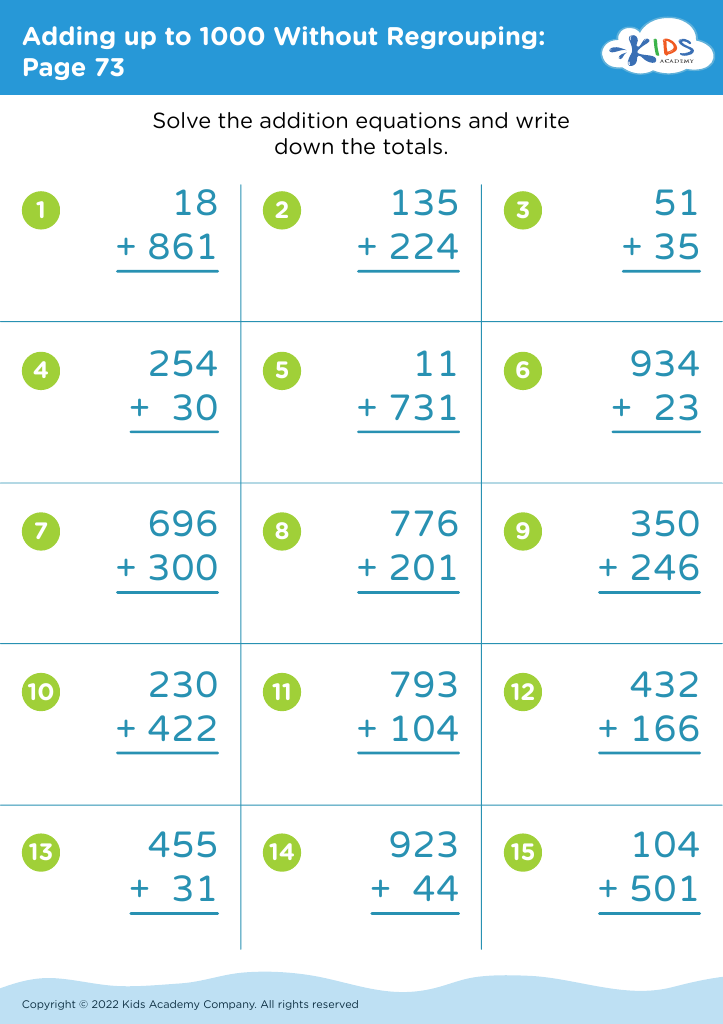
Adding up to 1000 Without Regrouping: Page 73
Worksheet
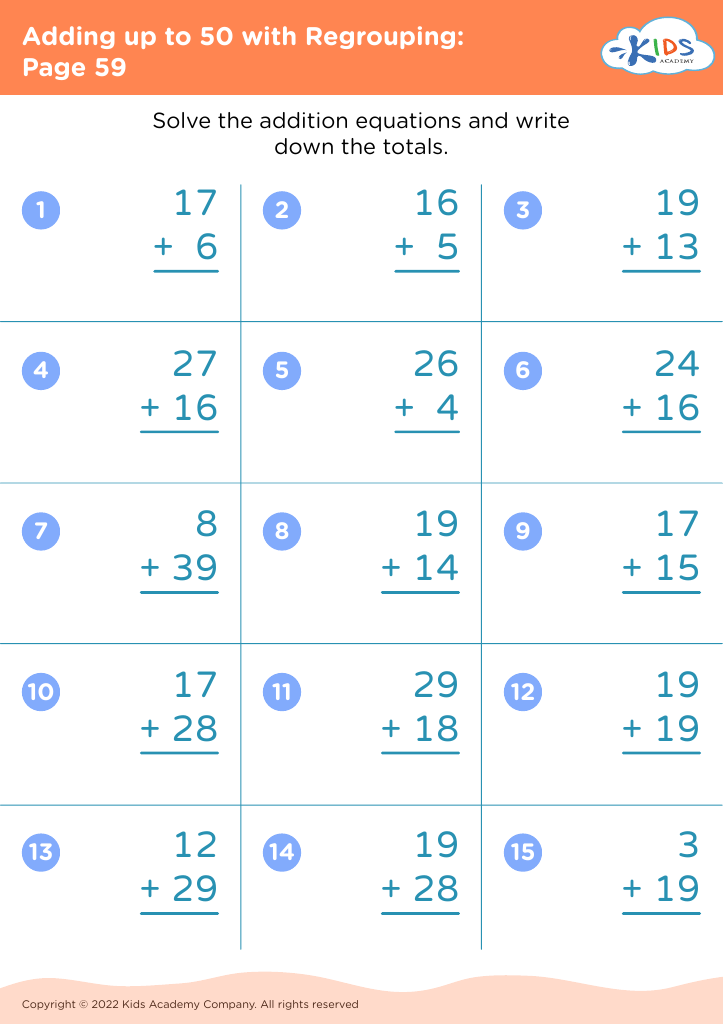
Adding up to 50 with Regrouping: Page 59
Worksheet
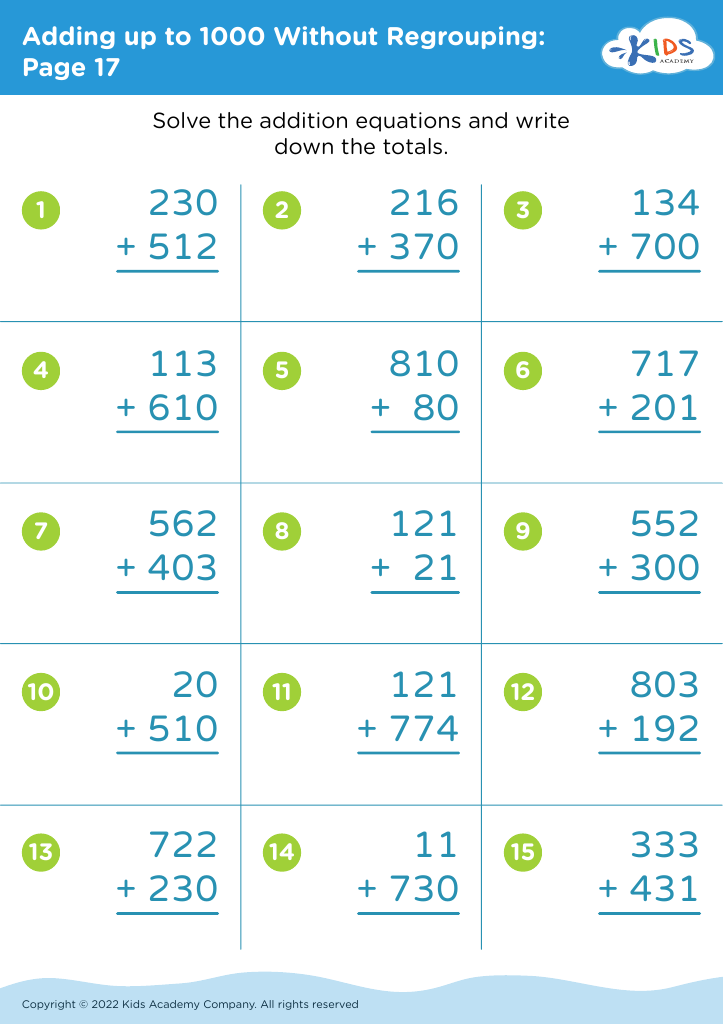
Adding up to 1000 Without Regrouping: Page 17
Worksheet
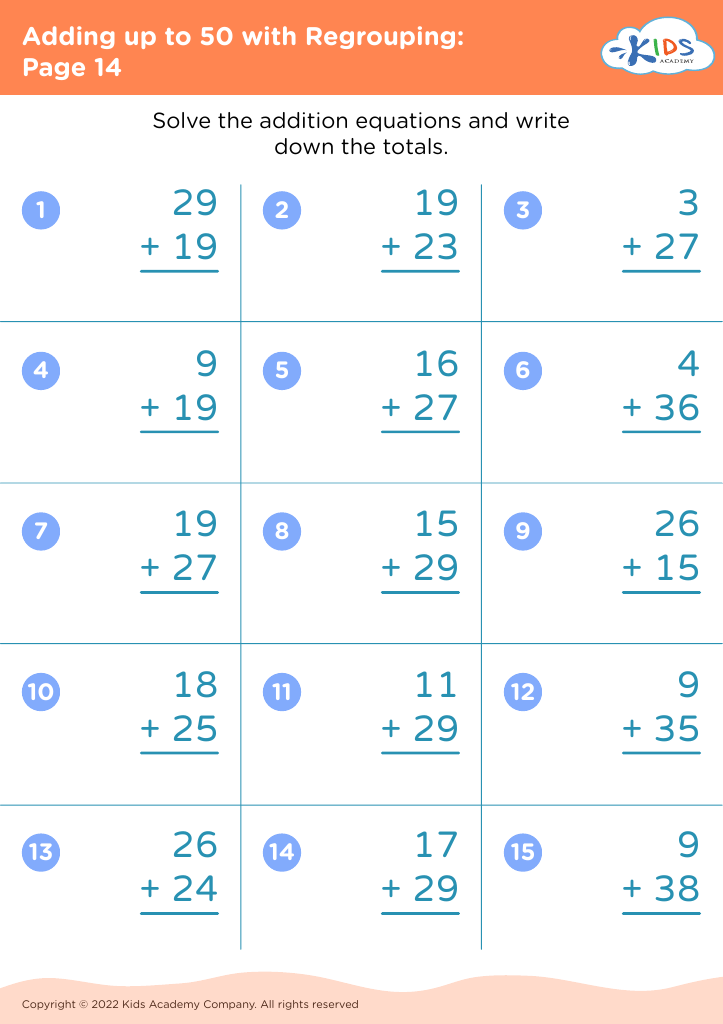
Adding up to 50 with Regrouping: Page 14
Worksheet
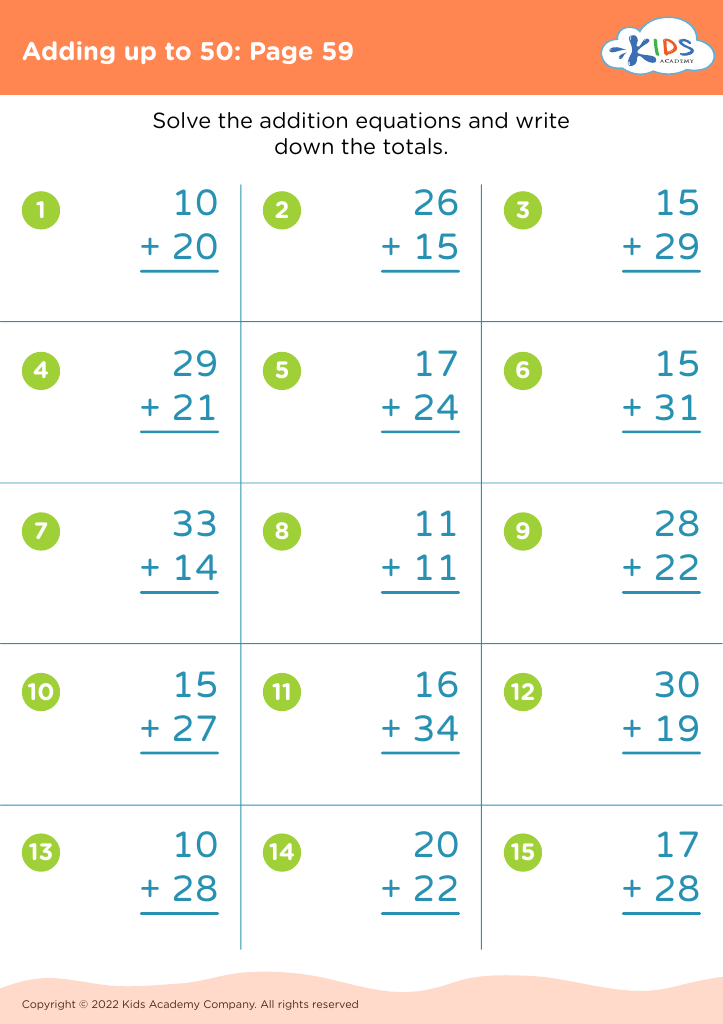
Adding up to 50: Page 59

Adding up to 50: Page 59

Adding up to 50: Page 59
Worksheet
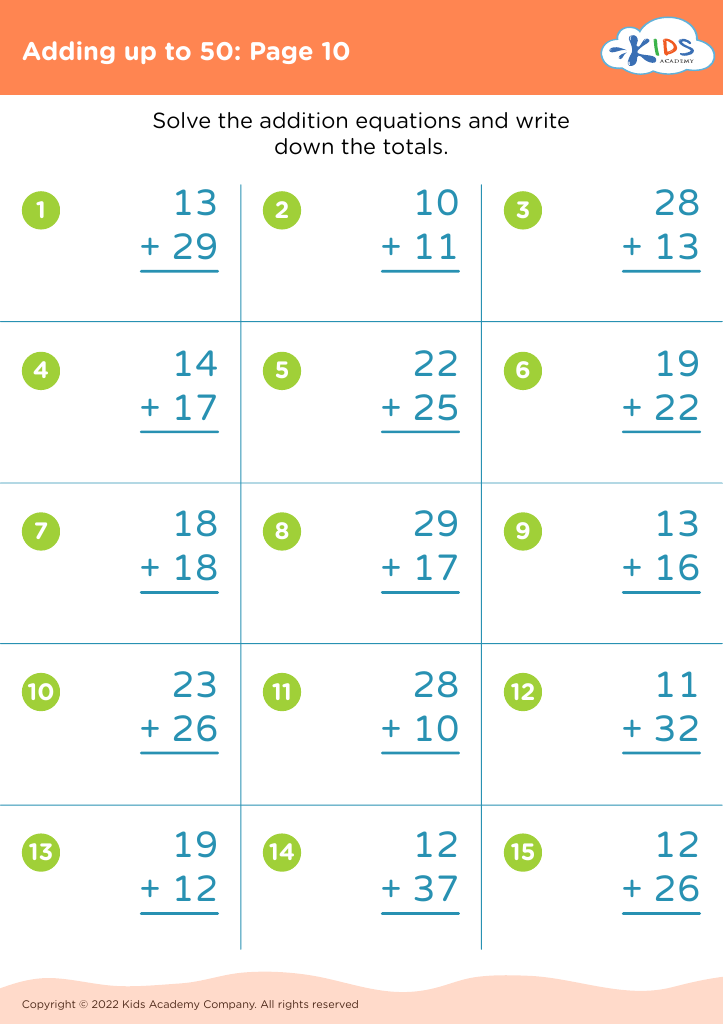
Adding up to 50: Page 10

Adding up to 50: Page 10

Adding up to 50: Page 10
Worksheet
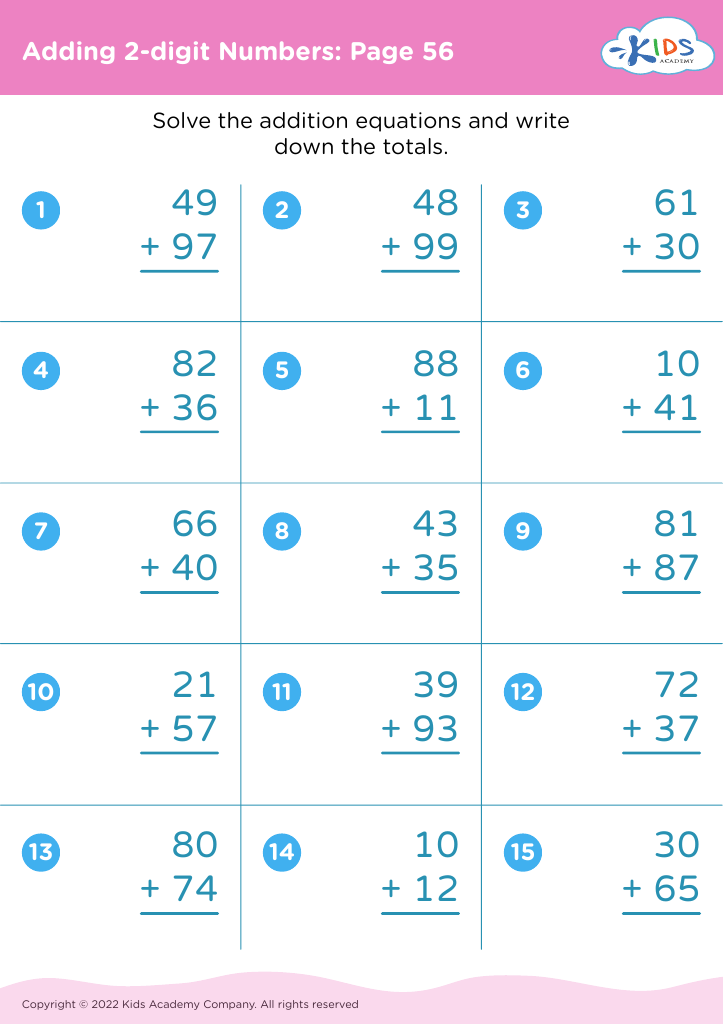
Adding 2-digit Numbers: Page 56

Adding 2-digit Numbers: Page 56

Adding 2-digit Numbers: Page 56
Worksheet
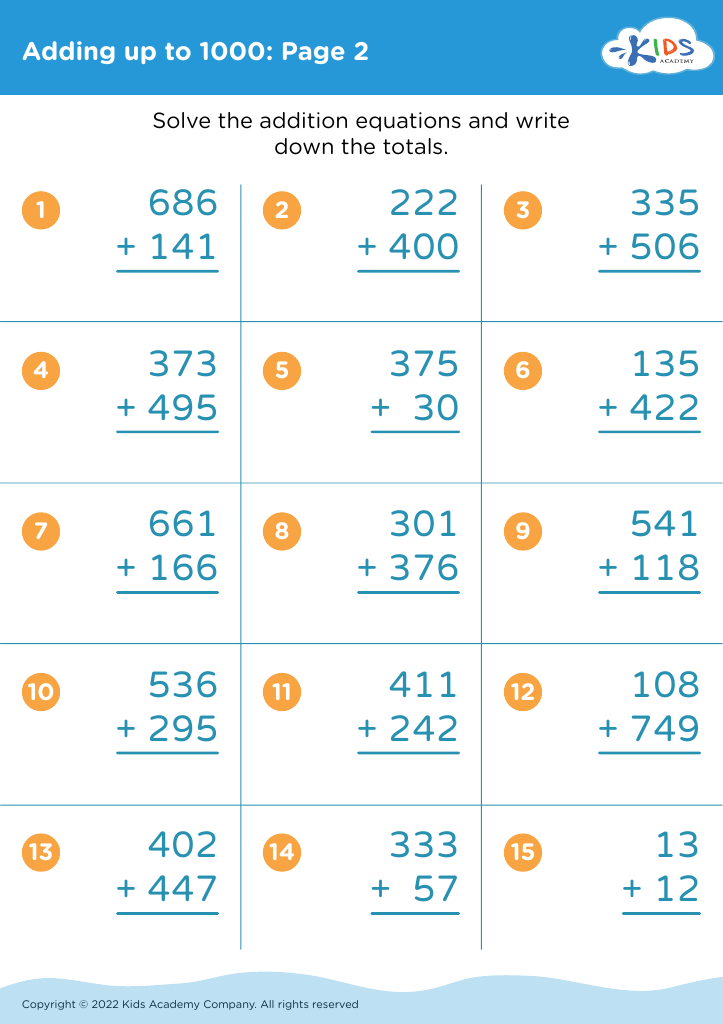
Adding up to 1000: Page 2

Adding up to 1000: Page 2

Adding up to 1000: Page 2
Worksheet
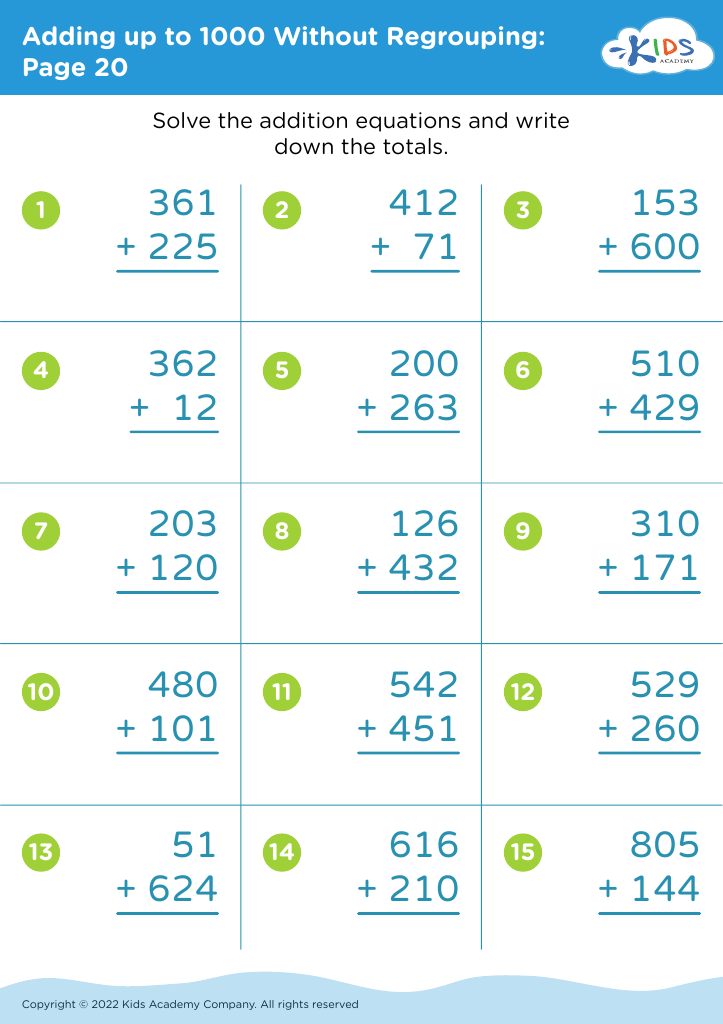
Adding up to 1000 Without Regrouping: Page 20
Worksheet
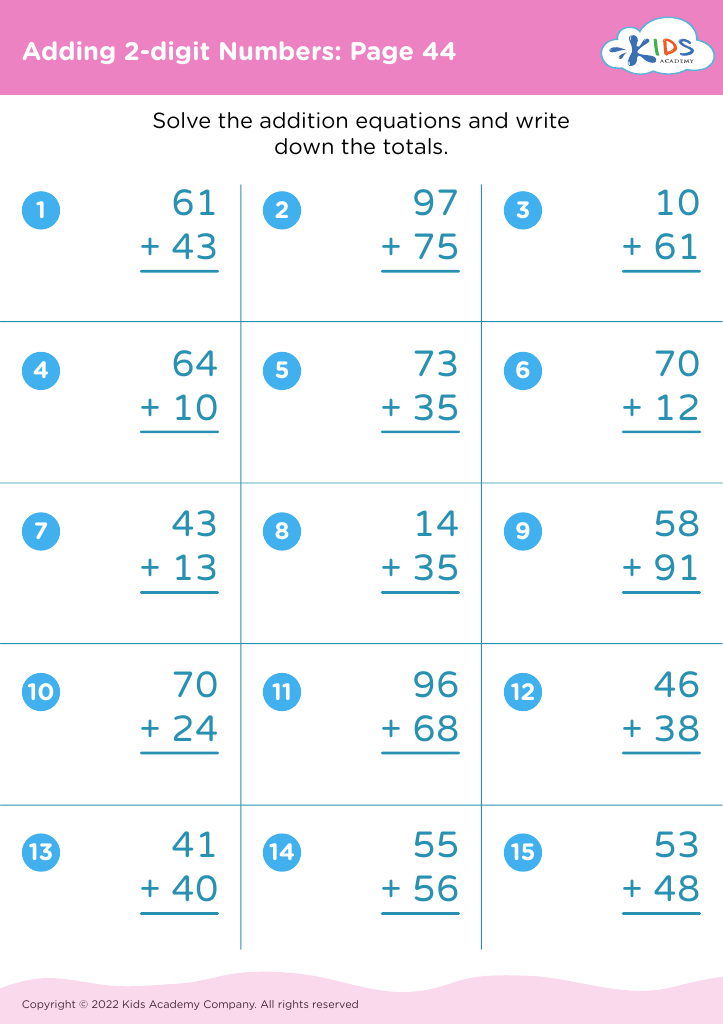
Adding 2-digit Numbers: Page 44

Adding 2-digit Numbers: Page 44

Adding 2-digit Numbers: Page 44
Worksheet
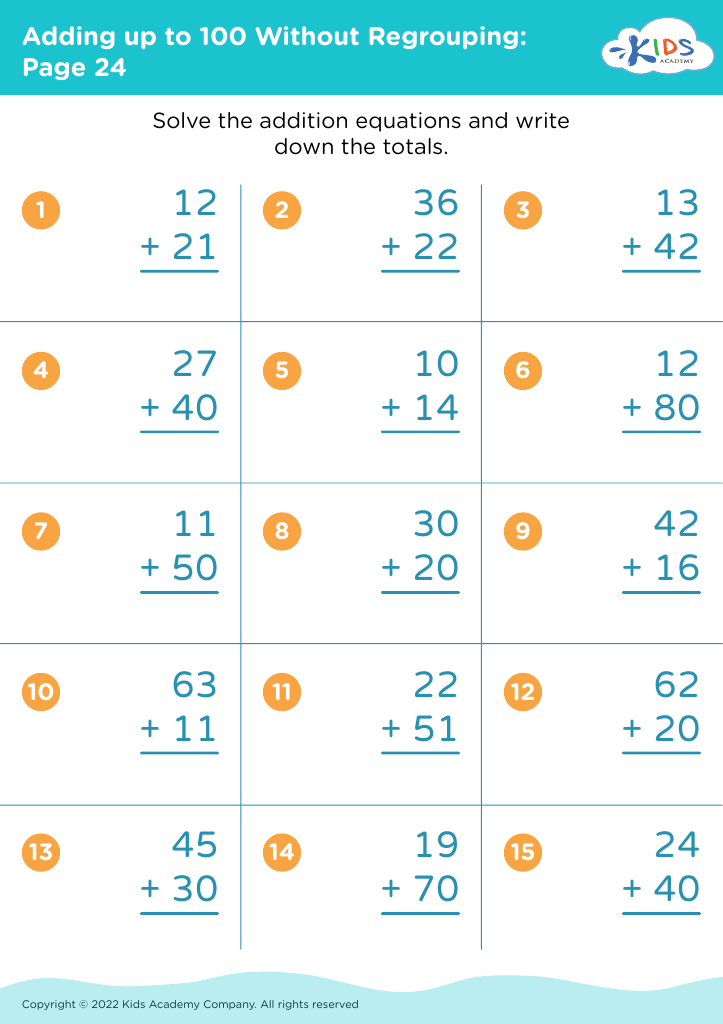
Adding up to 100 Without Regrouping: Page 24
Worksheet
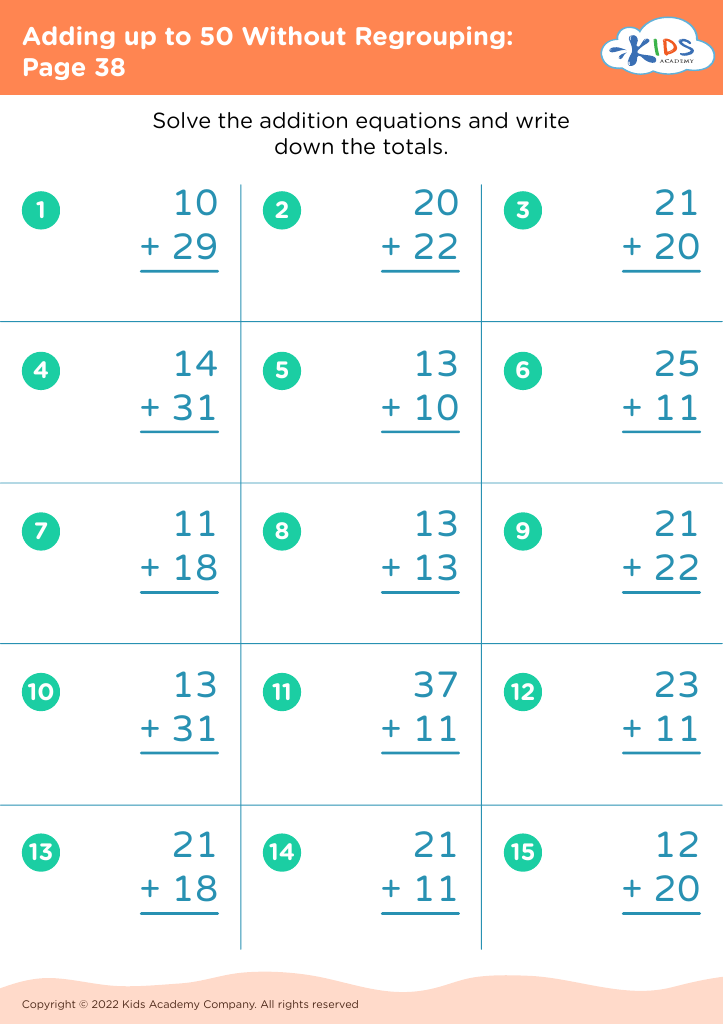
Adding up to 50 Without Regrouping: Page 38
Worksheet
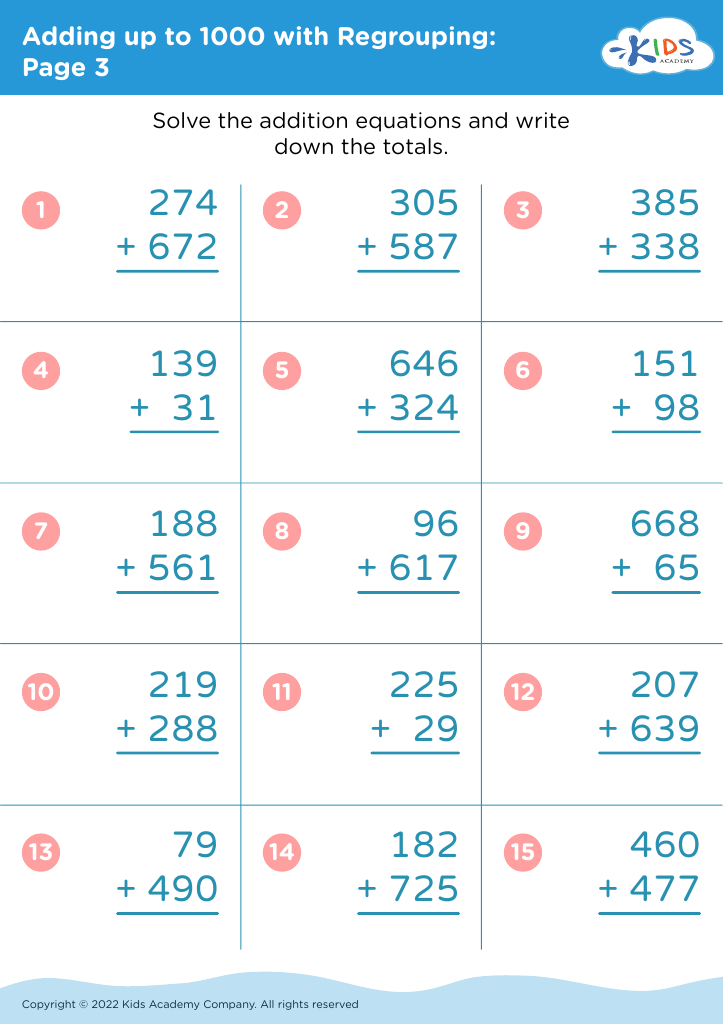
Adding up to 1000 with Regrouping: Page 3
Worksheet
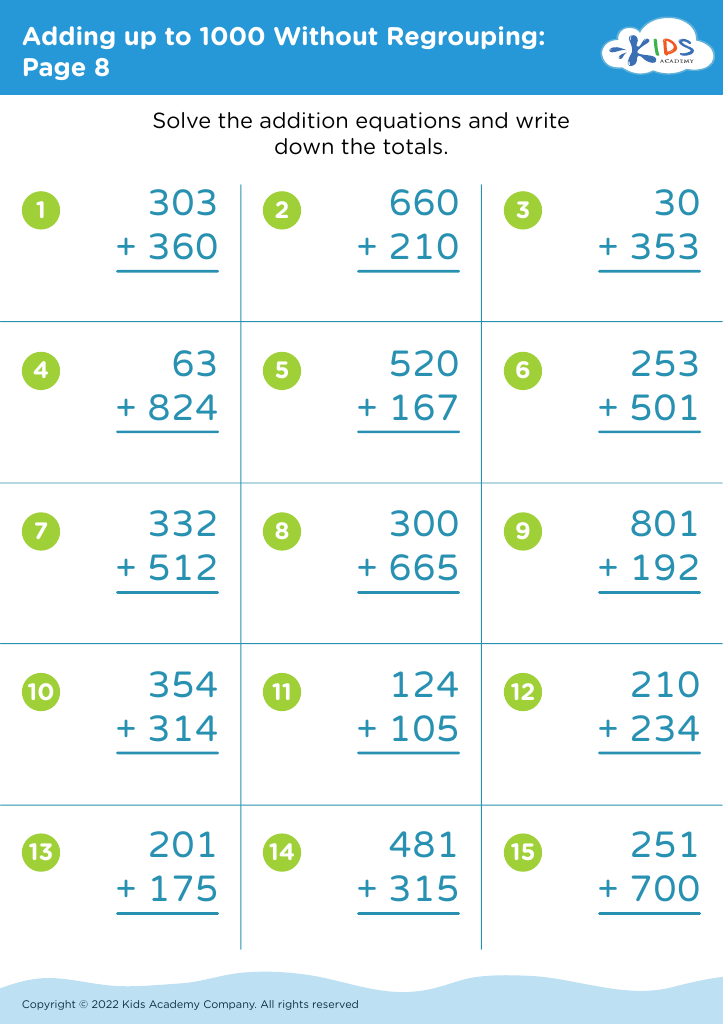
Adding up to 1000 Without Regrouping: Page 8
Worksheet
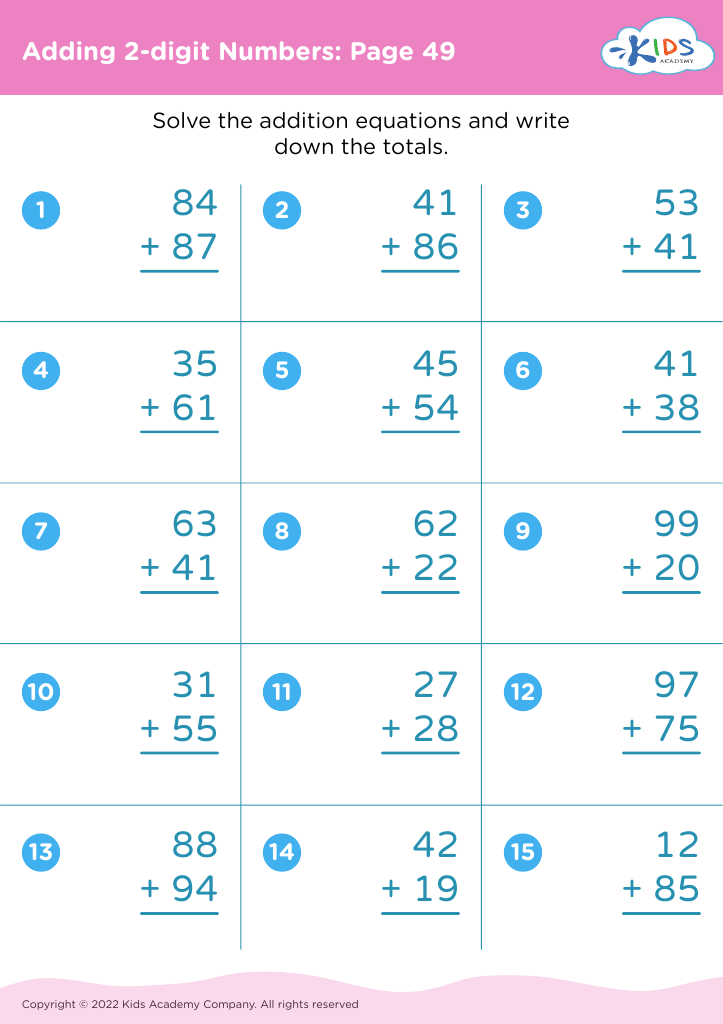
Adding 2-digit Numbers: Page 49

Adding 2-digit Numbers: Page 49

Adding 2-digit Numbers: Page 49
Worksheet
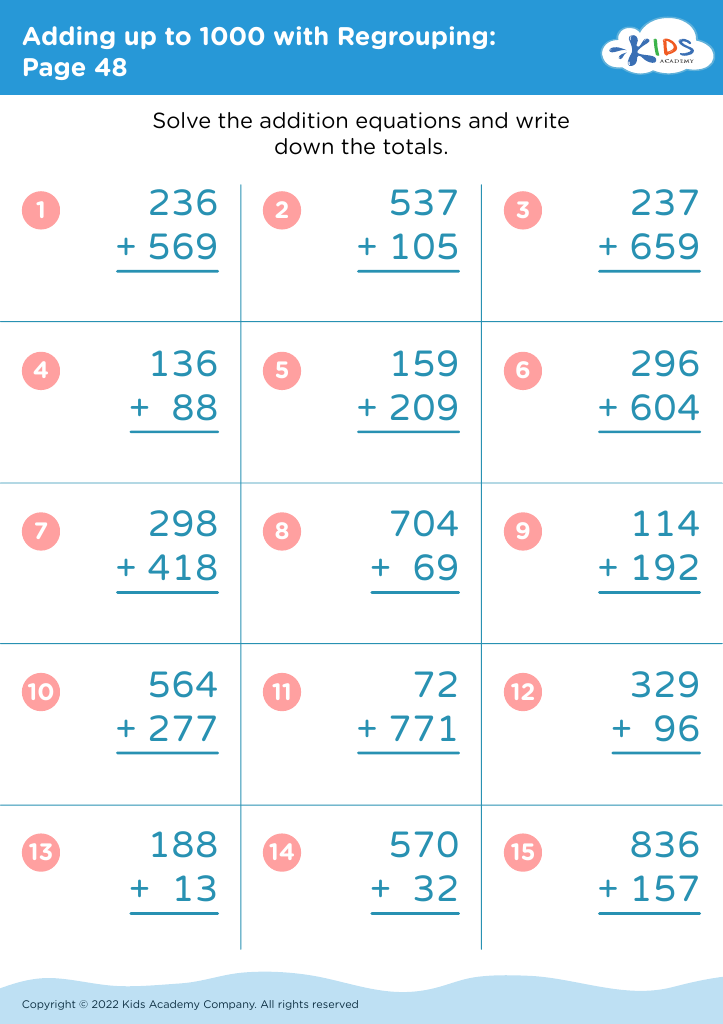
Adding up to 1000 with Regrouping: Page 48
Worksheet
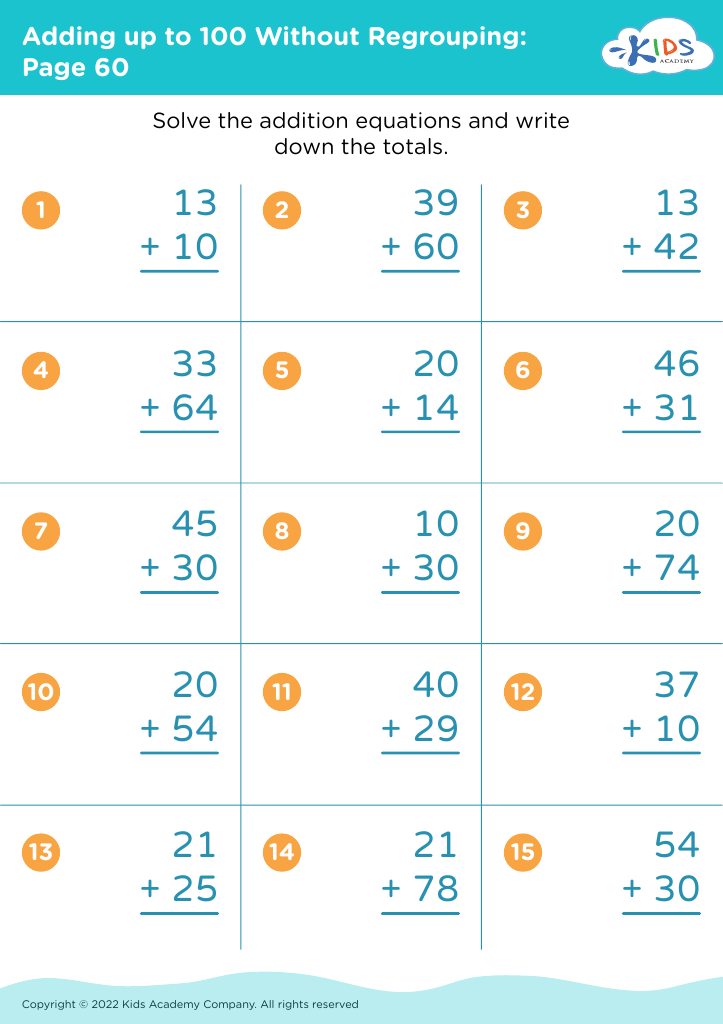
Adding up to 100 Without Regrouping: Page 60
Worksheet


Enhancing comprehension in addition and subtraction for children aged 3-9 is crucial as it lays the foundational skills necessary for future mathematical learning and everyday problem-solving. During these formative years, children are developing critical cognitive skills, and a solid understanding of basic operations helps them make sense of numbers in meaningful ways.

As they engage with addition and subtraction, children learn not just the mechanics of calculations, but also develop essential skills such as logical reasoning, pattern recognition, and spatial awareness. These early math concepts contribute to their overall literacy and numeracy competency, which are vital for success in school and life.

Additionally, fostering a positive attitude towards math during these crucial years can help combat potential anxiety about the subject later on. Engaged children who feel confident in their abilities are more likely to pursue advanced mathematical concepts.

Parents and teachers should employ hands-on activities, games, and storytelling to promote understanding of addition and subtraction, making learning enjoyable and effective. By prioritizing comprehension in these areas, caregivers can support children's academic growth, boost their self-esteem, and provide them with the tools necessary to navigate an increasingly quantitative world.