Logical thinking Addition & Subtraction Worksheets for Ages 3-9
10 filtered results
-
From - To
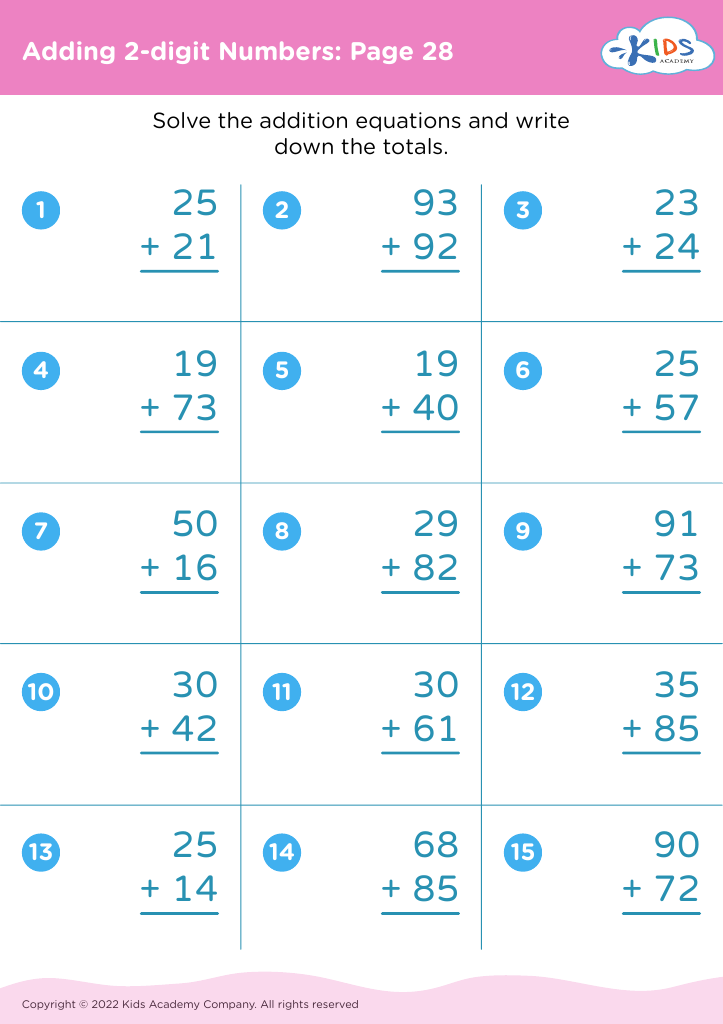
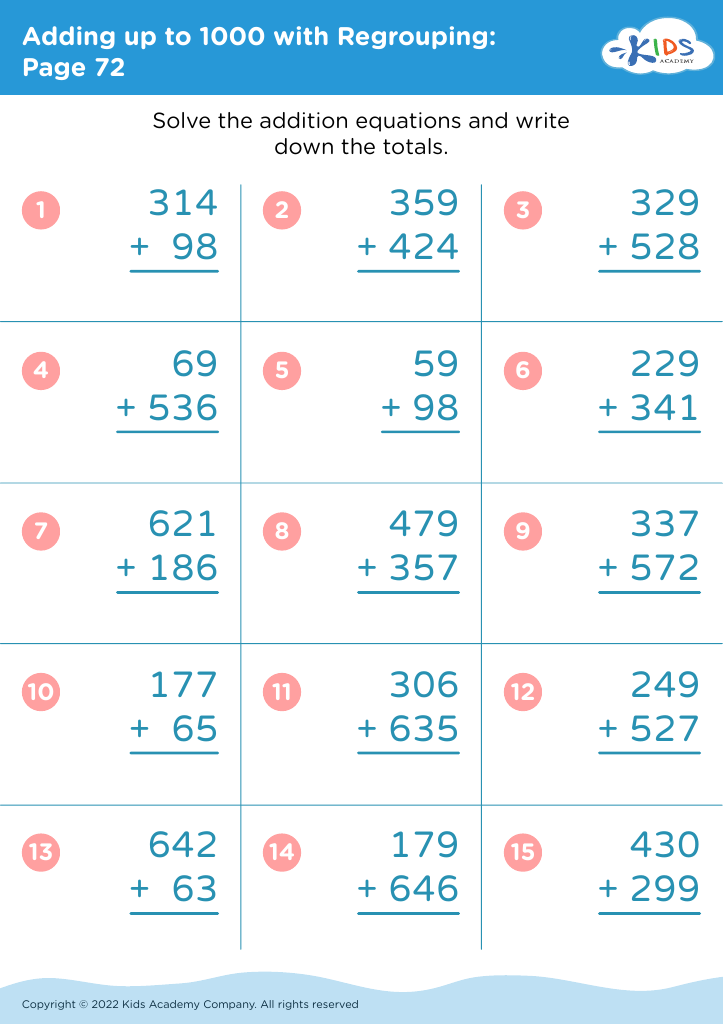
Discover our engaging "Logical Thinking Addition & Subtraction Worksheets" designed for children ages 3-9! These worksheets foster critical thinking and problem-solving skills by integrating fun puzzles and challenges alongside basic math concepts. Your child will develop their logical reasoning as they explore various activities aimed at improving their addition and subtraction abilities. Our user-friendly design makes it easy for both parents and teachers to encourage independent learning. Perfect for classroom settings or home fun, these worksheets ensure an exciting approach to early math education and pave the way for a solid foundation in numeracy. Start your child's mathematical journey today!
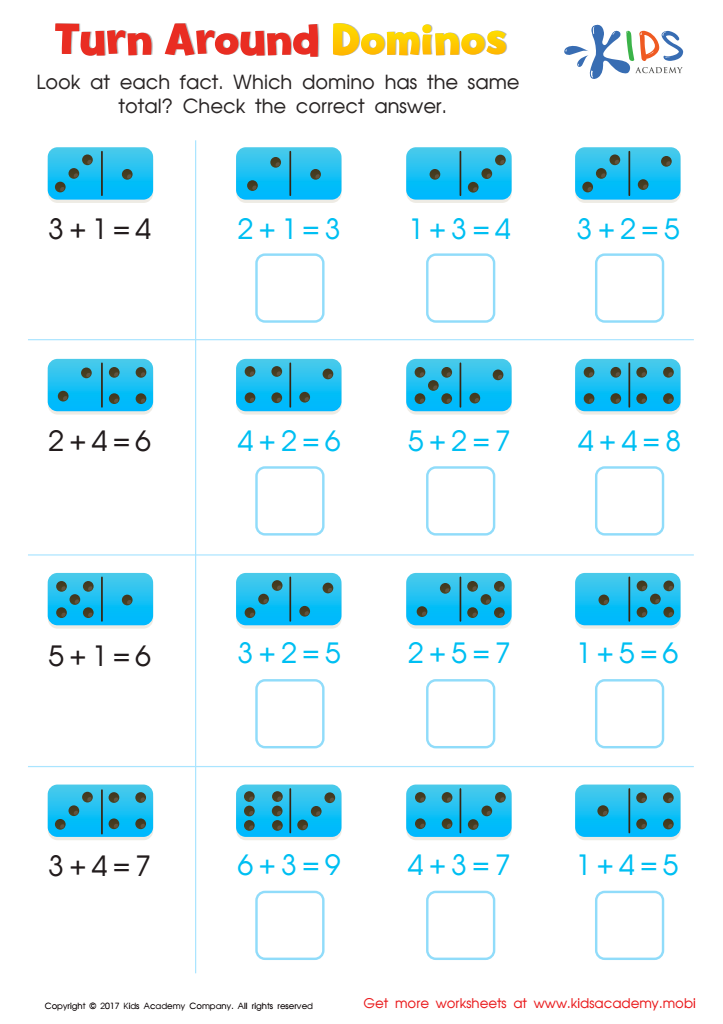
Turn Around Dominos Worksheet
 Assign to My Students
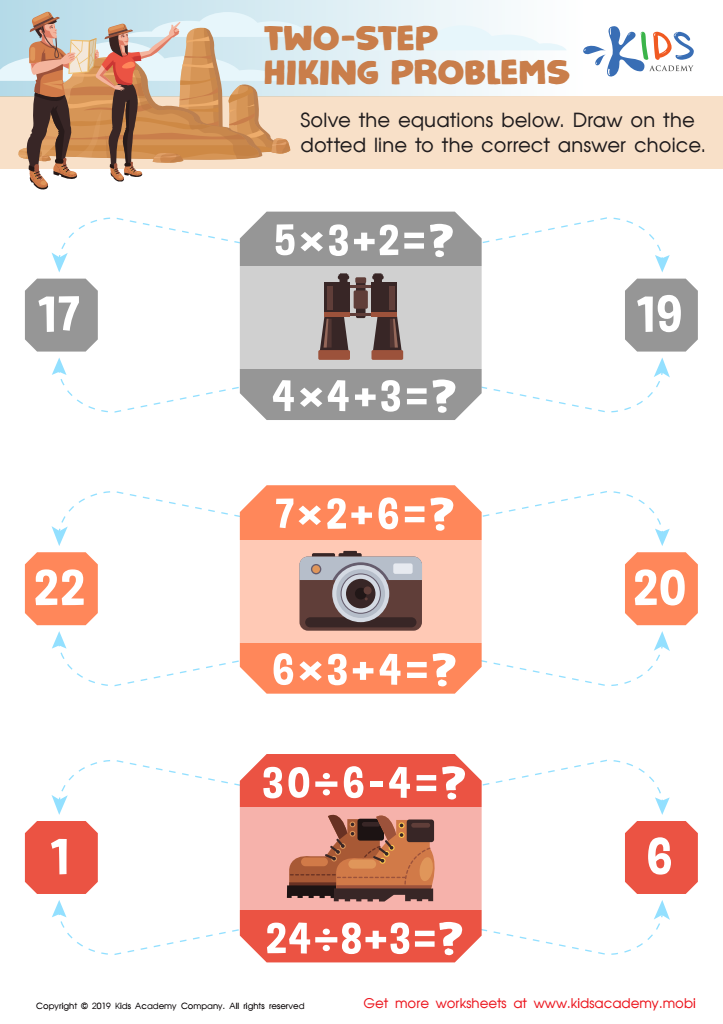
Two-Step Hiking Problems Worksheet
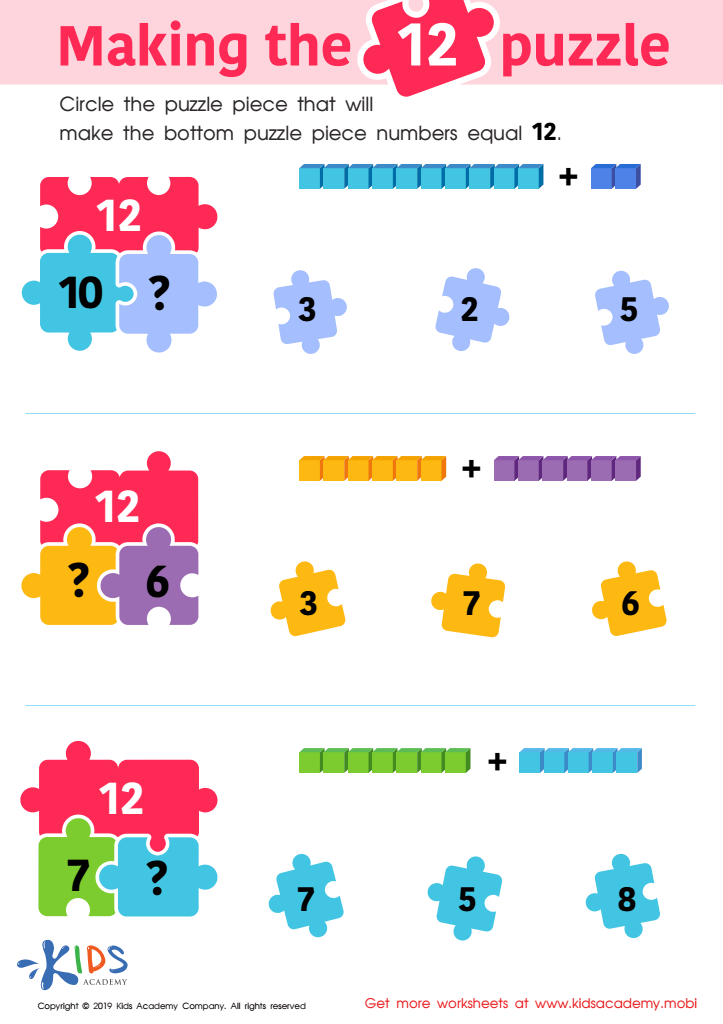
Making the 12 Puzzle Worksheet








Parents and teachers should prioritize fostering logical thinking in addition and subtraction for children aged 3-9 because these foundational skills lay the groundwork for future academic success and problem-solving abilities. At this age, children are developing critical cognitive functions, and introducing them to logical reasoning helps enhance their analytical skills.
Logical thinking in mathematical contexts allows children to understand the underlying principles behind addition and subtraction rather than just memorizing facts. This understanding helps them tackle more complex math challenges as they progress in their education. When children grasp logical reasoning, they are better equipped to connect mathematical concepts to real-life situations, making math more relevant and engaging.
Moreover, fostering these skills at a young age can boost children's confidence and attitudes toward math. Experiences that promote logical thinking often encourage curiosity and exploration, traits essential for lifelong learning. As children successfully navigate various mathematical tasks, they also develop perseverance, critical for overcoming challenges in and out of the classroom.
In sum, nurturing logical thinking in addition and subtraction helps children build a strong mathematical foundation, enhances critical thinking, and prepares them for the academic challenges ahead, ultimately contributing to their holistic development.








