Recognizing Patterns Addition & Subtraction Worksheets for Ages 3-9
23 filtered results
-
From - To
Introducing our "Recognizing Patterns Addition & Subtraction Worksheets" designed for children aged 3-9. Each worksheet is crafted to enhance basic math skills by identifying and understanding patterns in addition and subtraction. These engaging activities help young learners recognize numerical patterns, boosting their problem-solving abilities and comprehension. Perfect for classroom and at-home learning, our printable worksheets cater to various learning levels and make math fun and interactive. Foster your child's early mathematical development and watch them excel with our specialized resources. Explore our collection to support your child's learning journey today!
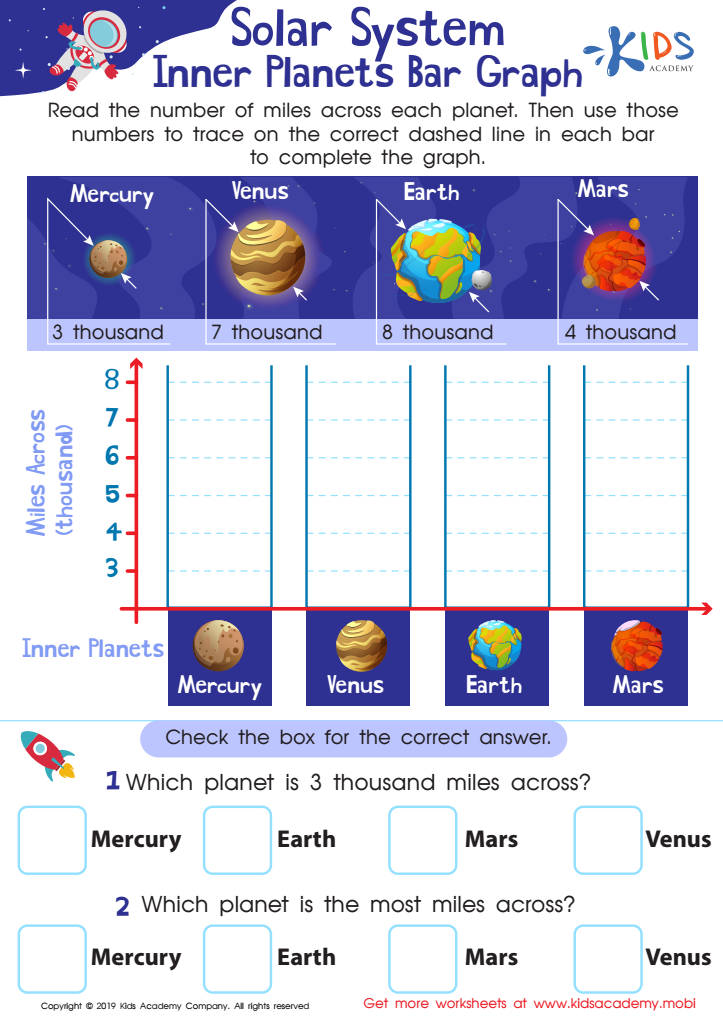
Planets Bar Graph Worksheet
 Assign to My Students
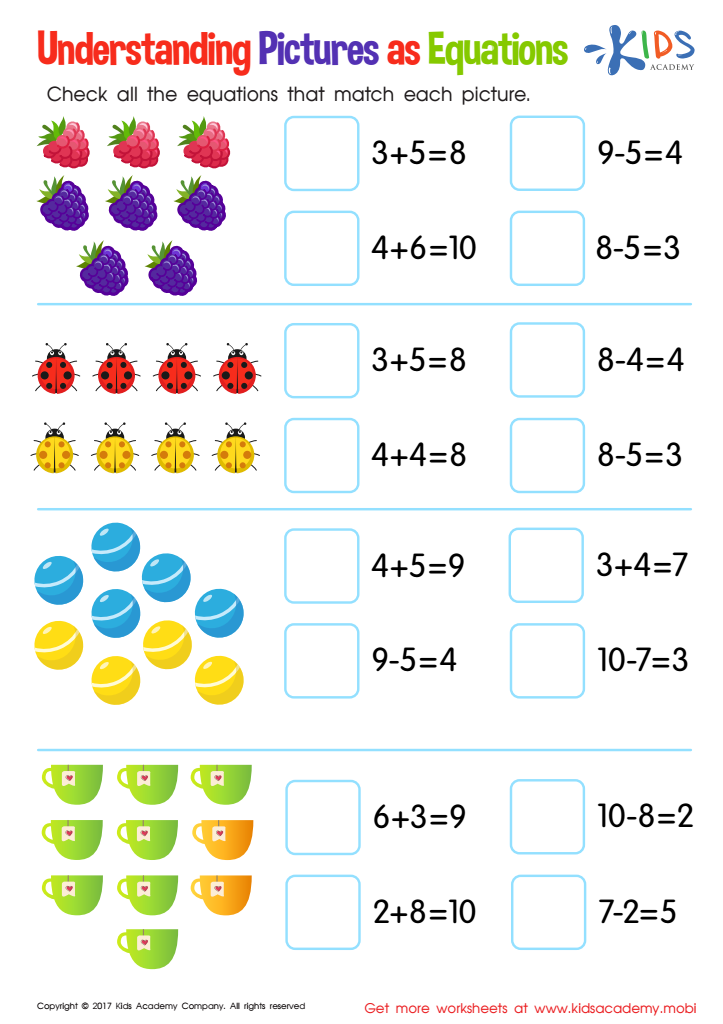
Understanding Pictures as Equations Worksheet
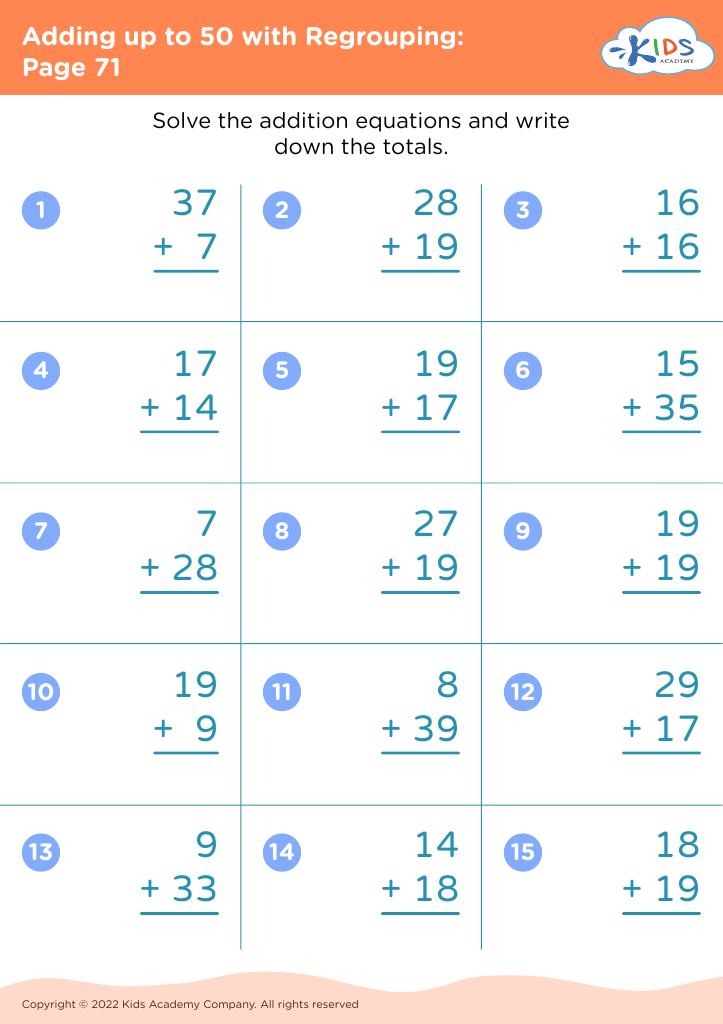
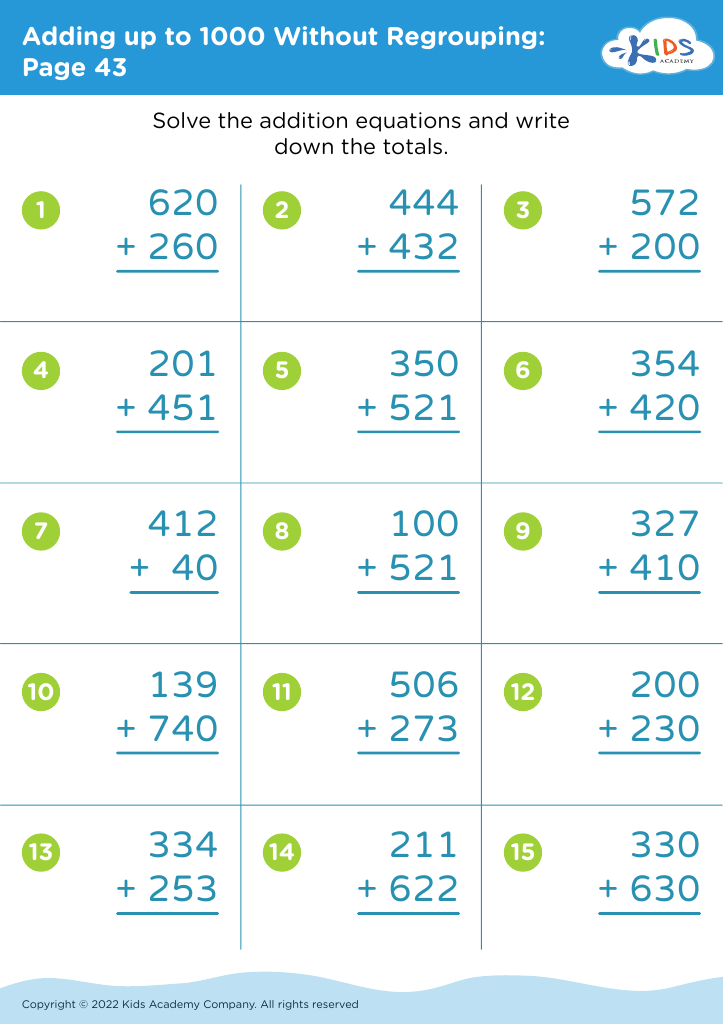
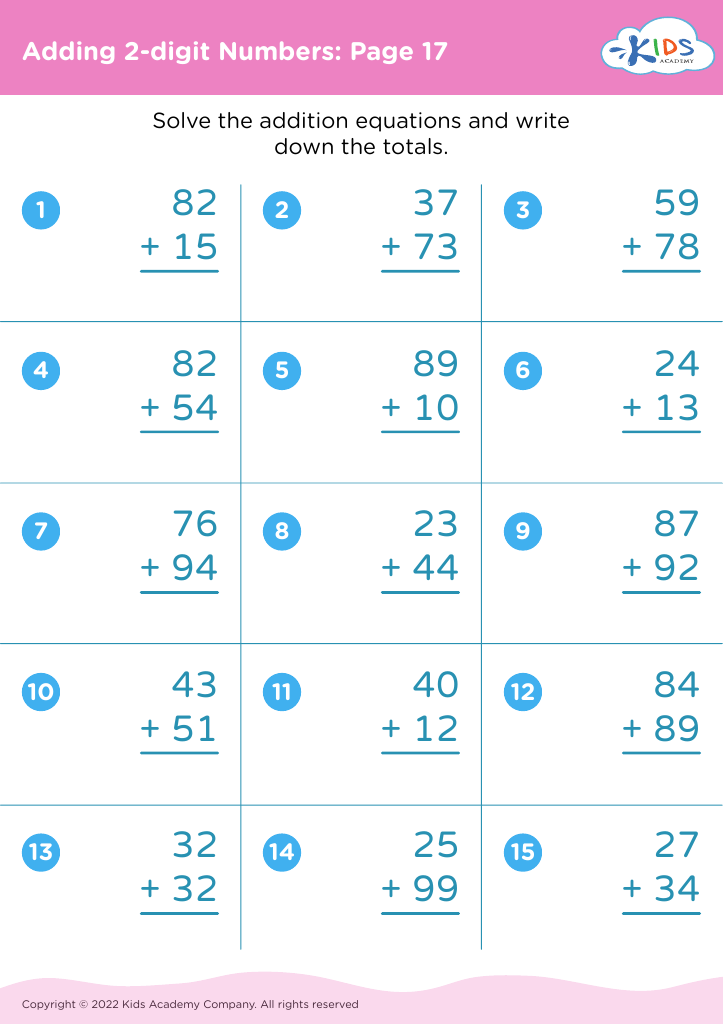
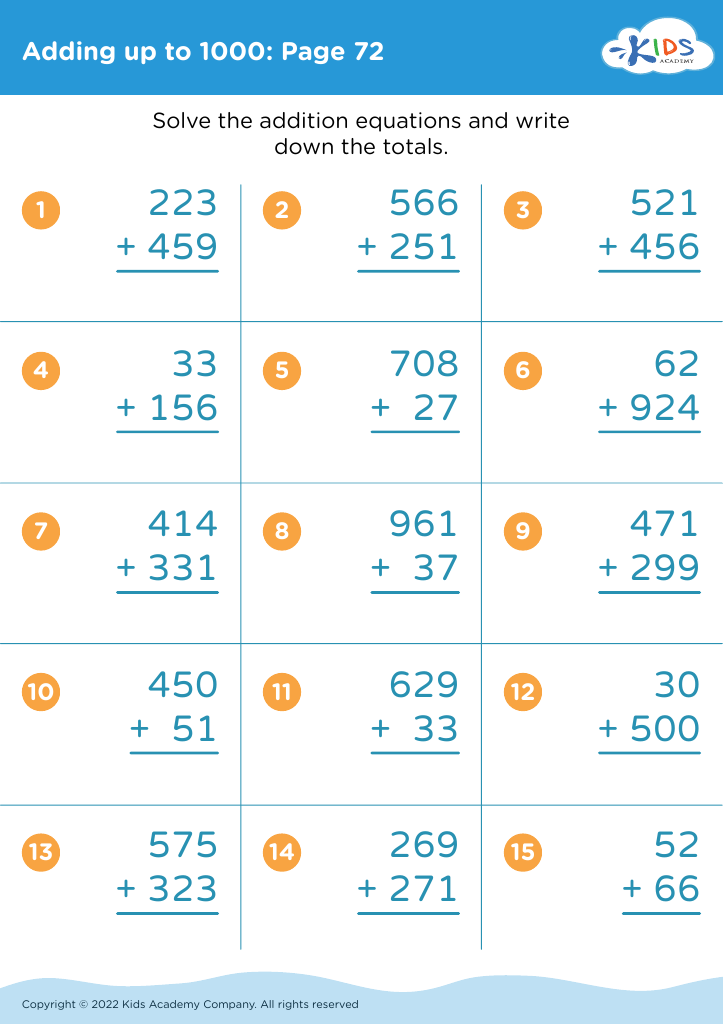
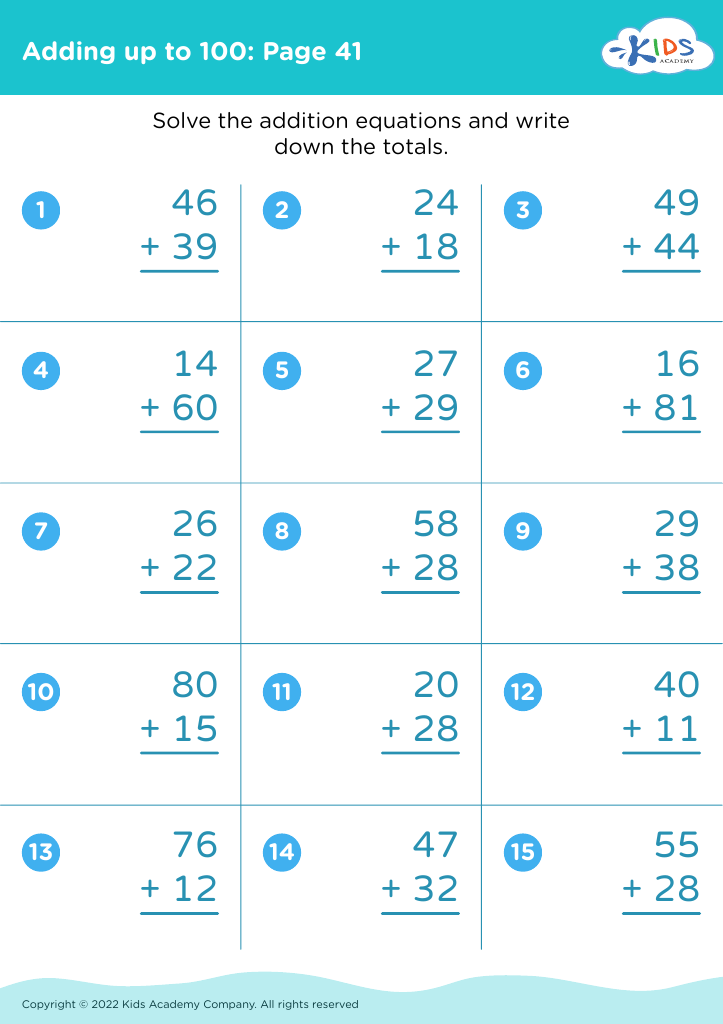
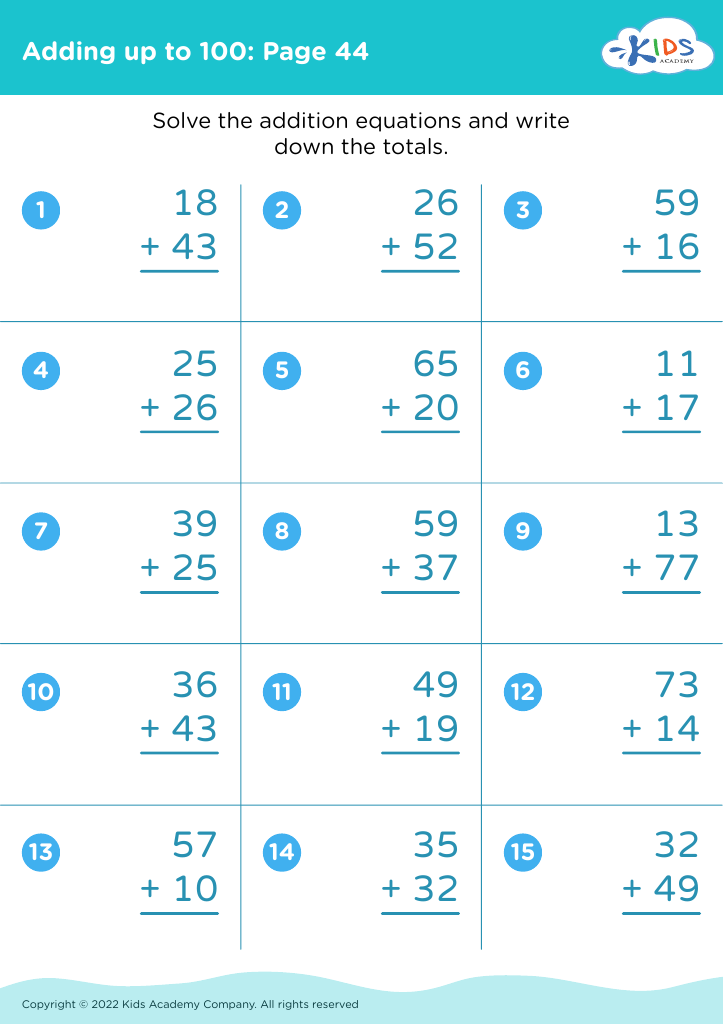








Recognizing patterns in addition and subtraction for children aged 3-9 is crucial for building foundational math skills. At this critical stage of development, children are highly receptive to understanding basic mathematical concepts that will support their future learning. Patterns help young learners internalize the logic behind addition and subtraction, enabling them to predict and solve mathematical equations more efficiently.
Patterns in math make abstract concepts more concrete. For instance, when children notice that adding one to a number always increases the result by one, they start grasping the consistent behavior of numbers. This understanding improves their number sense, enhances mental math skills, and fosters a love for mathematical reasoning.
Moreover, pattern recognition aligns with other areas of learning, such as language, art, and science, promoting a well-rounded intellectual development. Teachers and parents who emphasize pattern recognition in math help children develop critical thinking skills, improve their ability to focus, and cultivate problem-solving abilities.
Furthermore, these skills are not just academic; they play a role in day-to-day decisions. Whether following a recipe that requires measurements or budgeting an allowance, recognizing patterns in addition and subtraction is fundamentally practical. Supporting children through this key learning phase ensures they build confidence and competence in math, laying a strong foundation for future educational success.








