Understanding addition Addition & Subtraction Worksheets for Ages 3-9
15 filtered results
-
From - To
Our "Understanding Addition & Subtraction Worksheets for Ages 3-9" are designed to make learning basic math skills fun and engaging for young minds. Tailored to meet the developmental needs of children aged 3-9, these worksheets provide comprehensive exercises to help students grasp the concepts of addition and subtraction. Each activity is crafted to build a solid foundation in early math, fostering problem-solving abilities and boosting confidence. Colorful illustrations and interactive challenges keep kids motivated, making math a delightful adventure. Empower your child with essential arithmetic skills using our expertly designed educational resources.
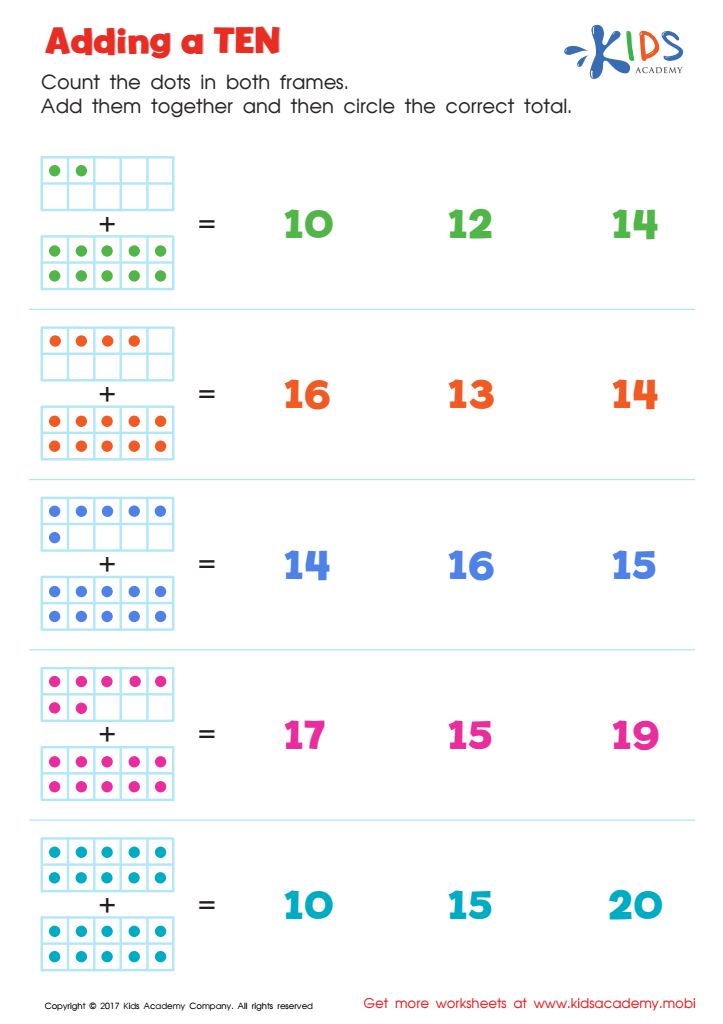
Adding a Ten Worksheet
 Assign to My Students
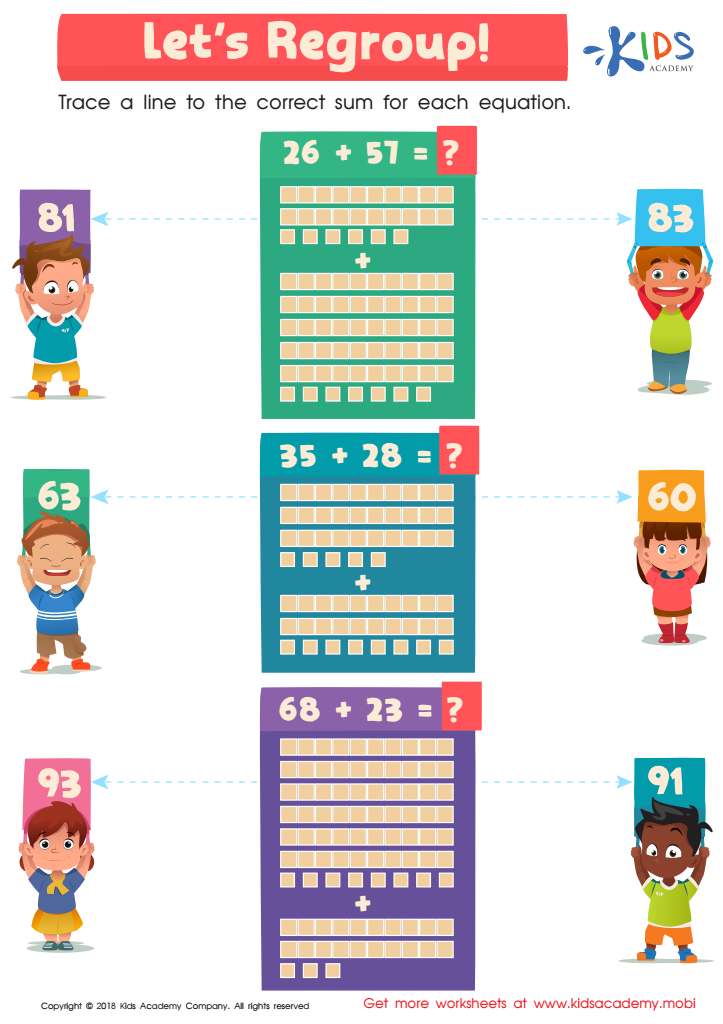
Let's Regroup Worksheet
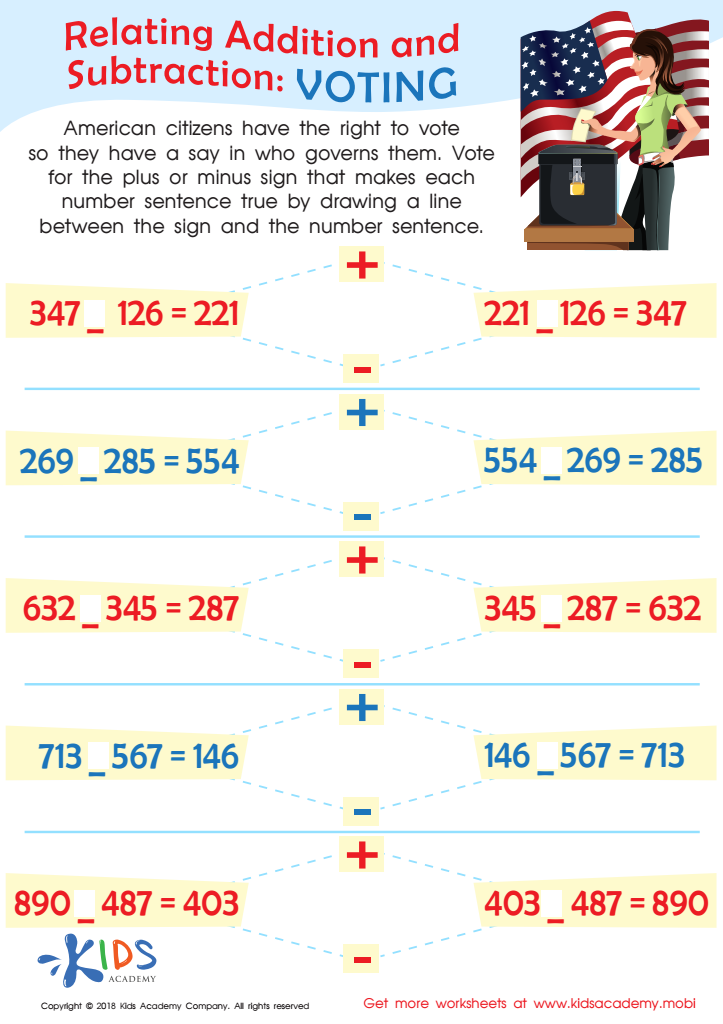
Voting Worksheet
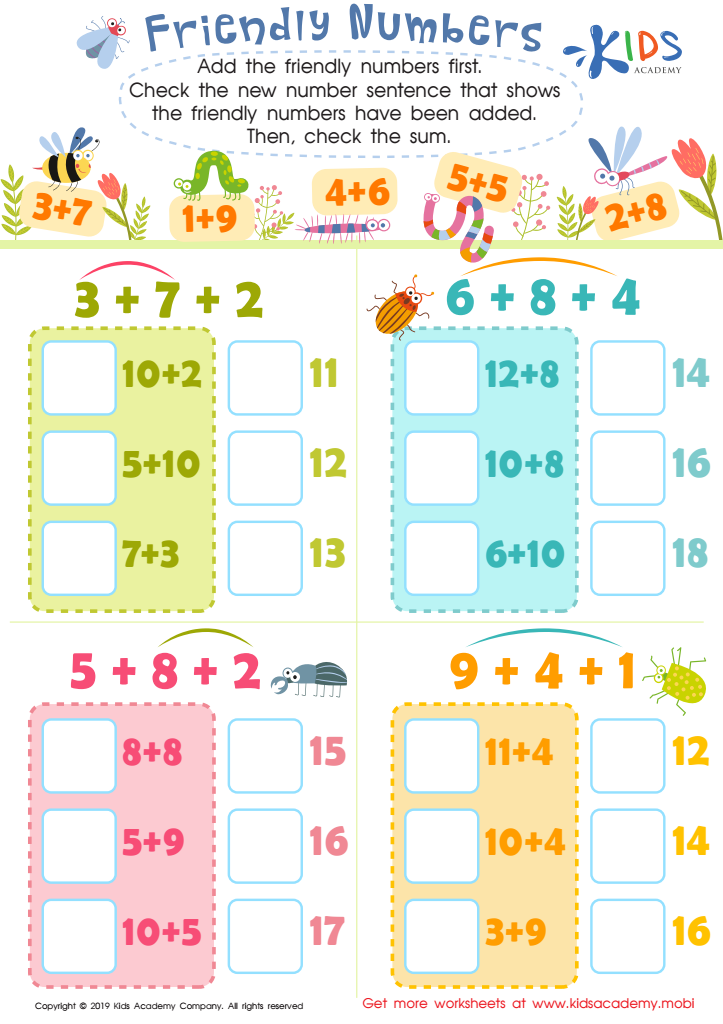
Friendly Numbers Worksheet
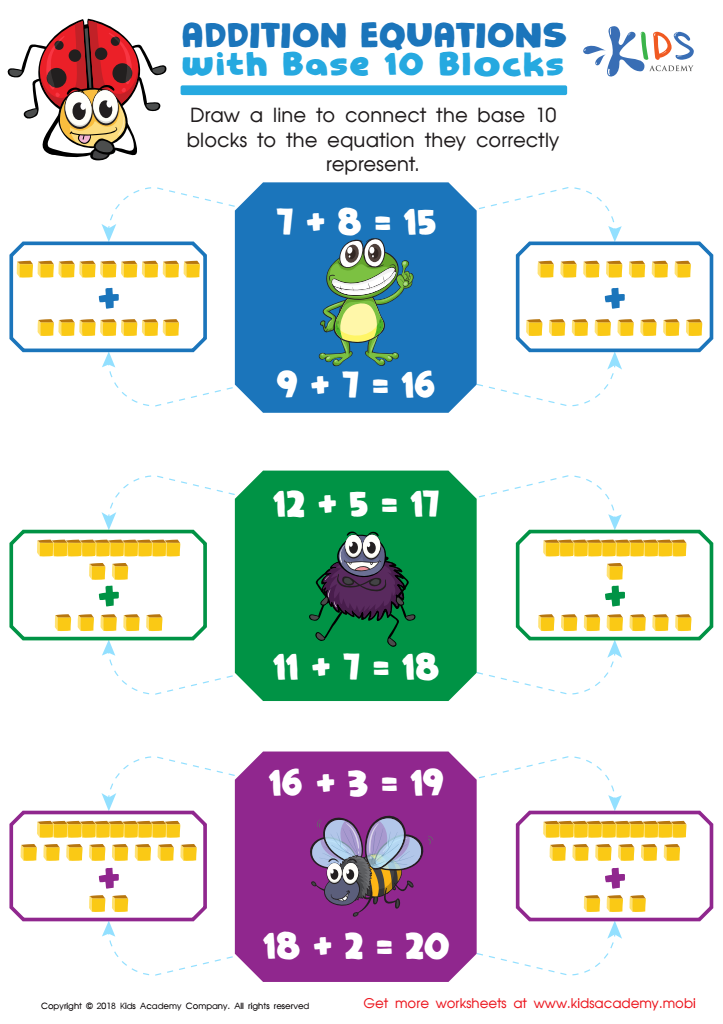
Addition Equations With Base 10 Blocks Worksheet
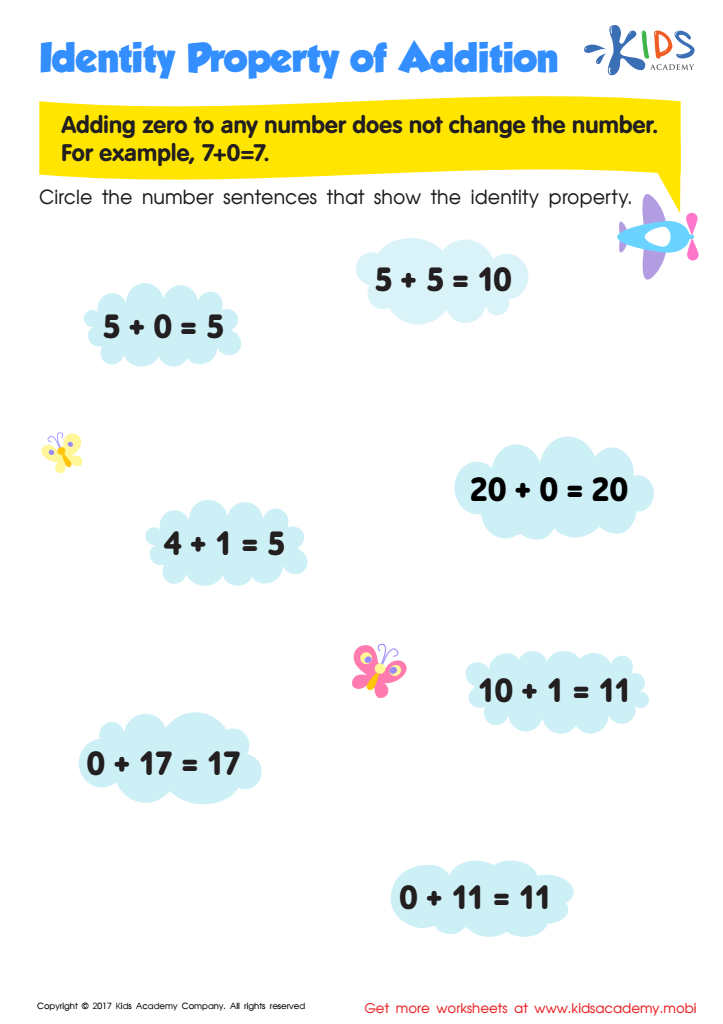
Identity Property of Addition Worksheet
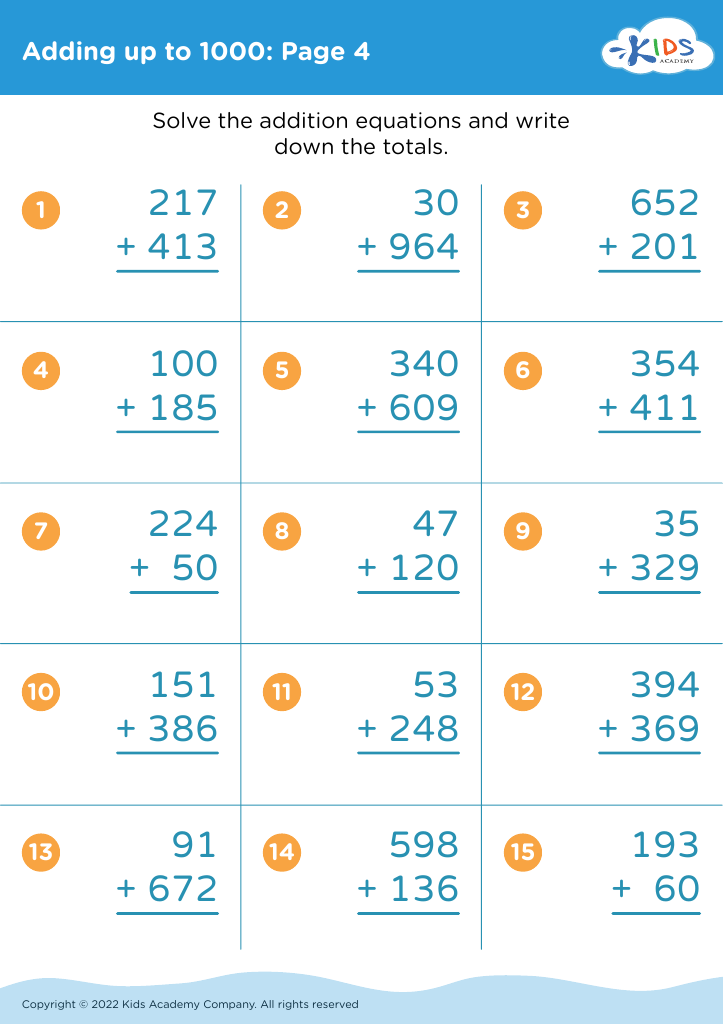
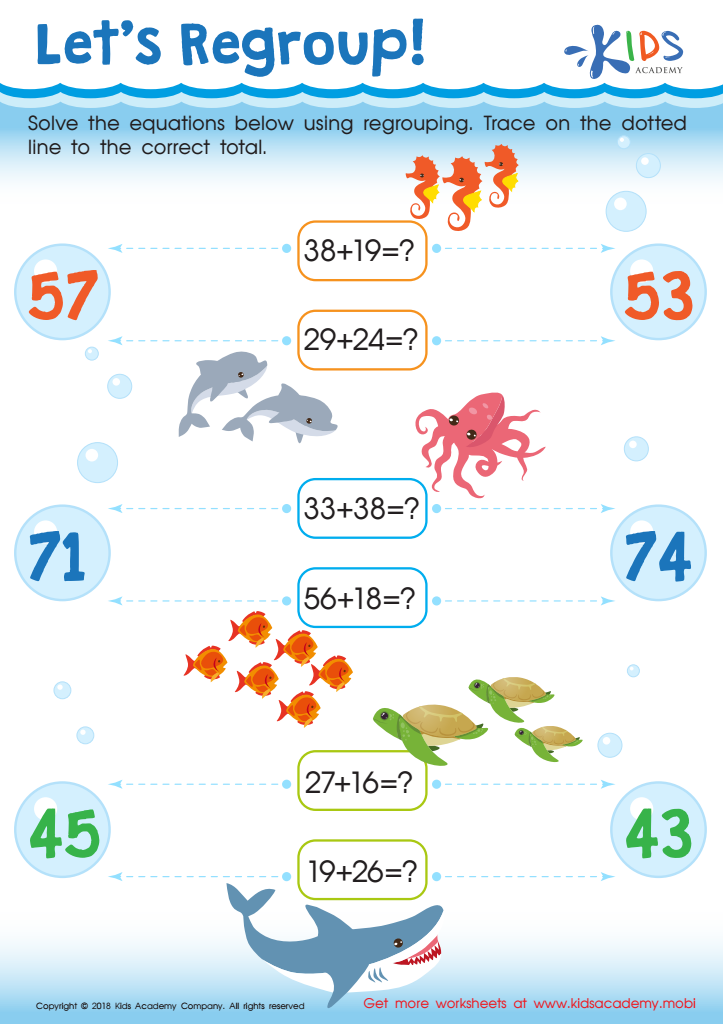
Let's Regroup! Worksheet
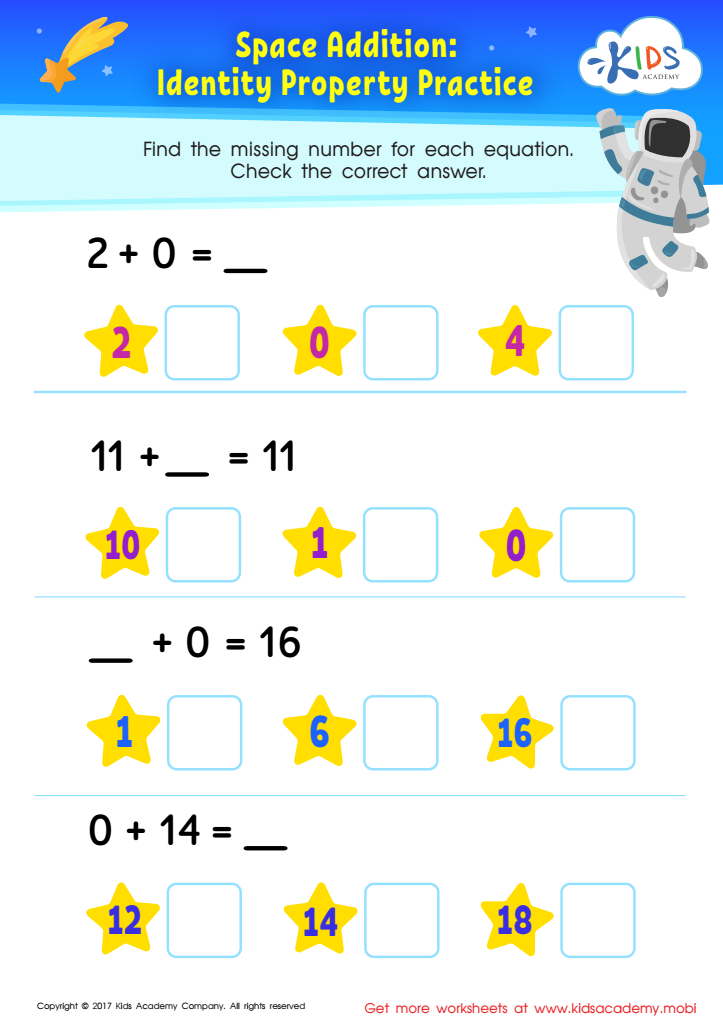
Space Addition: Identity Property Practice Worksheet
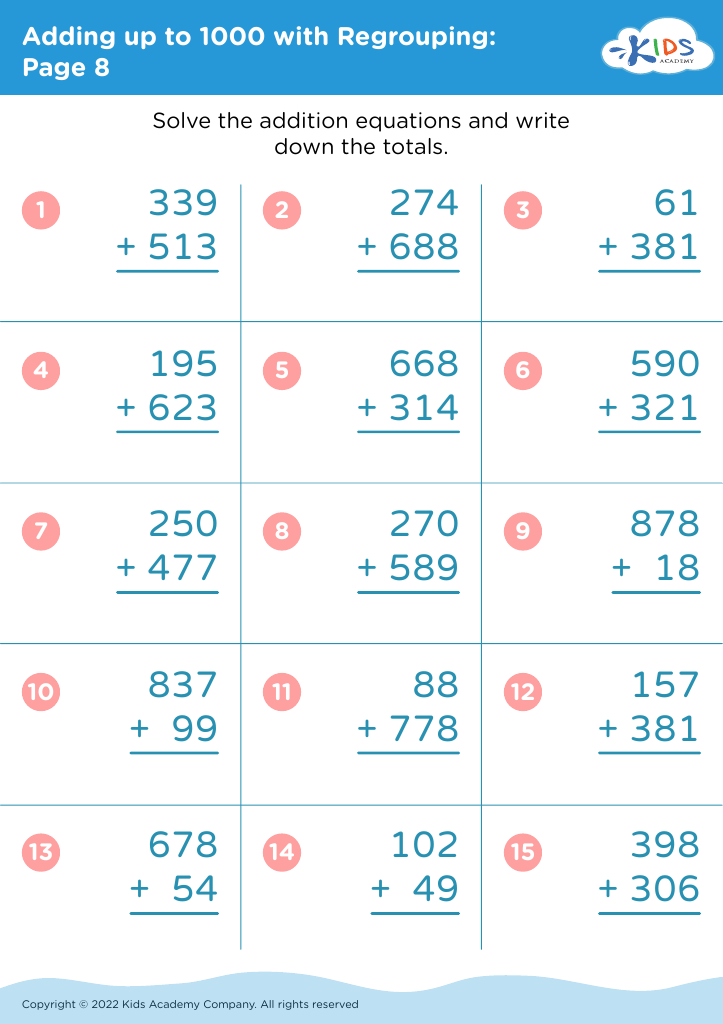
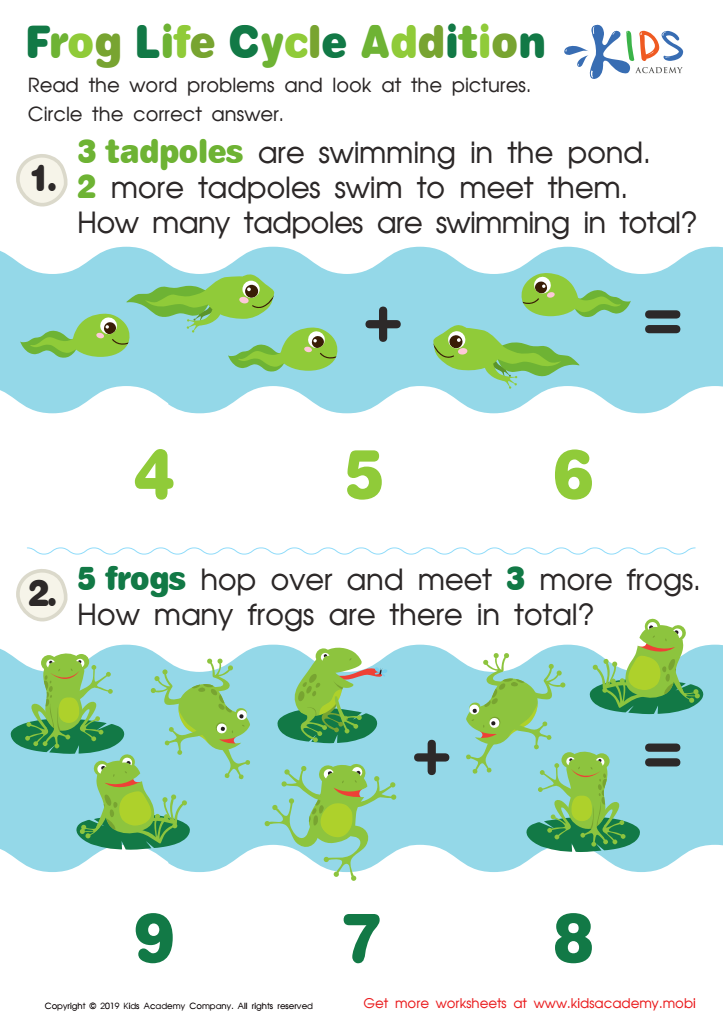
Frog Life Cycle Addition Worksheet
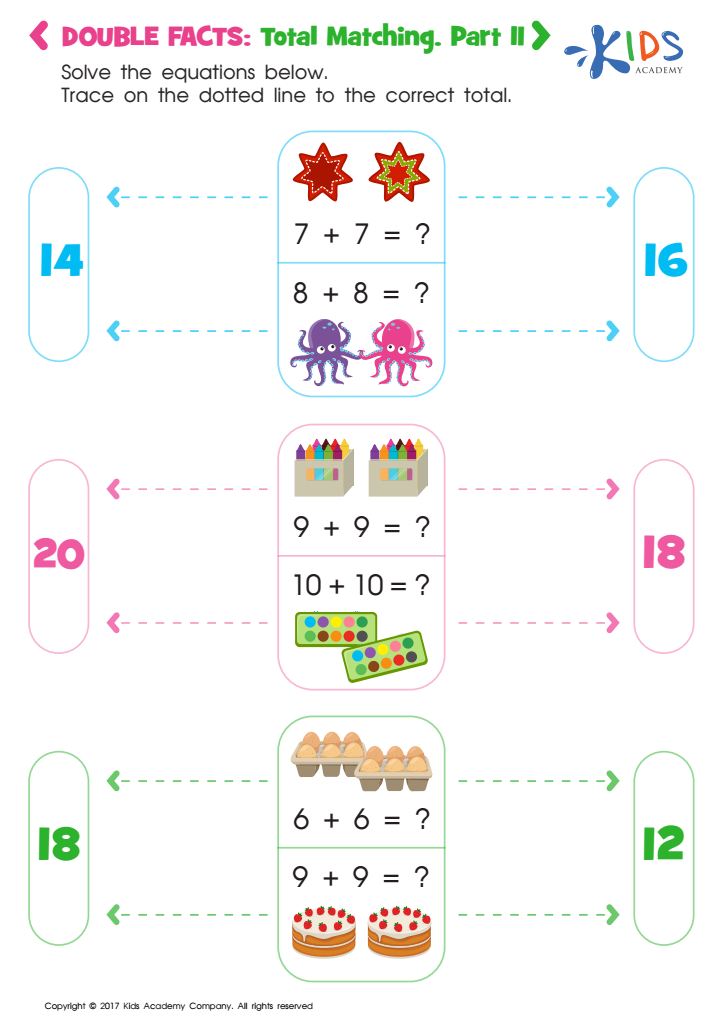
Double Facts: Total Matching 2 Worksheet
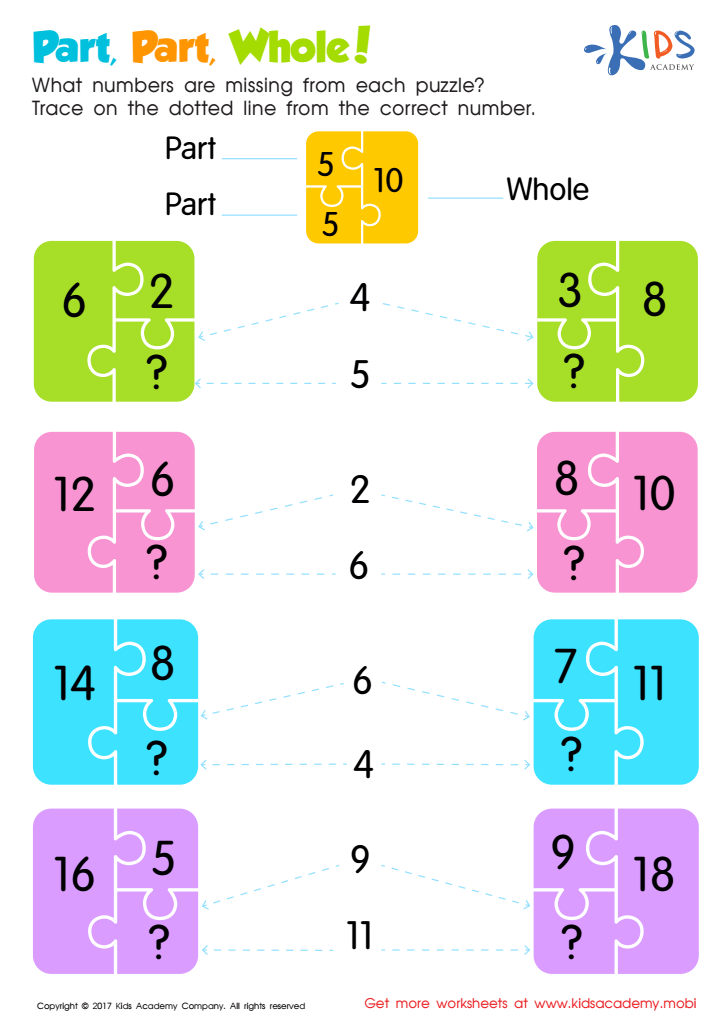
Part, Part, Whole Worksheet
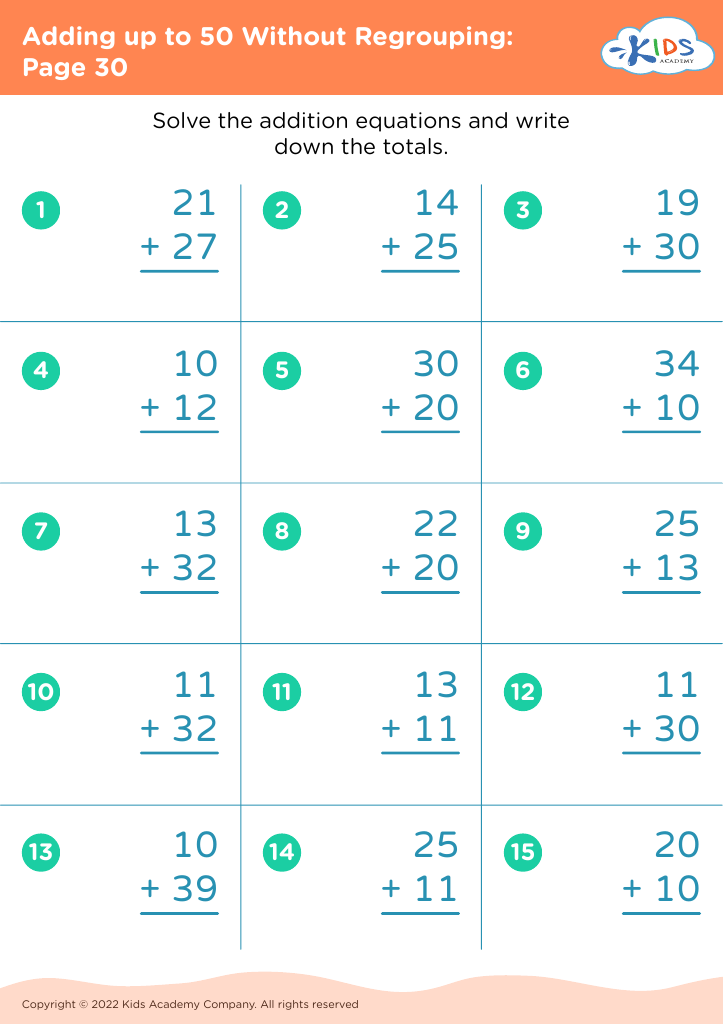








Understanding addition and subtraction for young children, ages 3-9, is foundational to their overall mathematical development and academic success. During these formative years, children are developing critical thinking and problem-solving skills that are essential for later life. Grasping basic arithmetic concepts helps to build their confidence and ability to handle more complex mathematical operations in subsequent school years.
For parents and teachers, fostering a strong understanding of addition and subtraction in early childhood is crucial. It establishes a positive attitude towards mathematics, dispelling fears or anxieties that can impede learning later on. Mastery of these core concepts enables children to approach math with curiosity and enthusiasm.
Furthermore, addition and subtraction are not just academic skills; they are life skills. They support everyday activities such as making fair trades with friends, understanding the passage of time, managing allowances, and navigating spatial relationships.
Early competence in these areas also allows teachers to identify and address any learning difficulties promptly, providing tailored support to ensure every child progresses effectively. Overall, prioritizing the development of addition and subtraction skills equips children with a solid foundation for both their educational journey and real-life situations, making it a crucial focus for both parents and educators.








