Check out this FREE Trial Lesson on Addition & Subtraction for age 3-9!

Match Exactly the Same

Favorites
With answer key
Interactive
  • 3-9
  • Understanding fractions
  • Addition & Subtraction
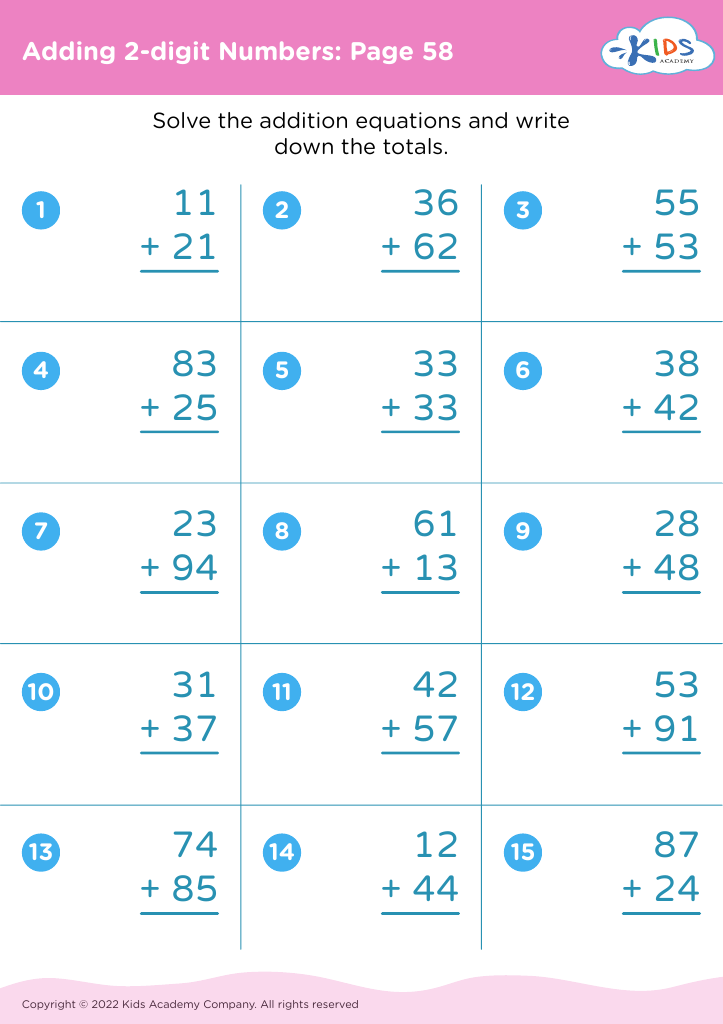
Adding 2-digit Numbers: Page 58

Adding 2-digit Numbers: Page 58

Adding 2-digit Numbers: Page 58
Worksheet
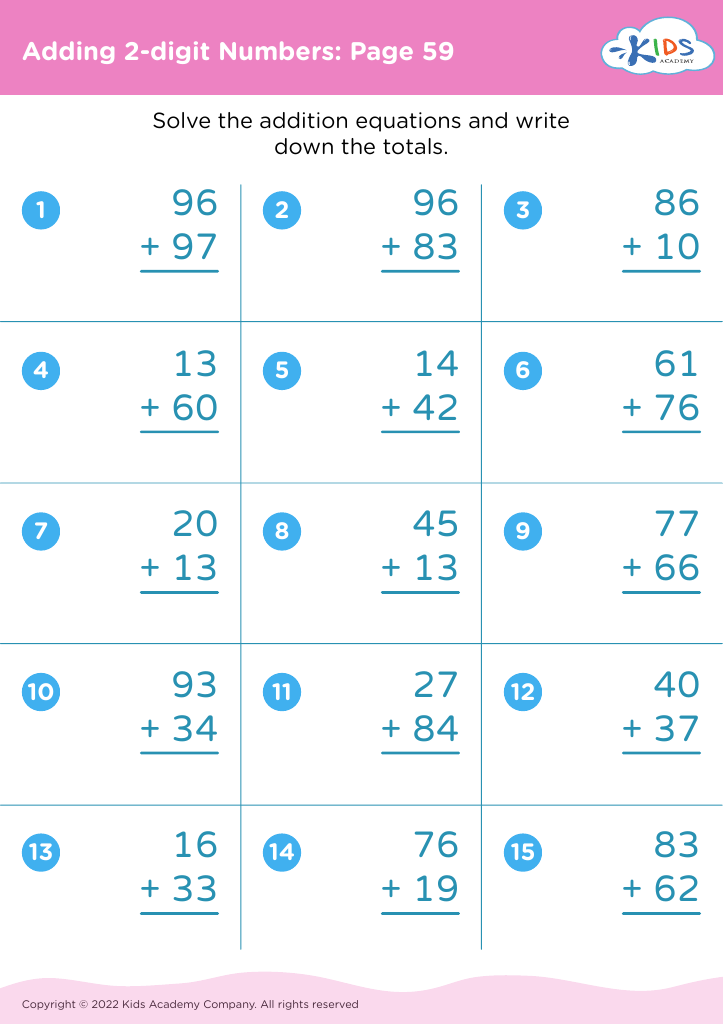
Adding 2-digit Numbers: Page 59

Adding 2-digit Numbers: Page 59

Adding 2-digit Numbers: Page 59
Worksheet
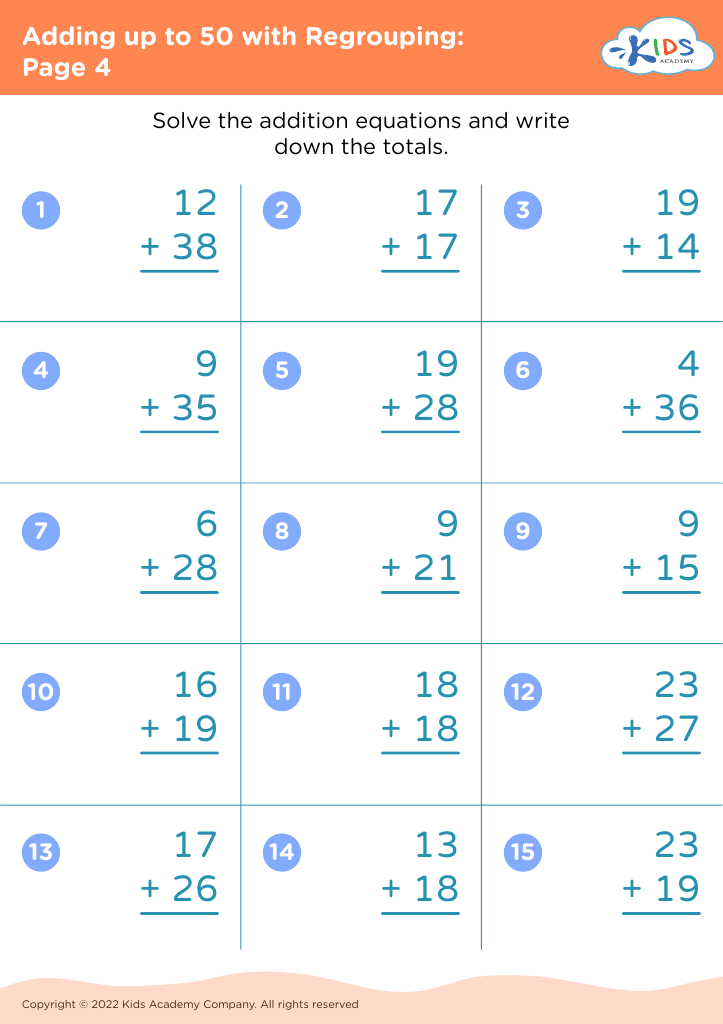
Adding up to 50 with Regrouping: Page 4
Worksheet
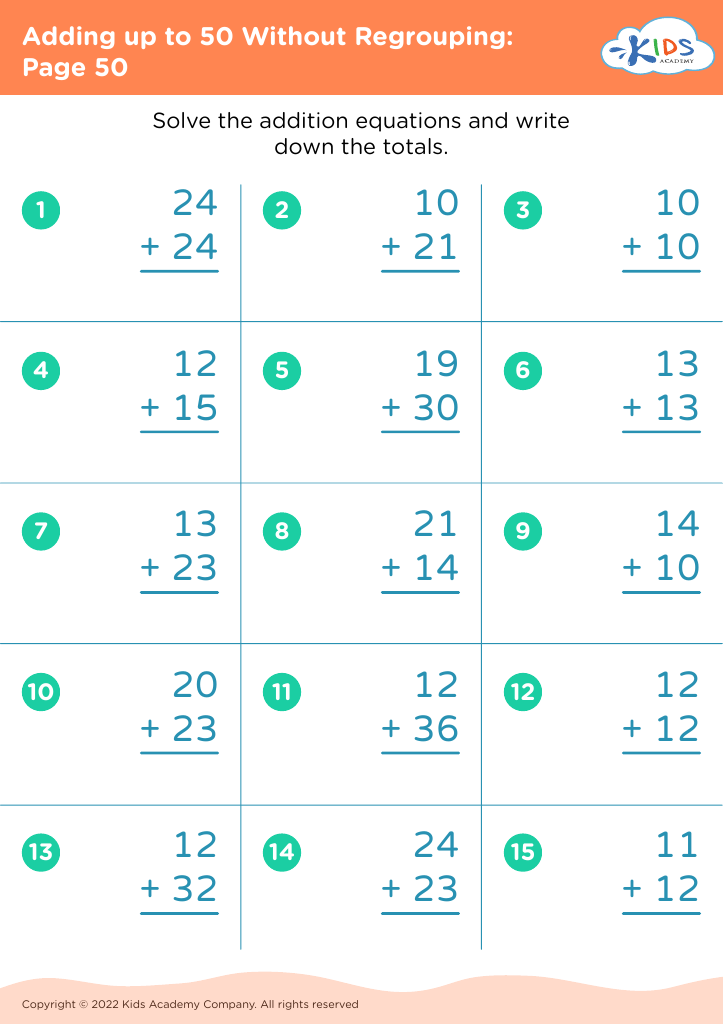
Adding up to 50 Without Regrouping: Page 50
Worksheet
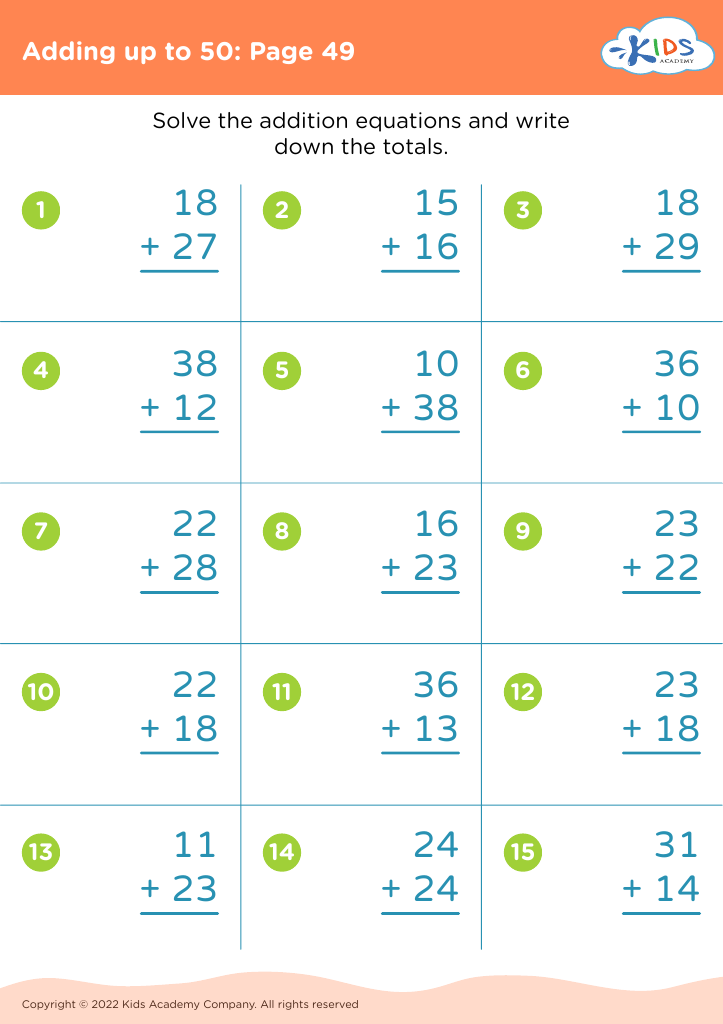
Adding up to 50: Page 49

Adding up to 50: Page 49

Adding up to 50: Page 49
Worksheet
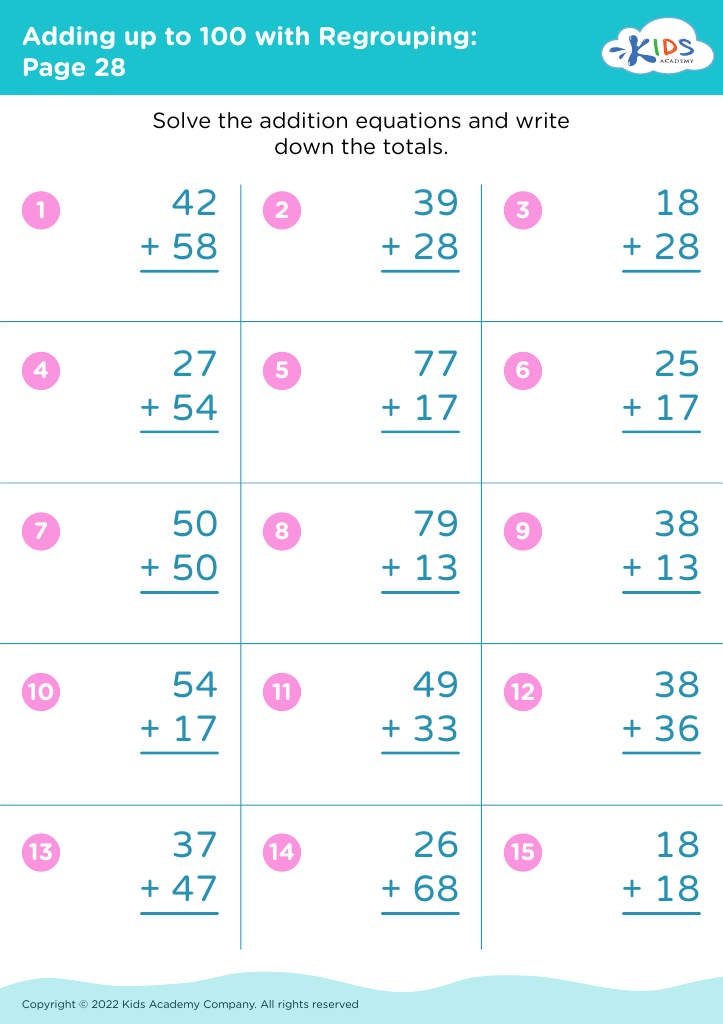
Adding up to 100 with Regrouping: Page 28
Worksheet
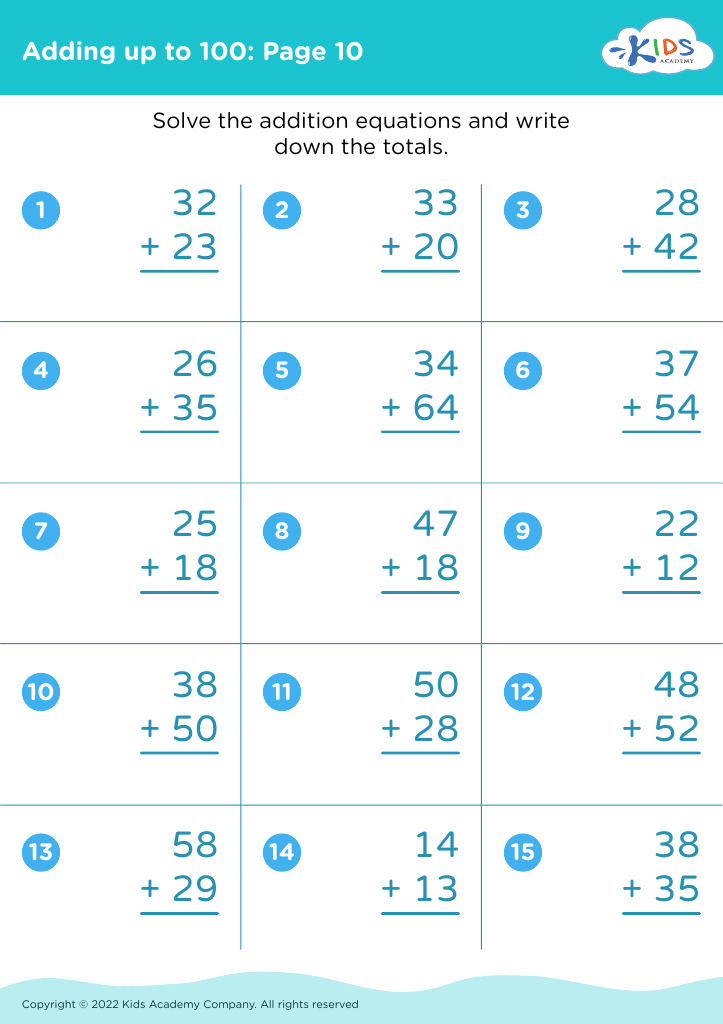
Adding up to 100: Page 10

Adding up to 100: Page 10

Adding up to 100: Page 10
Worksheet
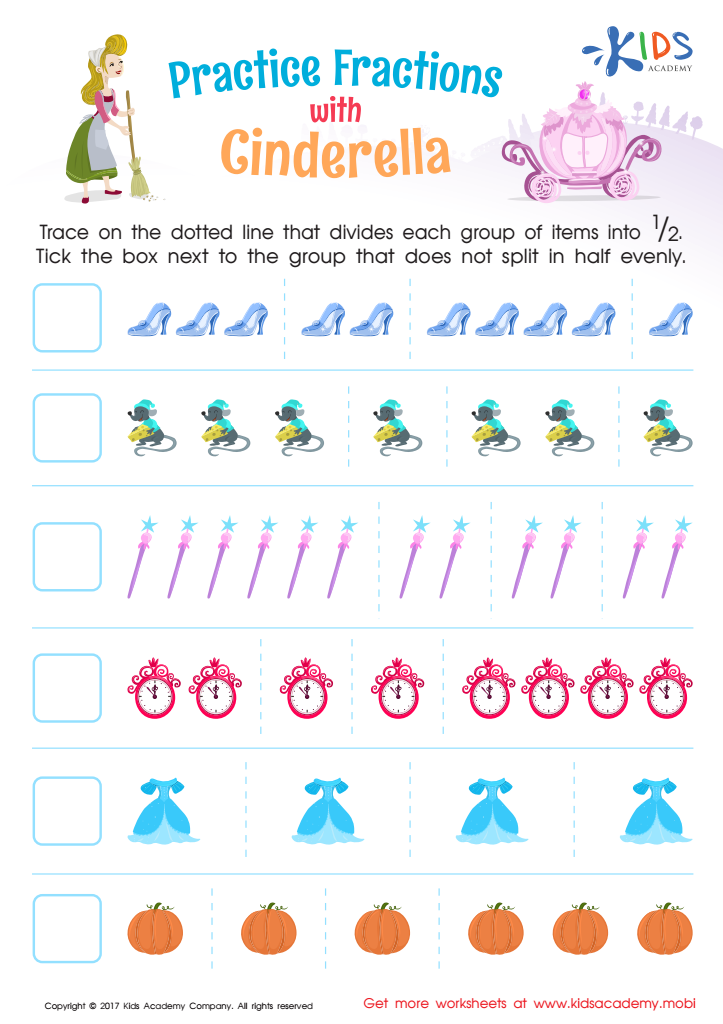
Cinderella Fraction Practice

Fractions: Cinderella Printable

Cinderella and ½ are the perfect pair to excite your child about learning fractions.
Fractions: Cinderella Printable
Worksheet
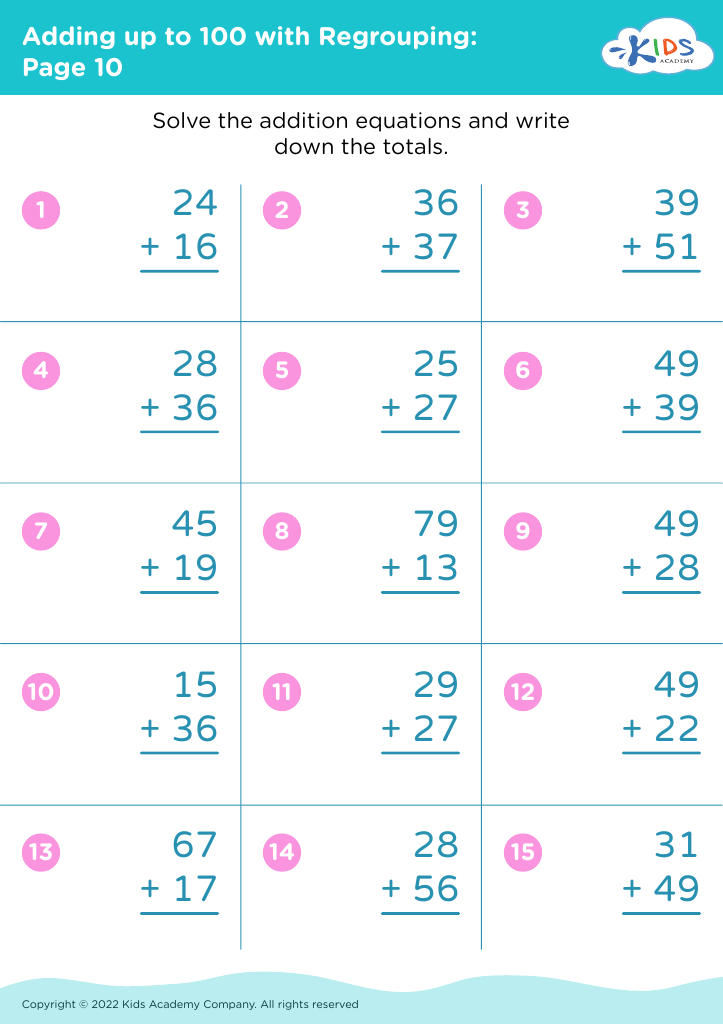
Adding up to 100 with Regrouping: Page 10
Worksheet
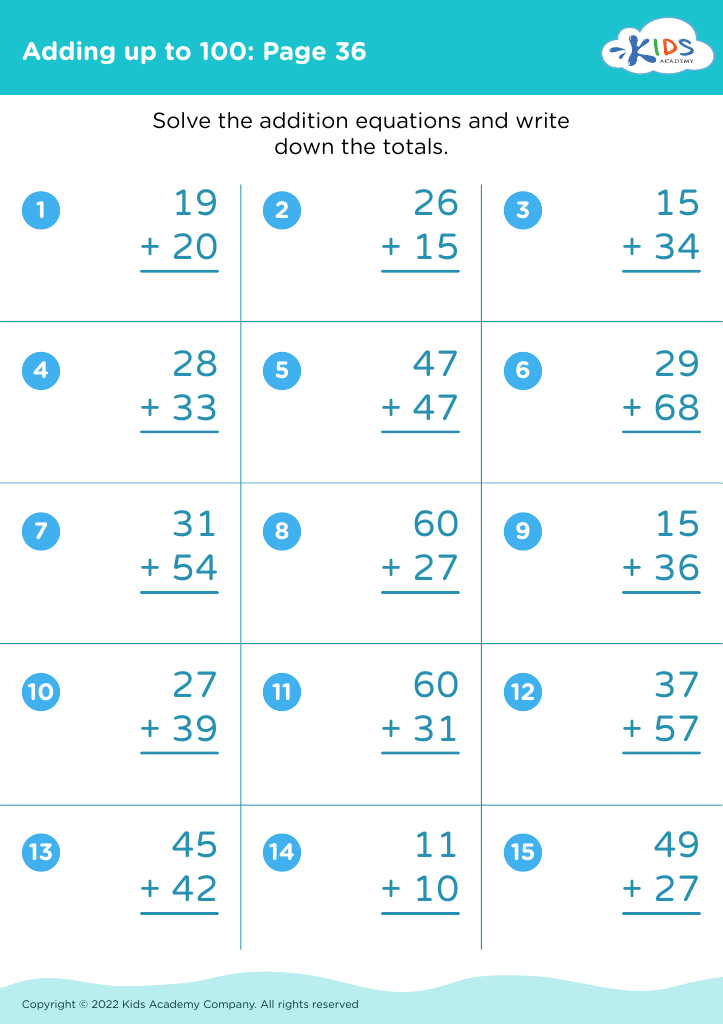
Adding up to 100: Page 36

Adding up to 100: Page 36

Adding up to 100: Page 36
Worksheet
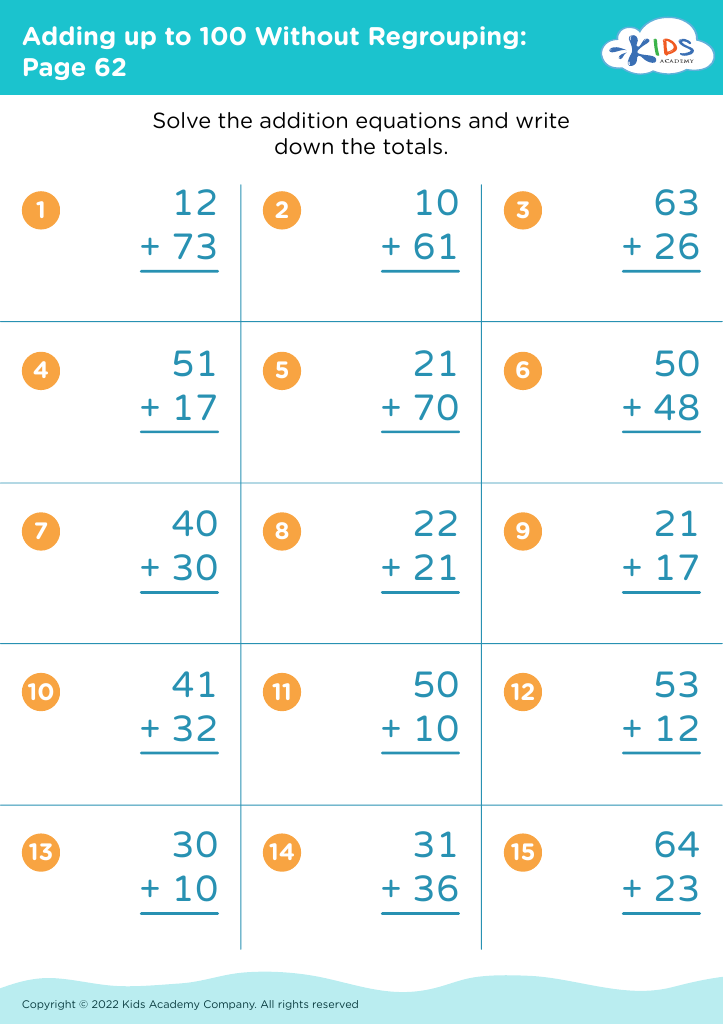
Adding up to 100 Without Regrouping: Page 62
Worksheet
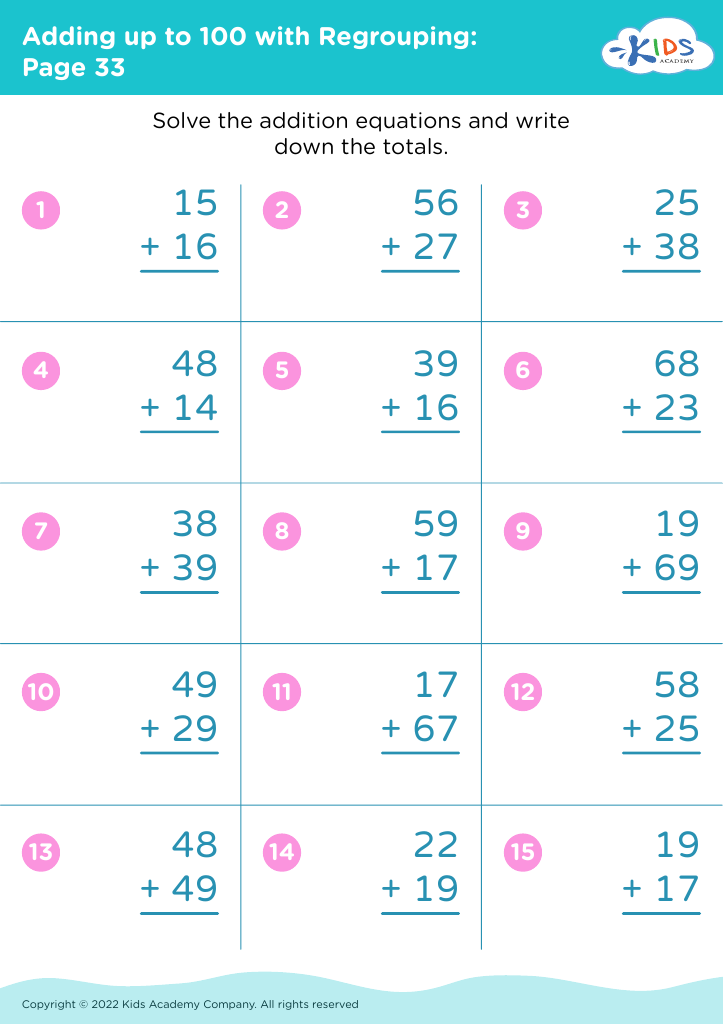
Adding up to 100 with Regrouping: Page 33
Worksheet
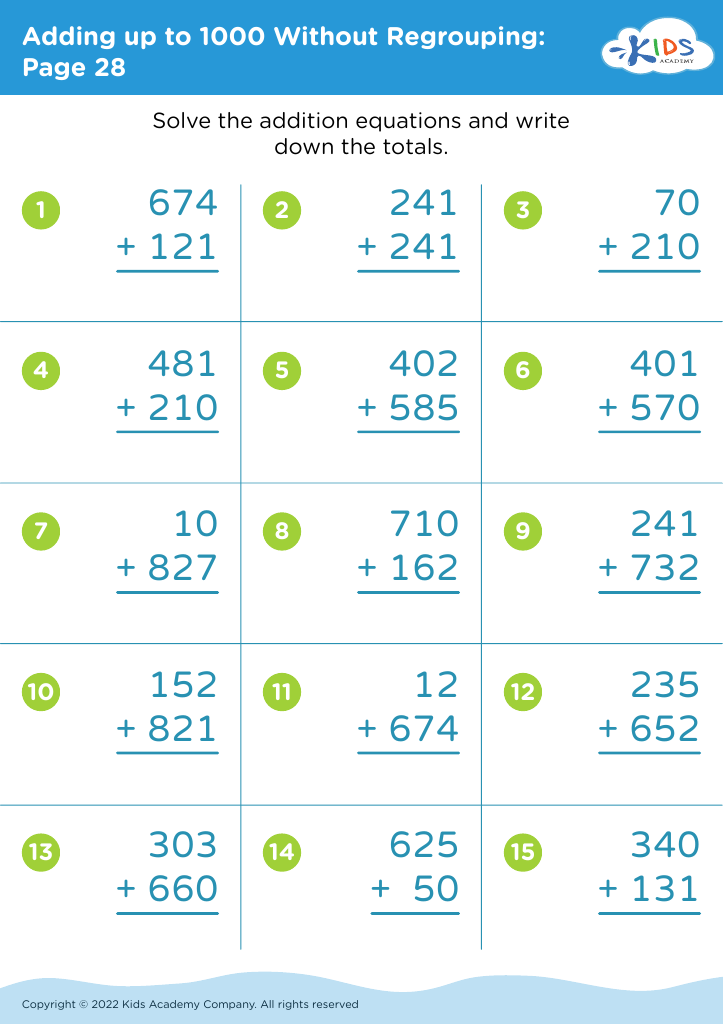
Adding up to 1000 Without Regrouping: Page 28
Worksheet
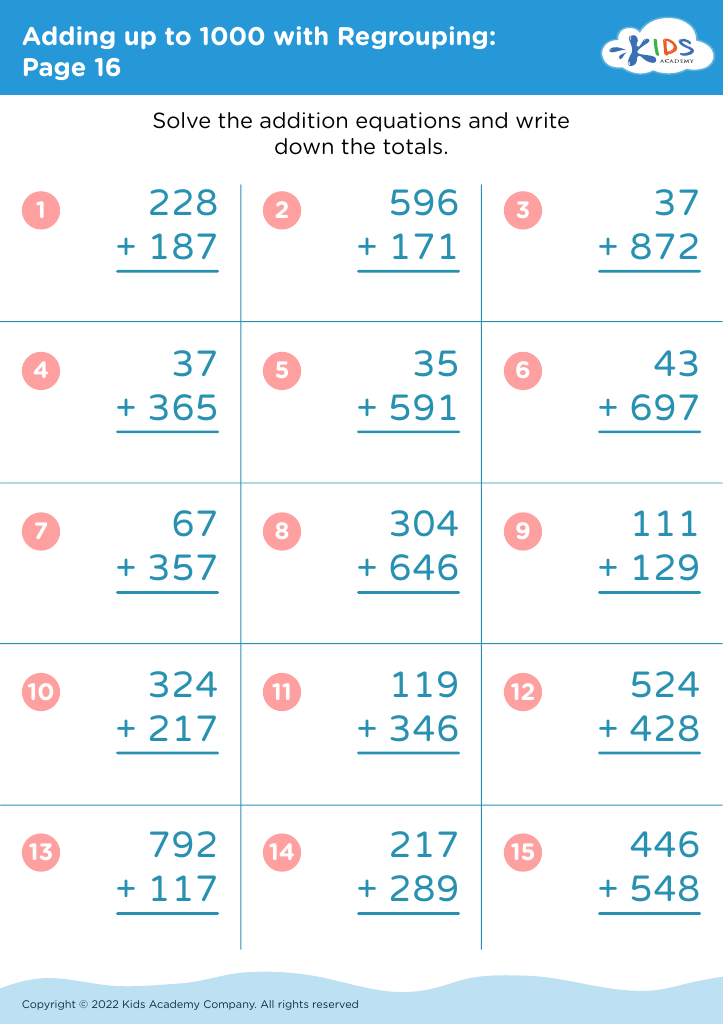
Adding up to 1000 with Regrouping: Page 16
Worksheet
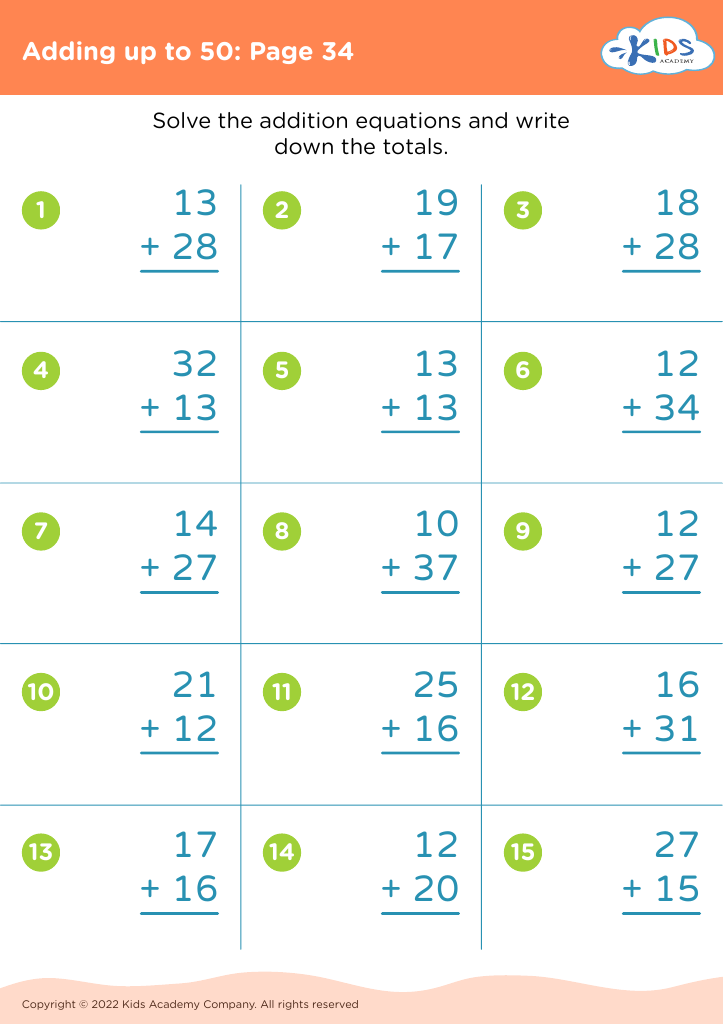
Adding up to 50: Page 34

Adding up to 50: Page 34

Adding up to 50: Page 34
Worksheet
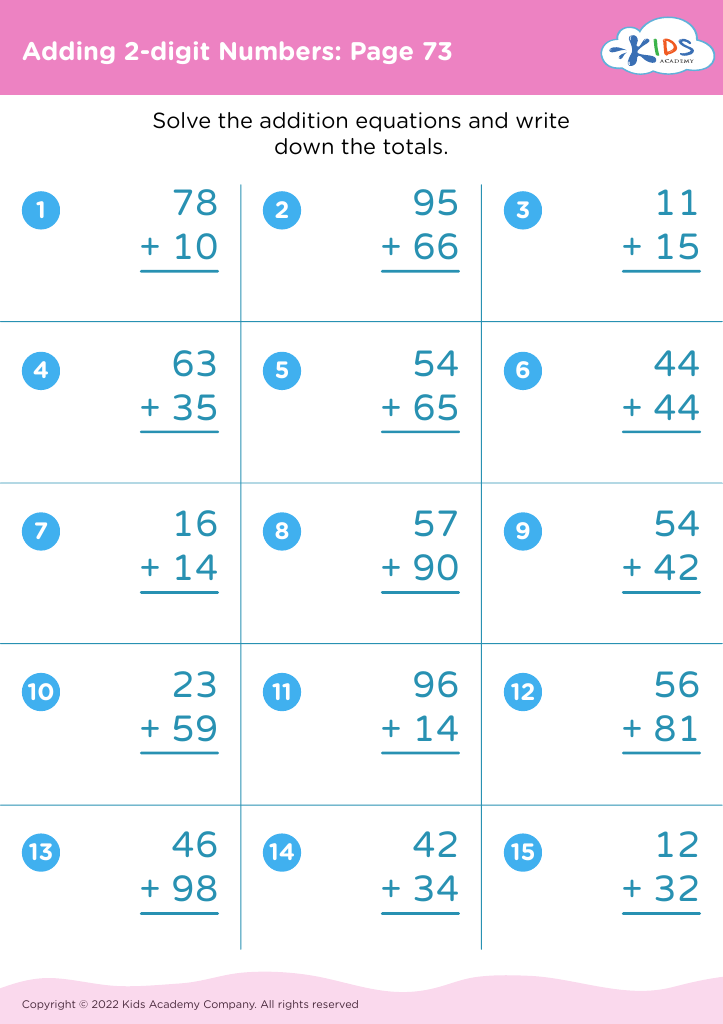
Adding 2-digit Numbers: Page 73

Adding 2-digit Numbers: Page 73

Adding 2-digit Numbers: Page 73
Worksheet
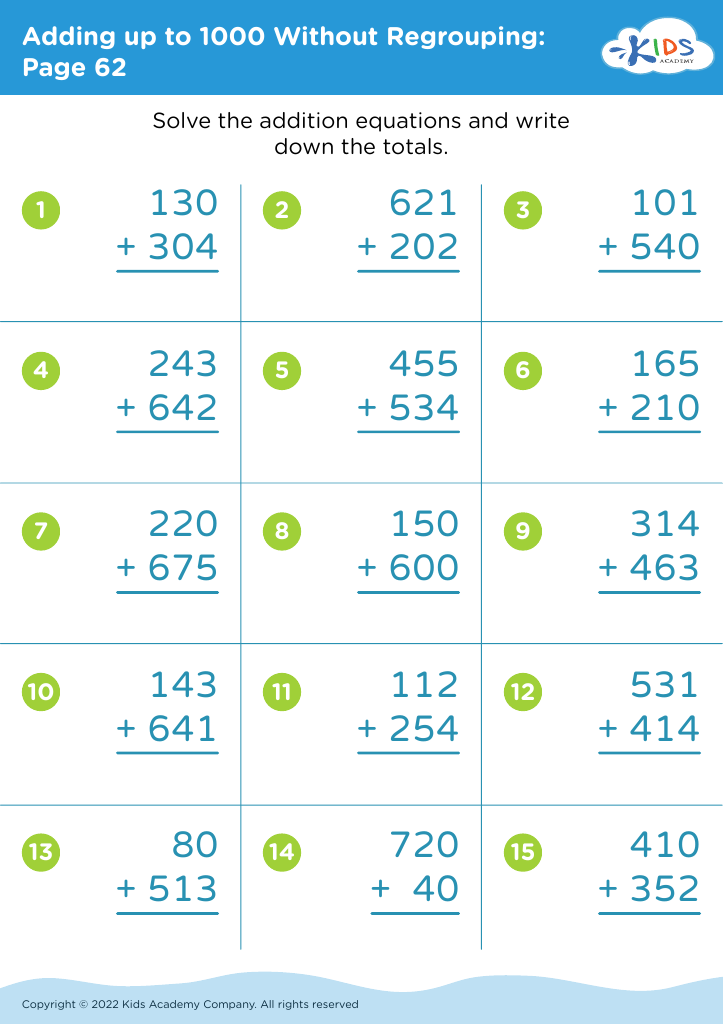
Adding up to 1000 Without Regrouping: Page 62
Worksheet
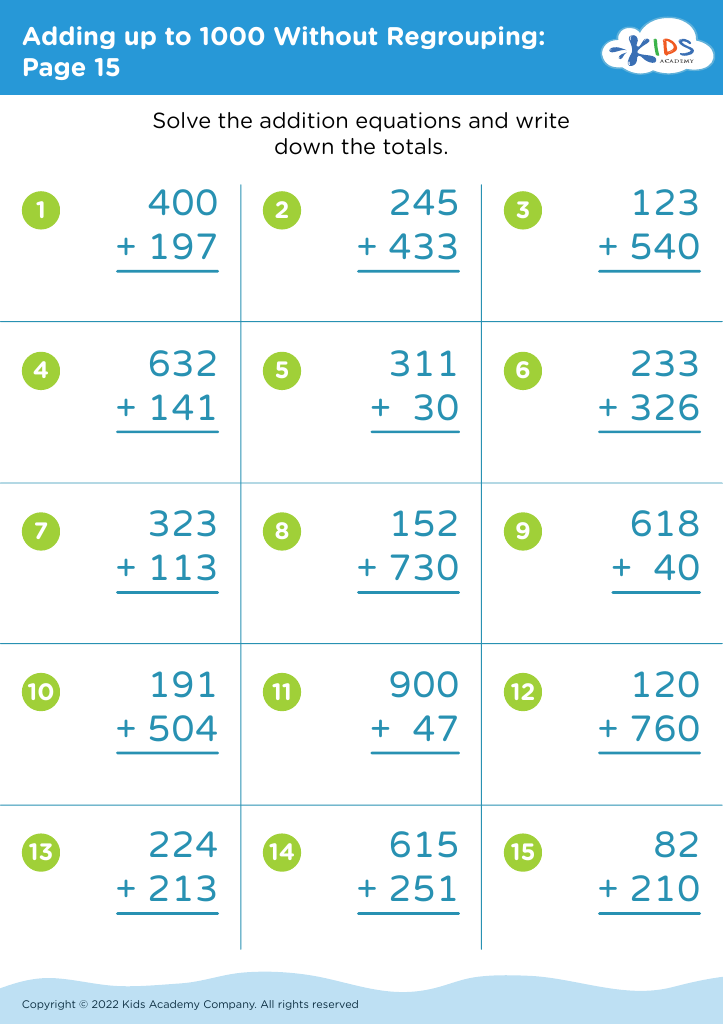
Adding up to 1000 Without Regrouping: Page 15
Worksheet
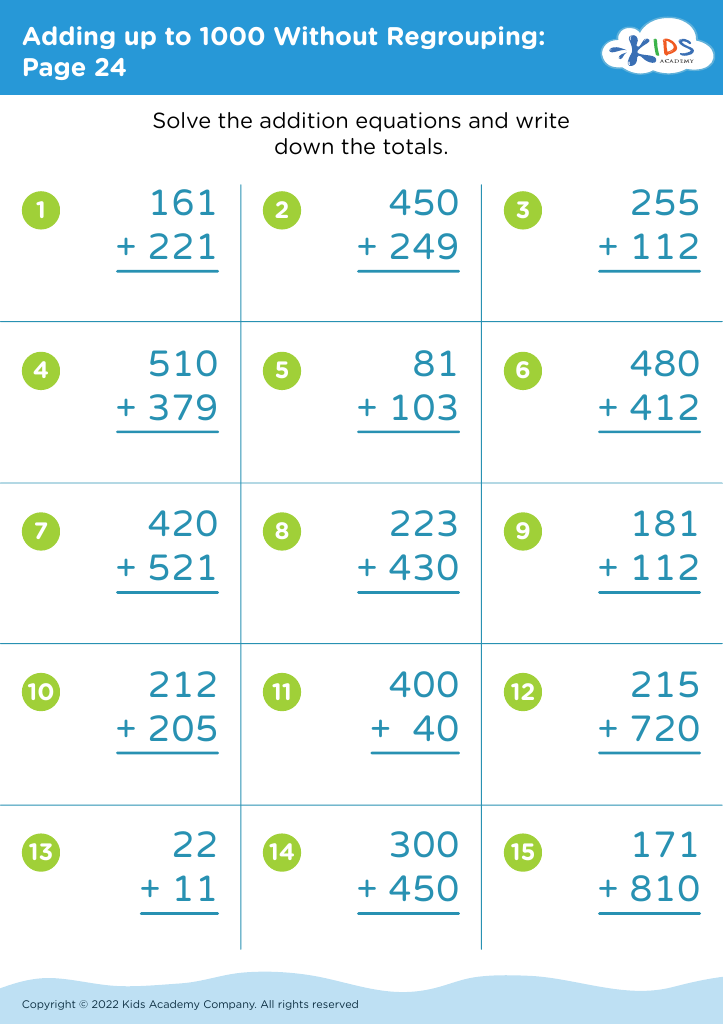
Adding up to 1000 Without Regrouping: Page 24
Worksheet


... 6 7

Understanding fractions, as well as their addition and subtraction, is crucial for children aged 3-9, as it lays the foundation for mathematical skills needed in later life. At an early stage, children begin to develop their number sense, which is pivotal when they encounter more complex mathematical concepts in school. Fractions allow children to grasp the idea of part-whole relationships, enhancing their comprehension of division and ratios.

Moreover, familiarity with fractions helps develop critical thinking and problem-solving skills. Engaging with fractions through hands-on activities—like dividing pizzas or measuring ingredients for a recipe—makes math tangible and enjoyable. This hands-on approach boosts motivation and encourages children to explore mathematical ideas with curiosity, setting a positive tone for future learning.

For parents and teachers, fostering an understanding of fractions prepares students for advanced mathematics and everyday tasks involving measurements, sharing, and comparing. By nurturing these skills early, we can help children build confidence and resilience in math, ensuring they are better equipped to face challenges in their academic journeys. Ultimately, emphasizing fractions will enrich their personal and educational experiences, creating lifelong skills they can draw upon in various real-world contexts.