Vocabulary development Addition & Subtraction Worksheets for Ages 3-9
8 filtered results
-
From - To
Boost your child's math and language skills with our Vocabulary Development Addition & Subtraction Worksheets for ages 3-9! Our expertly designed worksheets help young learners master the key math terms while enhancing their addition and subtraction abilities. These engaging, interactive activities offer age-appropriate challenges that build fundamental understanding and boost confidence in math. Perfect for both classroom and at-home learning, our worksheets make mastering math vocabulary fun and effective. Visit Kids Academy to explore our extensive collection and give your child the tools they need for successful math learning.
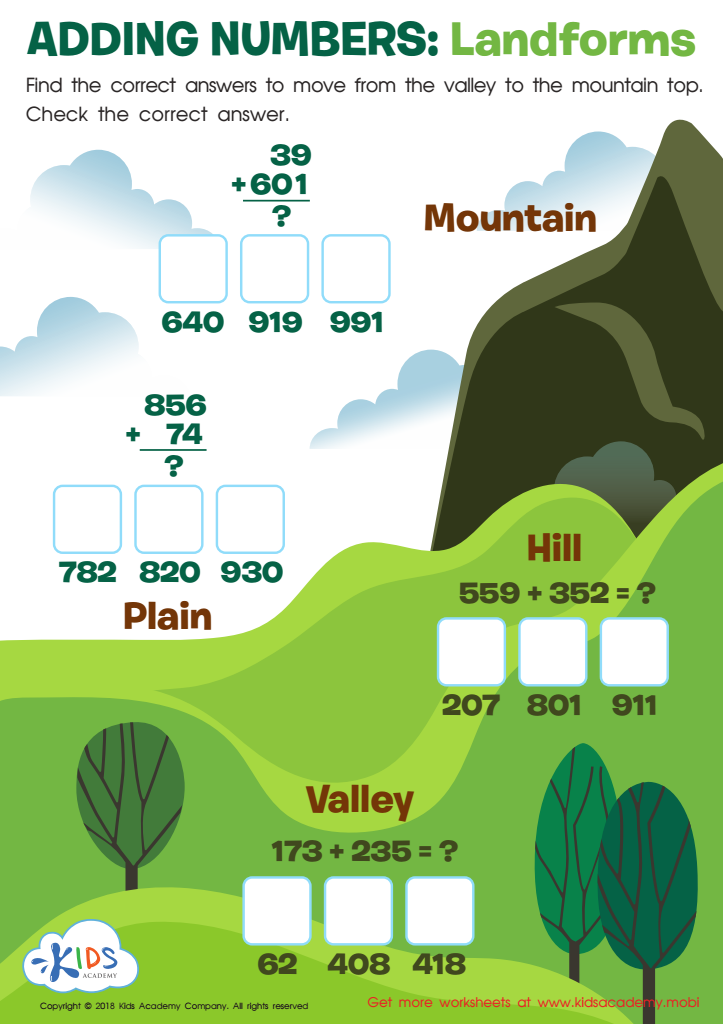
Adding Numbers: Landforms Worksheet
 Assign to My Students
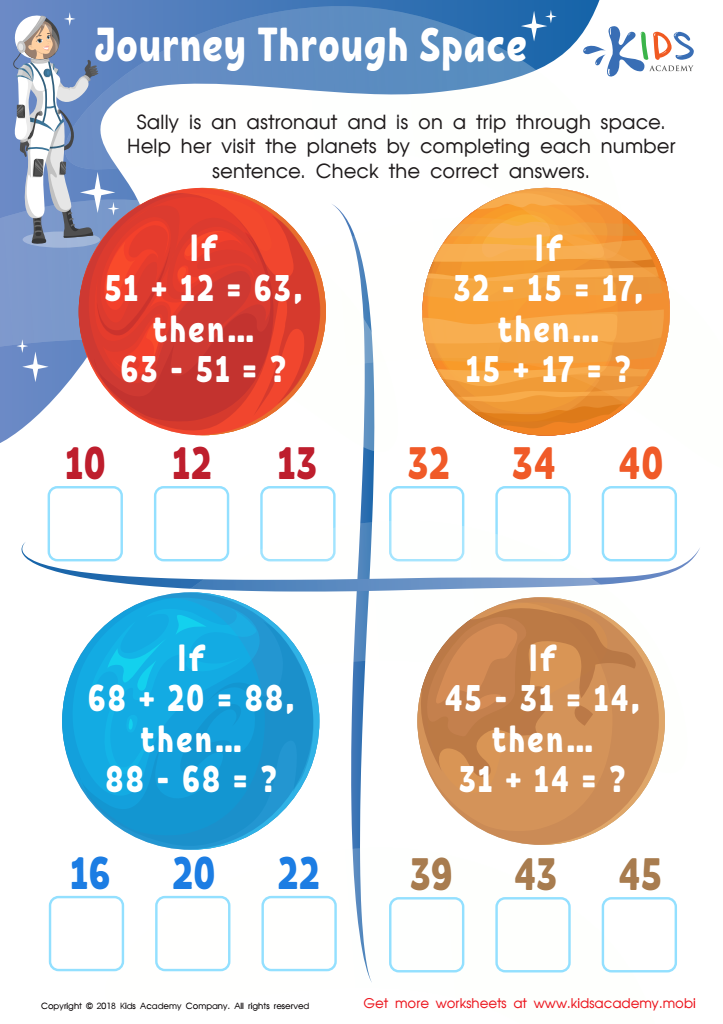
Journey Through Space Worksheet
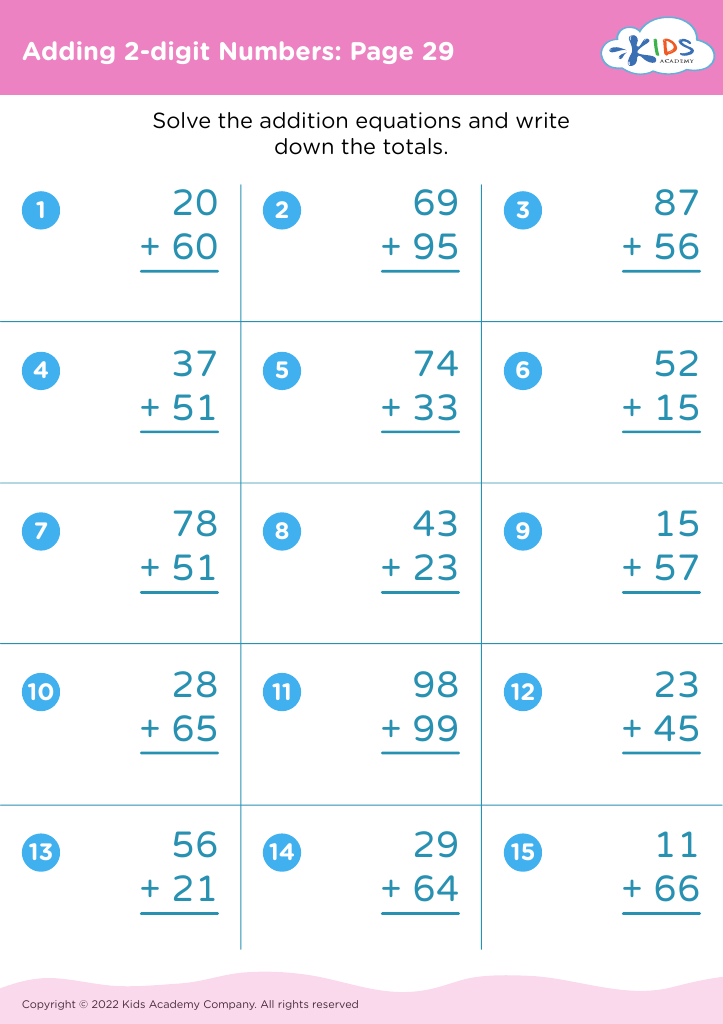
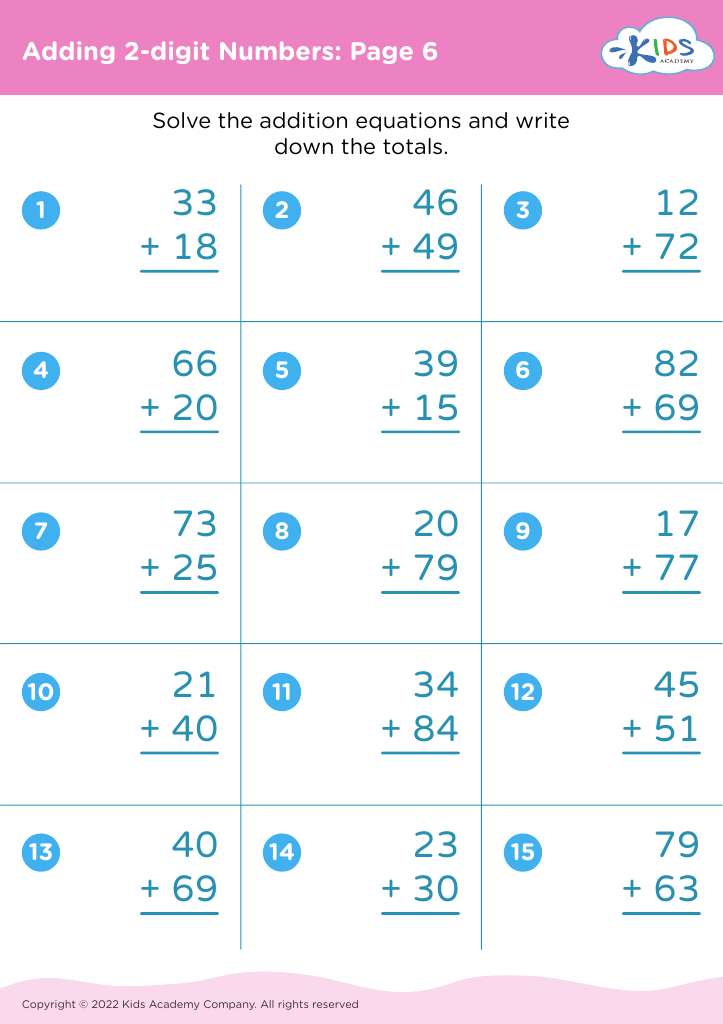
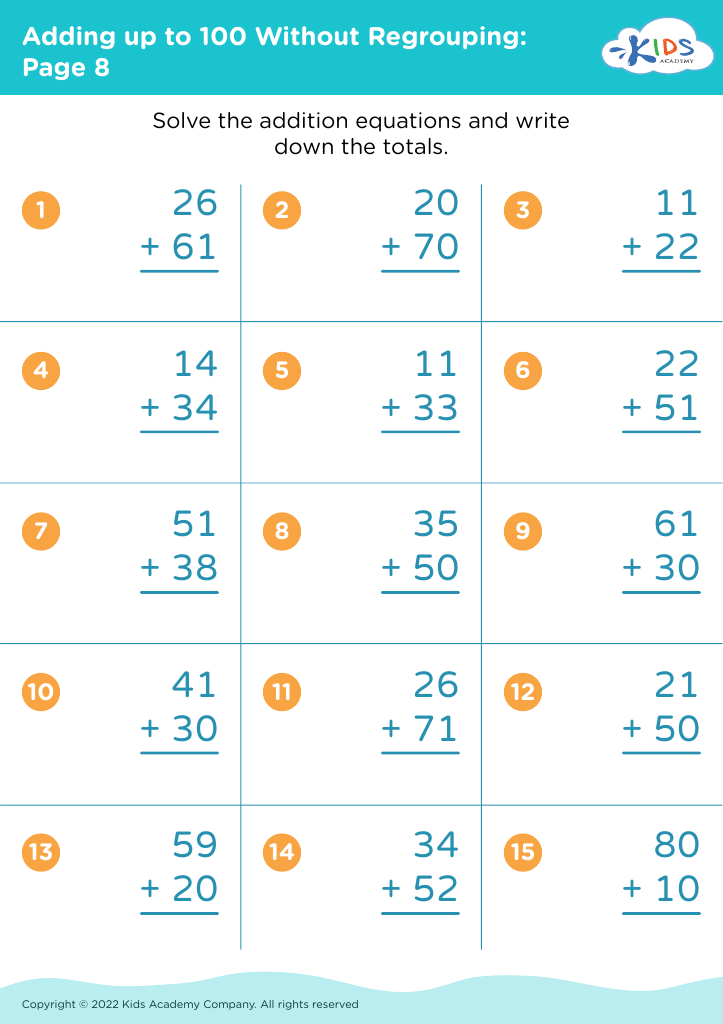
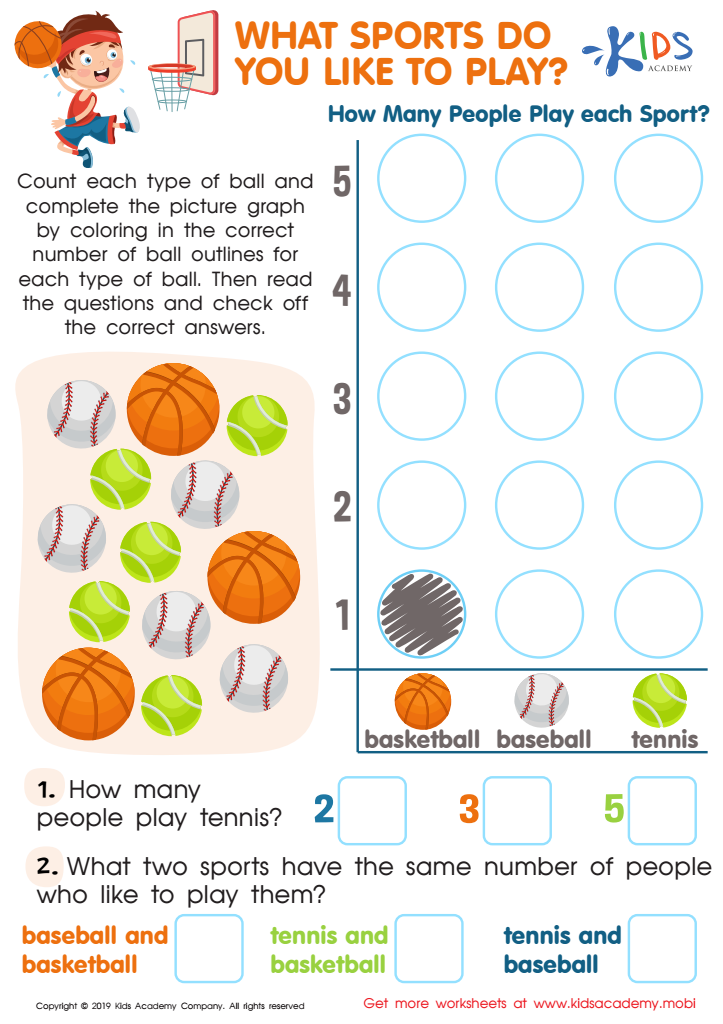
What Sports Do You Like to Play Worksheet








Vocabulary development and the ability to perform addition and subtraction are foundational skills for children aged 3-9, and parents and teachers should deeply care about nurturing these areas for several reasons.
Firstly, vocabulary development is crucial for language proficiency. A rich vocabulary supports reading comprehension, effective communication, and academic success across all subjects. As children encounter new words, they learn to articulate their thoughts better, ask questions, and engage in meaningful conversations. This enhances cognitive development and social skills, equipping them for future academic challenges and interpersonal interactions.
Secondly, mastering addition and subtraction is essential for early math literacy. These fundamental arithmetic skills form the basis for more complex mathematical concepts encountered later in education, such as multiplication, division, algebra, and geometry. Proficiency in basic math fosters logical thinking, problem-solving skills, and an understanding of number relationships. Understanding math concepts early on can boost a child's confidence and reduce math anxiety, encouraging a positive attitude toward learning.
Integrating vocabulary and arithmetic practice at an early age sets a strong educational foundation, promoting well-rounded development. Parents and teachers play a pivotal role by providing a stimulating and supportive environment where children can explore, inquire, and build enduring skills. This dual focus ensures children are prepared for academic challenges, fostering lifelong learning and success.








