Filters

17 filtered results

Clear all filters
Favorites
With answer key
Interactive

17 filtered results

Difficulty Level

Grade


Welcome to our Enhance Comprehension Addition Worksheets for Ages 3-9! Designed to support young learners, these engaging worksheets help children build their addition skills while fostering critical thinking and comprehension. Our interactive and colorful resources encourage playful learning, ensuring that kids grasp the concepts behind addition beyond mere rote memorization. With a range of activities tailored to different age groups, children will develop confidence in their math abilities while enjoying the process. Perfect for teachers and parents alike, these worksheets integrate comprehension skills with math practice, making learning both fun and effective. Explore our collection and watch young minds flourish!
Check out this FREE Trial Lesson on Addition for age 3-9!

P

Favorites
With answer key
Interactive
  • 3-9
  • Enhance comprehension
  • Addition
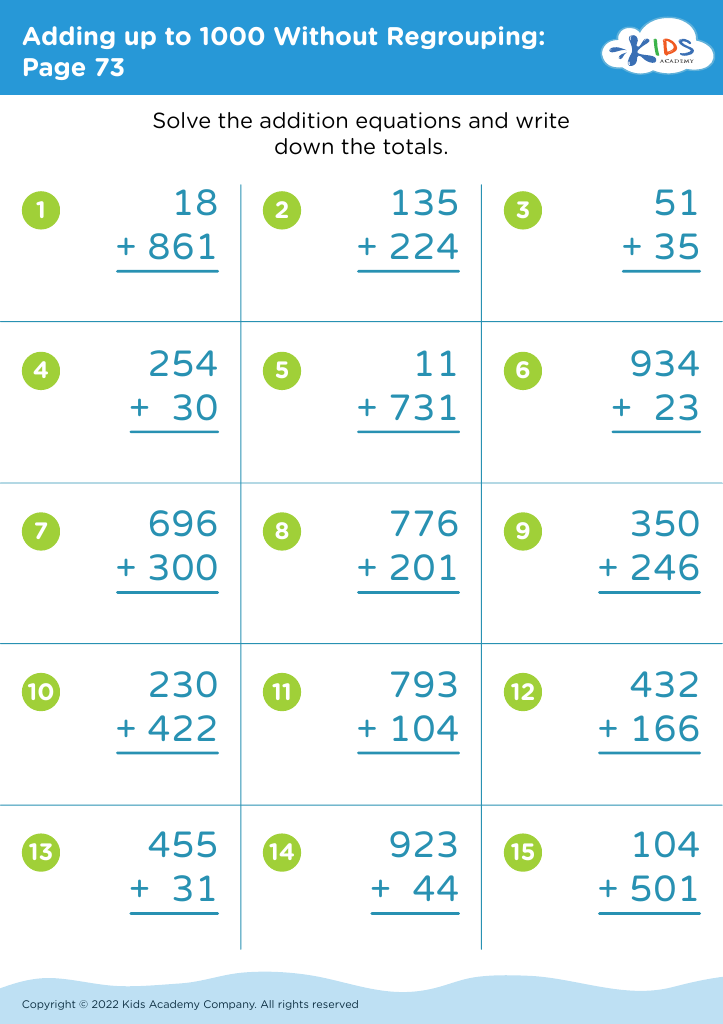
Adding up to 1000 Without Regrouping: Page 73
Worksheet
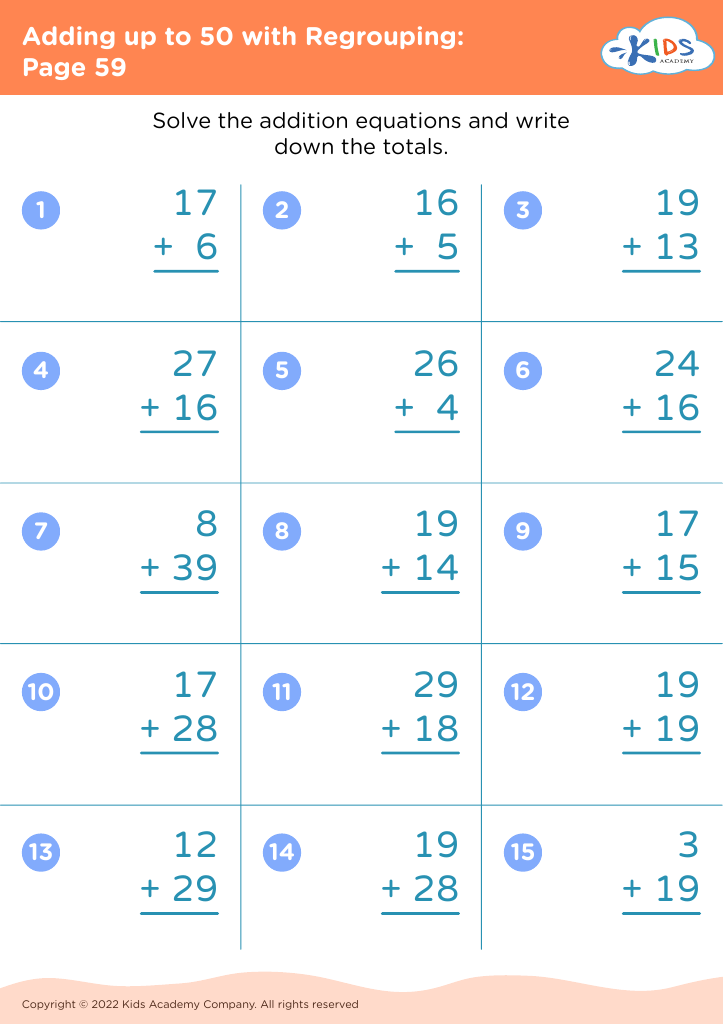
Adding up to 50 with Regrouping: Page 59
Worksheet
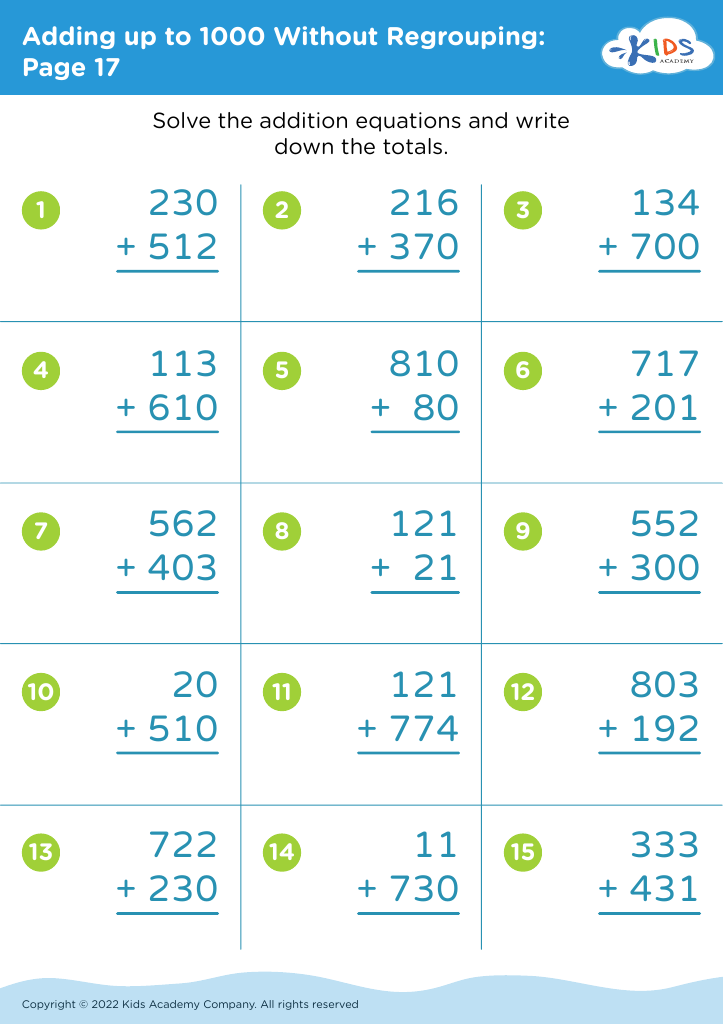
Adding up to 1000 Without Regrouping: Page 17
Worksheet
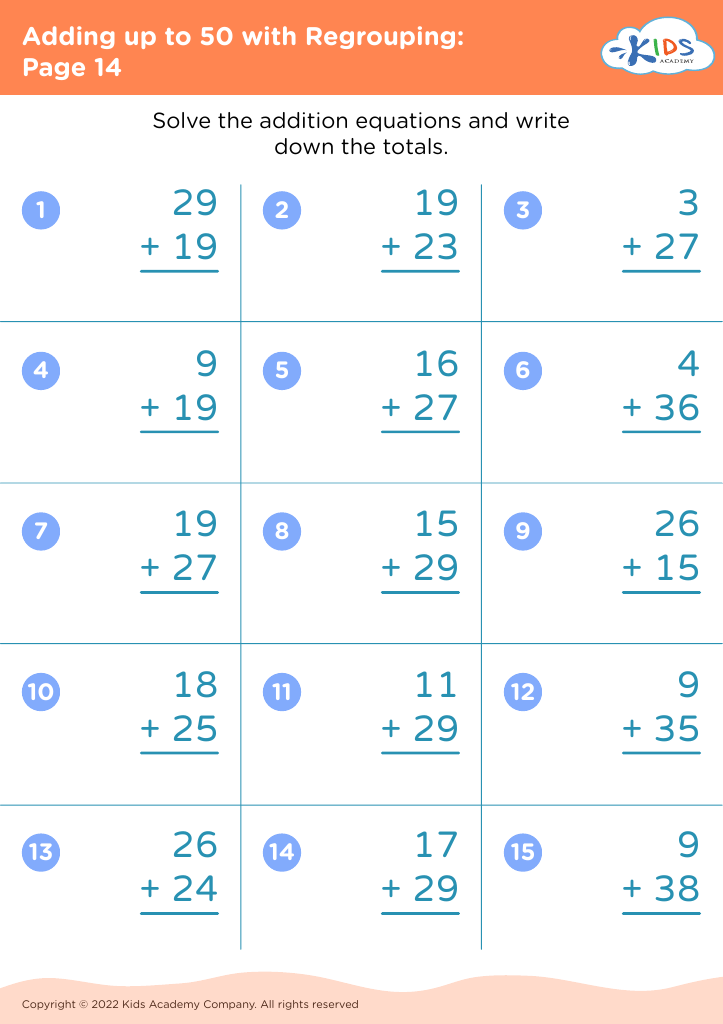
Adding up to 50 with Regrouping: Page 14
Worksheet
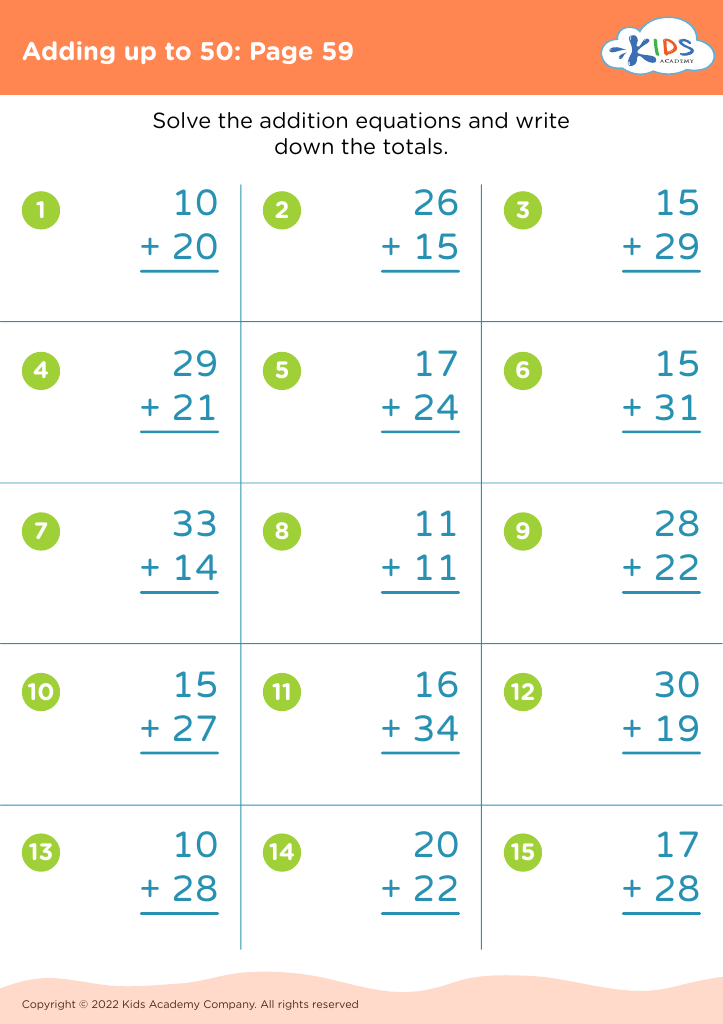
Adding up to 50: Page 59

Adding up to 50: Page 59

Adding up to 50: Page 59
Worksheet
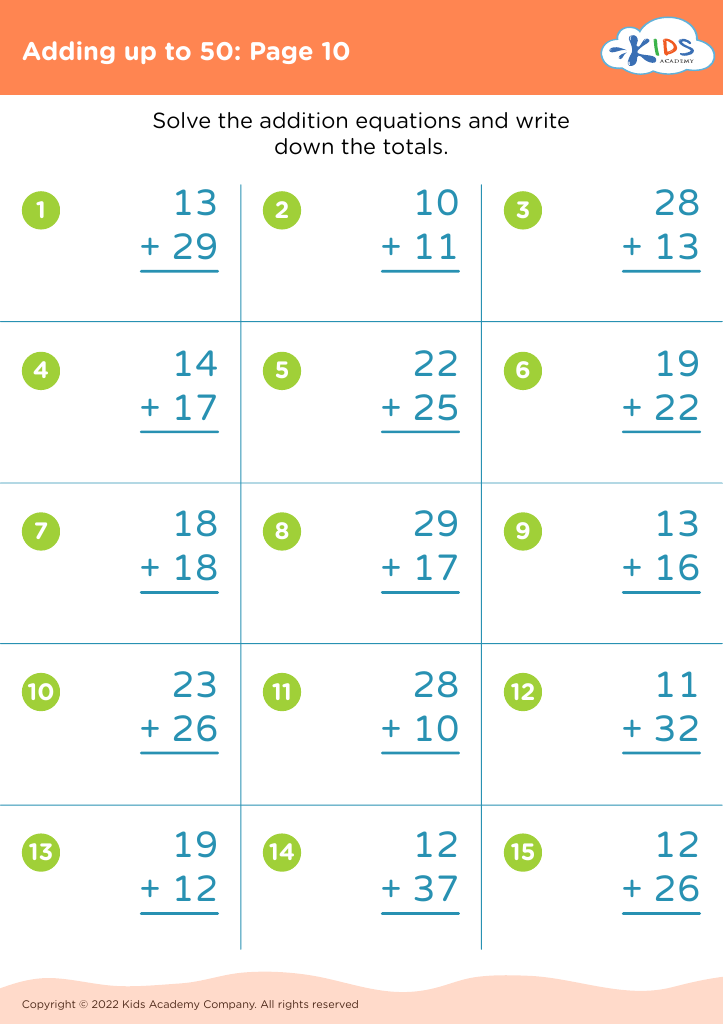
Adding up to 50: Page 10

Adding up to 50: Page 10

Adding up to 50: Page 10
Worksheet
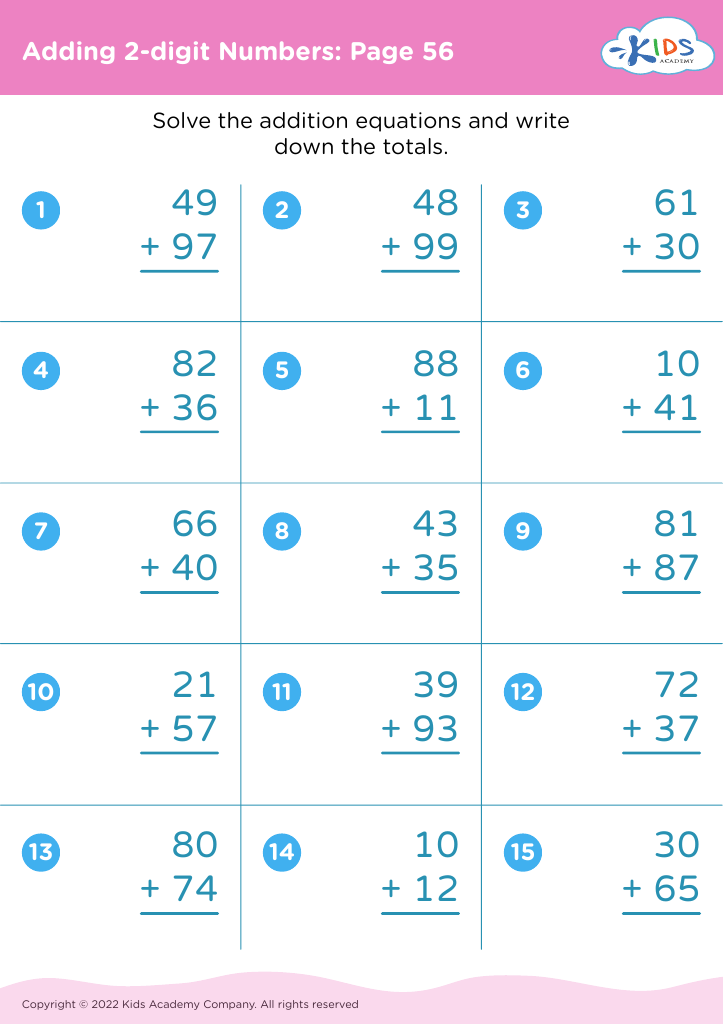
Adding 2-digit Numbers: Page 56

Adding 2-digit Numbers: Page 56

Adding 2-digit Numbers: Page 56
Worksheet
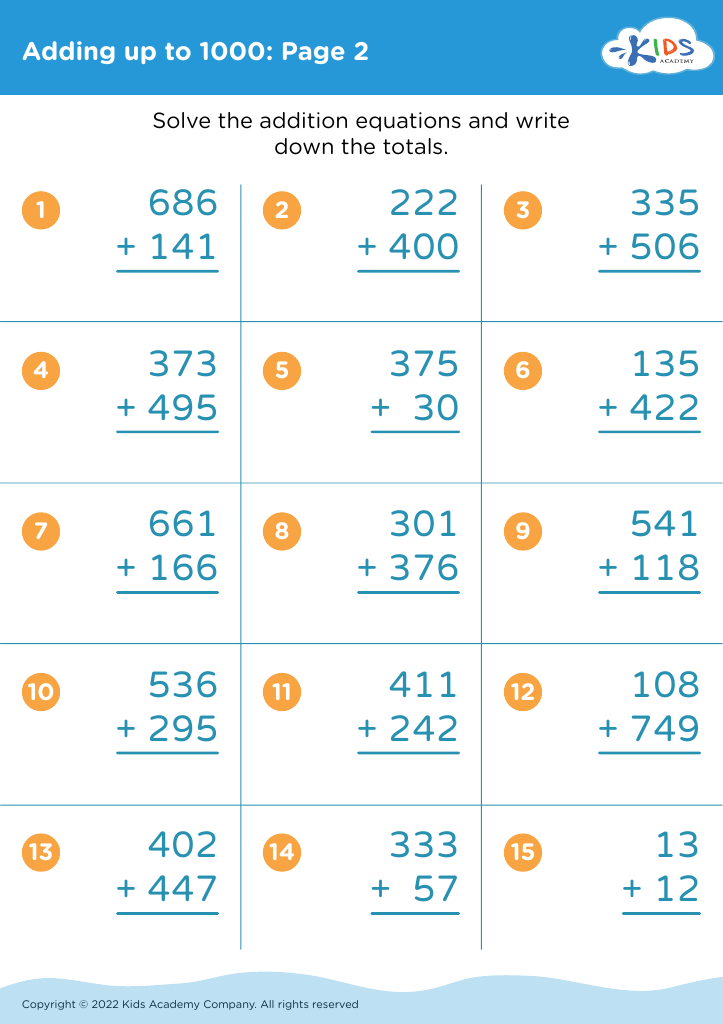
Adding up to 1000: Page 2

Adding up to 1000: Page 2

Adding up to 1000: Page 2
Worksheet
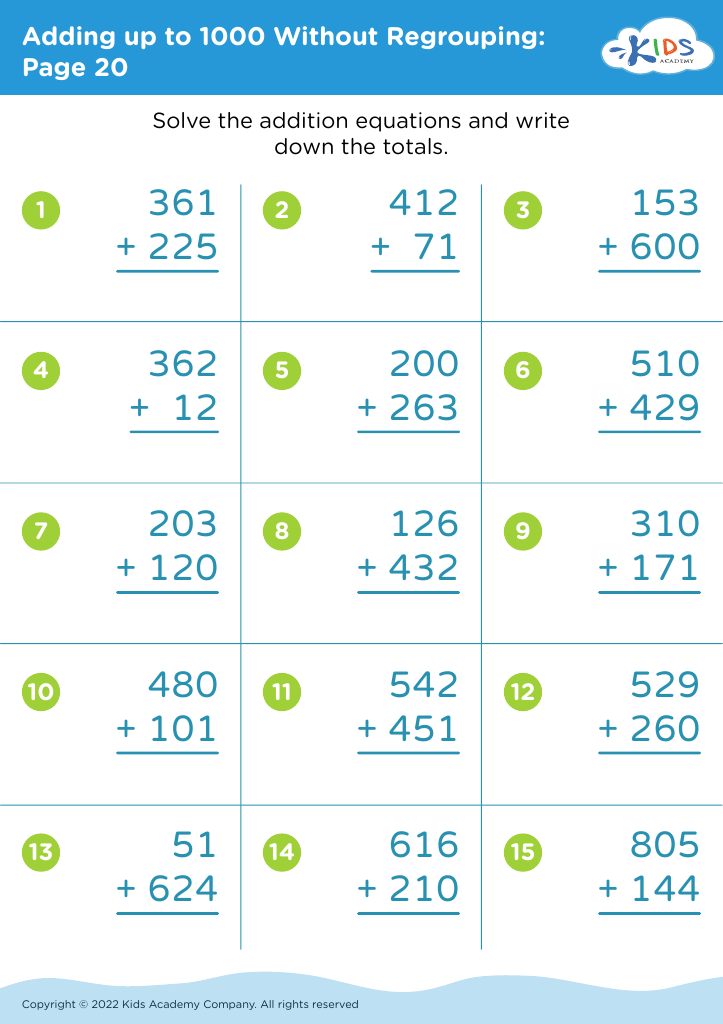
Adding up to 1000 Without Regrouping: Page 20
Worksheet
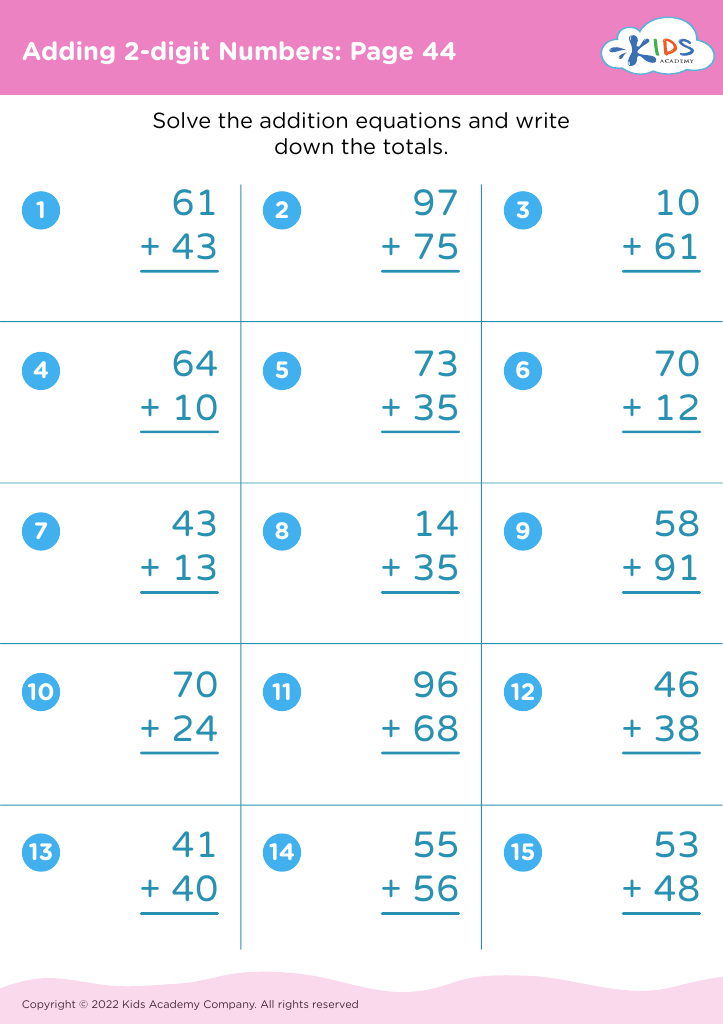
Adding 2-digit Numbers: Page 44

Adding 2-digit Numbers: Page 44

Adding 2-digit Numbers: Page 44
Worksheet
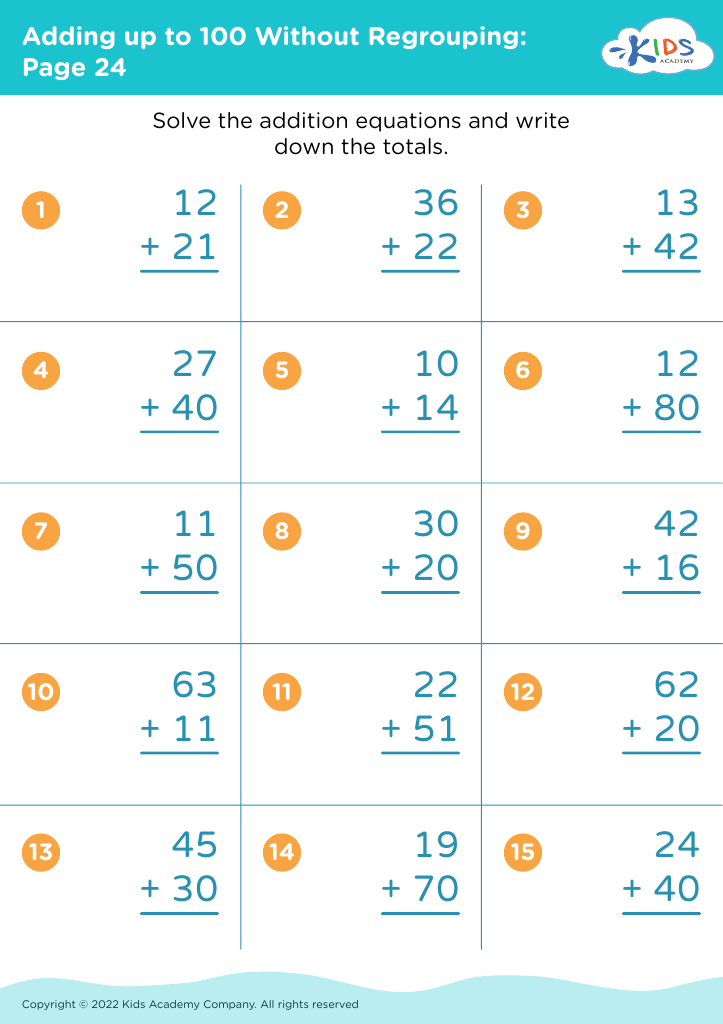
Adding up to 100 Without Regrouping: Page 24
Worksheet
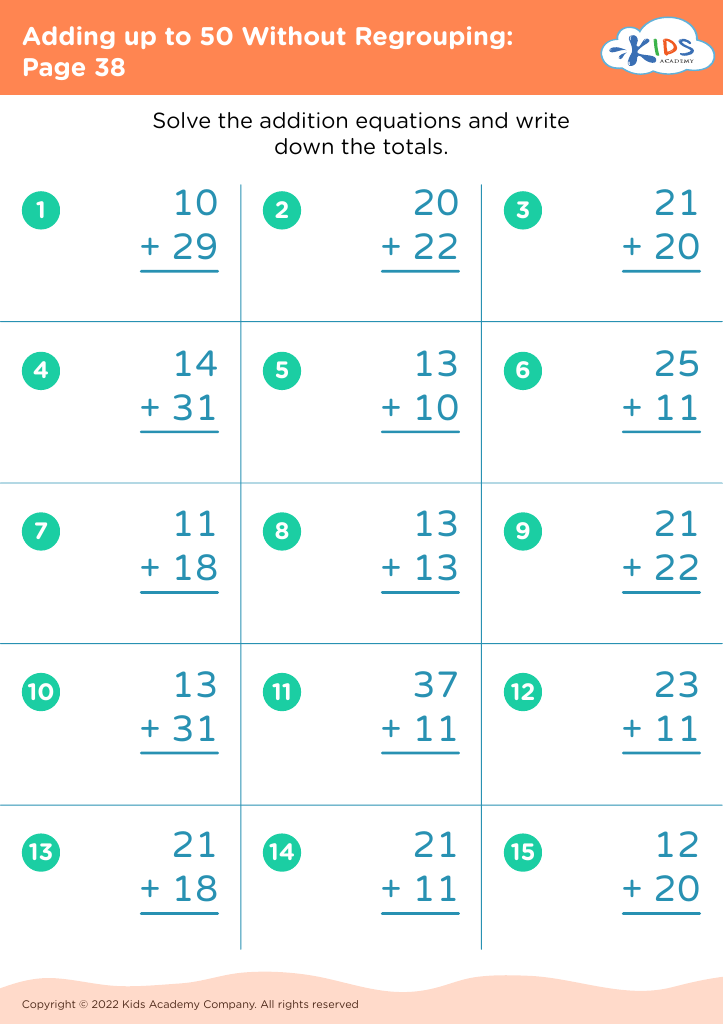
Adding up to 50 Without Regrouping: Page 38
Worksheet
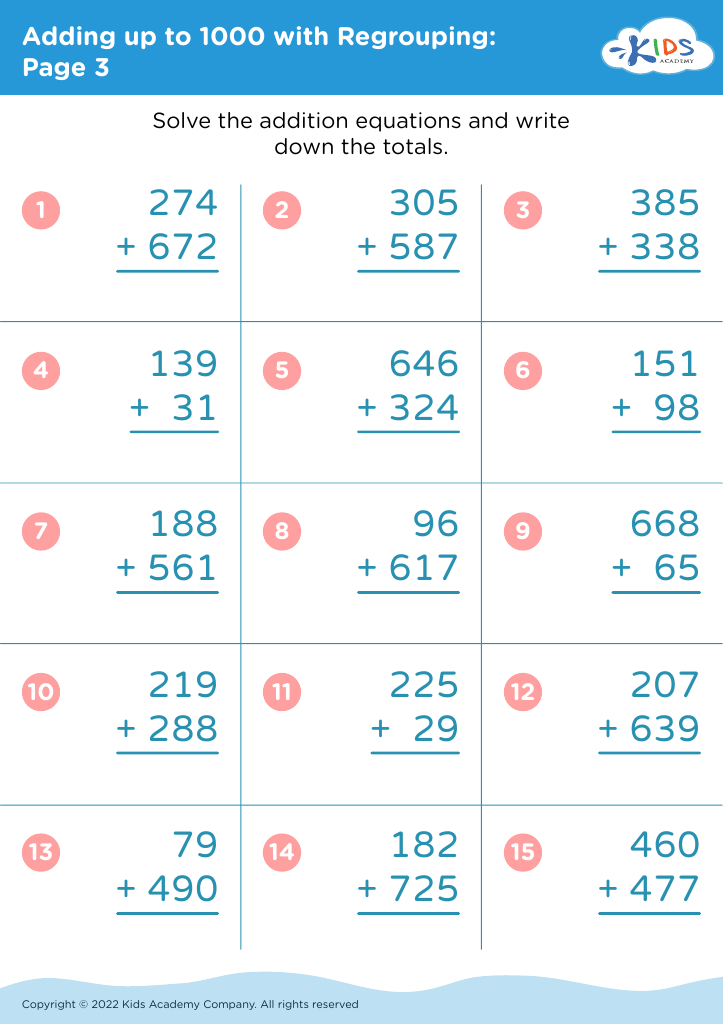
Adding up to 1000 with Regrouping: Page 3
Worksheet
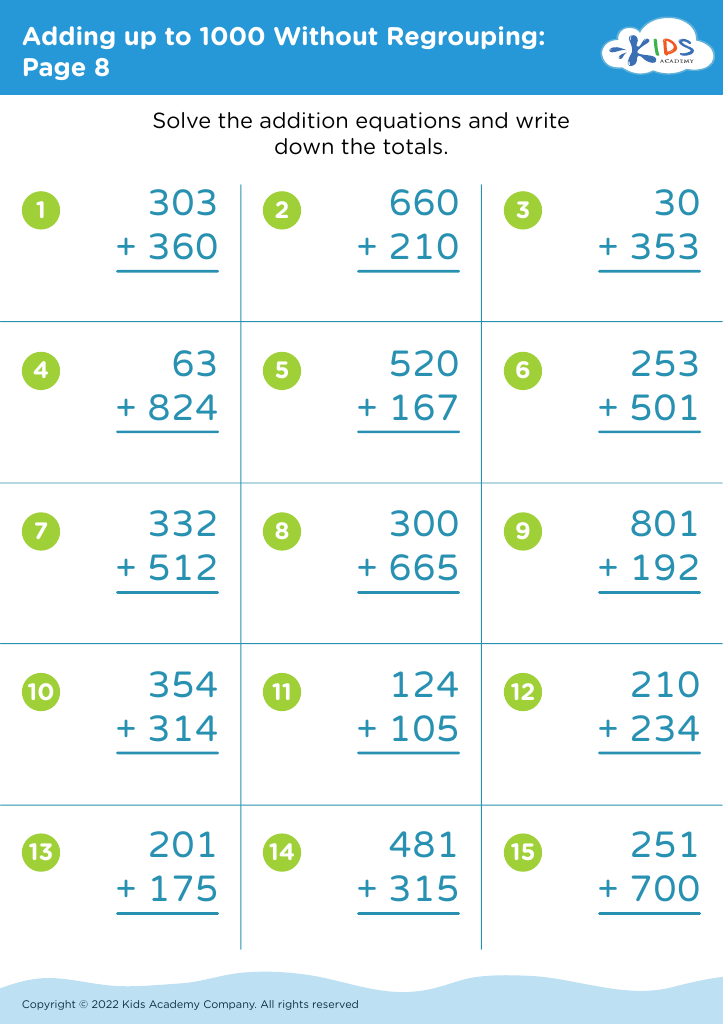
Adding up to 1000 Without Regrouping: Page 8
Worksheet
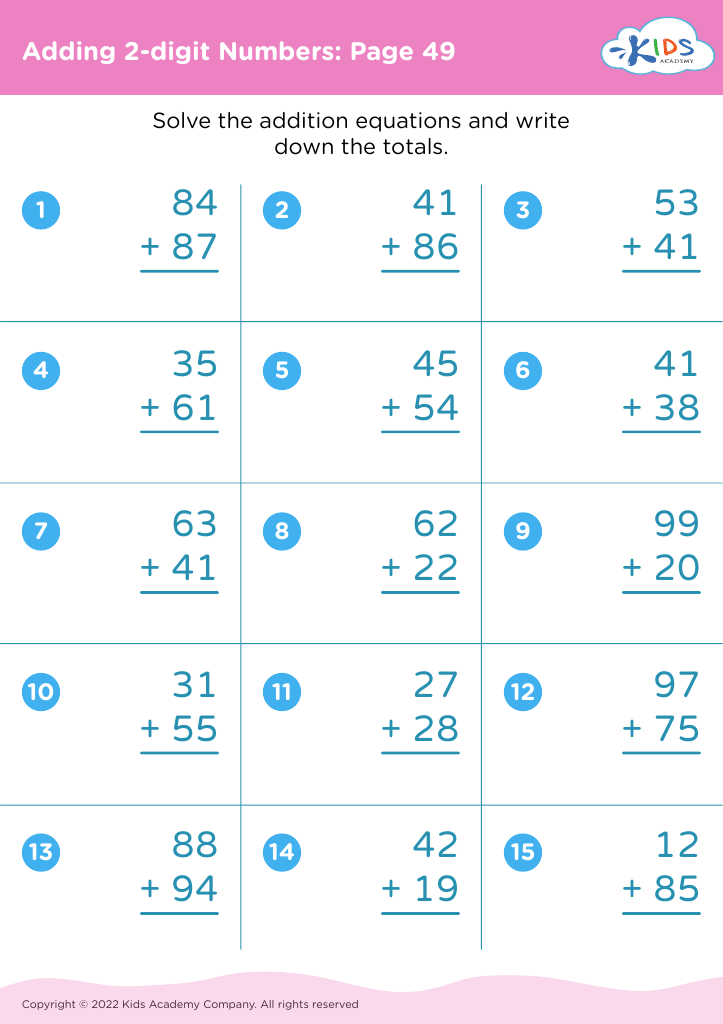
Adding 2-digit Numbers: Page 49

Adding 2-digit Numbers: Page 49

Adding 2-digit Numbers: Page 49
Worksheet
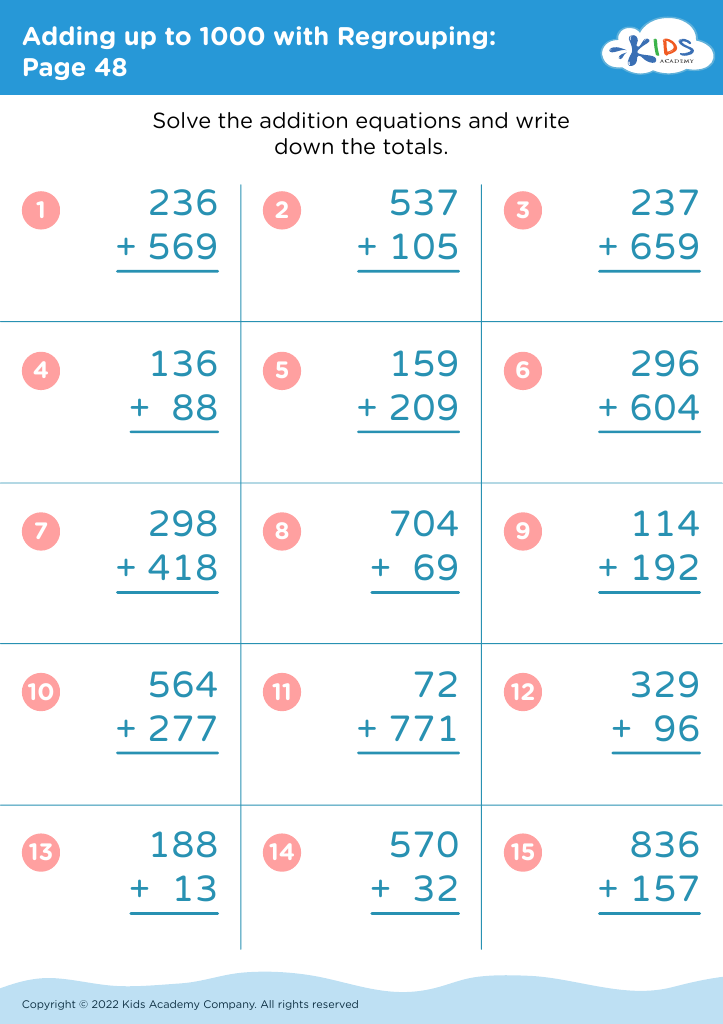
Adding up to 1000 with Regrouping: Page 48
Worksheet
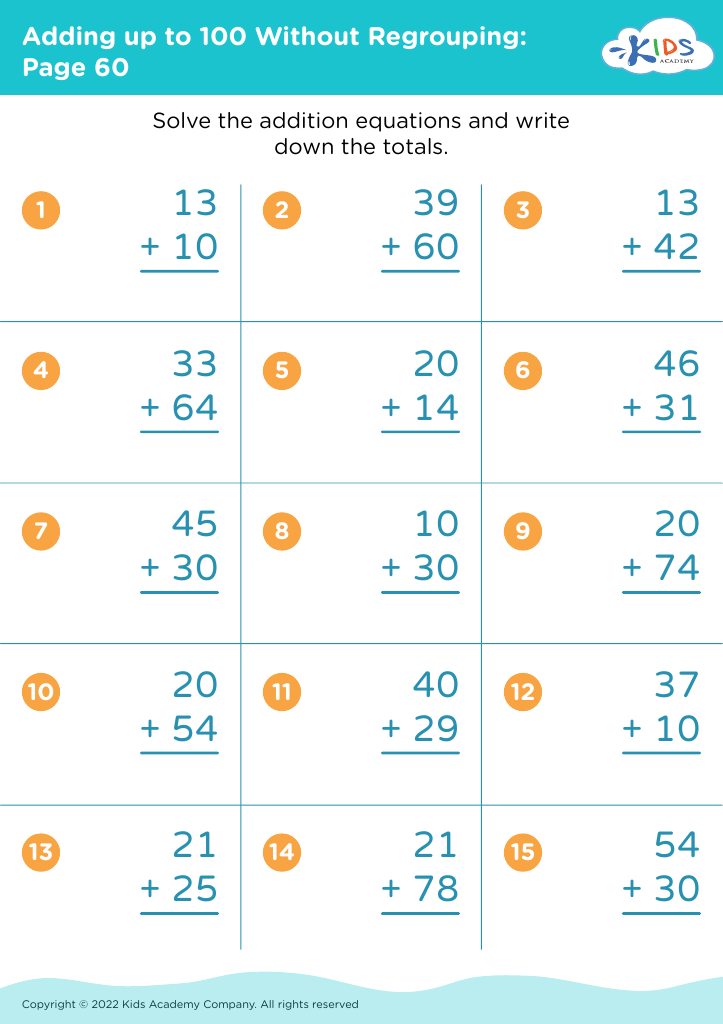
Adding up to 100 Without Regrouping: Page 60
Worksheet


Enhancing comprehension in young children, particularly in the context of addition, is vital for their overall cognitive development and future academic success. For children aged 3 to 9, mastering addition lays the groundwork for more complex mathematical concepts, such as subtraction, multiplication, and division.

Parents and teachers should prioritize comprehension in this area for several reasons. First, a solid understanding of addition develops critical thinking skills, as children learn to recognize patterns and solve problems creatively. Moreover, it fosters a positive attitude toward math; when children grasp concepts early on, they are more likely to approach math with enthusiasm rather than anxiety.

Additionally, comprehension in addition enhances language and communication skills. As children define problems, explain their reasoning, or discuss strategies with peers, they build vocabulary and articulatory skills that are essential in all areas of learning.

Furthermore, early math comprehension is closely linked to later academic achievement. Research indicates that children who excel in basic math skills in the early years are more inclined to succeed in higher-level mathematics and other subjects in later grades. By investing time and energy into enhancing comprehension in addition, parents and teachers can cultivate foundational skills that will benefit children lifelong.