Welcome to our "Enhance Number Recognition Addition Worksheets" designed for children aged 3-9! These engaging worksheets are perfect for reinforcing early math skills while making learning fun. Our age-appropriate activities focus on developing number recognition, addition concepts, and critical thinking. With colorful illustrations and a variety of interactive exercises, children will enjoy exploring numbers and mastering addition. Our expertly crafted resources support different learning styles, ensuring every child can thrive. Ideal for homeschooling, classroom use, or supplemental practice, these worksheets will help lay a strong foundation for your child’s mathematical journey. Explore freely, and watch their confidence grow!
Check out this FREE Trial Lesson on Addition for age 3-9!

Sorting Objects into 3 Categories

Favorites
With answer key
Interactive
  • 3-9
  • Enhance number recognition
  • Addition
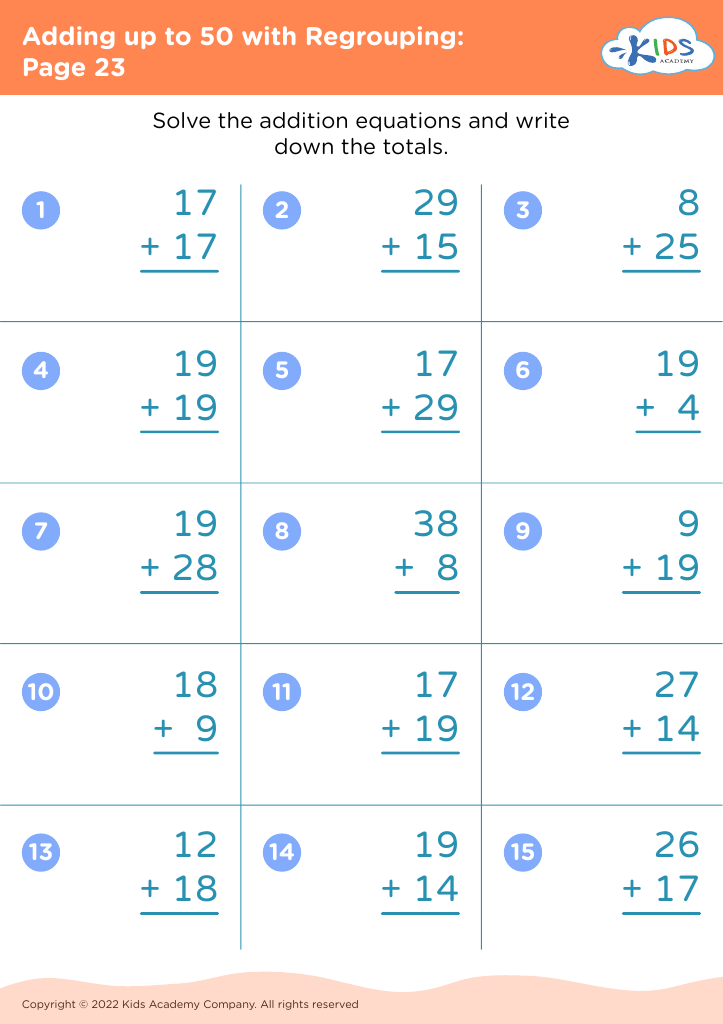
Adding up to 50 with Regrouping: Page 23
Worksheet
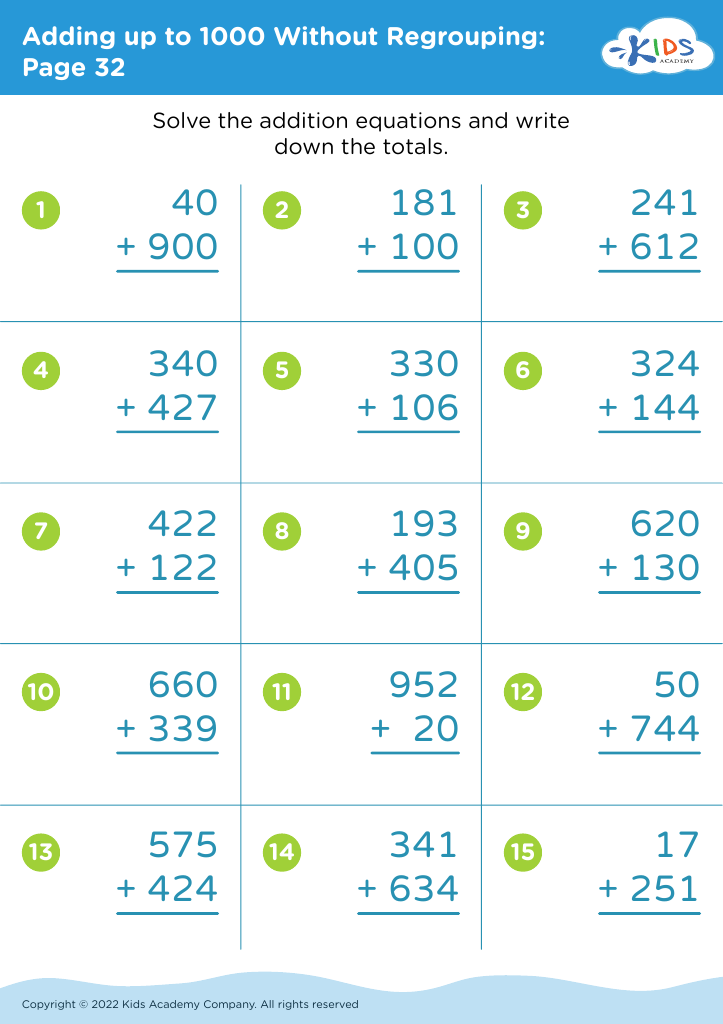
Adding up to 1000 Without Regrouping: Page 32
Worksheet
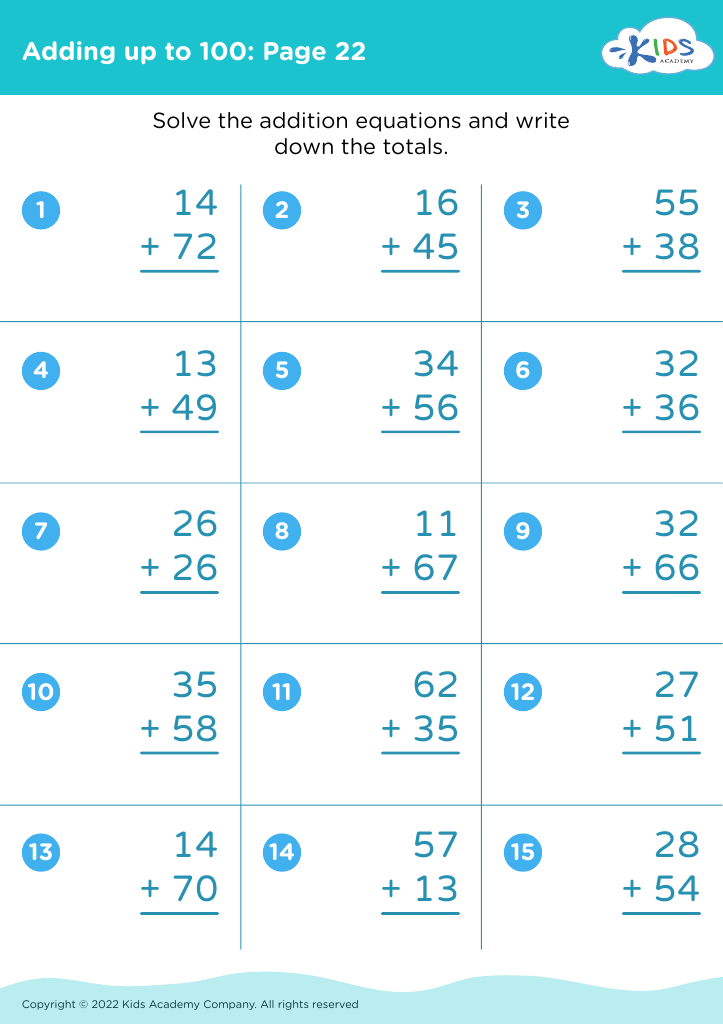
Adding up to 100: Page 22

Adding up to 100: Page 22

Adding up to 100: Page 22
Worksheet
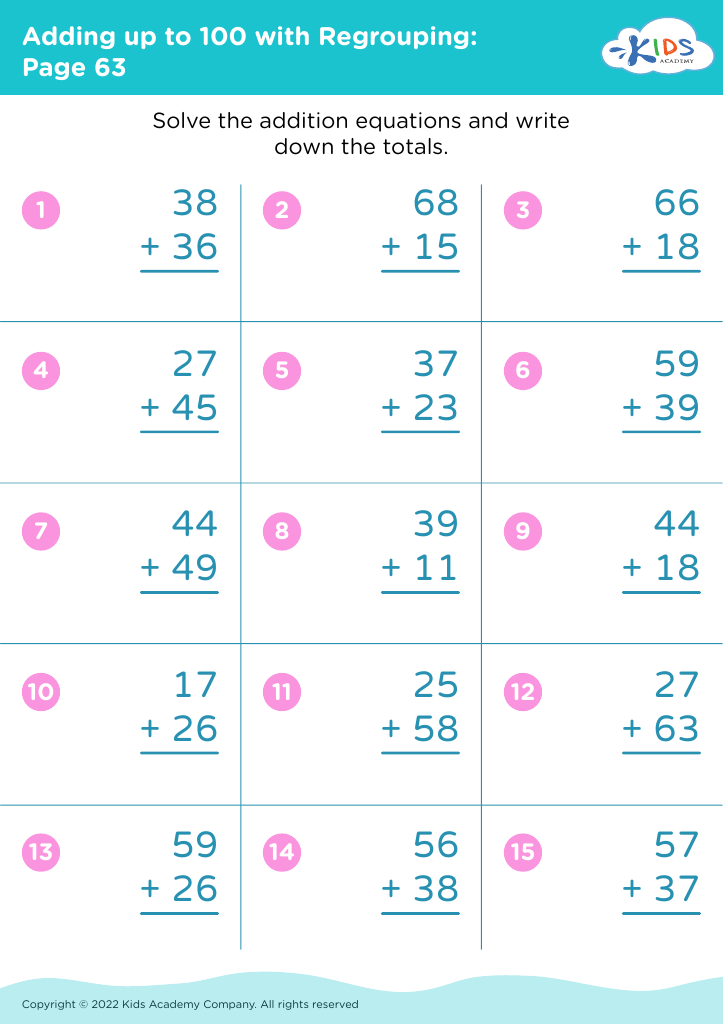
Adding up to 100 with Regrouping: Page 63
Worksheet
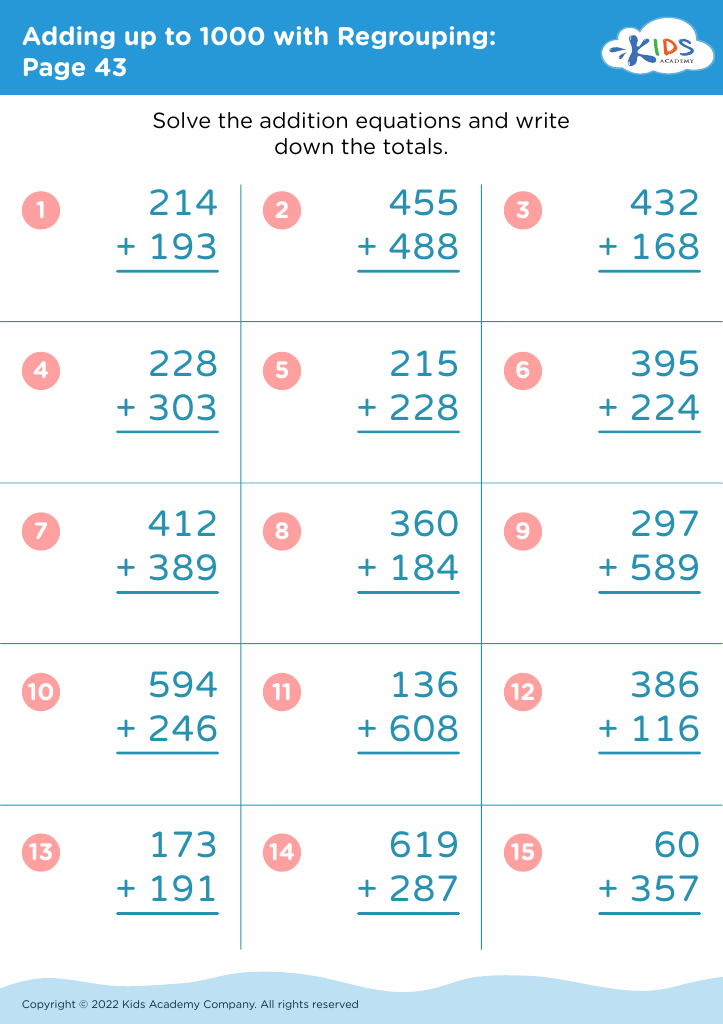
Adding up to 1000 with Regrouping: Page 43
Worksheet
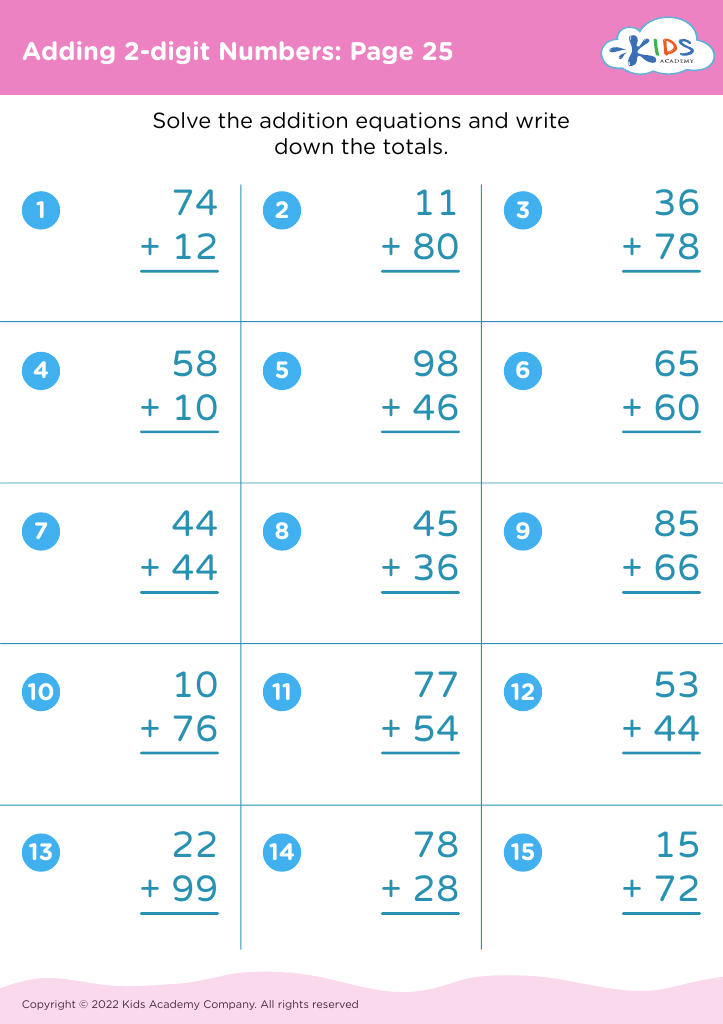
Adding 2-digit Numbers: Page 25

Adding 2-digit Numbers: Page 25

Adding 2-digit Numbers: Page 25
Worksheet
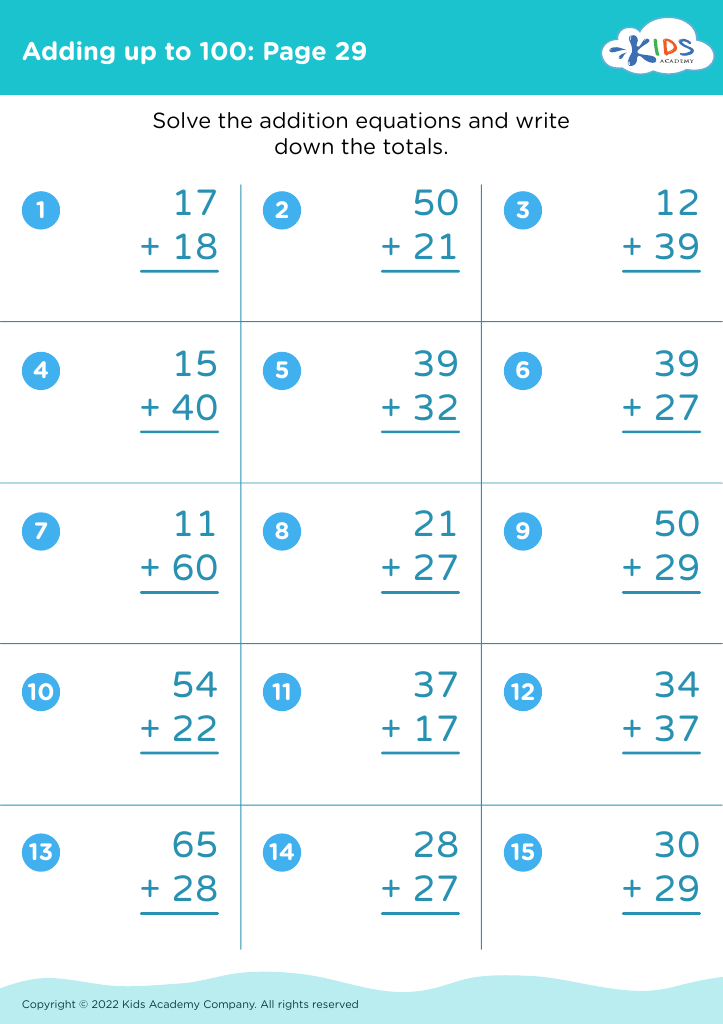
Adding up to 100: Page 29

Adding up to 100: Page 29

Adding up to 100: Page 29
Worksheet
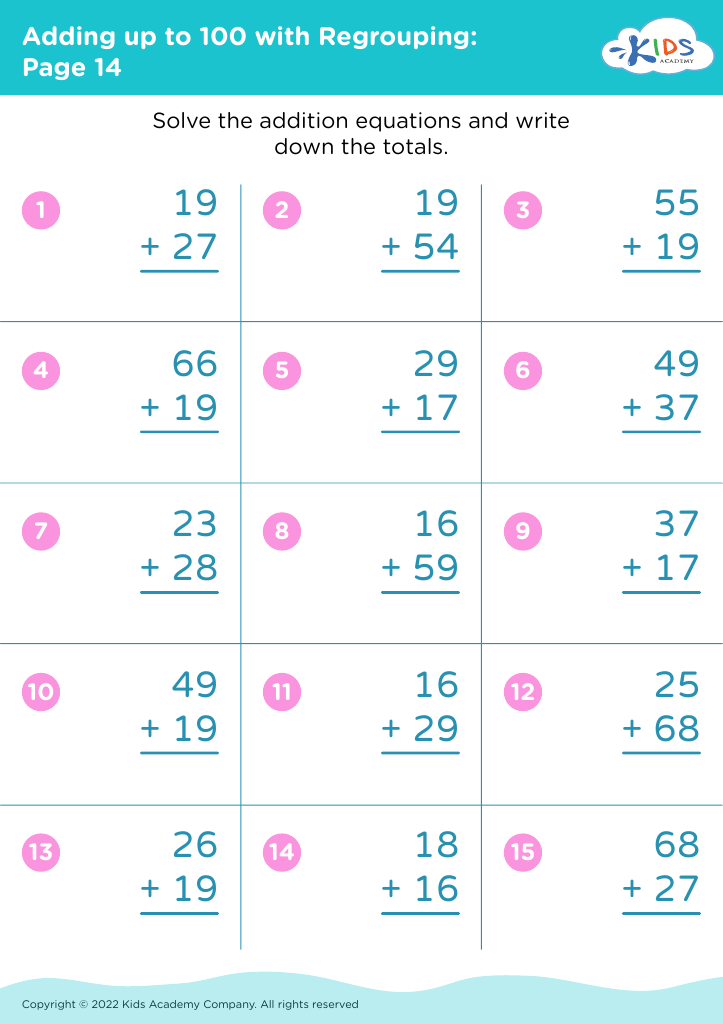
Adding up to 100 with Regrouping: Page 14
Worksheet
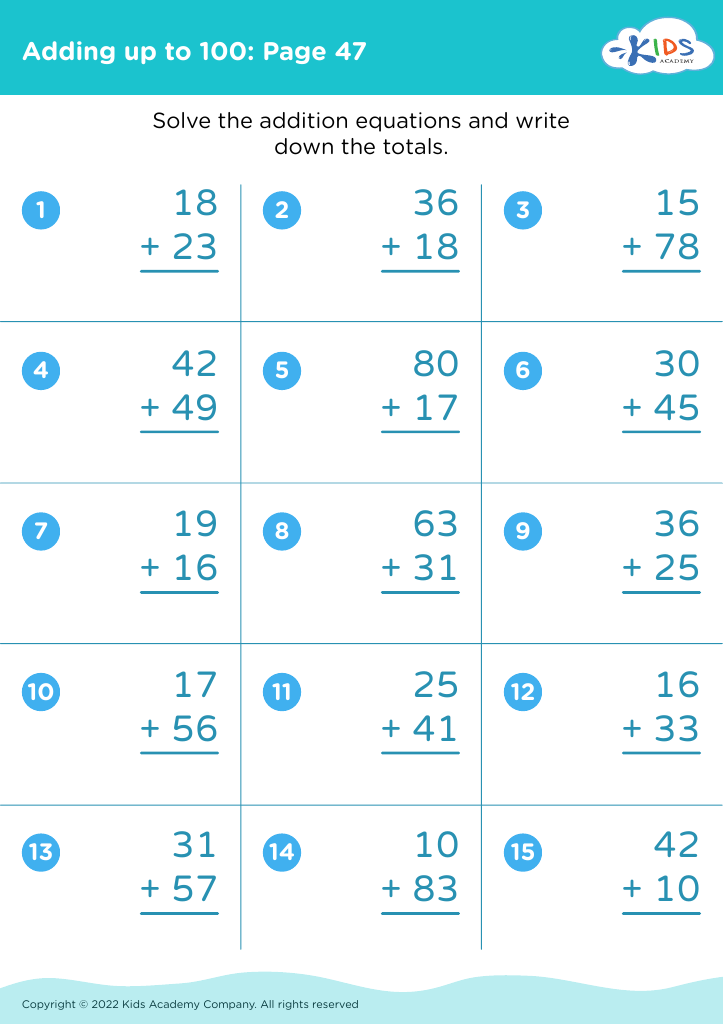
Adding up to 100: Page 47

Adding up to 100: Page 47

Adding up to 100: Page 47
Worksheet
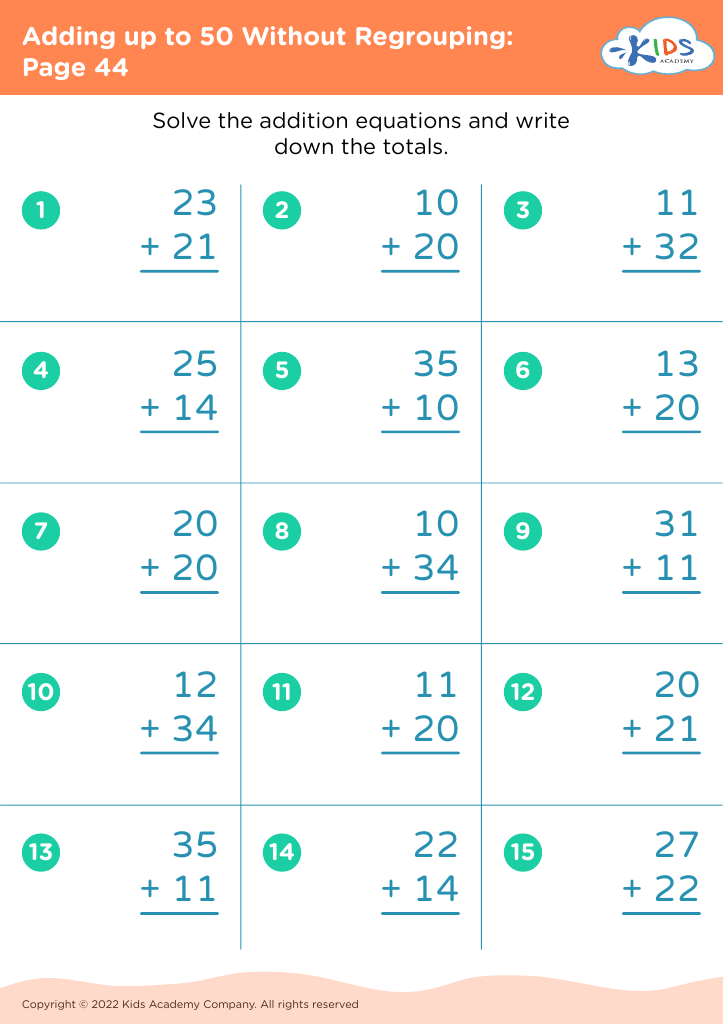
Adding up to 50 Without Regrouping: Page 44
Worksheet
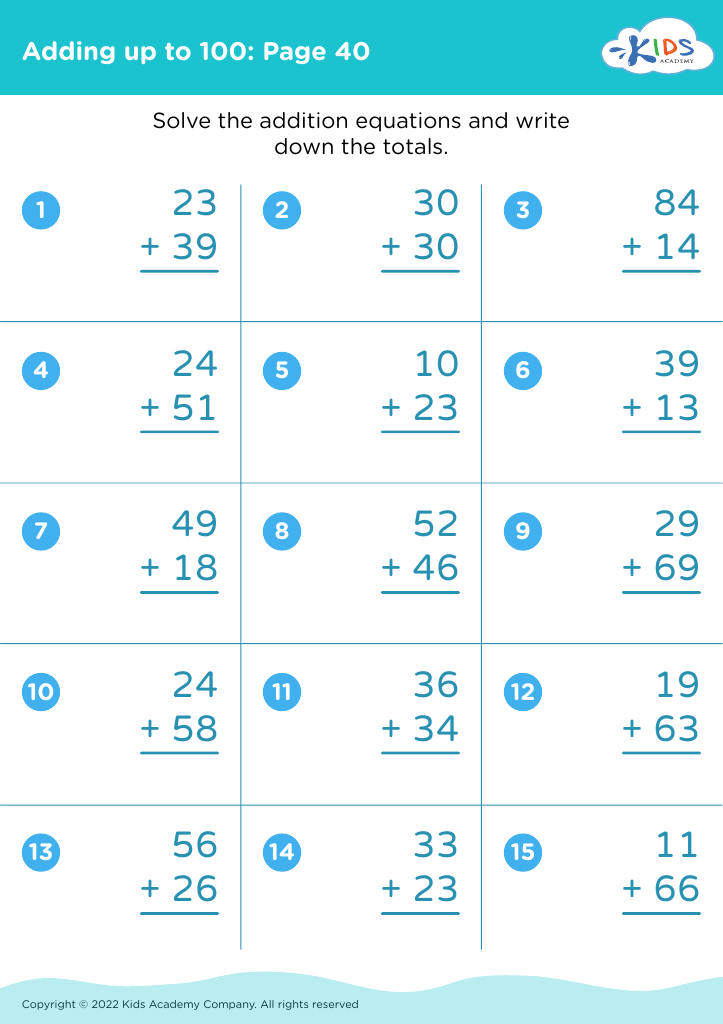
Adding up to 100: Page 40

Adding up to 100: Page 40

Adding up to 100: Page 40
Worksheet
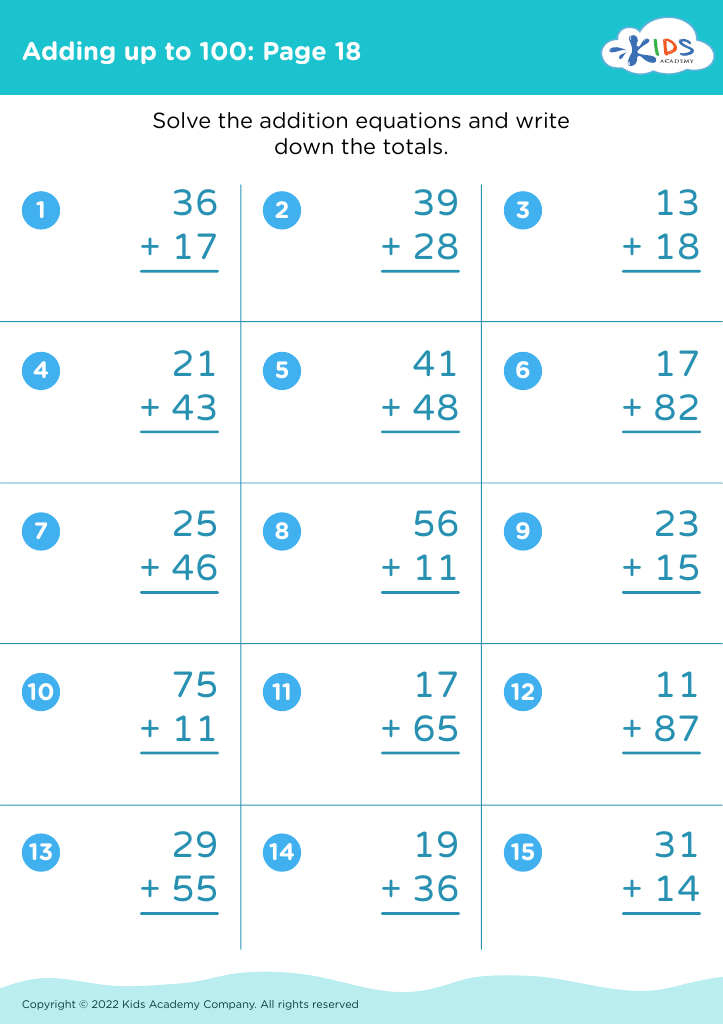
Adding up to 100: Page 18

Adding up to 100: Page 18

Adding up to 100: Page 18
Worksheet
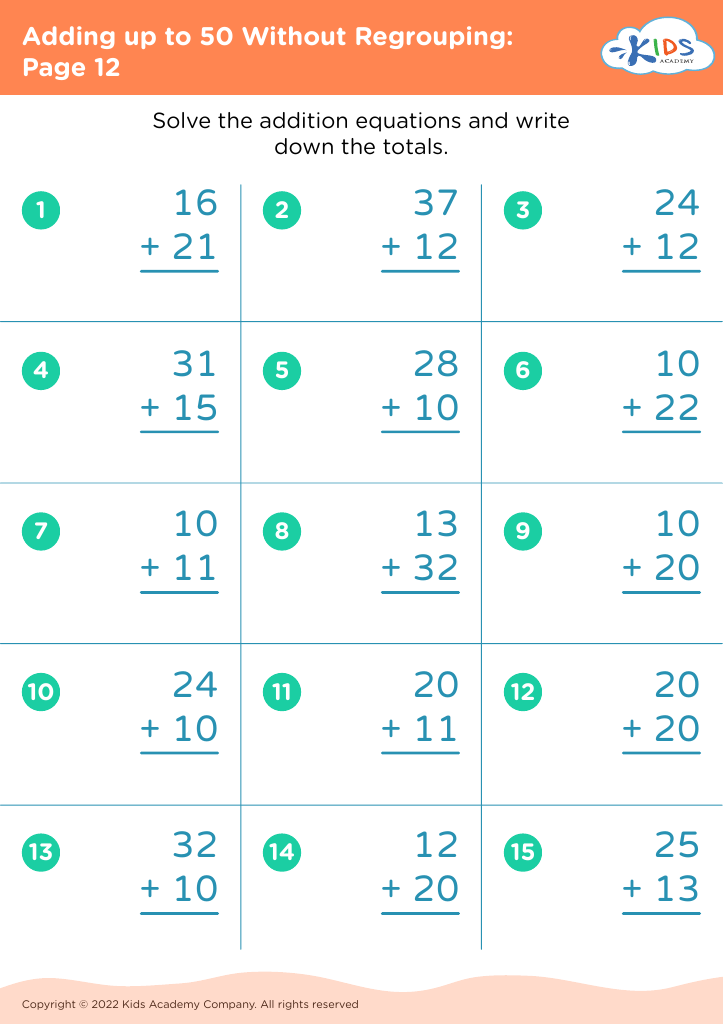
Adding up to 50 Without Regrouping: Page 12
Worksheet
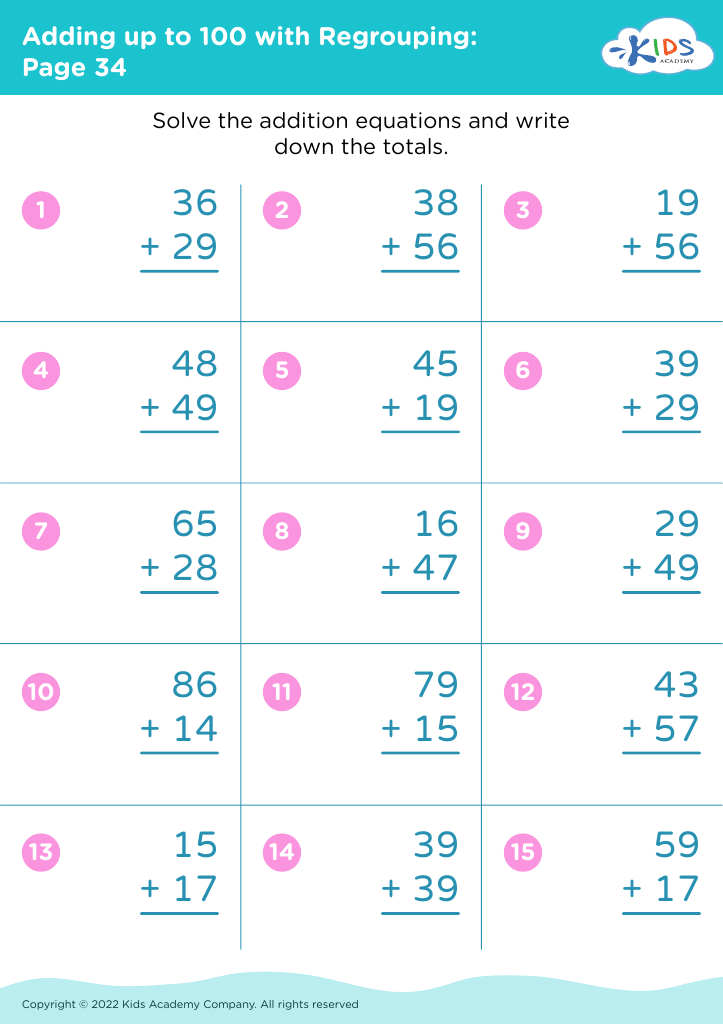
Adding up to 100 with Regrouping: Page 34
Worksheet
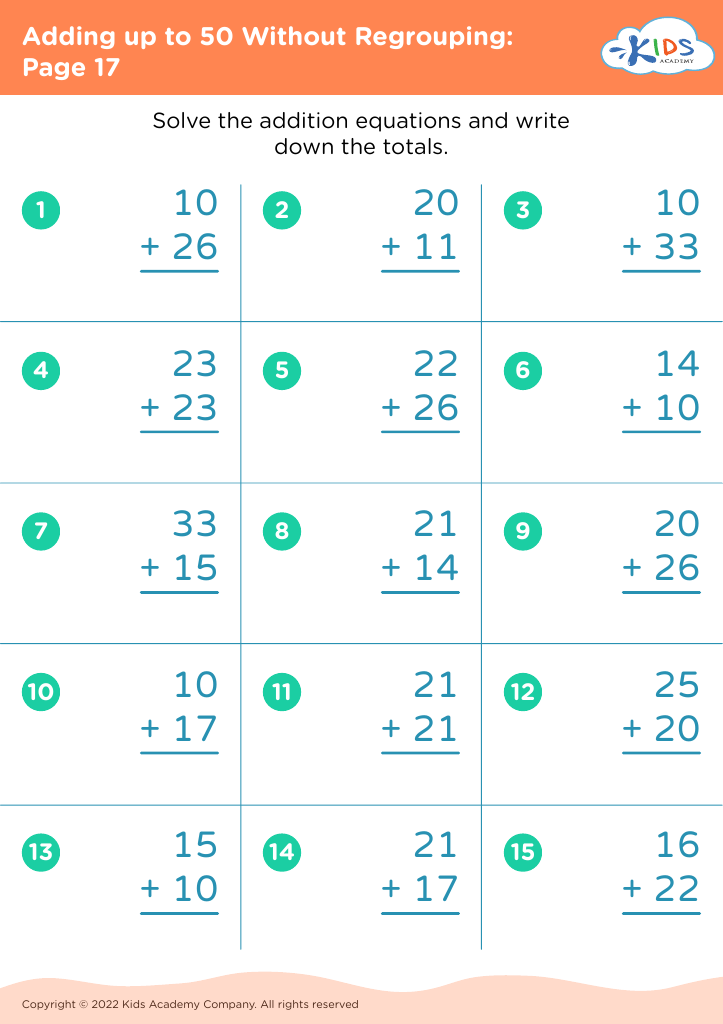
Adding up to 50 Without Regrouping: Page 17
Worksheet
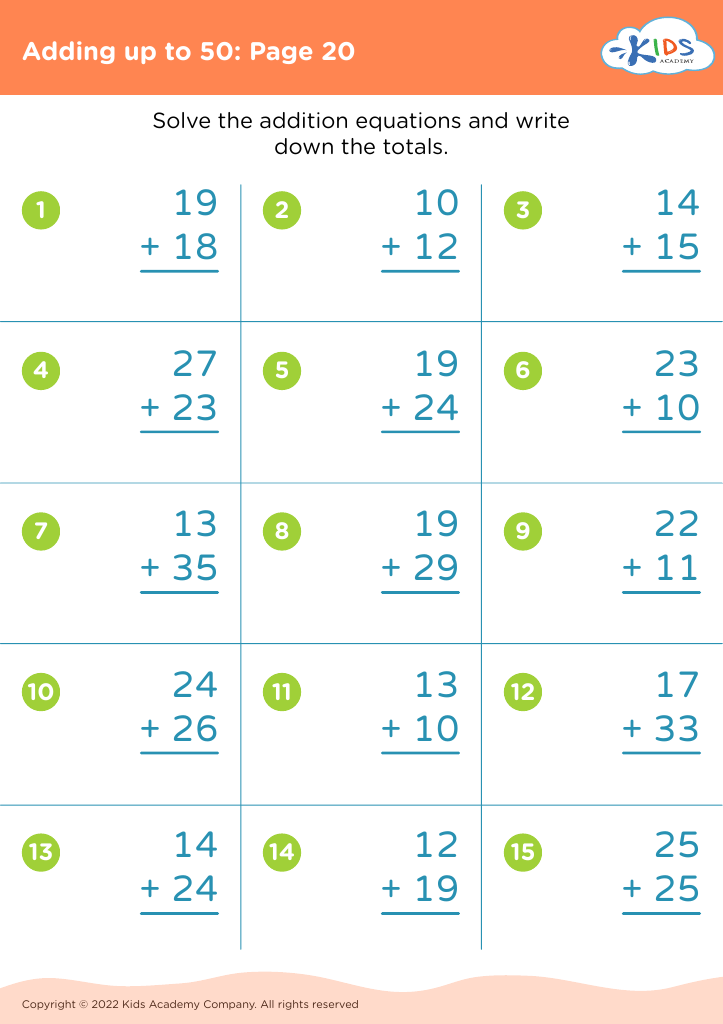
Adding up to 50: Page 20

Adding up to 50: Page 20

Adding up to 50: Page 20
Worksheet
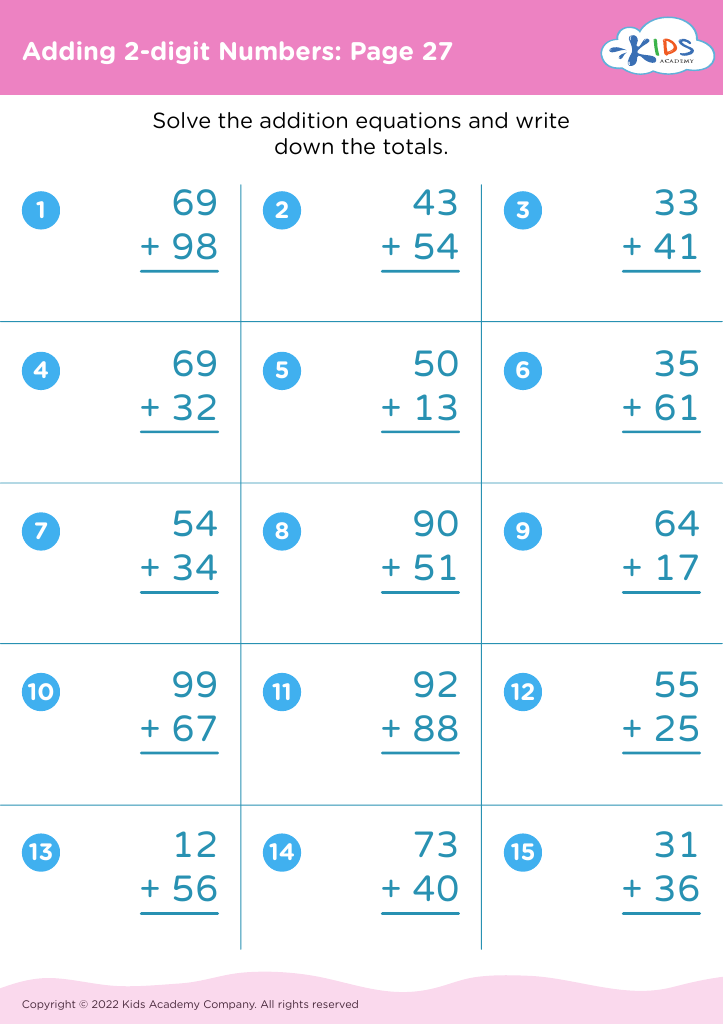
Adding 2-digit Numbers: Page 27

Adding 2-digit Numbers: Page 27

Adding 2-digit Numbers: Page 27
Worksheet


Enhancing number recognition and addition skills in children ages 3-9 is crucial for several reasons. First and foremost, these foundational skills serve as a building block for future mathematical understanding. By developing strong number recognition, children become more confident in handling numbers, which simplifies problem-solving in later grades.

In addition, early engagement with numbers can spark a child’s interest in mathematics. Fun activities, games, and exercises centered around addition can foster a positive attitude towards math, reducing anxiety and negativity often associated with the subject. These early experiences frame children's perspectives on mathematics, making them more likely to pursue advanced math coursework in the future.

Moreover, number recognition and addition help improve cognitive skills like critical thinking and logical reasoning. Through playful and interactive learning methods—such as counting games or hands-on activities—children learn to strategize and make decisions.

Parents and teachers play a vital role in creating stimulating learning environments that can enhance number recognition and addition, ultimately supporting children's overall academic success and self-confidence. By laying a solid mathematical foundation during these formative years, we set the stage for lifelong learning and achievement in mathematics and related fields.