
Handwriting practice Addition Worksheets for Ages 3-9
5 filtered results
Difficulty Level
Grade
Age
-
From - To
Subject
Activity
Standards
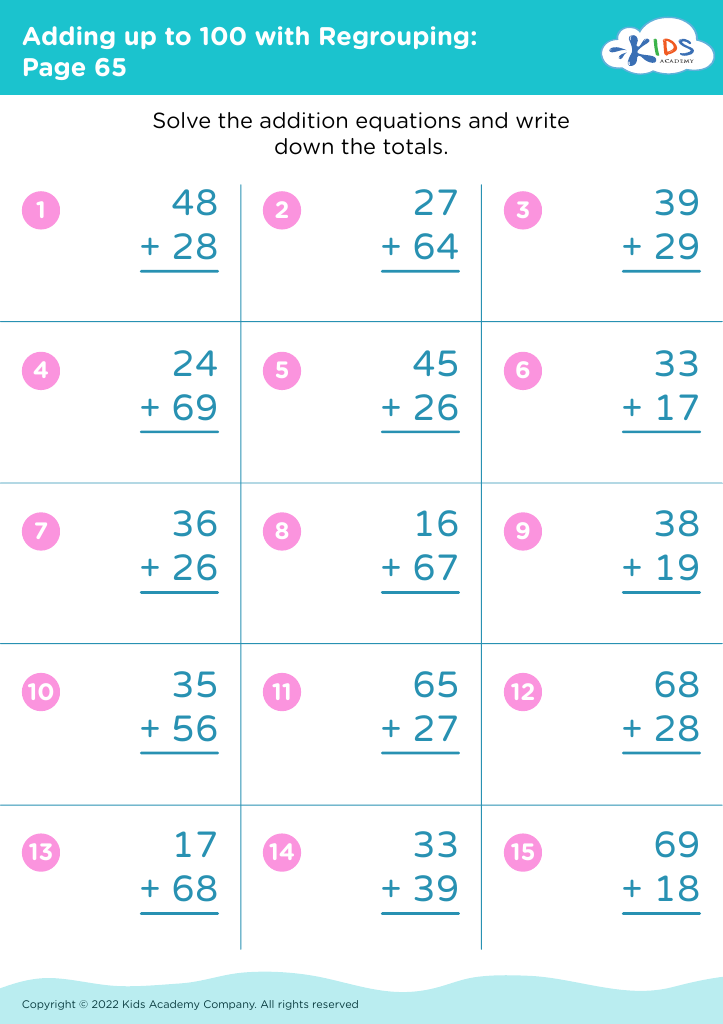
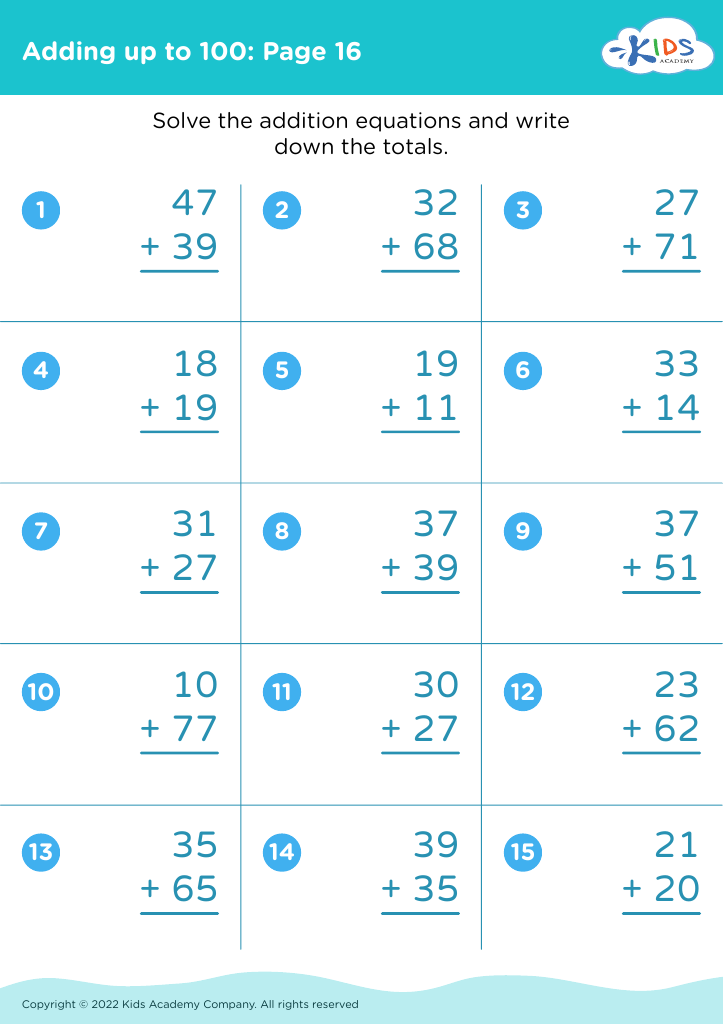
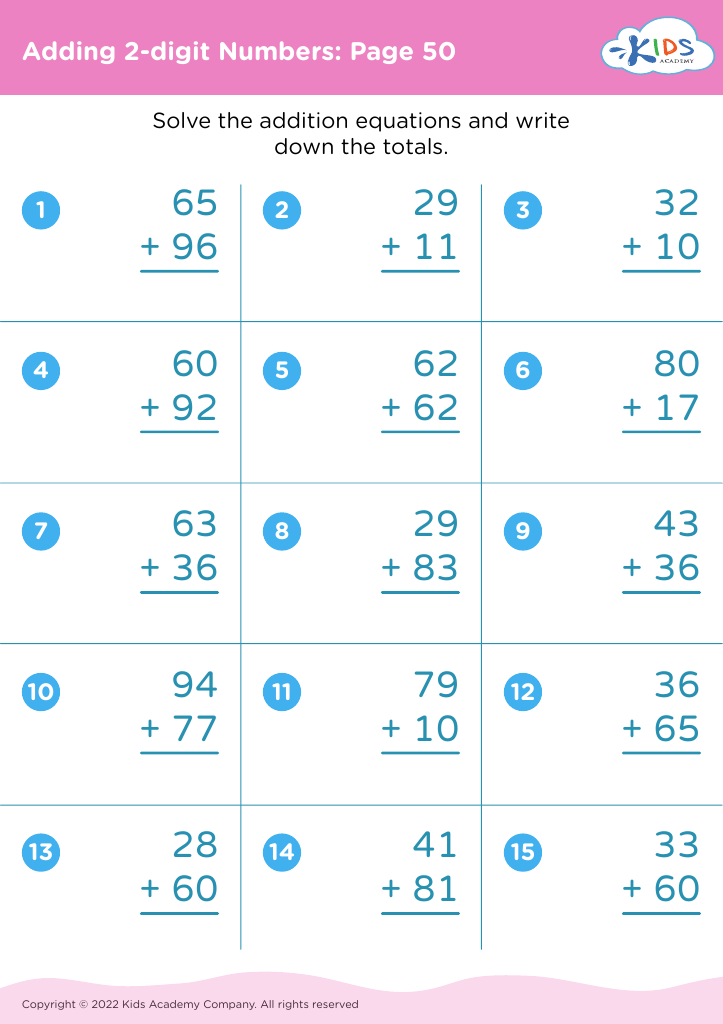
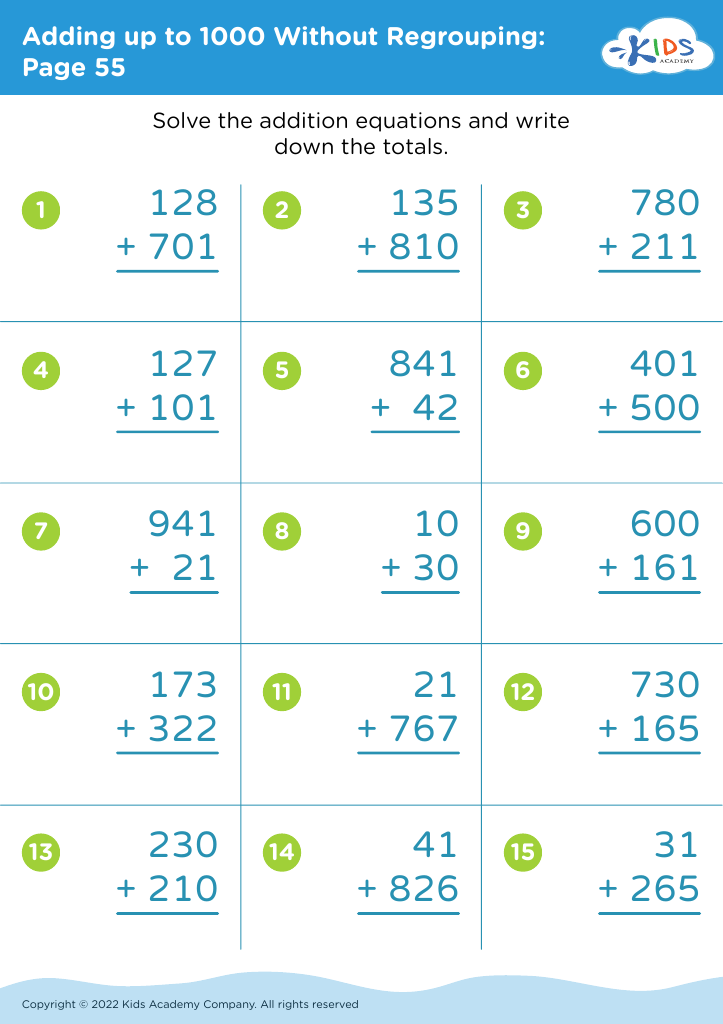
Enhance your child's math and handwriting skills with our Handwriting Practice Addition Worksheets for Ages 3-9. Perfectly crafted for young learners, these worksheets combine fundamental addition problems with structured handwriting practice to reinforce number formation and legibility. Engage kids with fun, age-appropriate exercises that develop both fine motor skills and mathematical understanding. Ideal for parents and educators, our printable resources support at-home learning and classroom instruction. Help your child build a solid foundation in basic math while boosting their confidence in writing with our expertly designed worksheets from Kids Academy.
Favorites
With answer key
Interactive
Join Kids Academy for Free
Who is primarily going to use this learning content?








Handwriting practice combined with addition activities for ages 3-9 is crucial in early education for several compelling reasons. Firstly, handwriting enhances fine motor skills, improving children's ability to perform delicate tasks such as buttoning clothes or using utensils. The physical act of writing supports the development of hand-eye coordination and dexterity.
Secondly, the blending of handwriting with addition encapsulates both cognitive and kinesthetic learning, fostering a multi-sensory educational experience. This hybrid approach cultivates stronger neural connections, aiding memory retention and the understanding of numerical concepts. Engaging in such activities provides a solid foundation for more complex mathematical problem-solving in later years.
Moreover, children who practice writing develop better reading and spelling skills due to their enhanced understanding of letter and number formation. Handwriting practice also instills patience and perseverance as students learn to write legibly over time.
Incorporating addition tasks reinforces arithmetic skills in a practical manner. This dual-faceted practice makes the learning process enjoyable, reducing math anxiety and increasing self-confidence. It promotes critical thinking and problem-solving skills when children write numbers, solve problems, and directly see their progress.
Collectively, handwriting practice coupled with basic arithmetic can immensely benefit a child's educational journey, making such activities well worth the attention of both parents and teachers.








