Numeracy development Addition Worksheets for Ages 3-9
3 filtered results
-
From - To
Explore our Numeracy Development Addition Worksheets for children aged 3-9, designed to foster essential mathematical skills through fun and engaging activities. These worksheets help young learners grasp the concept of addition, enhance their number recognition, and build confidence in their math abilities. With a variety of engaging exercises, children will enjoy solving problems using colorful visuals and interactive elements. Our resources are perfect for home or classroom use, catering to different learning styles and paces. Support your child's journey in becoming a confident learner and establish a solid foundation in numeracy skills with our carefully crafted addition worksheets. Dive into the world of numbers today!
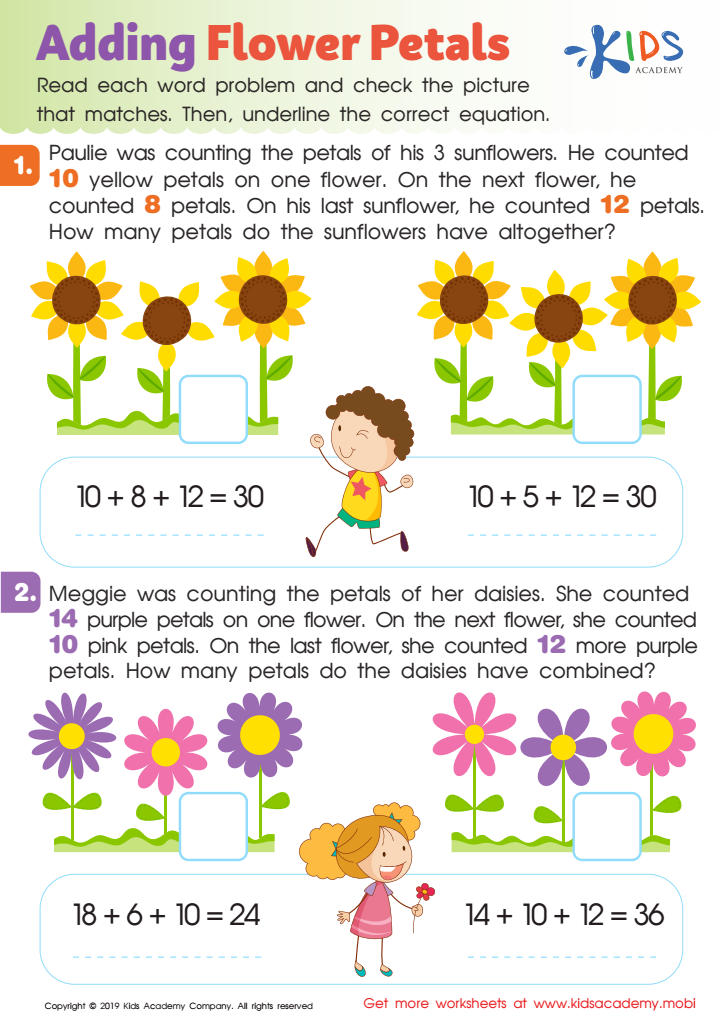
Adding Flower Petals Worksheet
 Assign to My Students



.jpg)




Numeracy development, particularly in addition, is crucial for children aged 3-9 as it lays the foundation for their overall mathematical competence and critical thinking skills. Early understanding of addition enables children to recognize and manipulate numbers, fostering confidence in their mathematical abilities. This competence enhances their problem-solving skills and equips them to tackle more complex mathematical concepts later in their education.
Furthermore, numeracy skills are not just vital for academic success; they also play a fundamental role in everyday life. From managing money to measuring ingredients for recipes, addition helps children navigate tasks they will encounter regularly. By focusing on numeracy development, parents and teachers can promote practical skills that enhance children's independence and daily functioning.
Engagement in fun and interactive activities, such as games and hands-on learning, can significantly motivate young learners. As parents and educators work together to cultivate these skills, they also support social interaction and collaboration among peers. Early investment in addition skills not only accelerates academic progress but also fosters a lifelong appreciation for mathematics, thereby ensuring well-rounded development. Ultimately, nurturing these skills during these formative years shapes children's futures, paving the way for successful learning trajectories.








