Recognizing Patterns Addition Worksheets for Ages 3-9
21 filtered results
-
From - To
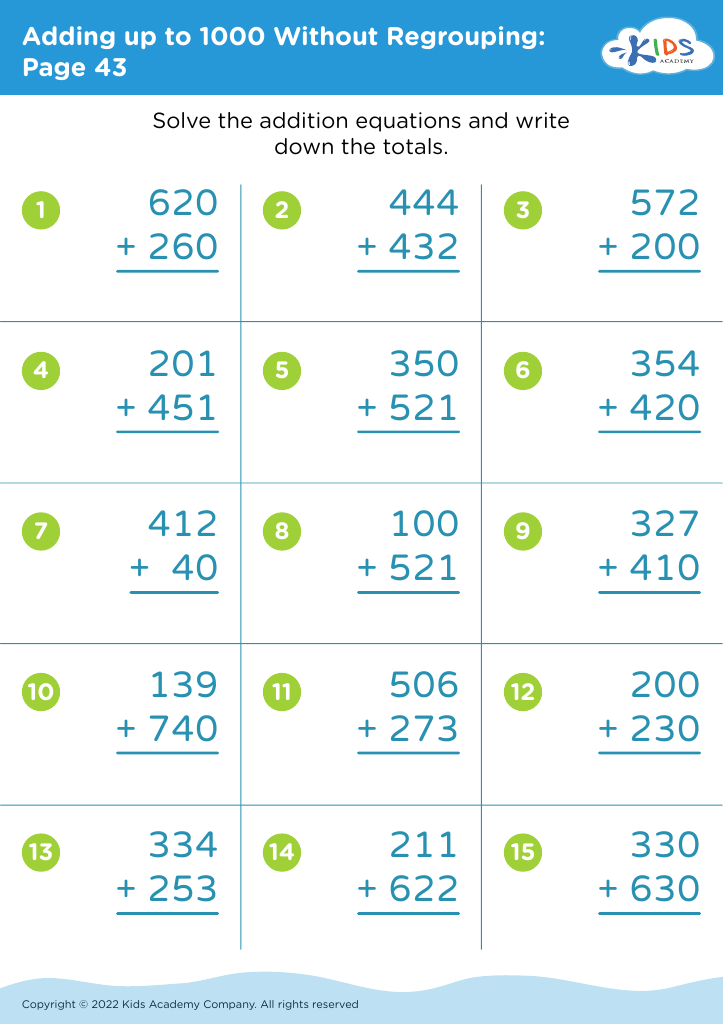
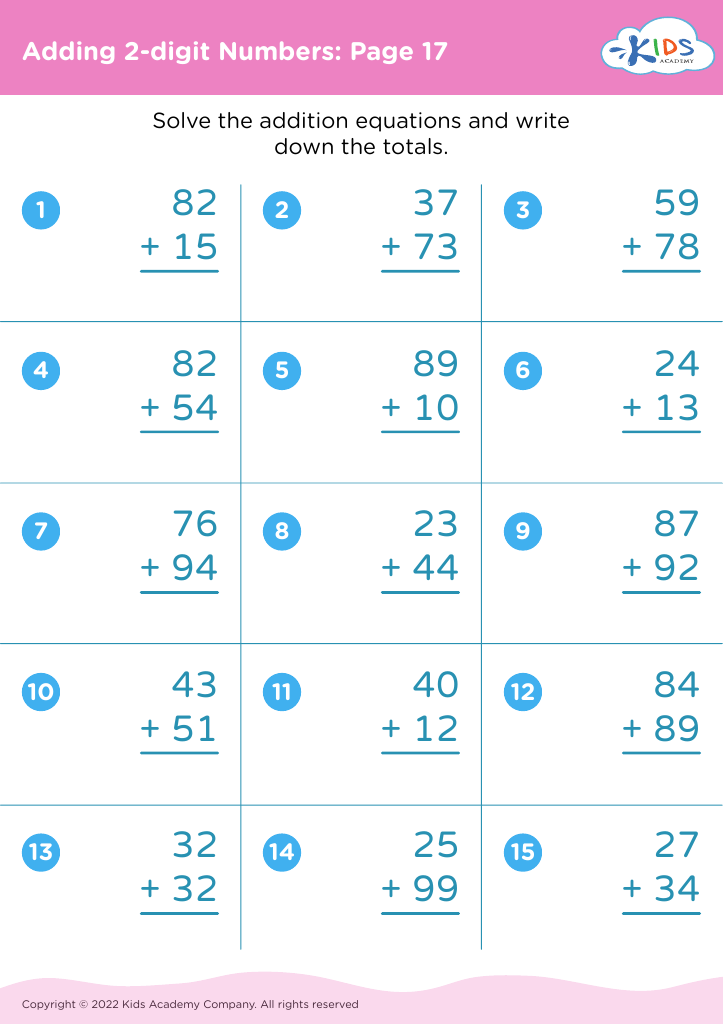
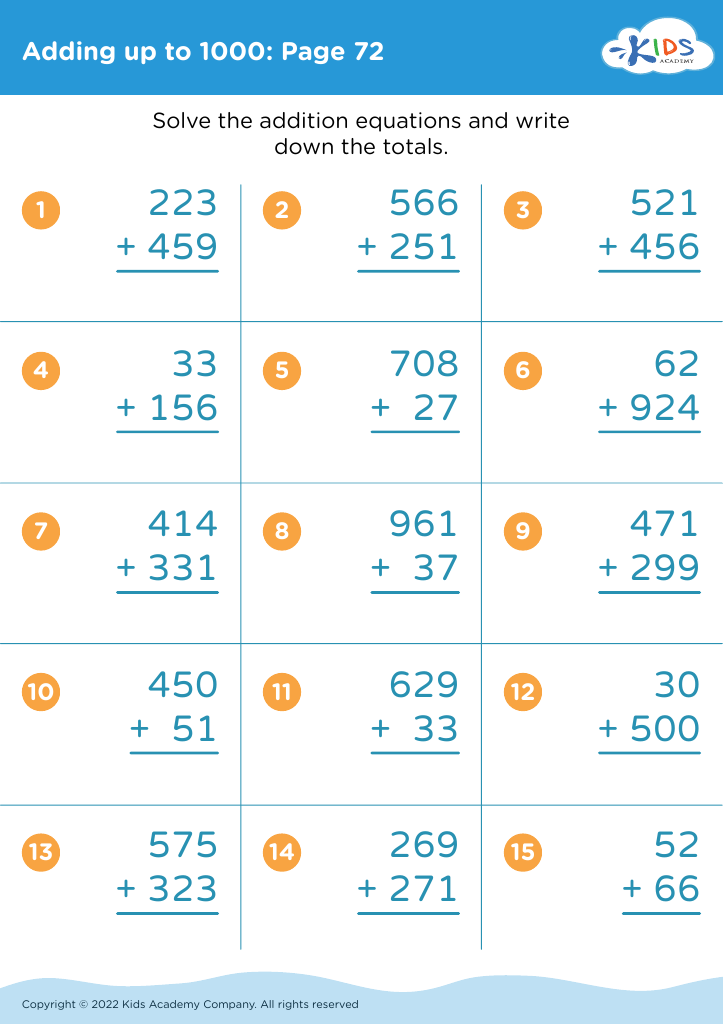
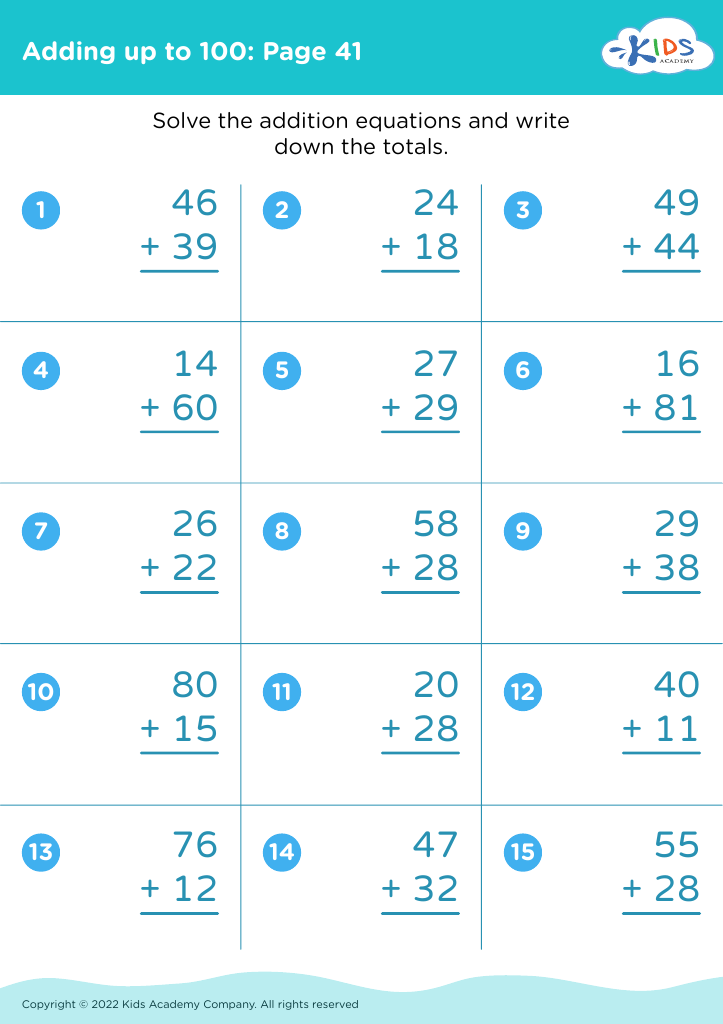
Discover our engaging Recognizing Patterns Addition Worksheets designed for children ages 3-9! These interactive worksheets are perfect for helping young learners grasp essential math skills while fostering critical thinking and pattern recognition. With colorful visuals and age-appropriate tasks, children will practice addition through various pattern-based activities, enhancing their understanding of numbers and relationships. These resources are perfect for both classroom settings and at-home learning, ensuring that kids remain excited about math. Support your child’s educational journey by encouraging them to explore patterns in addition, building a strong foundation for future math success! Start your journey with our printable worksheets today!
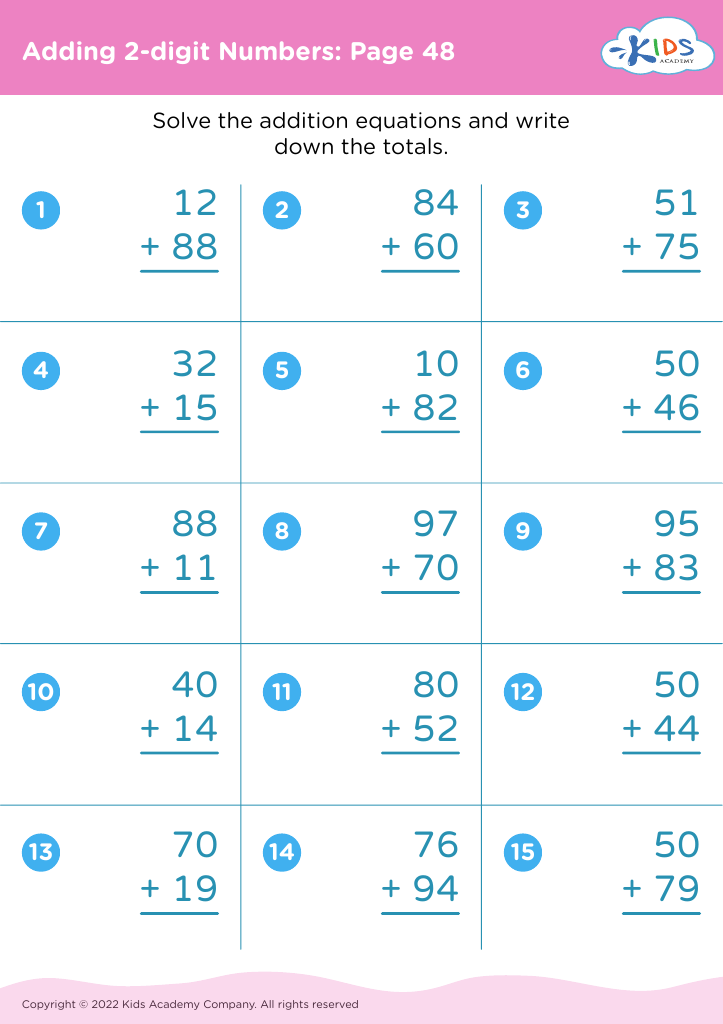
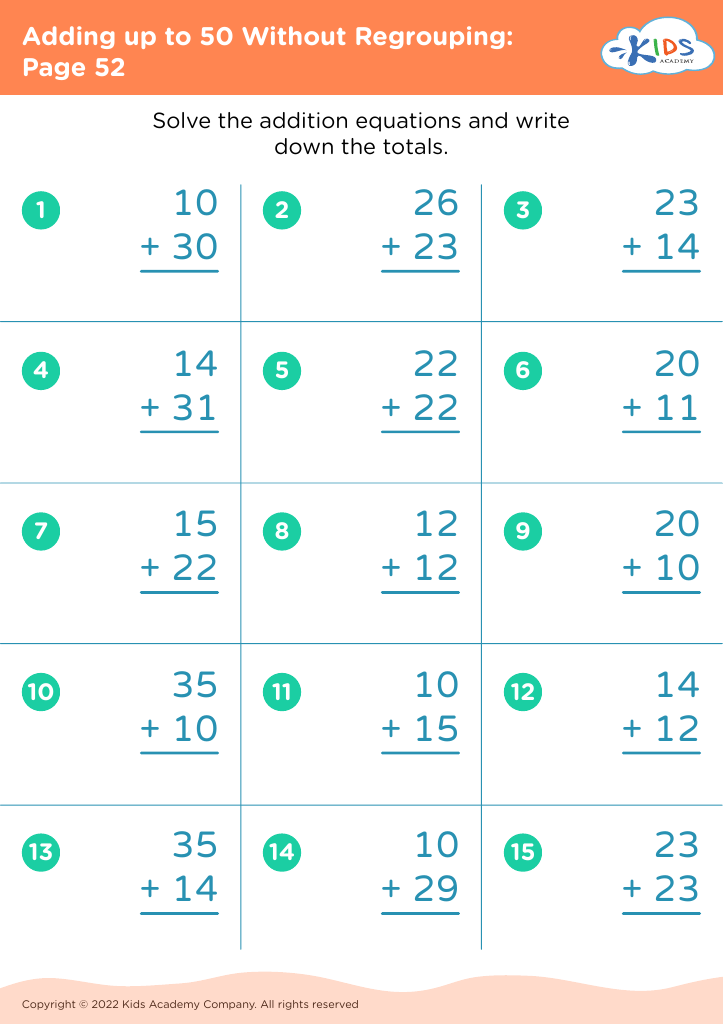
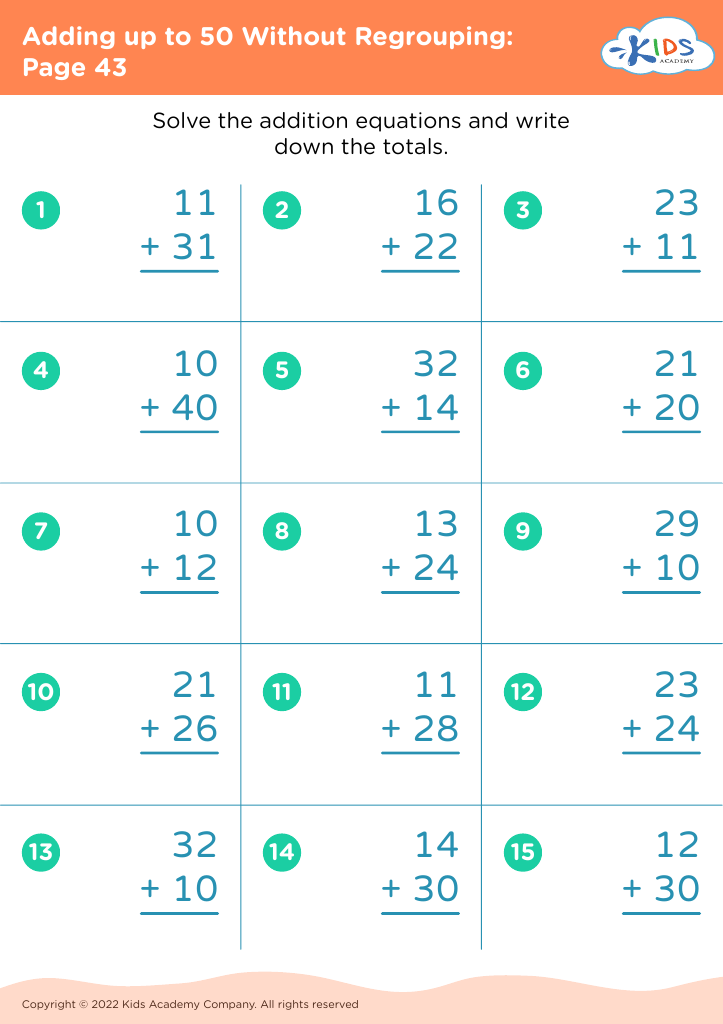
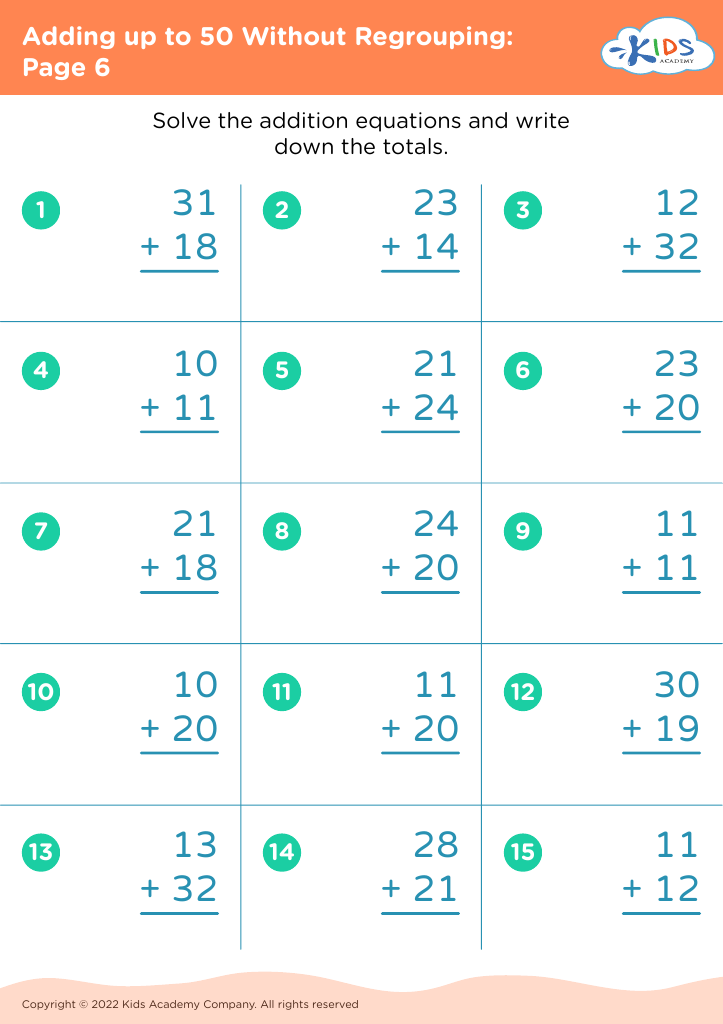
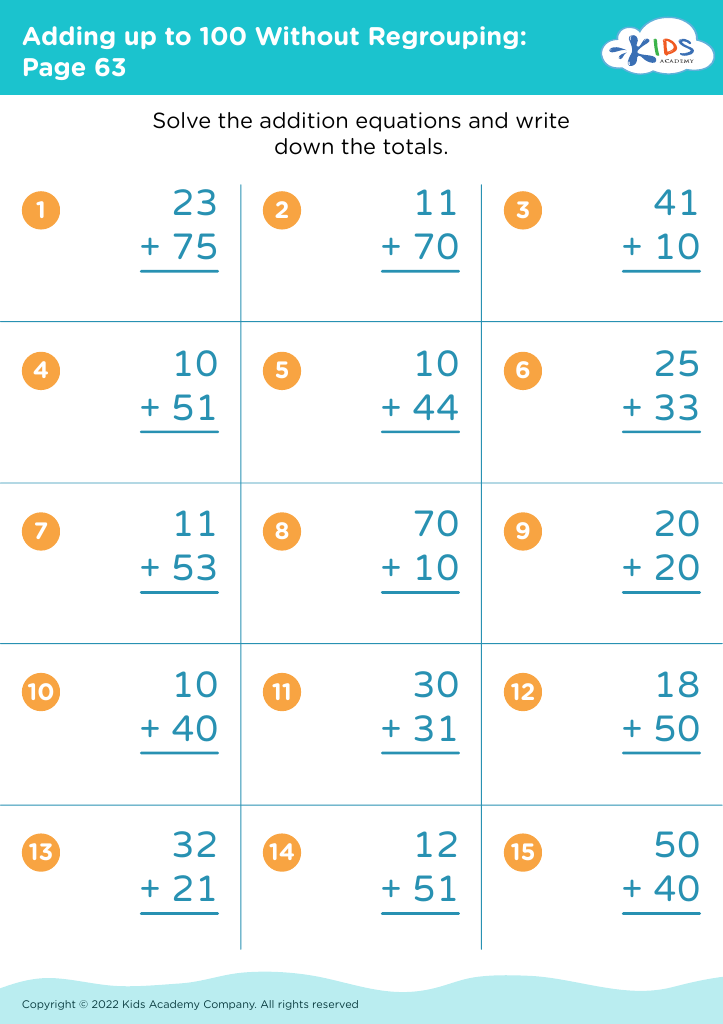
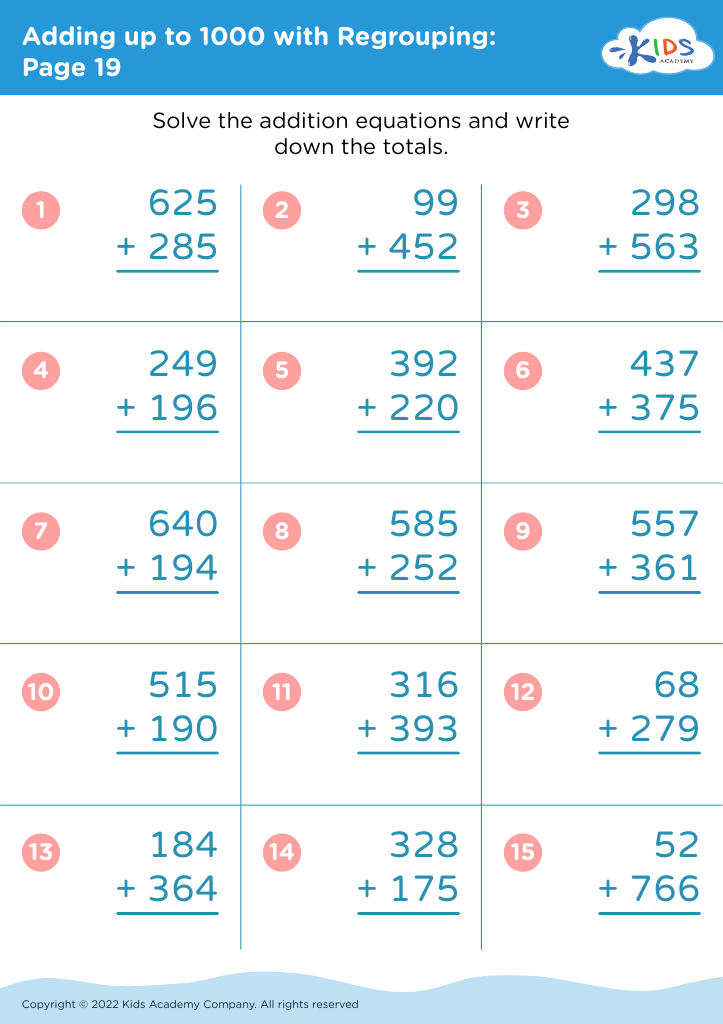
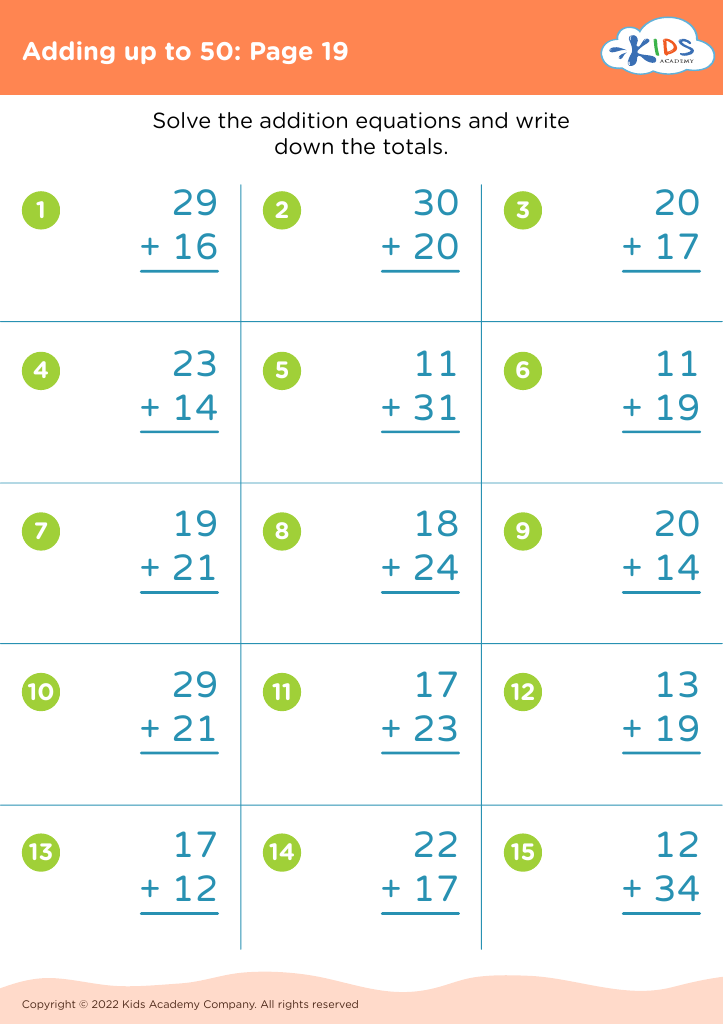
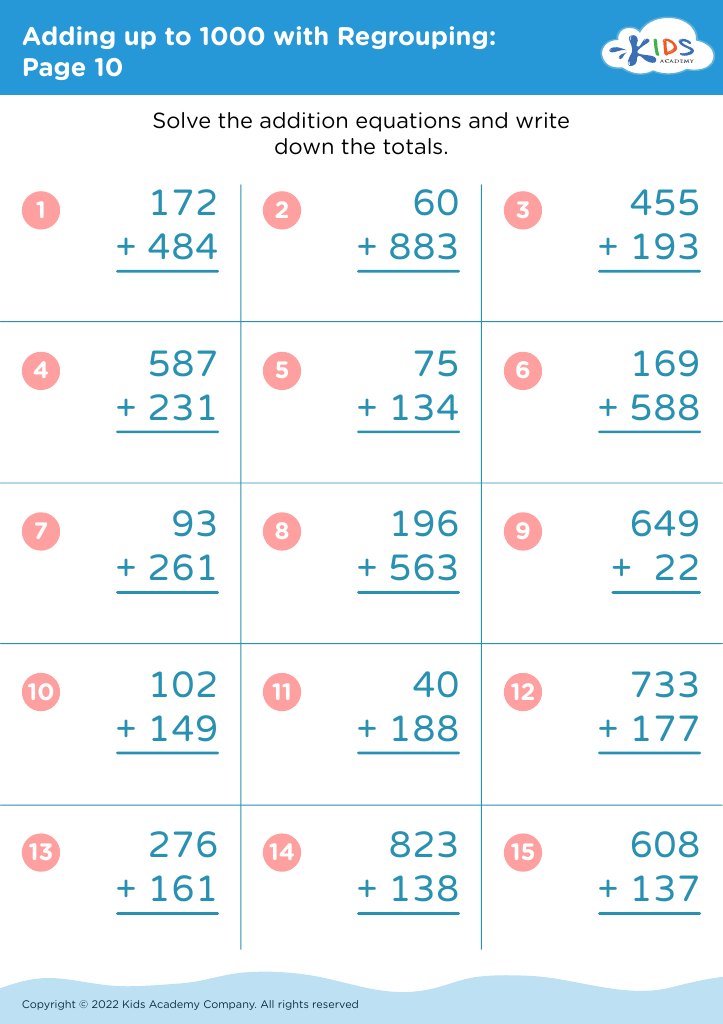
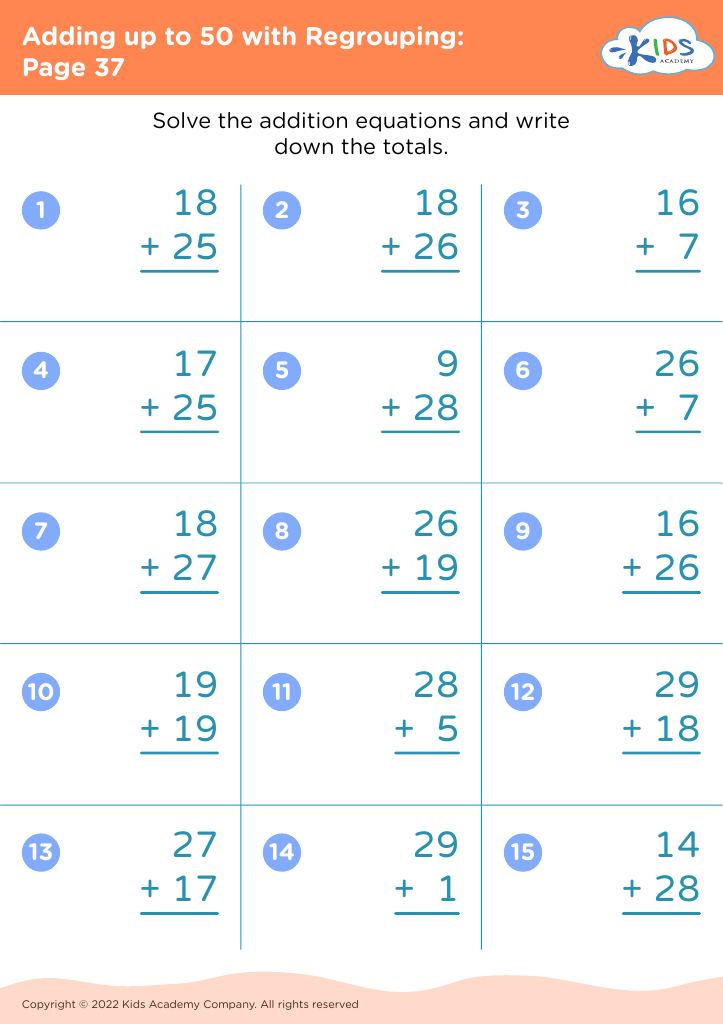
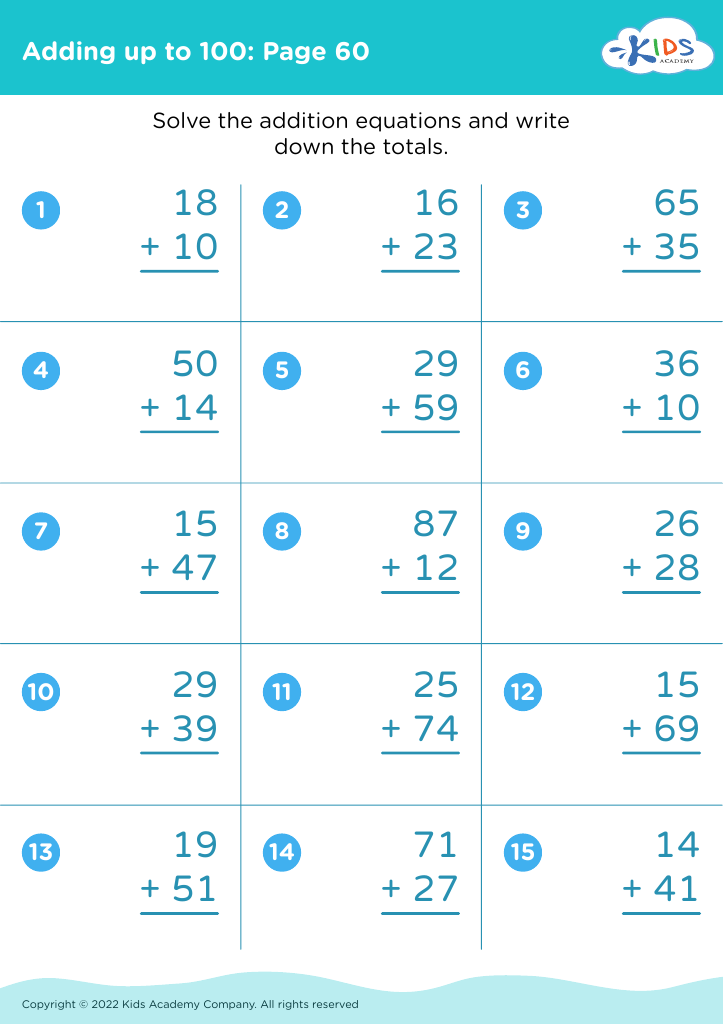
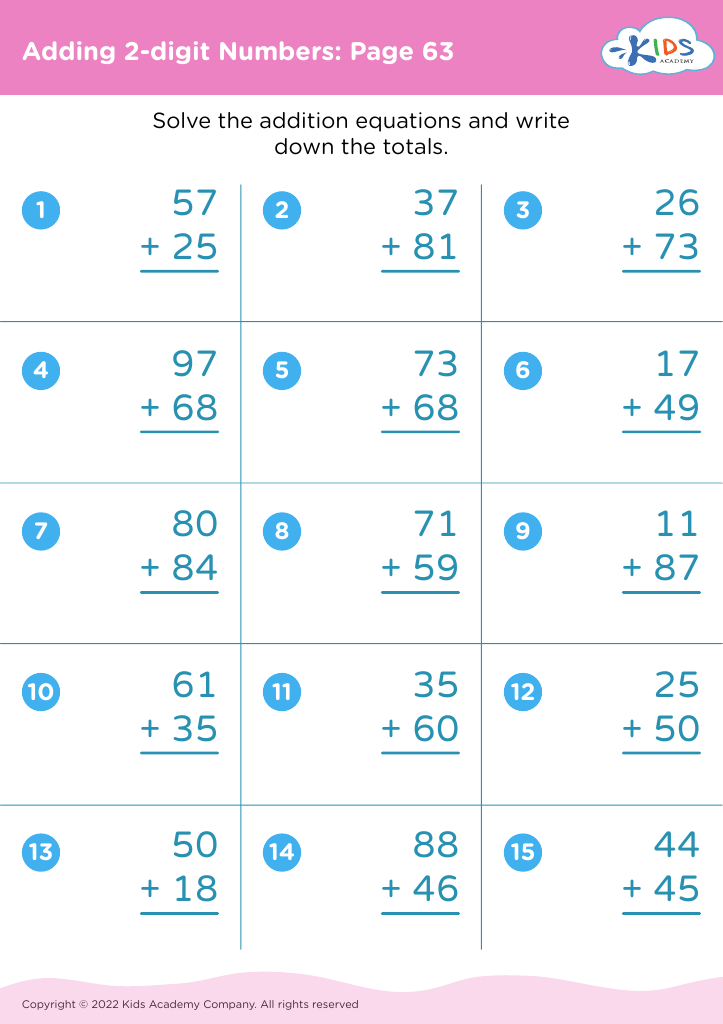
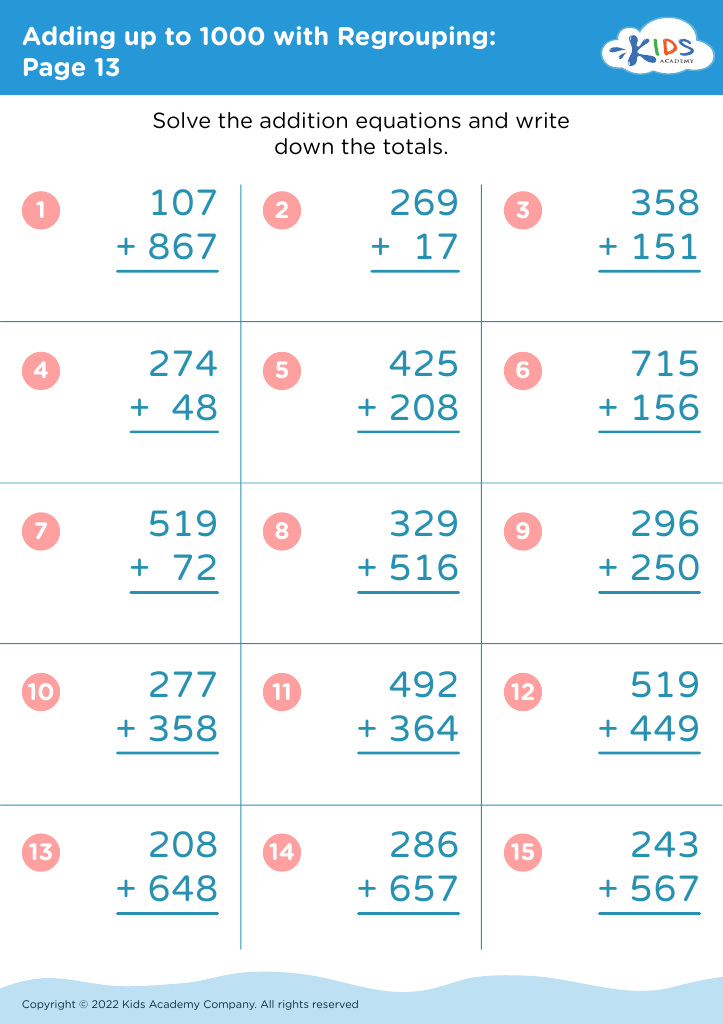
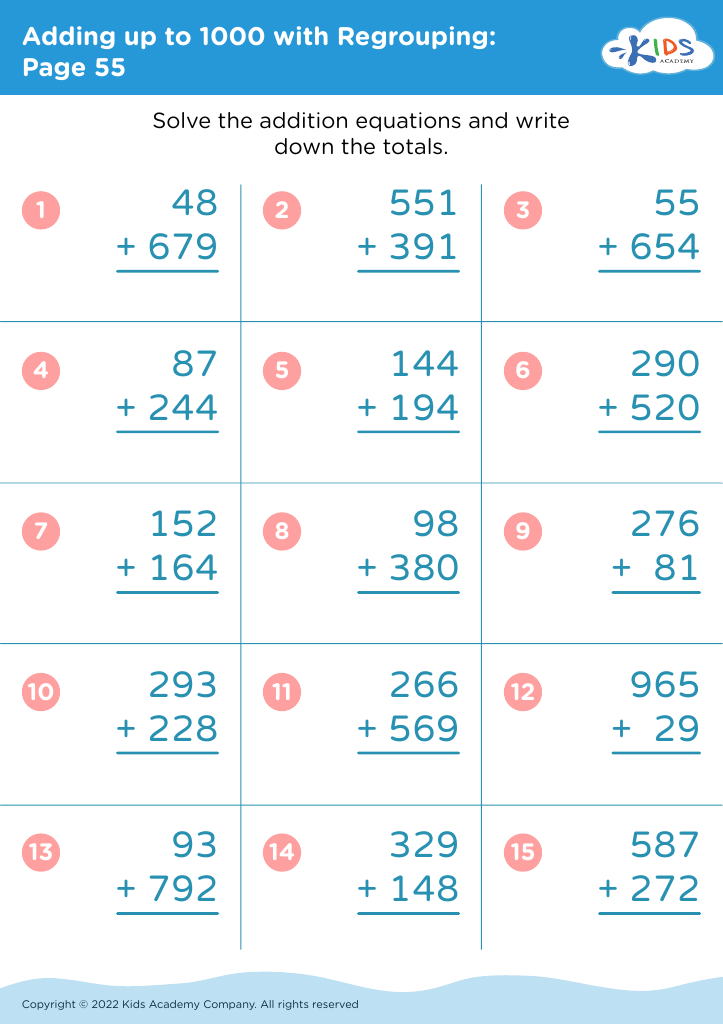
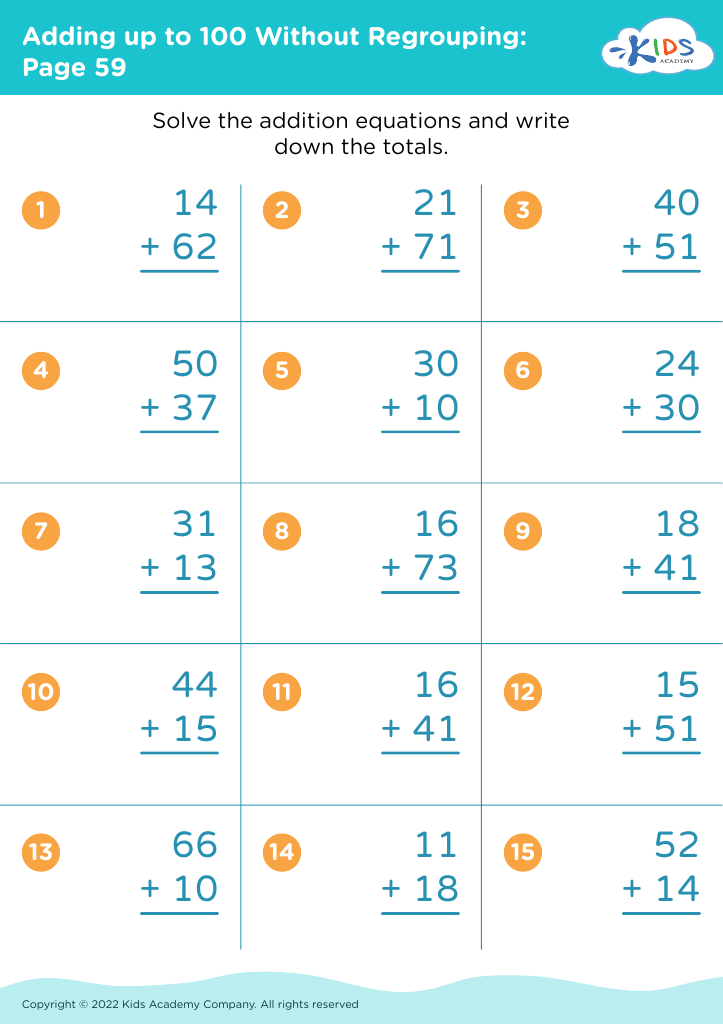
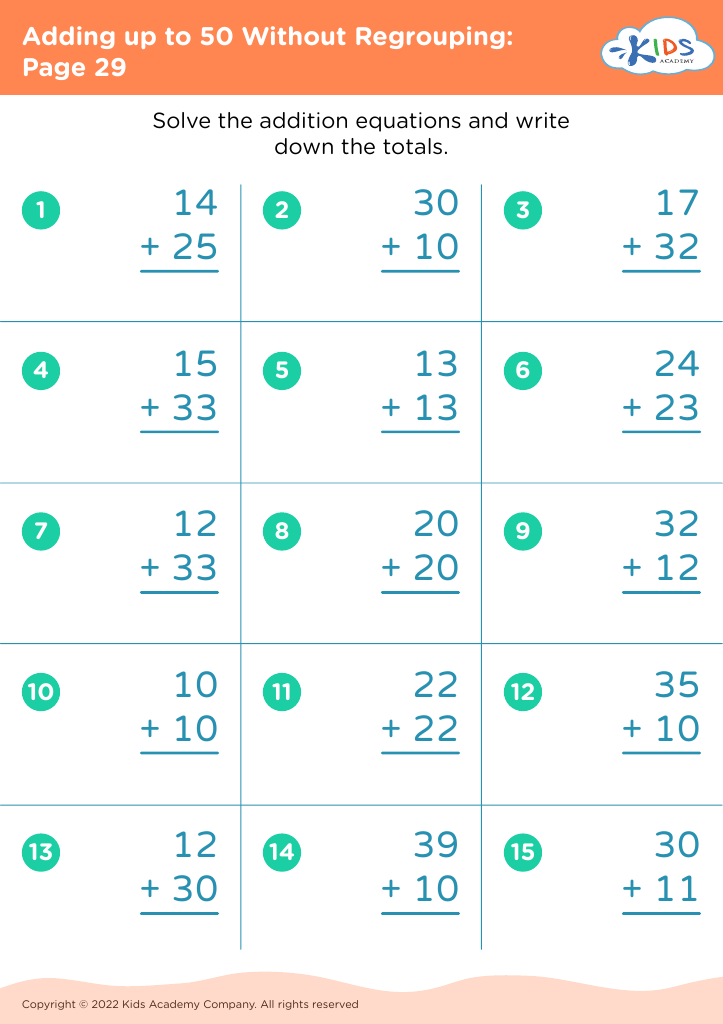
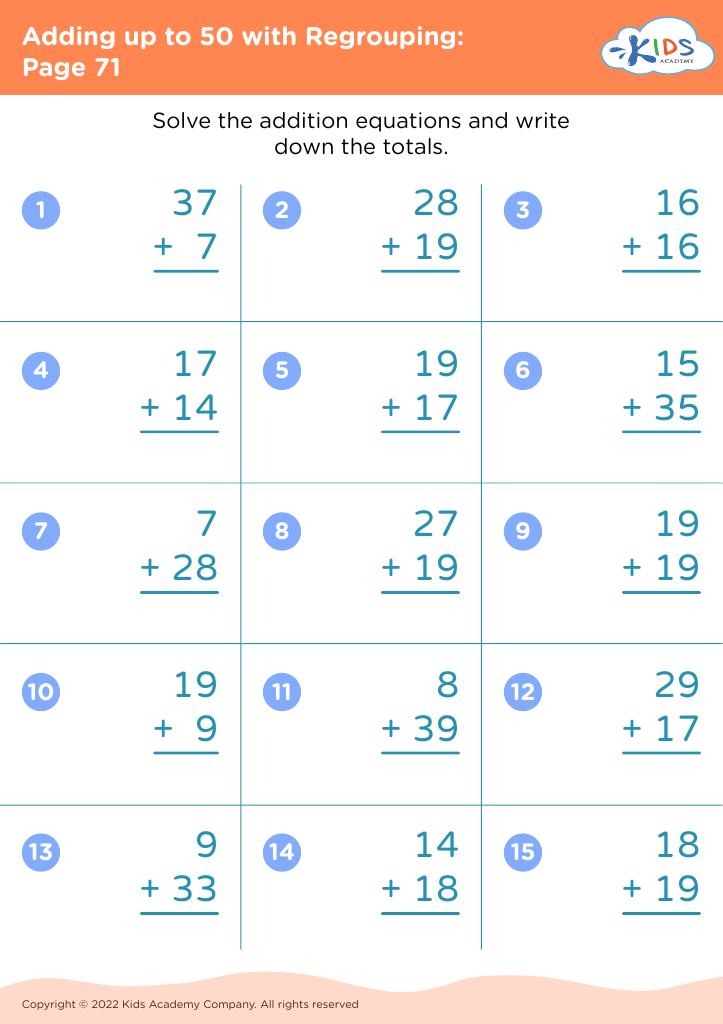
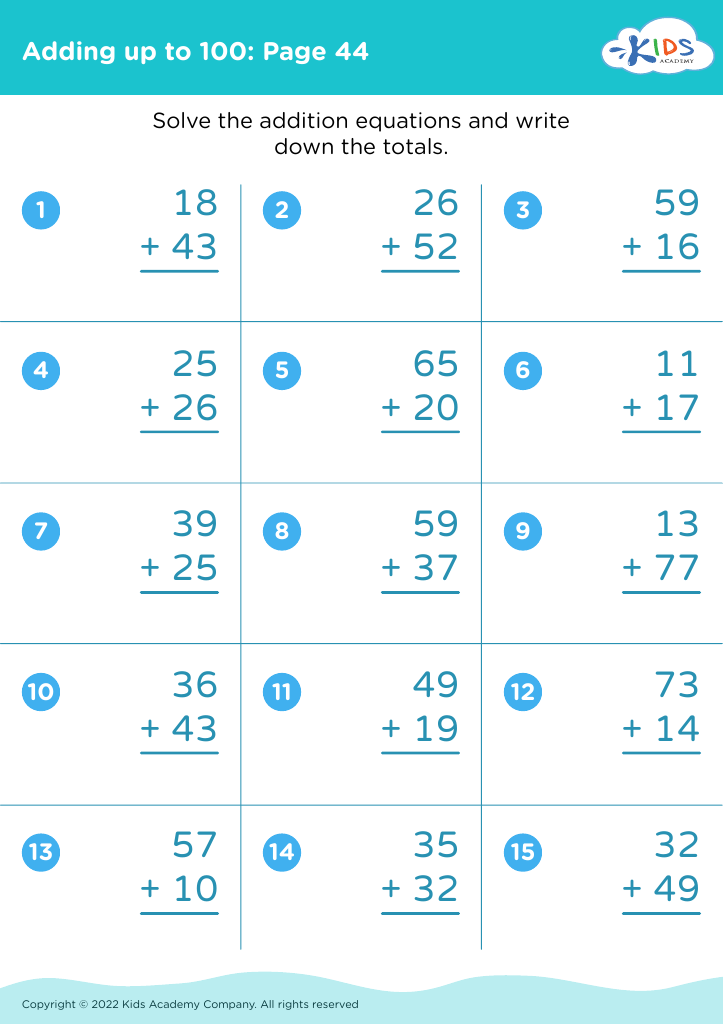








Recognizing patterns in addition is a foundational skill for children aged 3-9, and it plays a critical role in their overall mathematical development. Understanding patterns helps children make connections between numbers, leading to better number sense and enhancing problem-solving abilities. When children identify patterns, they can predict outcomes, which fosters critical thinking—a vital skill for lifelong learning.
For parents and teachers, nurturing this skill early on is essential. It encourages children to engage in active learning, as they become explorers of numbers rather than passive recipients of information. By recognizing patterns, students can become more efficient in their calculations, discovering shortcuts that simplify complex problems. This can build confidence and encourage a positive attitude towards math.
Moreover, woodworking, music, and nature teach us that recognizing and creating patterns is present all around us. Integrating pattern explorations into everyday activities can strengthen connections between mathematical concepts and real-world situations. Supporting children in pattern recognition not only builds a strong numerical foundation but also fosters creativity, making learning both enjoyable and meaningful. In short, investing time in this area enhances children’s overall cognitive development, setting the stage for future success in math and beyond.








