Telling time Addition Worksheets for Ages 3-9
3 filtered results
-
From - To
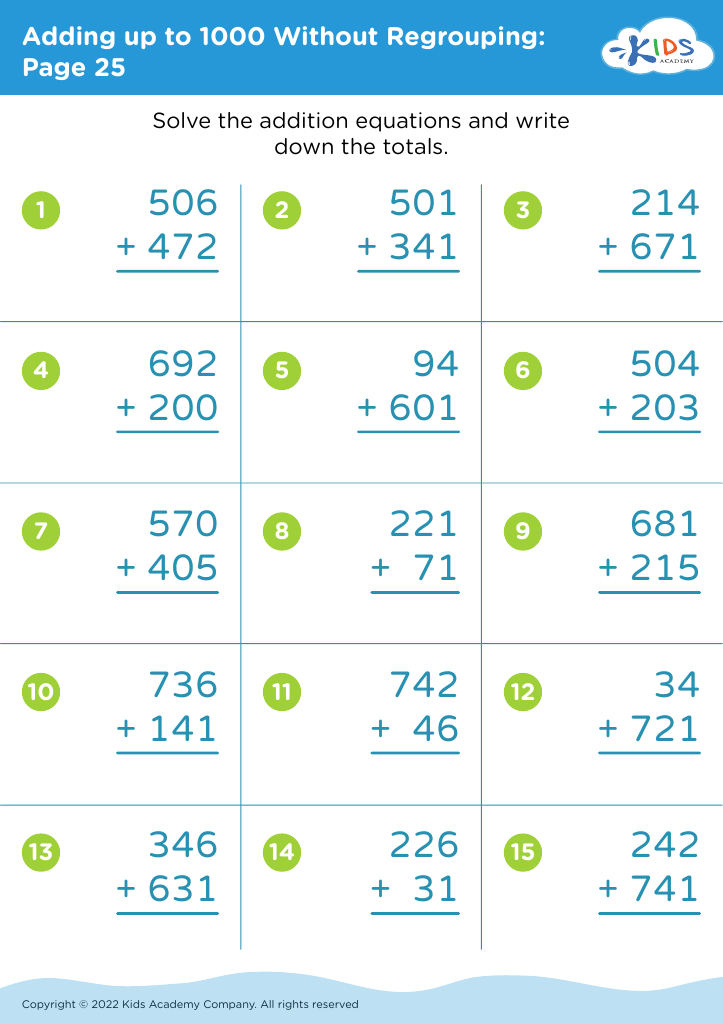
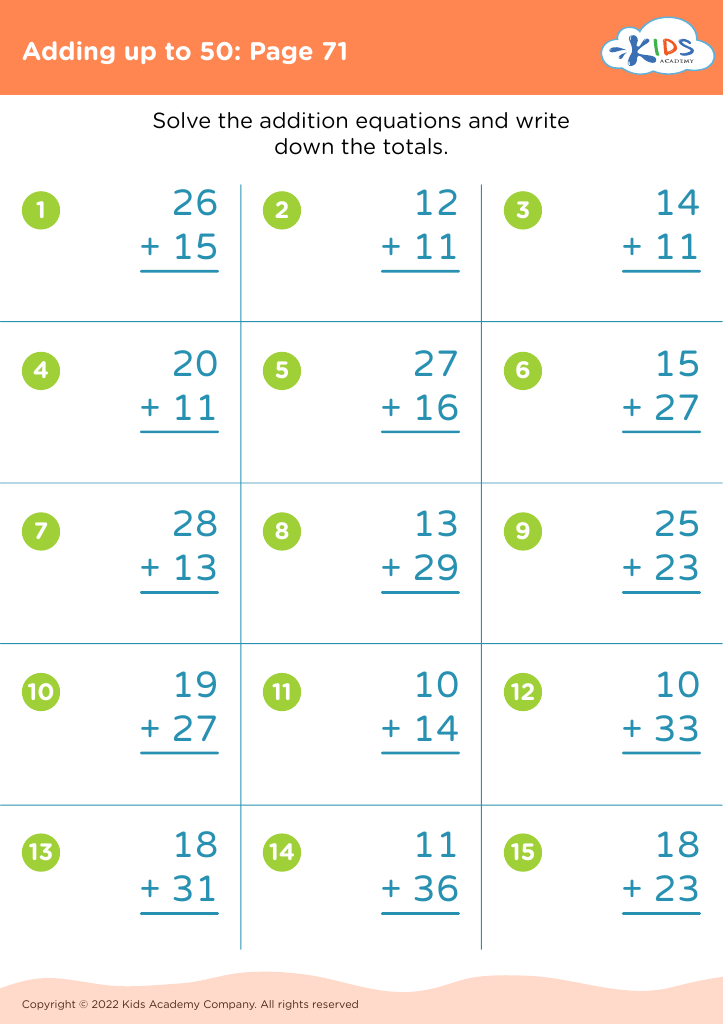
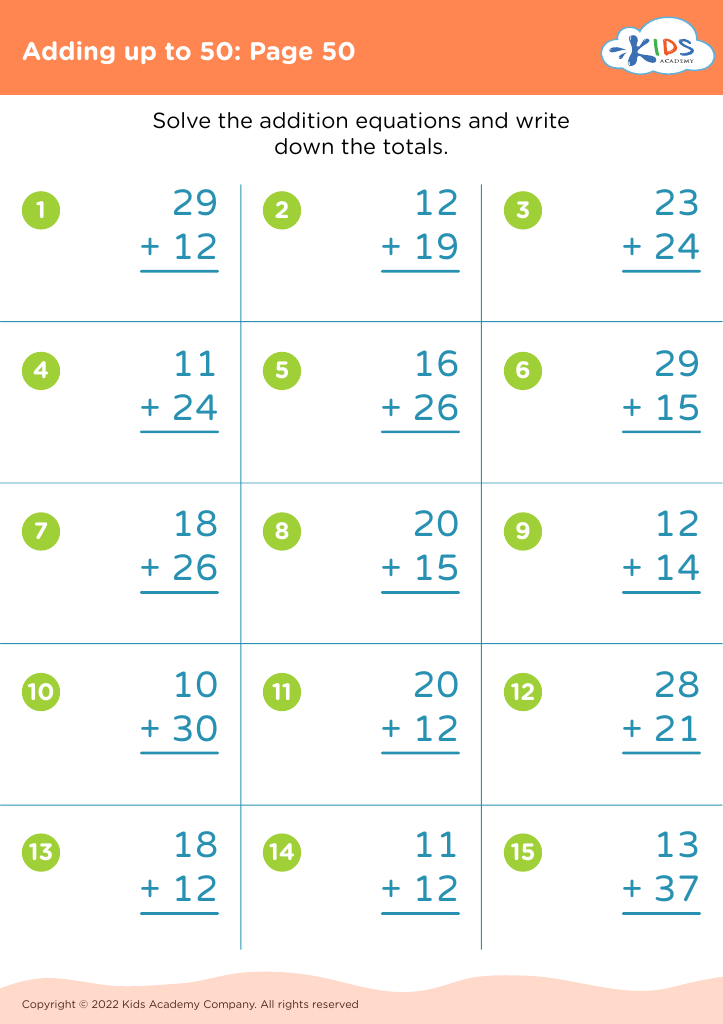
Enhance your child's ability to tell time while mastering basic addition with our Telling Time Addition Worksheets, specially designed for ages 3-9. Combining engaging illustrations and interactive time-telling exercises, these worksheets make learning both fun and educational. Kids will practice reading clocks and performing simple arithmetic, fostering essential skills for early math development. Our expert-crafted activities cater to young learners, gradually boosting their confidence and proficiency. Perfect for home or classroom use, introduce your child to the practical and educational joy of time-telling and addition today! Download now from Kids Academy and watch them thrive!







Telling time and addition are foundational skills that are crucial for children ages 3-9, and as parents or teachers, emphasizing their importance is essential for early development. Firstly, learning to tell time equips children with a sense of routine and independence. It helps them understand the concept of time management, aiding in their daily activities such as knowing when to wake up, attend school, or play. This comprehension fosters a sense of responsibility and punctuality from a young age.
Similarly, mastering addition is pivotal in fostering mathematical proficiency. Addition forms the basis of arithmetic, and early exposure enables children to tackle more complex math problems with confidence as they progress in school. It cultivates logical thinking, problem-solving skills, and enhances cognitive development.
Moreover, integrating both skills into everyday activities makes learning practical and engaging. Practicing telling time by setting daily reminders, or performing simple addition during playtime, makes the learning process enjoyable and less daunting.
Overall, prioritizing these skills helps in building a strong educational foundation. Time-telling enhances organizational skills, while addition boosts numerical literacy—both of which are essential for academic success and everyday life. Therefore, parents and teachers should be proactive in nurturing these fundamental abilities in early childhood.








