
Color Identification Geometry Worksheets for Ages 3-9
5 filtered results
Difficulty Level
Grade
Age
-
From - To
Subject
Activity
Standards
Discover our engaging Color Identification Geometry Worksheets designed for children ages 3-9! These printable resources help young learners enhance their understanding of shapes while simultaneously developing their color recognition skills. Each worksheet features fun and interactive exercises that make learning enjoyable and effective. Kids can explore vibrant shapes and colors, improving their cognitive abilities, fine motor skills, and visual perception. Ideal for classroom or home learning, our worksheets support early childhood education by promoting creativity and critical thinking. Explore the world of geometry and color in a playful way that sets the foundation for future math skills. Download yours today!
Favorites
With answer key
Interactive
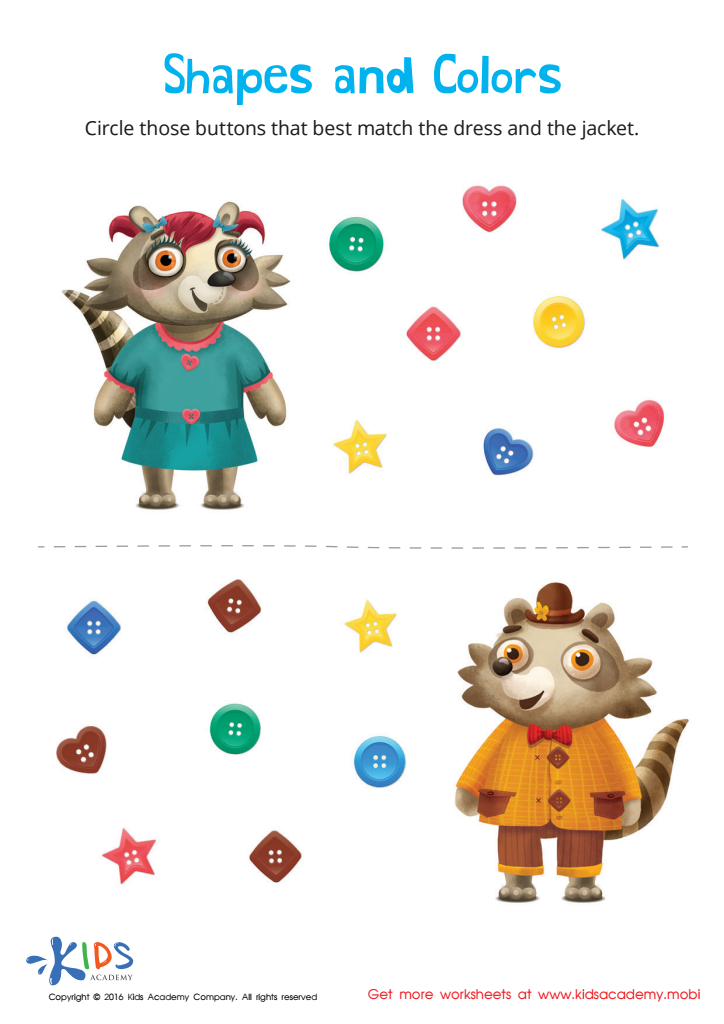
Matching: Shapes and Colors Worksheet
Help Mr. and Mrs. Raccoon find the right buttons to match their shirts! Kids will identify shapes and colors and learn to match them correctly.
Matching: Shapes and Colors Worksheet
Worksheet











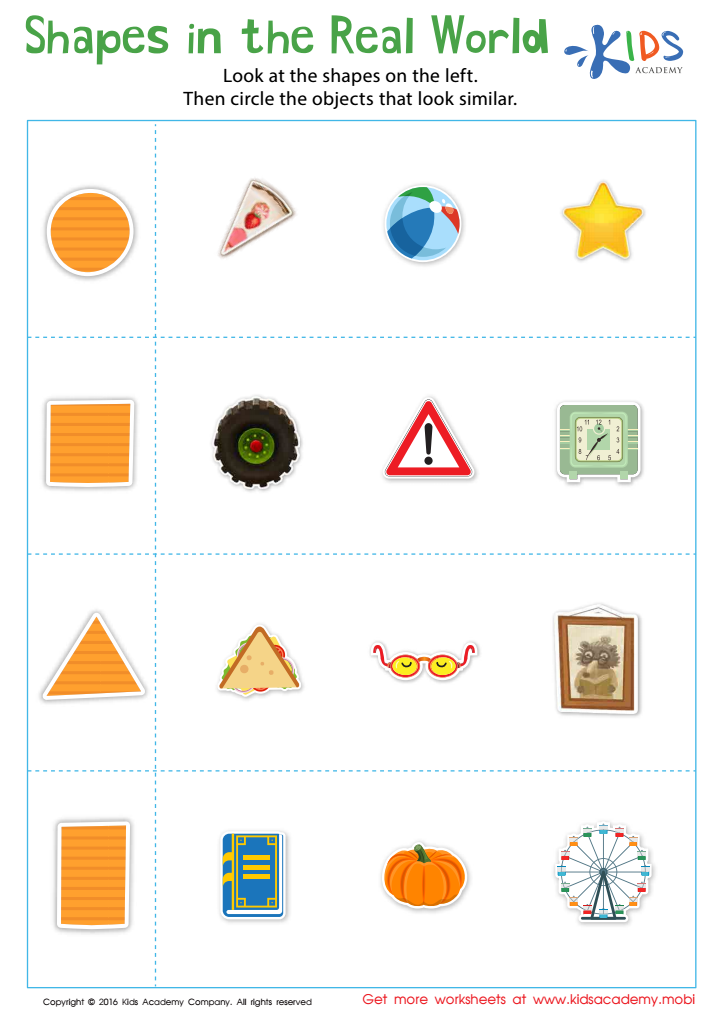
Shapes in the Real World Worksheet
Teach kids math in real-world context with this fun and inviting PDF. Let them explore geometric shapes and match them with everyday objects, giving them practice with fine motor skills and reinforcing basic shapes. Help them understand that math is everywhere in their lives!
Shapes in the Real World Worksheet
Worksheet
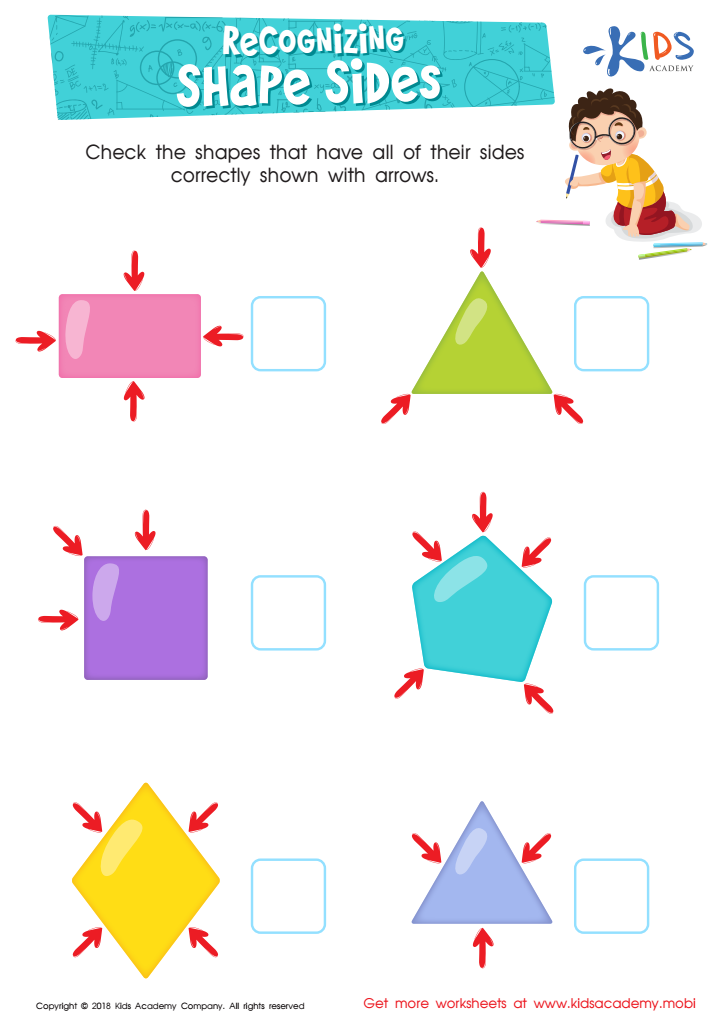
Recognizing Shape Sides Worksheet
This exercise will help your child recognize shape sides. Go over the difference between sides and angles first, then have them check the shapes with arrows to show the sides. They'll quickly get the hang of it and find it much easier after completing the colorful worksheet.
Recognizing Shape Sides Worksheet
Worksheet
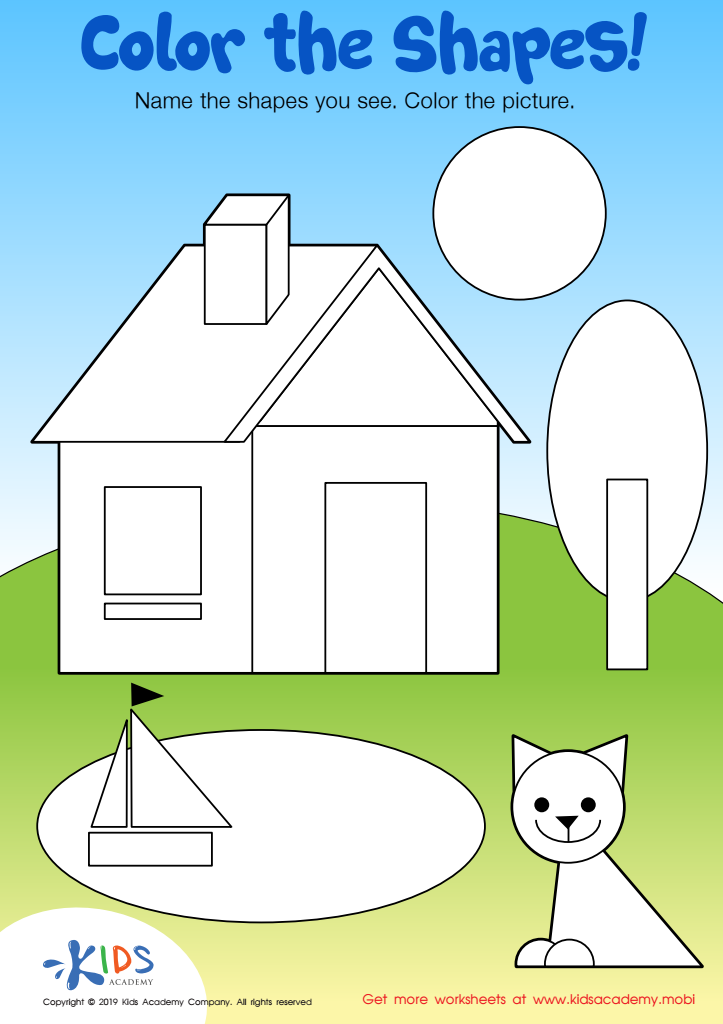
Color the Shapes Worksheet
Help your student master shape identification with this fun worksheet. Ask them to name the shapes in the picture, then color it! Ask questions like "How many squares do you see?" and "How many triangles?" to extend the learning. Identify squares, circles, triangles and rectangles with this enjoyable coloring page.
Download (PDF)
 Assign to My Students
Assign to My Students
Color the Shapes Worksheet
Worksheet
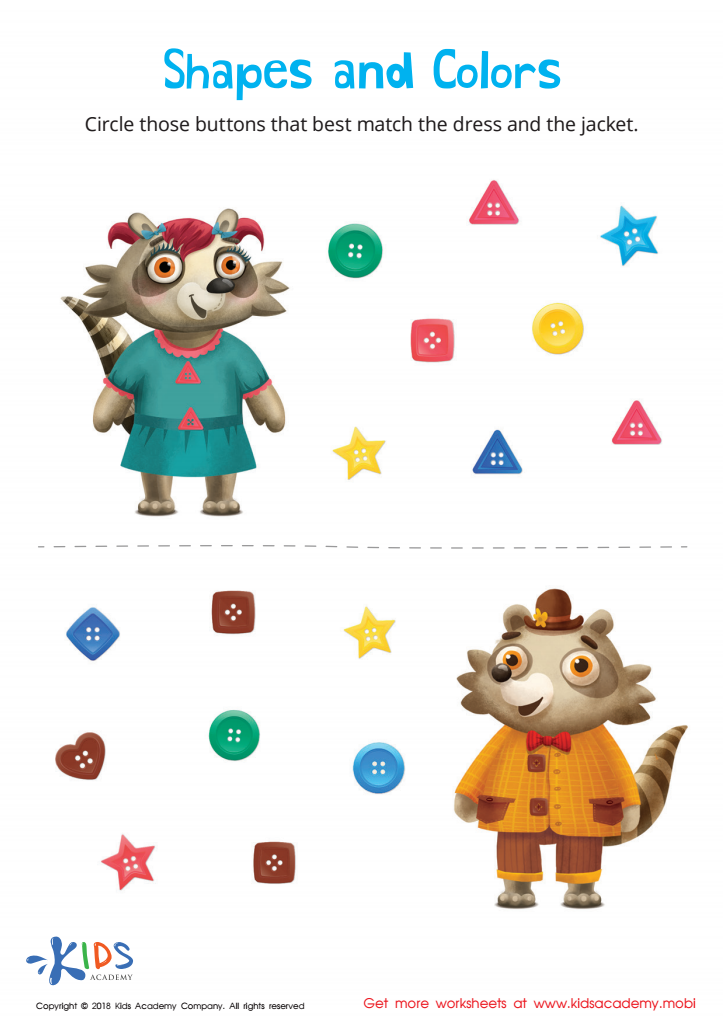
Shapes and Colors Worksheet
This worksheet is a fun way to teach toddlers shapes and colors! It has them match buttons on adorable racoon characters. Encourage your child to note the shape and color of the buttons then sort through and circle the matches. This helps build important attention to detail skills!
Shapes and Colors Worksheet
Worksheet
Join Kids Academy for Free
Who is primarily going to use this learning content?








Color identification and basic geometry are crucial developmental skills for children aged 3-9, laying the foundation for critical thinking and cognitive growth. Understanding colors helps children recognize and describe the world around them, amplifying language skills and enhancing visual perception. This early exposure fosters creativity and aids in making connections with emotions and concepts, teaching them to differentiate and categorize information effectively.
Geometry complements color identification by introducing shapes and spatial awareness, which are vital for problem-solving and logical reasoning. As children associate colors with different geometric shapes, it enhances their memory retention and comprehension of mathematical concepts. Engaging in activities that combine both elements, such as sorting colored shapes, stimulates cognitive development and strengthens hand-eye coordination.
For parents and teachers, promoting these skills encourages a love for learning, helping children build confidence in their abilities. Integrating color identification and geometry into play and daily activities helps to develop a solid foundation for future academic success in mathematics and science. Moreover, these skills play a role in everyday scenarios, from following directions to understanding patterns, making them essential not only in a classroom but throughout life. By prioritizing these areas, caregivers equip children with the tools for lifelong learning and exploration.








