Shape comparison Geometry Worksheets for Ages 3-9
4 filtered results
-
From - To
Discover our Shape Comparison Geometry Worksheets, designed for children ages 3-9, enhancing their geometry skills through fun and engaging activities. These printable worksheets from Kids Academy help young learners identify, compare, and understand various shapes. Whether distinguishing shapes by size, matching similar figures, or exploring geometric patterns, each exercise aims to develop critical thinking and spatial awareness. Perfect for both classroom and home learning, these worksheets provide a strong foundation in geometry, fostering an early love for math. Promote your child's learning today with our expertly crafted shape comparison activities!
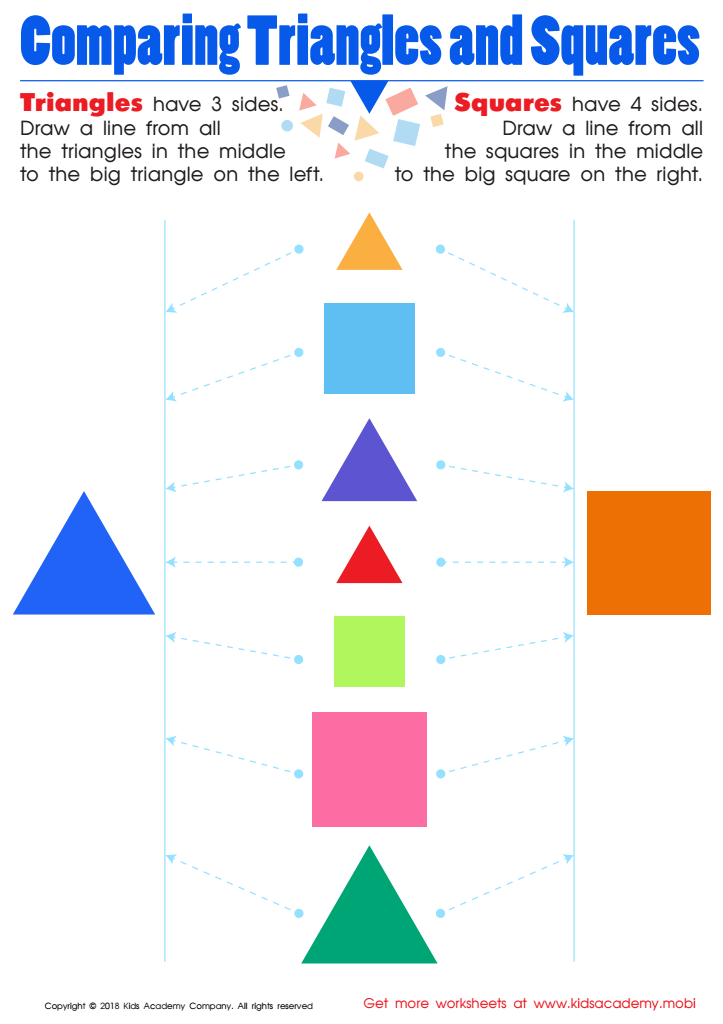
Comparing Triangles Squares Worksheet
 Assign to My Students











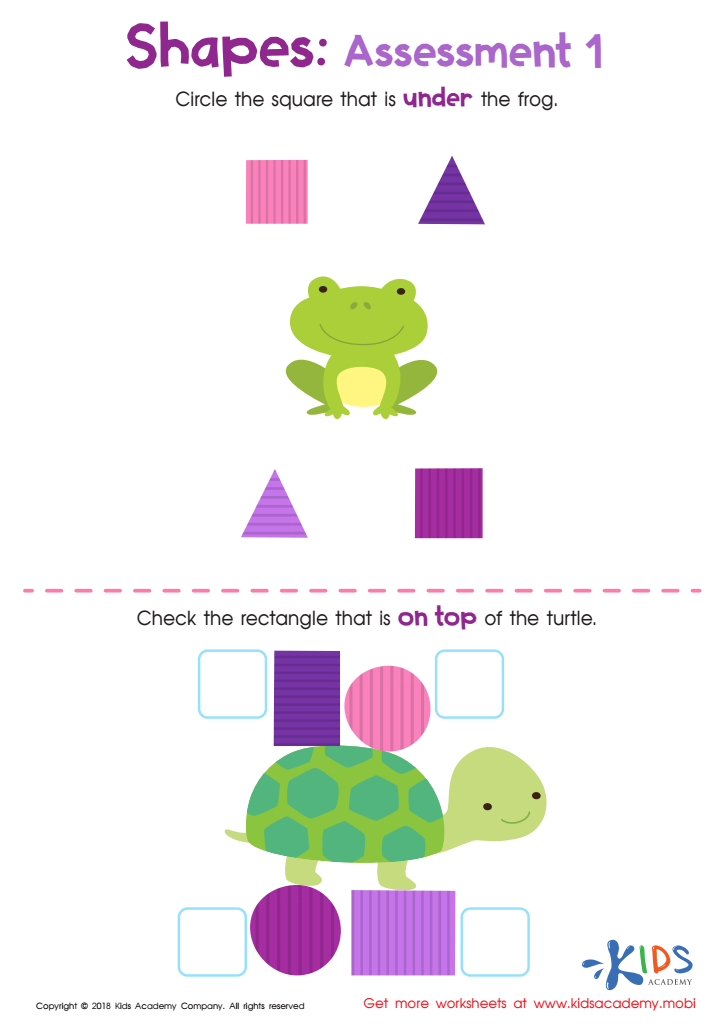
Geometry – Assessment 1 Worksheet
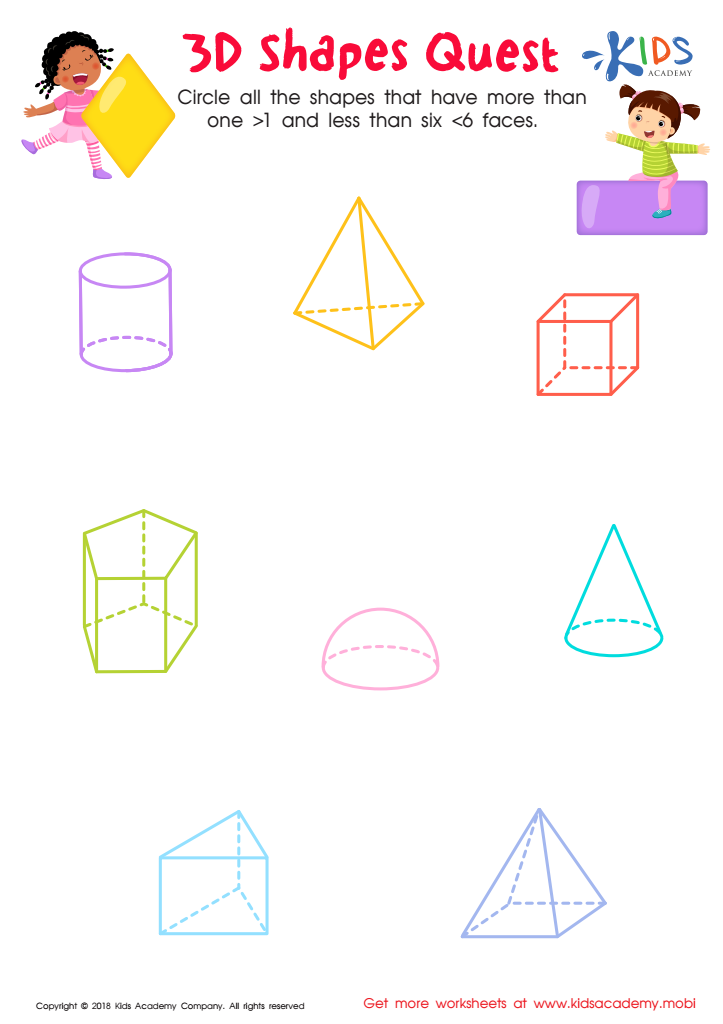
3D Shapes Quest Worksheet
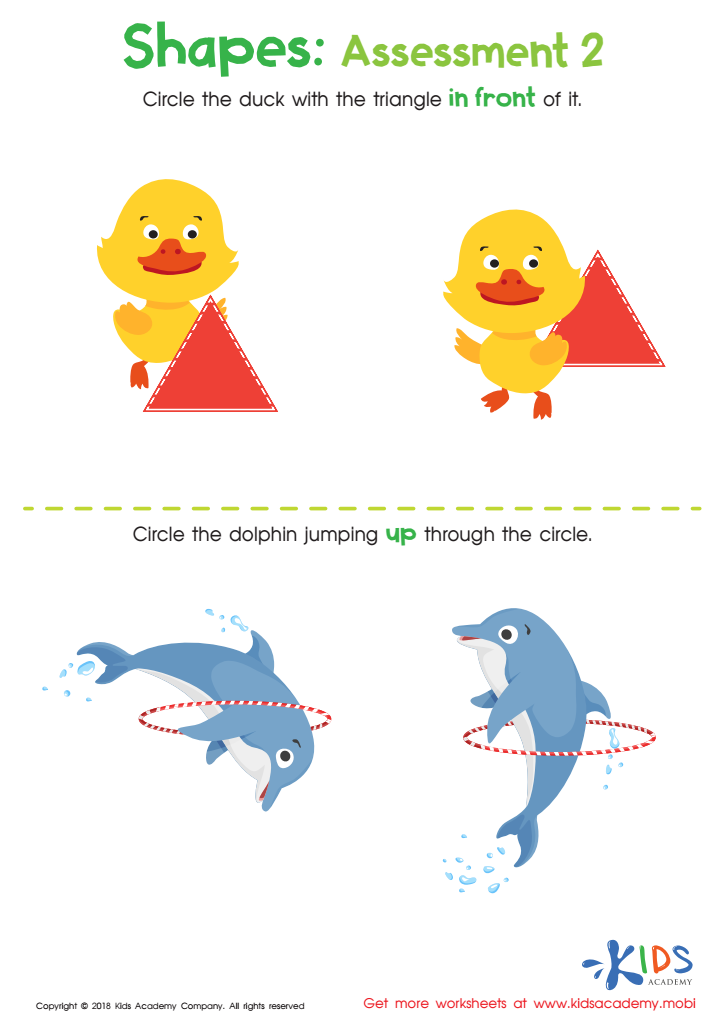
Geometry – Assessment 2 Worksheet








Shape comparison is fundamental in the early education of children aged 3-9, playing a crucial role in their cognitive and academic development. Firstly, understanding and comparing shapes helps in building basic geometry skills, which are foundational for more advanced mathematical concepts. Identifying similarities and differences among geometric figures fosters critical thinking and analytical skills, as children learn to observe and articulate specific attributes such as size, sides, corners, and symmetry.
Moreover, shape comparison is essential for the development of spatial awareness. Children begin to recognize how shapes fit together to form patterns and structures, a skill that is crucial in everyday problem-solving and is a cornerstone in subjects like science, technology, engineering, and arts (STEM/STEAM).
Significantly, introducing children to shape comparison at an early age boosts their language and vocabulary. Terms like "larger," "smaller," "same," and "different" become meaningful, enhancing their descriptive language capabilities. These formative years are also the ideal time to develop fine motor skills through hands-on activities like drawing, cutting, and assembling shapes.
Furthermore, engaging children in shape comparison activities stimulates their curiosity and fosters a lifelong interest in learning. It builds a strong foundation, ensuring that children enter higher grades with confidence and preparedness to tackle complex subjects. Overall, shape comparison is not just a math skill; it’s a multidisciplinary tool that supports holistic childhood development.








