Spatial understanding Geometry Worksheets for Ages 3-9
3 filtered results
-
From - To
Explore our engaging Spatial Understanding Geometry Worksheets designed for children ages 3-9! These interactive resources help young learners develop essential skills in recognizing shapes, understanding spatial relationships, and enhancing their problem-solving abilities. Our worksheets feature vibrant illustrations and age-appropriate activities that make learning geometry fun and intuitive. Whether in the classroom or at home, these worksheets facilitate a hands-on approach, allowing children to work with shapes, patterns, and spatial concepts through creative exercises. Foster a strong foundation in geometry with our expertly crafted materials, ensuring your child gains confidence and enjoyment in math. Start their journey in spatial understanding today!
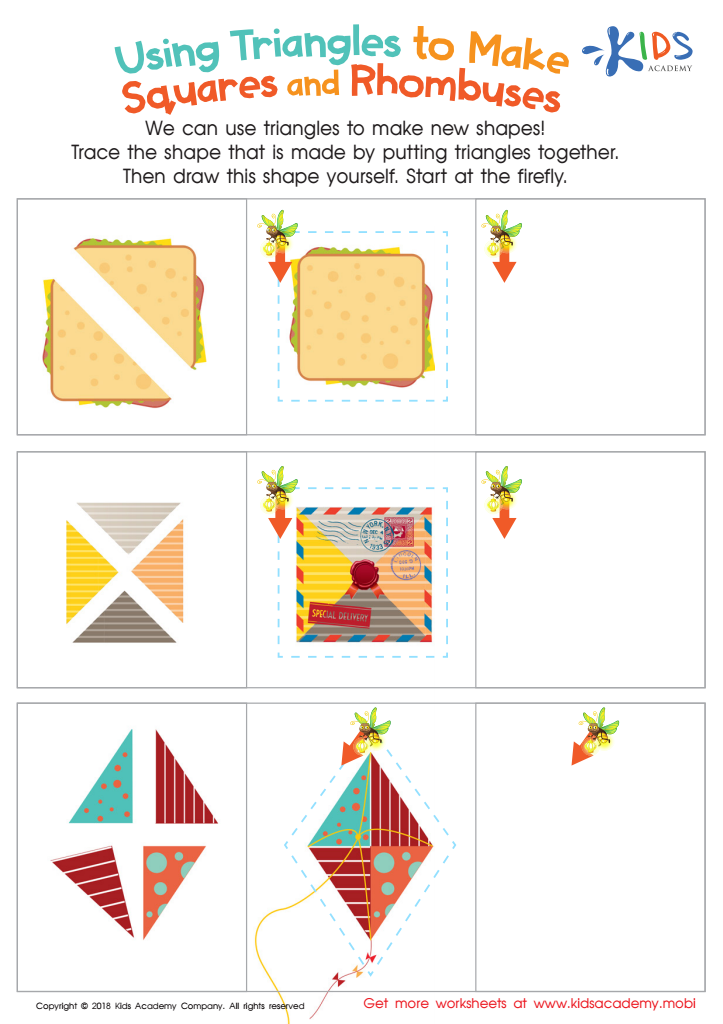
Using Triangles to Make Squares and Rhombuses Worksheet
 Assign to My Students











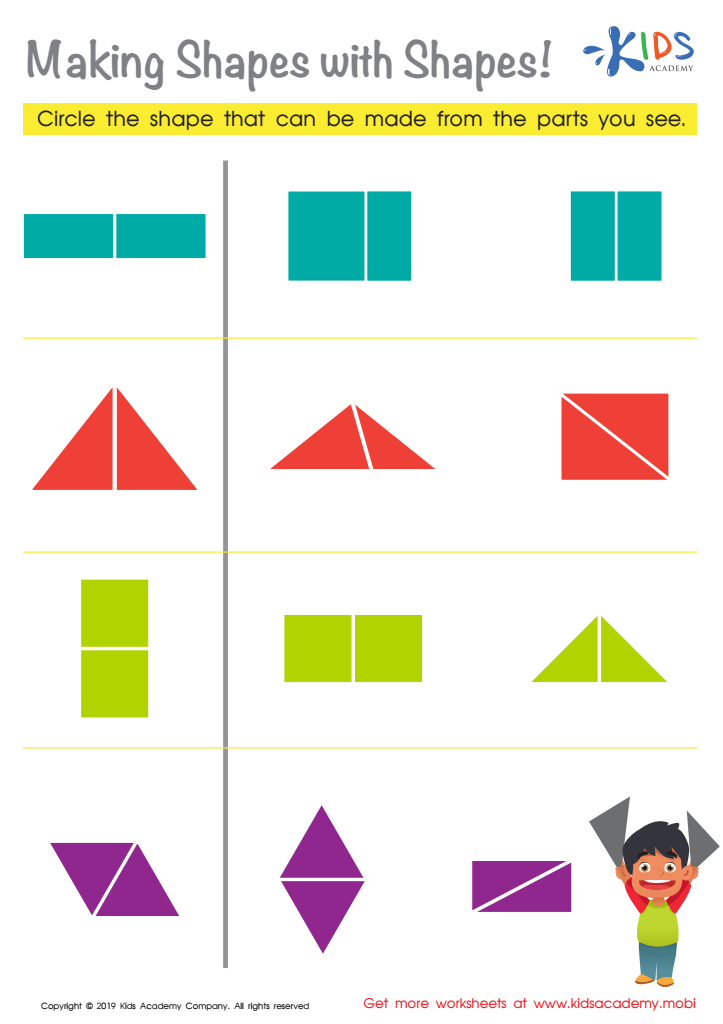
Making Shapes with Shapes Worksheet
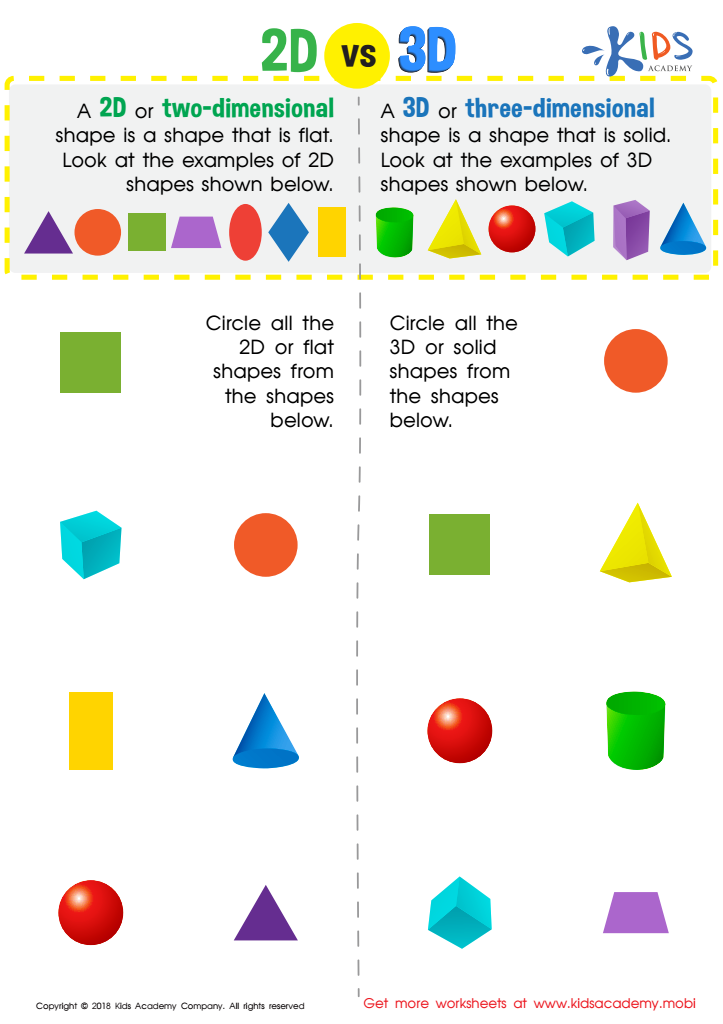
2D vs 3D Shapes Worksheet








Spatial understanding in geometry is essential for children aged 3-9 as it lays the foundation for critical thinking and problem-solving skills. During these formative years, children are naturally curious and eager to explore their environment. Recognizing shapes, understanding spatial relationships, and learning about size and volume are not merely academic skills; they are vital for everyday life.
Parents and teachers should prioritize spatial understanding because it fosters cognitive development. As children manipulate shapes and visualize patterns, they enhance their ability to think abstractly, which is crucial for later mathematical concepts. Early exposure to geometry promotes spatial awareness, allowing children to navigate the world around them with confidence.
Moreover, spatial skills are linked to success in various fields, including science, technology, engineering, and mathematics (STEM). Cultivating these skills early on can increase a child’s interest in STEM education and careers. Additionally, engaging in geometric activities can boost creativity, improving skills such as design and architecture later in life.
By integrating geometry into play and learning, parents and teachers contribute to a child’s overall development, enhancing their spatial reasoning and preparing them for both academic success and practical life challenges ahead.








