Vocabulary enhancement Geometry Worksheets for Ages 3-9
12 filtered results
-
From - To
Boost your child's vocabulary with our engaging Geometry Worksheets designed for ages 3-9! Our printable resources focus on enhancing geometry-related terminology through fun and interactive activities. Each worksheet introduces essential geometric concepts, helping young learners recognize shapes, sizes, and spatial relationships while building linguistic skills. Ideal for home or classroom use, these vocabulary enhancement worksheets encourage critical thinking and improve communication skills. Whether your child is just starting their learning journey or looking to reinforce their knowledge, our materials cater to all levels. Download now and watch your child's confidence soar as they master geometry words in a playful way!
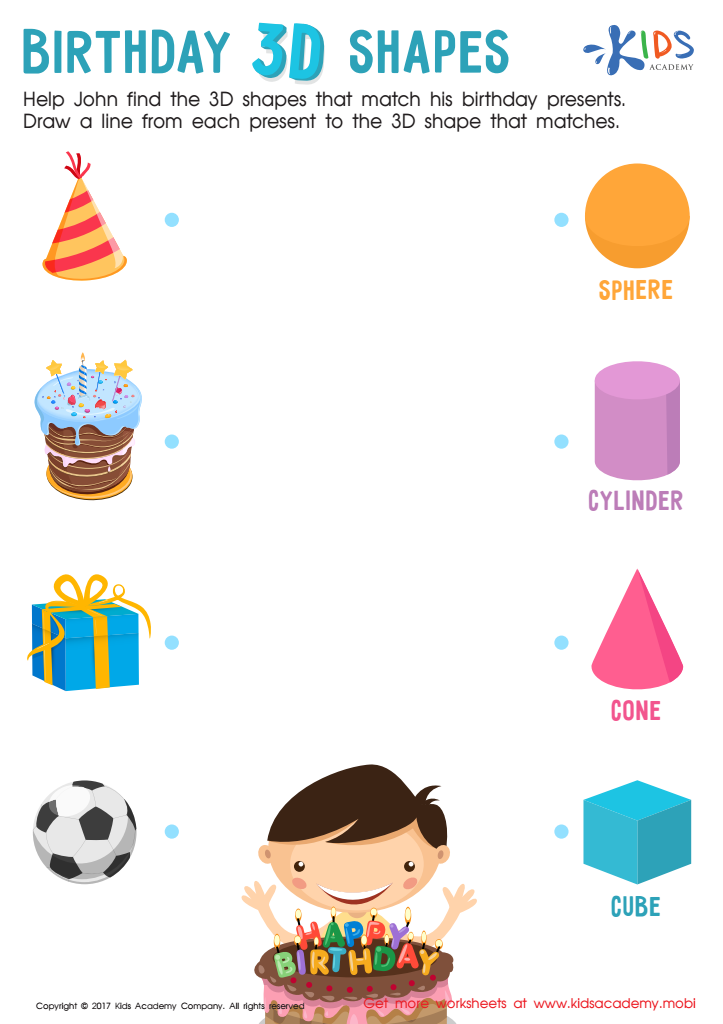
Birthday 3D Shapes Worksheet
 Assign to My Students











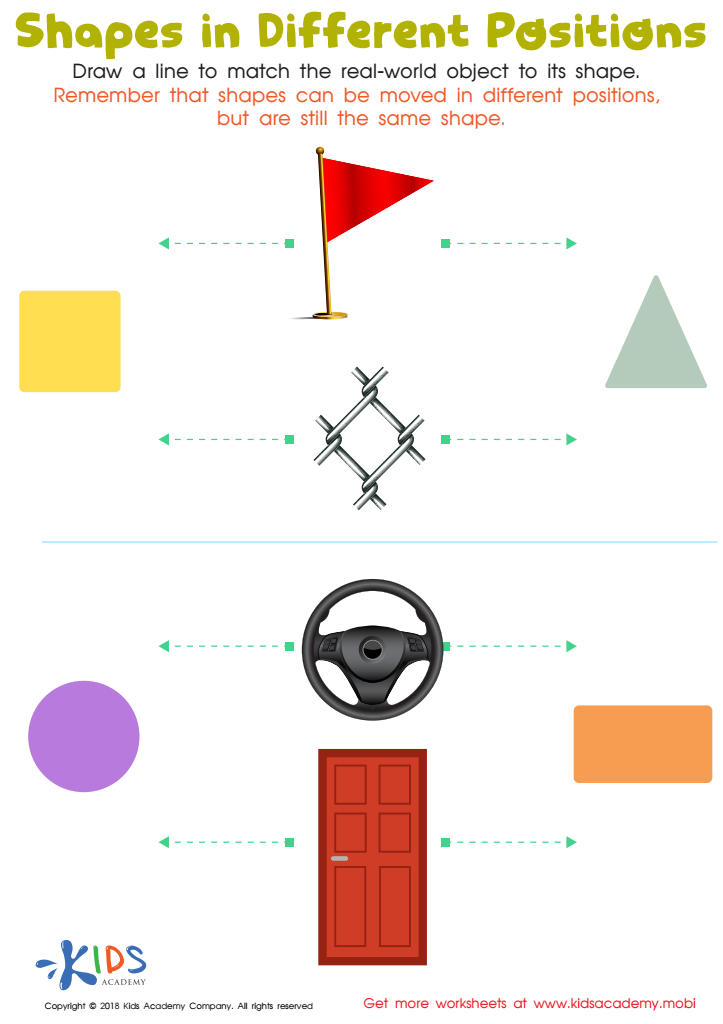
Shapes in Different Positions Worksheet
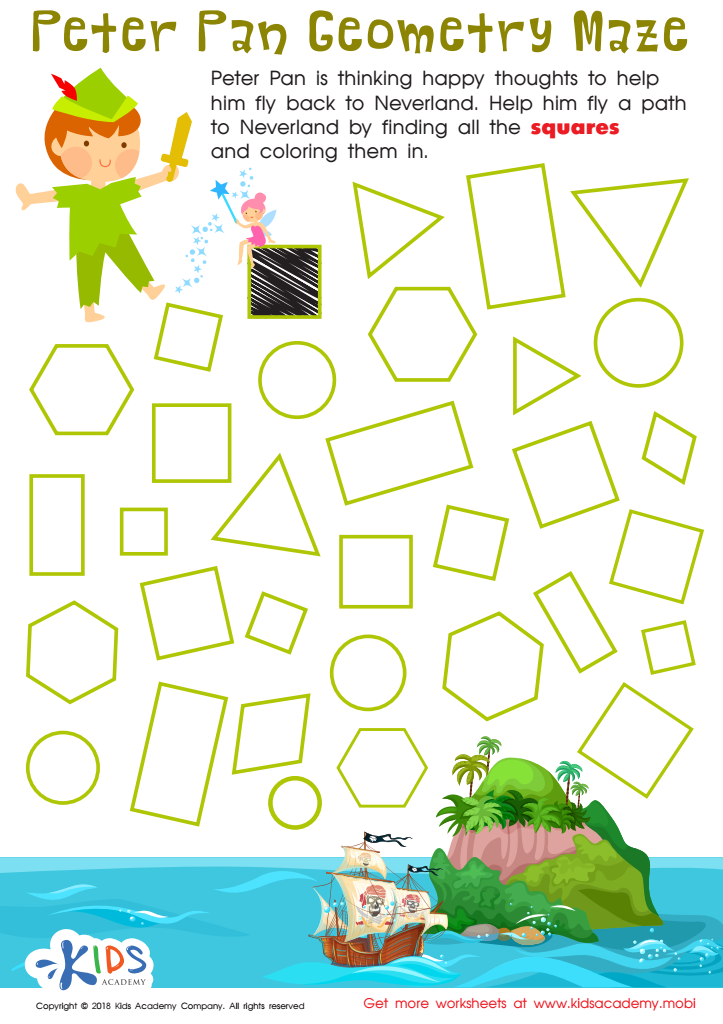
Peter Pan Worksheet
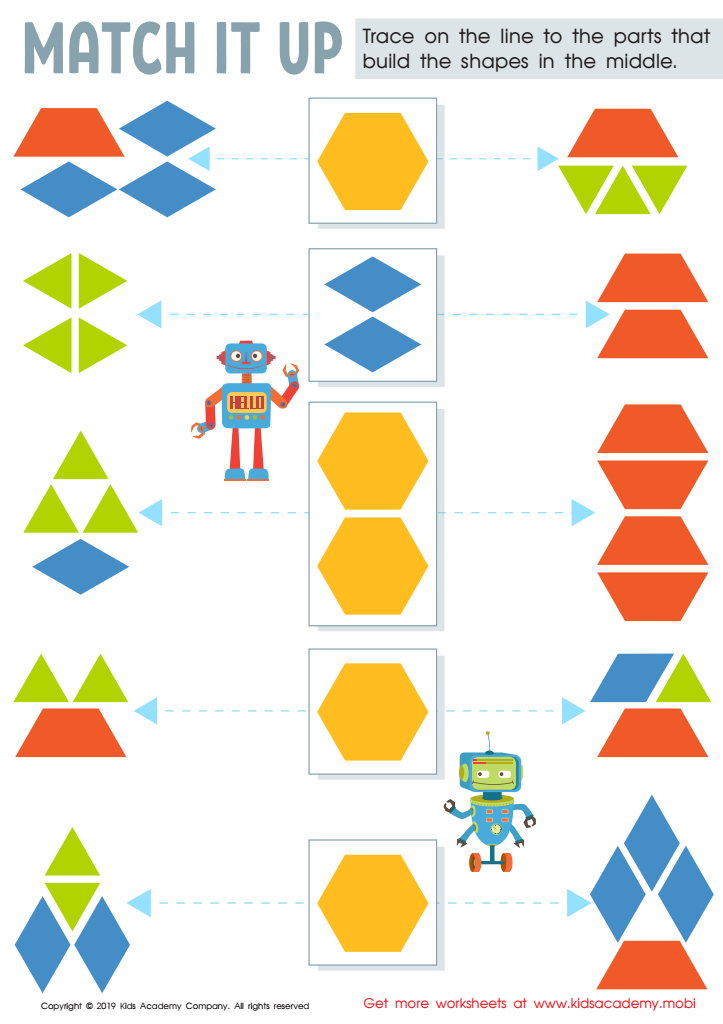
Match It up Worksheet
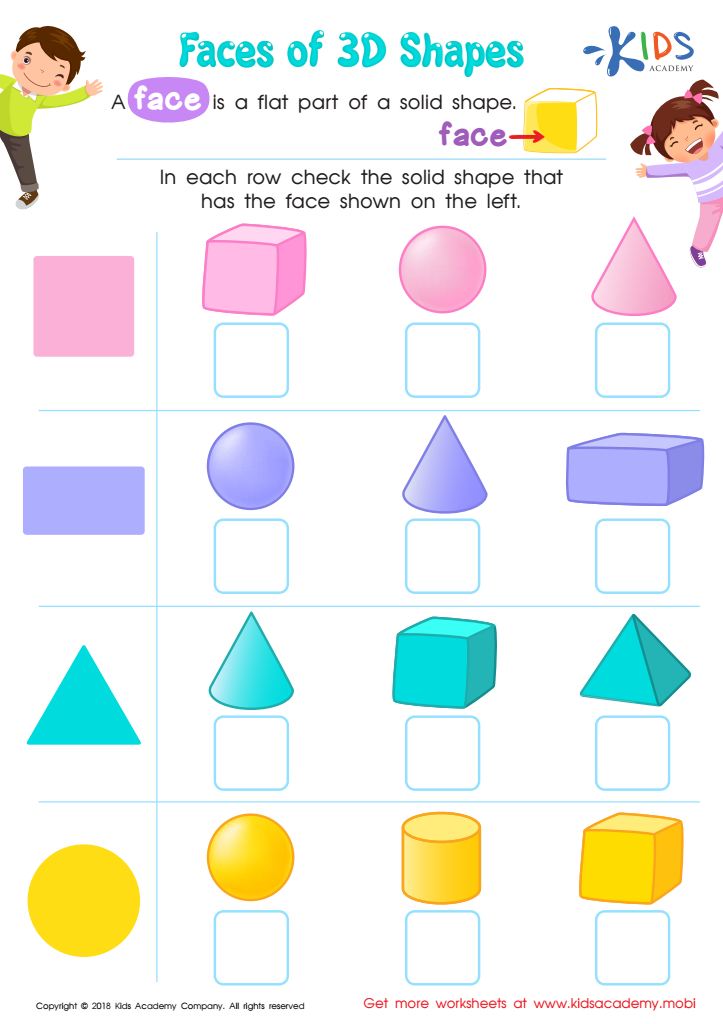
Faces of 3D Shapes Worksheet
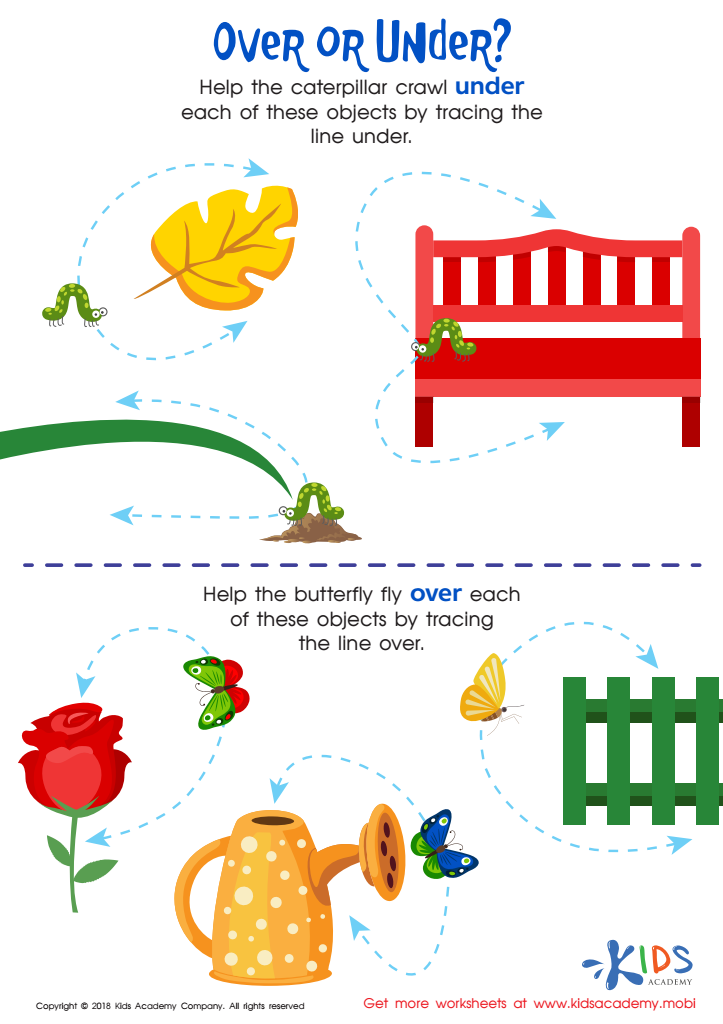
Over or Under? Worksheet
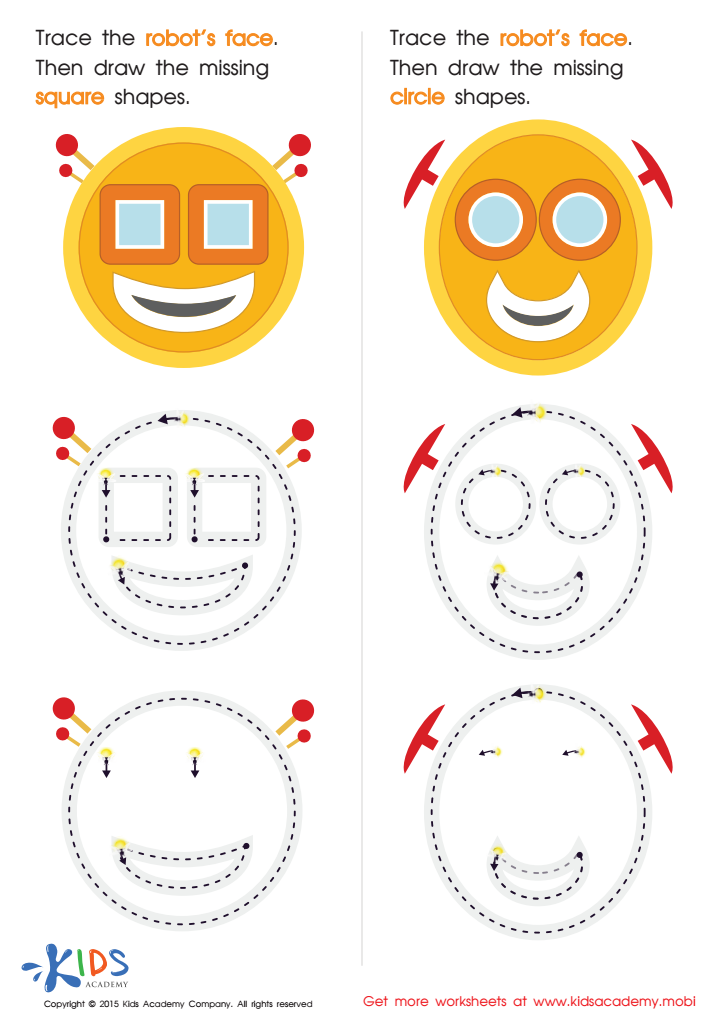
Practicing to Draw Circles And Squares Printable
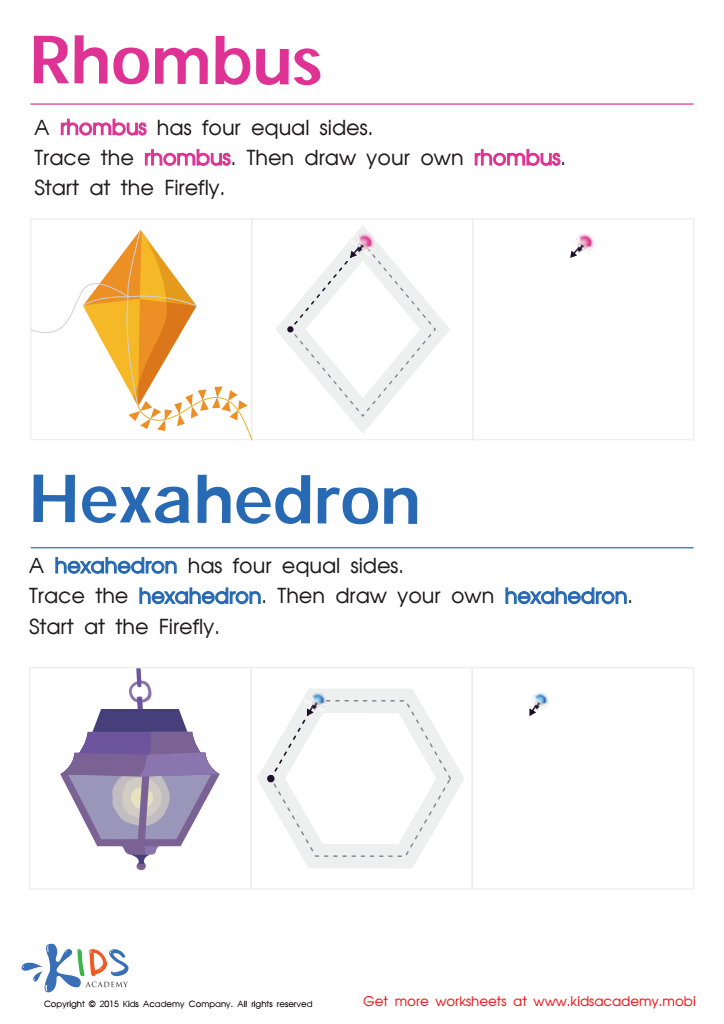
Draw a Rhombus And a Hexahedron Printable
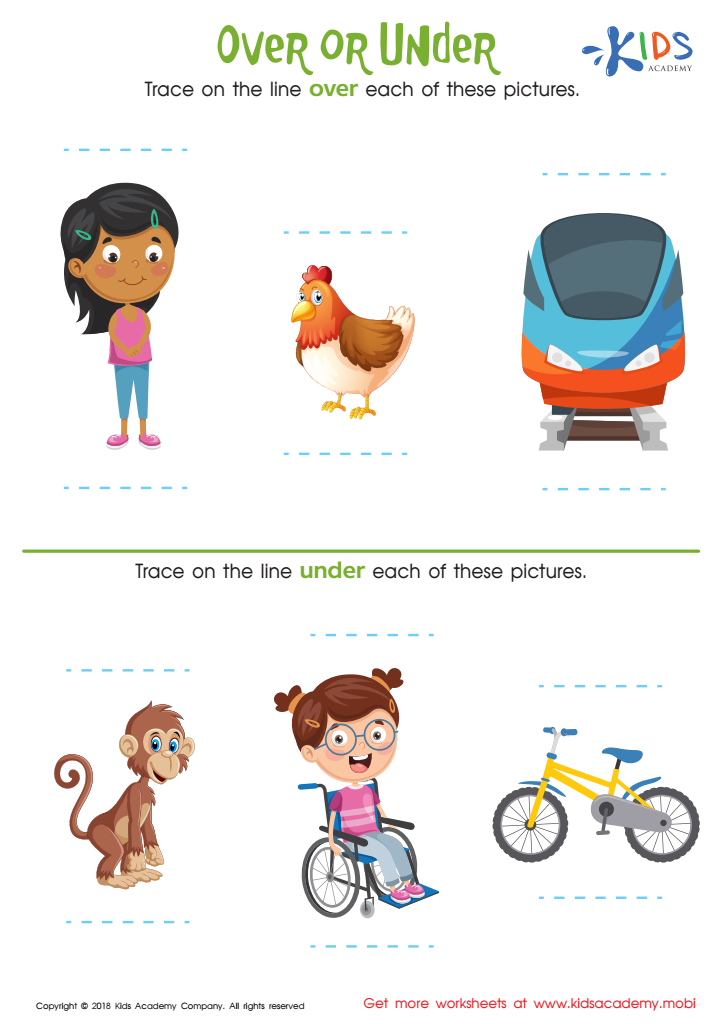
Over or Under Worksheet
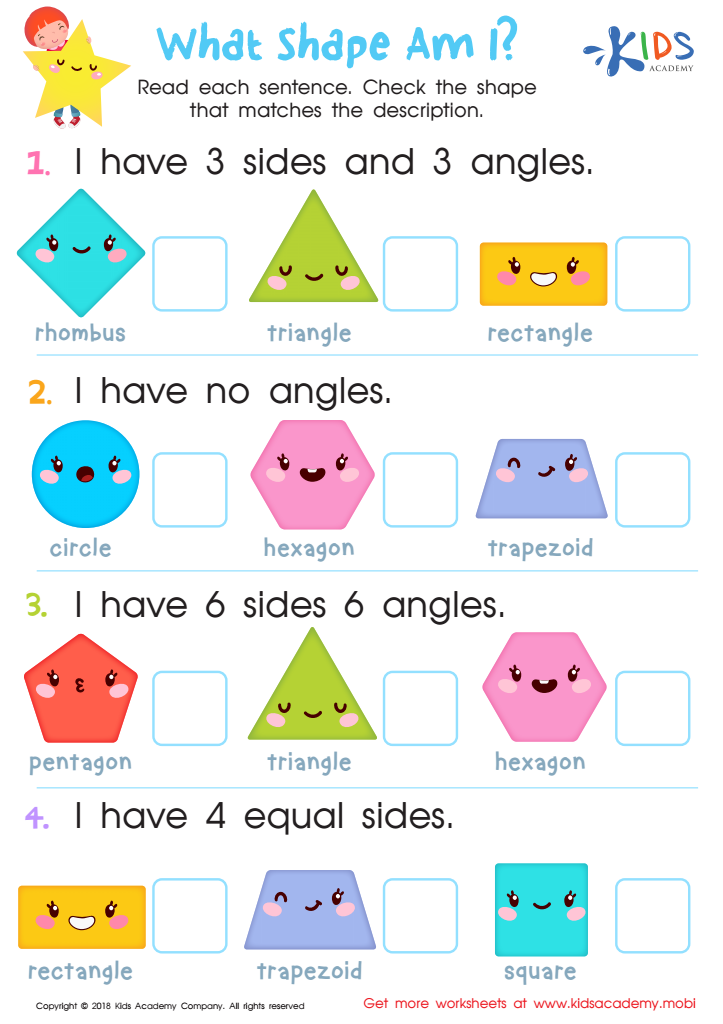
What Shape Am I? Worksheet
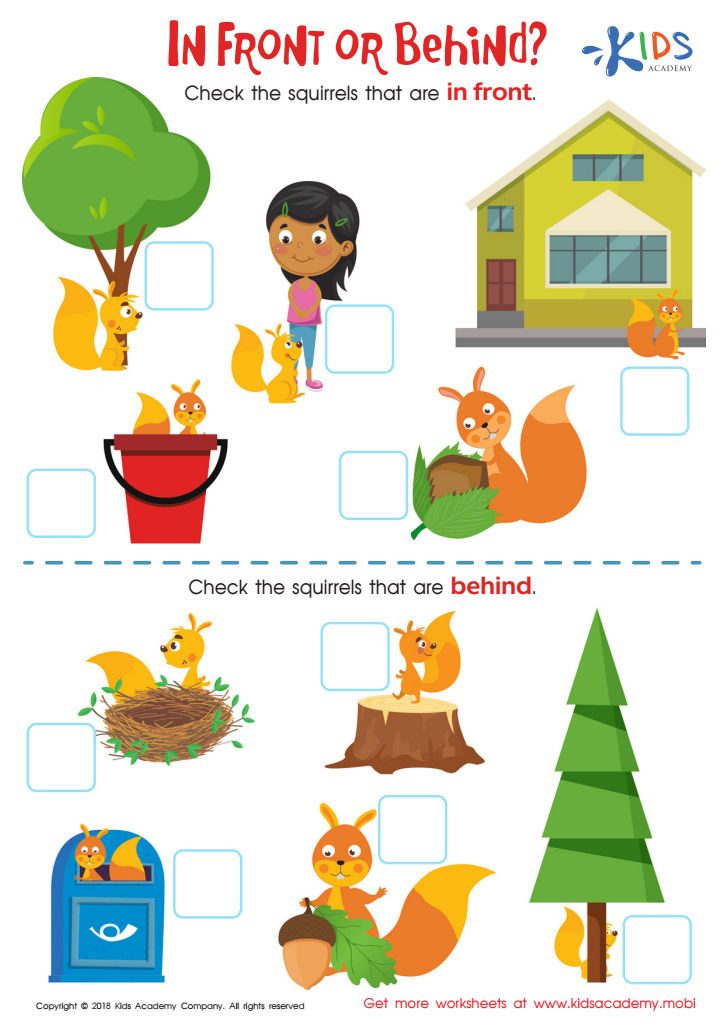
In Front or Behind: Part 2 Worksheet
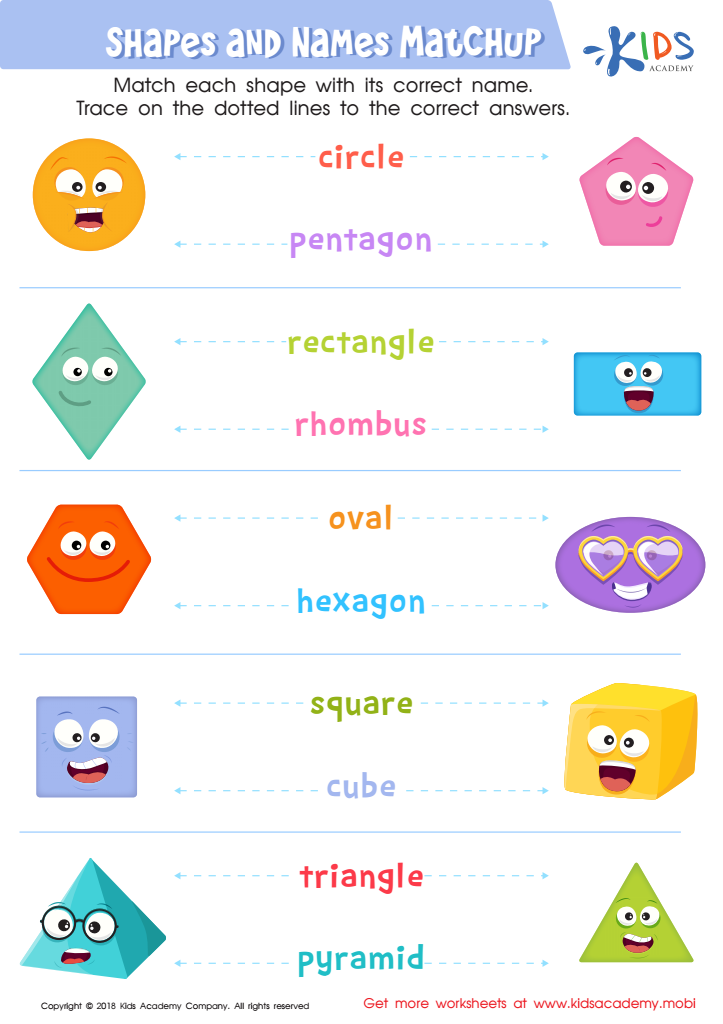
Shapes and Names Matchup Worksheet








Vocabulary enhancement in geometry for children aged 3-9 is crucial for fostering early mathematical understanding and cognitive development. At this age, children are particularly receptive to new concepts, making it an ideal time to introduce geometric vocabulary. By incorporating terms such as shapes, sizes, angles, and patterns into their everyday language, parents and teachers can help children build a strong mathematical foundation.
Understanding geometric vocabulary is essential for problem-solving and critical thinking skills. It enables children to articulate their thoughts, make connections between shapes and their properties, and apply this knowledge in real-life situations. Furthermore, strong vocabulary skills improve comprehension and communication, which are vital for academic success across various subjects.
Additionally, enhanced vocabulary in geometry encourages creativity through exploration and play. Children who understand geometric terms can engage more effectively in hands-on activities, such as building with blocks or creating artwork, which further solidifies their learning.
By actively promoting vocabulary enhancement in geometry, parents and teachers can nurture a love for math, boost confidence, and lay the groundwork for more advanced mathematical concepts in the future, ultimately setting children on a path to lifelong learning and success.








