Analyzing data Numbers Worksheets for Ages 3-9
3 filtered results
-
From - To
Welcome to our "Analyzing Data Numbers Worksheets" designed for children aged 3-9! These engaging worksheets provide young learners with essential skills in understanding and interpreting data. Through fun and interactive activities, kids will explore concepts such as sorting, counting, and graph reading, all while enhancing their critical thinking abilities. Our worksheets are crafted to promote exploration and make learning numbers enjoyable. With colorful illustrations and age-appropriate challenges, children will develop a solid foundation in data analysis as they progress through these engaging materials. Equip your child with the necessary skills for early math success today!
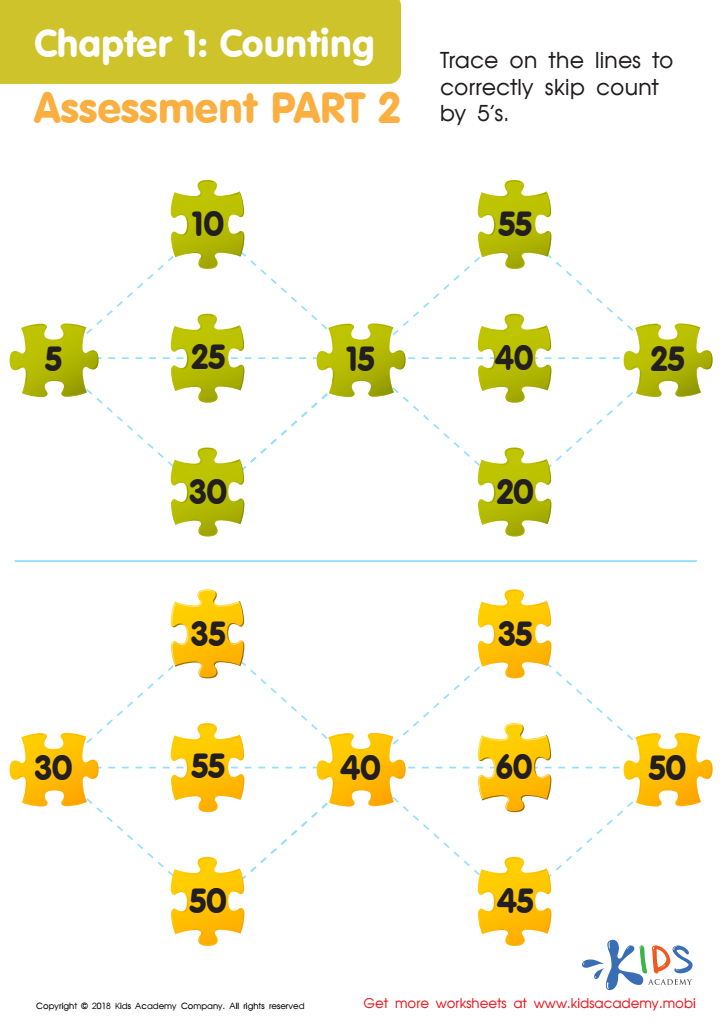
Counting: Assessment 2 Worksheet
 Assign to My Students
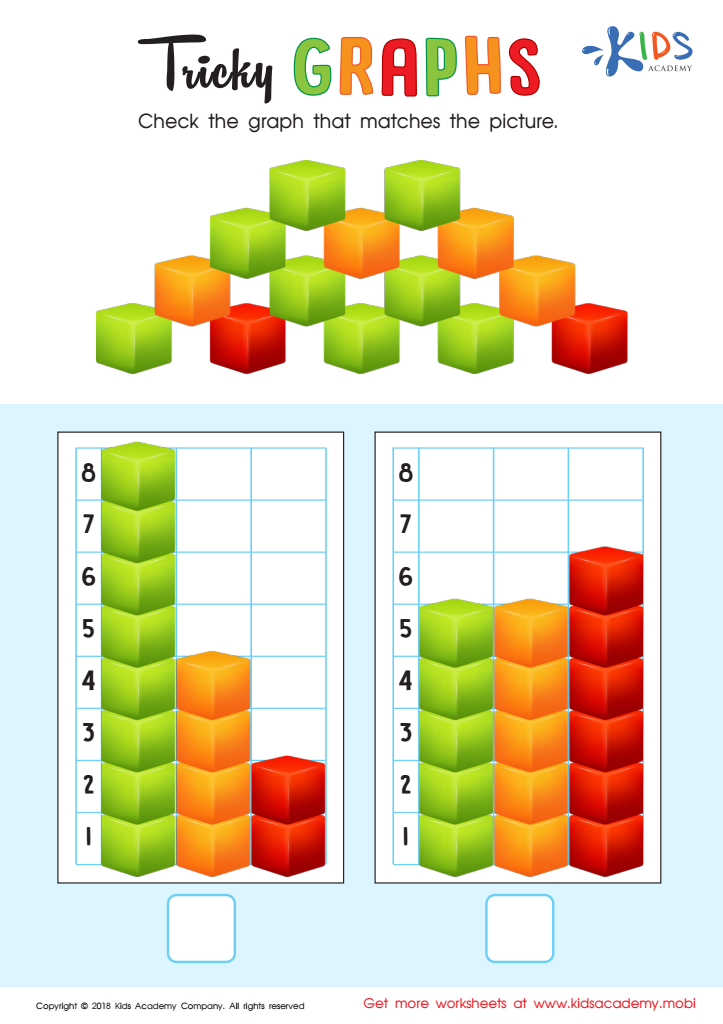
Tricky Graphs Worksheet
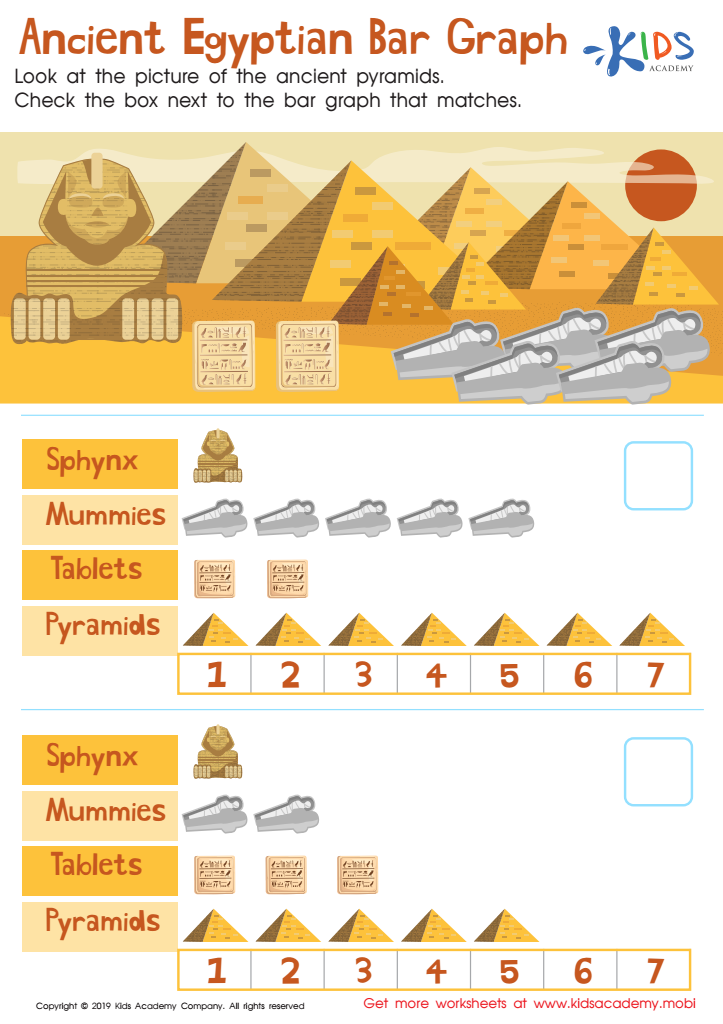
Egyptian Bar Graph Worksheet








Analyzing data for children ages 3-9 is crucial for both parents and teachers, as it provides valuable insights into developmental milestones and learning progress. During these formative years, understanding a child’s growth in areas such as literacy, numeracy, and social skills is essential for fostering a strong educational foundation.
By analyzing data, educators can identify each child's strengths and weaknesses, allowing for tailored instruction that meets individual needs. This personalized approach not only promotes academic success but also boosts confidence and motivation. For example, if data reveals a child is excelling in language skills but struggling with number concepts, targeted interventions can be introduced to support their learning effectively.
For parents, engaging with their child's progress through data analysis creates opportunities for meaningful dialogue about educational strategies and home activities that reinforce classroom learning. It helps parents understand how they can best support their children, ensuring a consistent learning environment.
Moreover, data analysis assists in identifying broader trends and gaps in classrooms or districts, enabling educators to adapt curricula and resources based on the collective needs of students. Ultimately, caring about data empowers parents and teachers to make informed decisions that enhance a child’s educational journey and overall development.








