Basic Counting Numbers Worksheets for Ages 3-9
3 filtered results
-
From - To
Unlock your child's mathematical potential with our Basic Counting Numbers Worksheets designed for ages 3-9! These engaging and interactive worksheets promote early math skills through fun activities aligned with developmental milestones. Children will enjoy practicing counting through colorful visuals and hands-on exercises that reinforce number recognition and basic arithmetic. Our resources cater to different learning styles, ensuring a comprehensive grasp of counting concepts. Perfect for home or classroom use, these worksheets encourage independent learning while making math enjoyable. Dive into the world of numbers with our thoughtfully crafted materials and watch your child flourish in their counting journey!
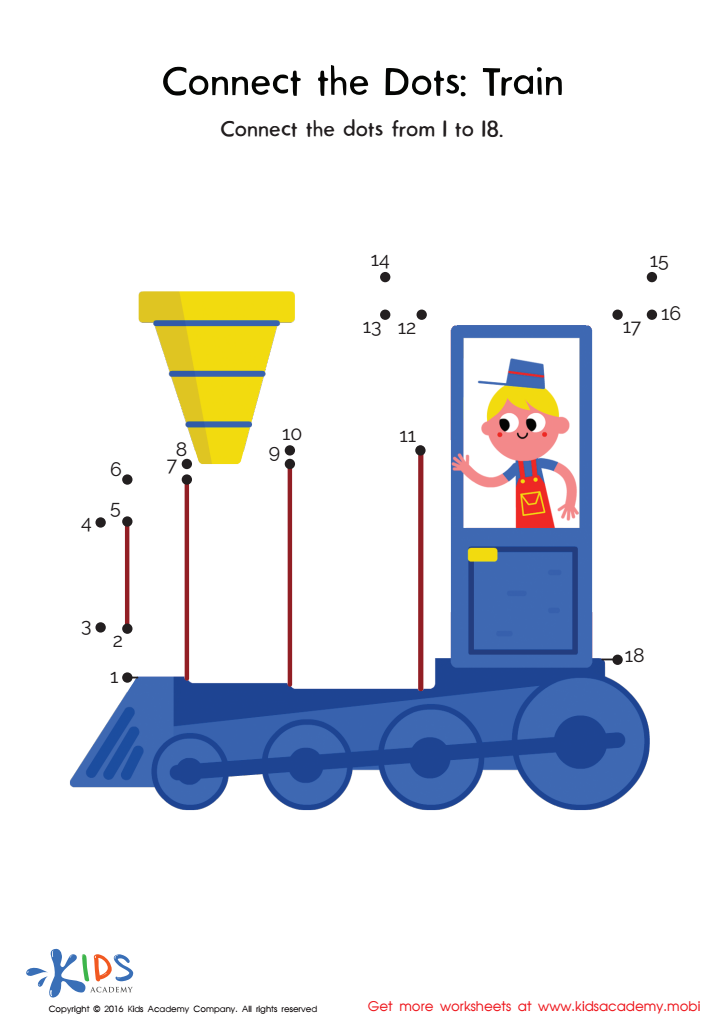
 Assign to My Students
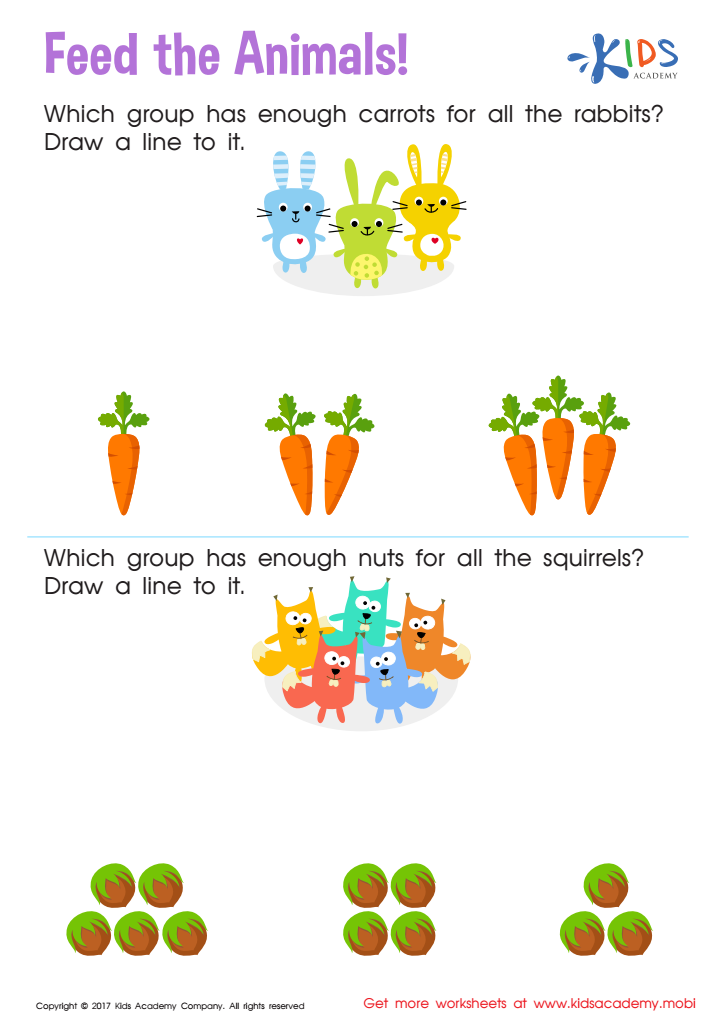
Count and Match: Feed the Animals Worksheet
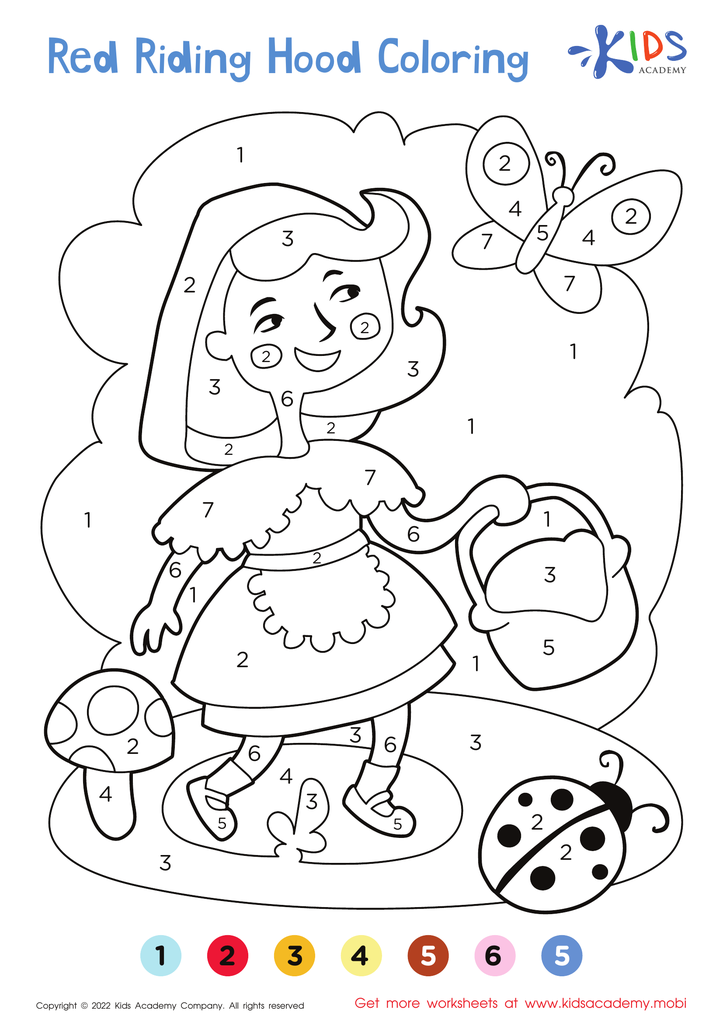
Little Red Riding Hood – Coloring by Numbers








Basic counting numbers form the foundation for early mathematical understanding, making their significance paramount for children aged 3-9. At this stage, children develop critical cognitive skills, and mastering counting is essential for promoting numeracy. Early counting proficiency not only enhances mathematical skills but also boosts problem-solving abilities and logical thinking.
Parents and teachers should care because recognizing and using basic numbers fosters confidence in children. When children successfully count and recognize numbers, it helps to build self-esteem and encourages a positive attitude towards learning. Additionally, counting is intertwined with everyday activities—aiding in tasks like sharing, measuring, and understanding time, thus enhancing real-world applications of math.
Encouraging counting also offers opportunities for social interaction, as children engage in group activities like games that involve numbers, promoting teamwork and communication. Moreover, research indicates that early math skills are a strong predictor of future academic success, making it imperative for caregivers to instill these skills early on.
Ultimately, when parents and teachers actively support counting and number recognition, they provide children with essential tools to navigate the world around them, laying the groundwork for lifelong learning and academic achievement.








