
Basic Math understanding Numbers Worksheets for Ages 3-9
3 filtered results
Difficulty Level
Grade
Age
-
From - To
Subject
Activity
Standards
Introducing our Basic Math Understanding Numbers Worksheets, specially designed for children ages 3 to 9. These engaging, age-appropriate printable worksheets offer a fun and interactive way to develop essential math skills in young learners. By focusing on number recognition, counting, and basic calculations, your child can build a strong mathematical foundation. Each worksheet is crafted to boost confidence and inspire a love for math through colorful activities and exercises. Perfect for parents and teachers, our worksheets make learning numbers enjoyable and effective. Start your child's journey to math mastery today with Kids Academy!
Favorites
With answer key
Interactive
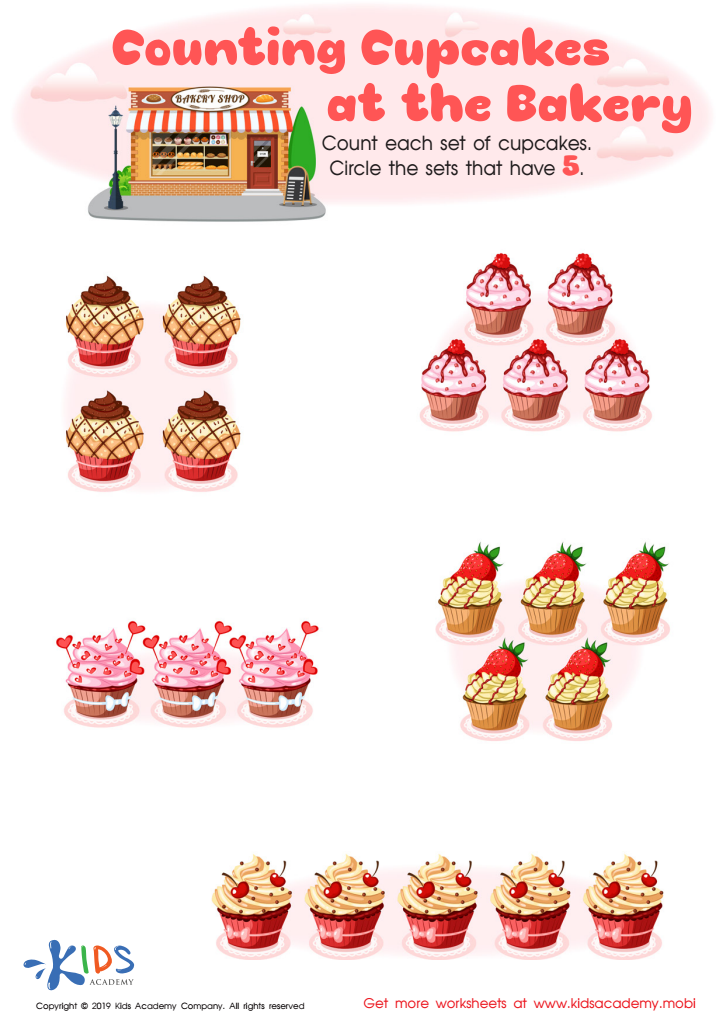
Counting Cupcakes Worksheet
This fun worksheet for preschoolers uses cupcakes to teach counting. Kids must circle the groups of cupcakes that add up to 5. The delicious treats make learning fun and engaging!
Counting Cupcakes Worksheet
Worksheet
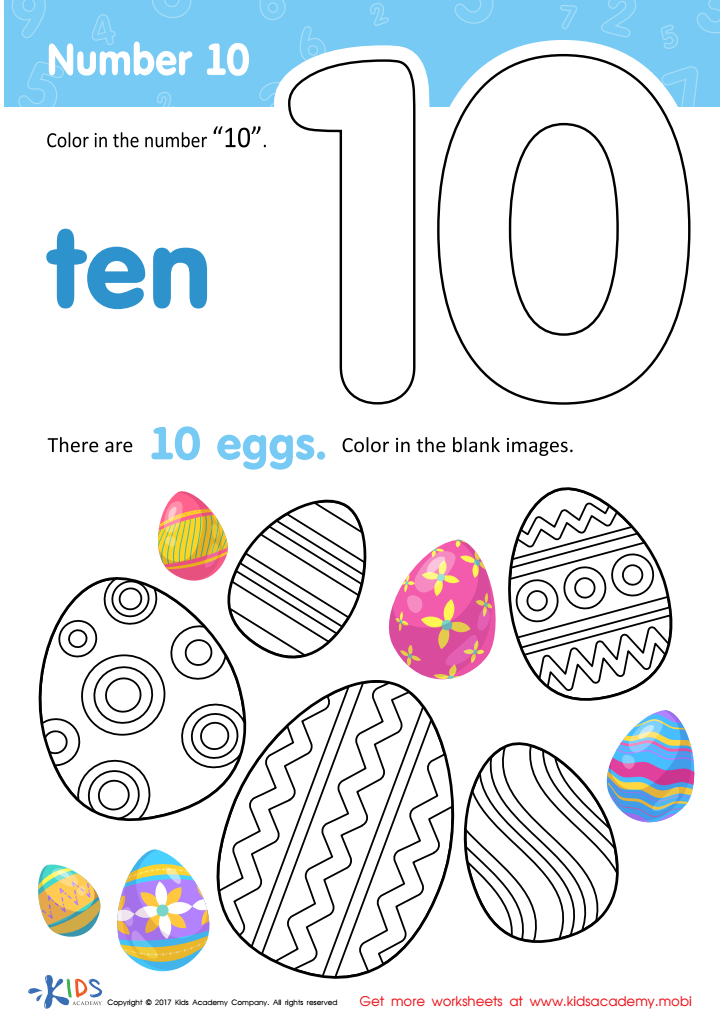
Number 10 Printable
Easter eggs are a great way to combine creativity and learning! Help your child explore the number 10 with our fun coloring page. The intricate designs will spark their imagination and fuel their artistic side, while they practice important numeracy basics. Get creative with eggs and enjoy the fun, no matter the time of year!
Download (PDF)
 Assign to My Students
Assign to My Students
Number 10 Printable
Worksheet
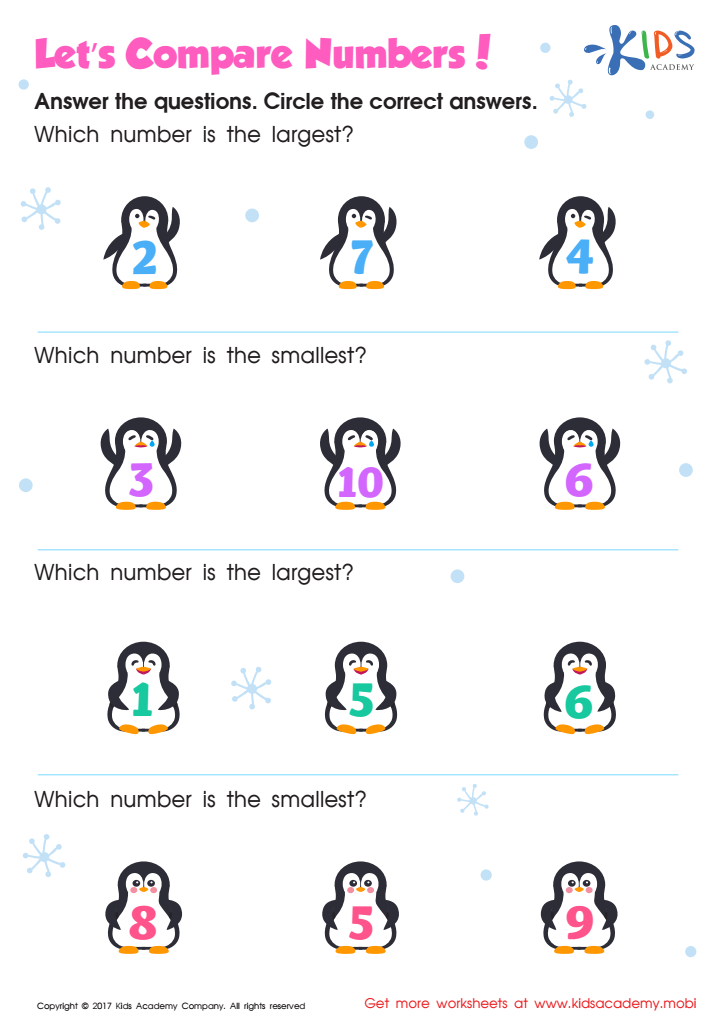
Comparing Numbers 1–10 Worksheet Kindergarten
Help your child sort out numbers 1-10 with this fun worksheet! They'll practice comparing numbers and boost their number sense. Plus, it features cute little penguins with numbers on their bellies - they make learning even more exciting!
Comparing Numbers 1–10 Worksheet Kindergarten
Worksheet
Join Kids Academy for Free
Who is primarily going to use this learning content?







Parents and teachers should place a high priority on fostering basic math understanding in children aged 3-9 because this formative period is critical for cognitive development. Numbers form the cornerstone of innumerable life skills, including problem-solving, logical reasoning, and decision-making. Early proficiency in math not only builds a strong academic foundation but also boosts confidence, which is crucial for a child’s future educational journey.
Early exposure to math promotes hands-on learning and helps children grasp concepts such as patterns, measurements, and spatial understanding, all of which are essential for everyday activities. For example, understanding quantity helps in sharing toys and equally, and basic arithmetic operations such as addition and subtraction, teach foundational skills for handling money.
Additionally, math skills are interlinked with literacy and can enhance language abilities by improving focus and the ability to follow multistep instructions. Children with strong early math skills often perform better in later academic years, not just in mathematics but across various subjects.
In summary, solid early math education equips children with critical thinking skills and lays the groundwork for lifelong learning. Parents and teachers can ensure that children receive the enrichment necessary to thrive both academically and in everyday situations, setting them up for future success.








