Fine motor skills (drawing) Numbers Worksheets for Ages 3-9
3 filtered results
-
From - To
Give your child a head start in math and handwriting with our Fine Motor Skills (Drawing) Numbers Worksheets designed for ages 3-9. These engaging worksheets help young learners develop essential fine motor skills while practicing number formation and recognition. Each worksheet features fun, educational activities that build the foundation for strong penmanship and mathematical understanding. Perfect for both classroom settings and at-home practice, our printable worksheets make learning an enjoyable experience, fostering confidence and dexterity in young children. Visit Kids Academy to explore our collection and watch your child's skills flourish!

Make it Even: St. Valentine's Day Worksheet
 Assign to My Students
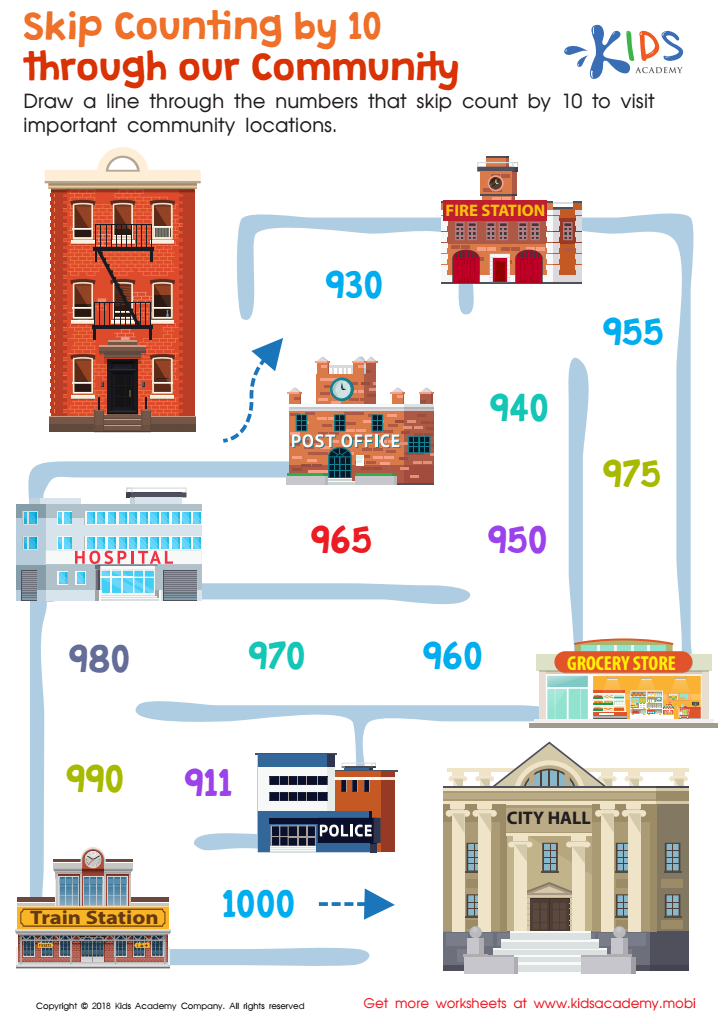
Skip Counting by 10 Through Our Community Worksheet

Jungle Counting Connect Dots Worksheet








Fine motor skills, particularly those associated with drawing numbers, are crucial for children aged 3-9 as they lay the foundation for both academic and life skills. These skills involve the coordinated effort of small muscles in the hands and fingers, essential for performing everyday tasks, like writing, buttoning clothing, and tying shoes. When children practice drawing numbers, they engage in activities that enhance hand-eye coordination, precision, and muscle control, all of which are necessary for writing legibly and efficiently.
For young children, fine motor skill development directly impacts their ability to succeed in an academic environment. Writing numbers accurately is a fundamental math skill that supports higher-level math concepts. Practicing drawing numbers also promotes cognitive development, as children differentiate shapes and symbols, enhancing their understanding of numerical concepts.
Moreover, developing fine motor skills builds confidence and independence. Children who can manipulate small objects or write clearly feel more competent and are better prepared to tackle daily challenges. Such early successes contribute positively to a child’s self-esteem and motivation to learn. By fostering fine motor skills through activities like drawing numbers, parents and teachers set the stage for overall developmental success, ensuring that children become proficient, self-assured, and ready to tackle more complex tasks as they grow.








