Understanding greater/less than Numbers Worksheets for Ages 3-9
3 filtered results
-
From - To
Introduce your young learners to the fundamental concepts of greater than and less than with our engaging worksheets designed for ages 3-9. These interactive resources foster early math skills, helping children identify and compare numbers in a fun and easy way. Each worksheet is thoughtfully crafted to build confidence in mathematical understanding, featuring colorful images and relatable examples. Suitable for both classroom settings and at-home practice, our worksheets encourage critical thinking while reinforcing number recognition. Perfect for parents and teachers alike, these activities make learning about comparisons enjoyable, setting the foundation for future mathematical success. Explore our collection and watch your child thrive!
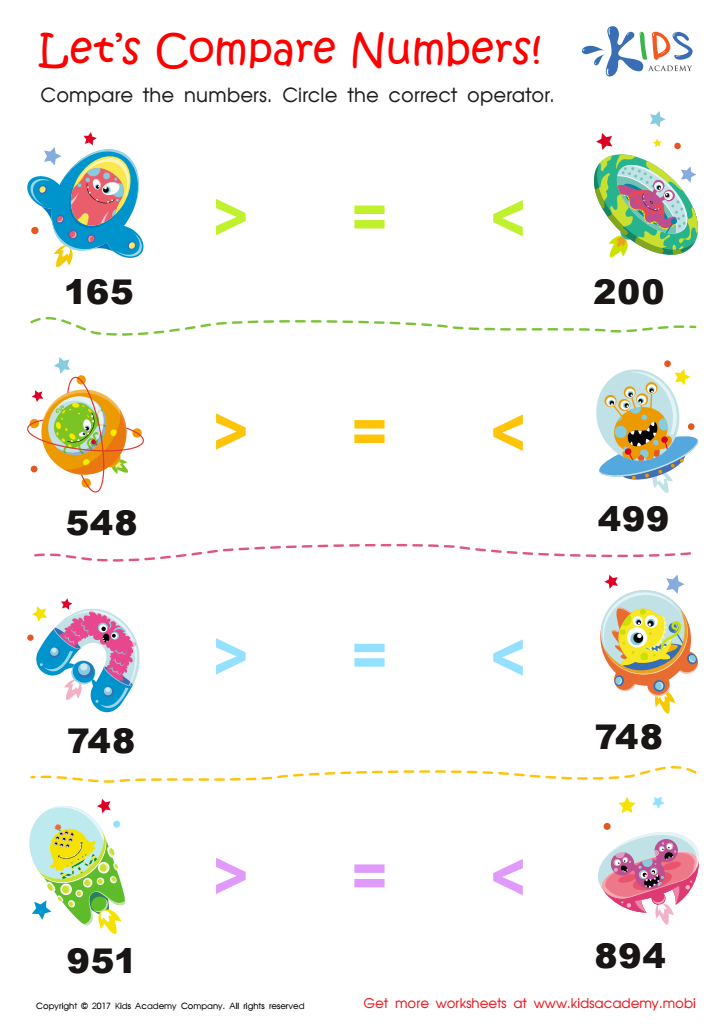
Comparing Numbers Worksheet for 2nd Grade
 Assign to My Students
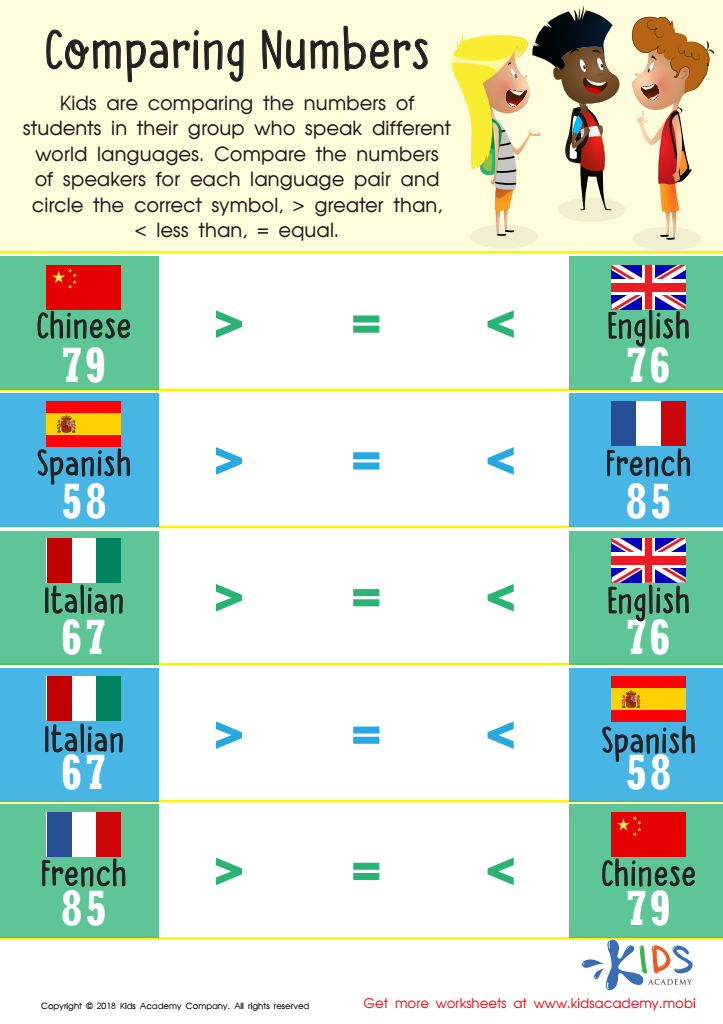
Comparing Numbers Worksheet for 1st Grade
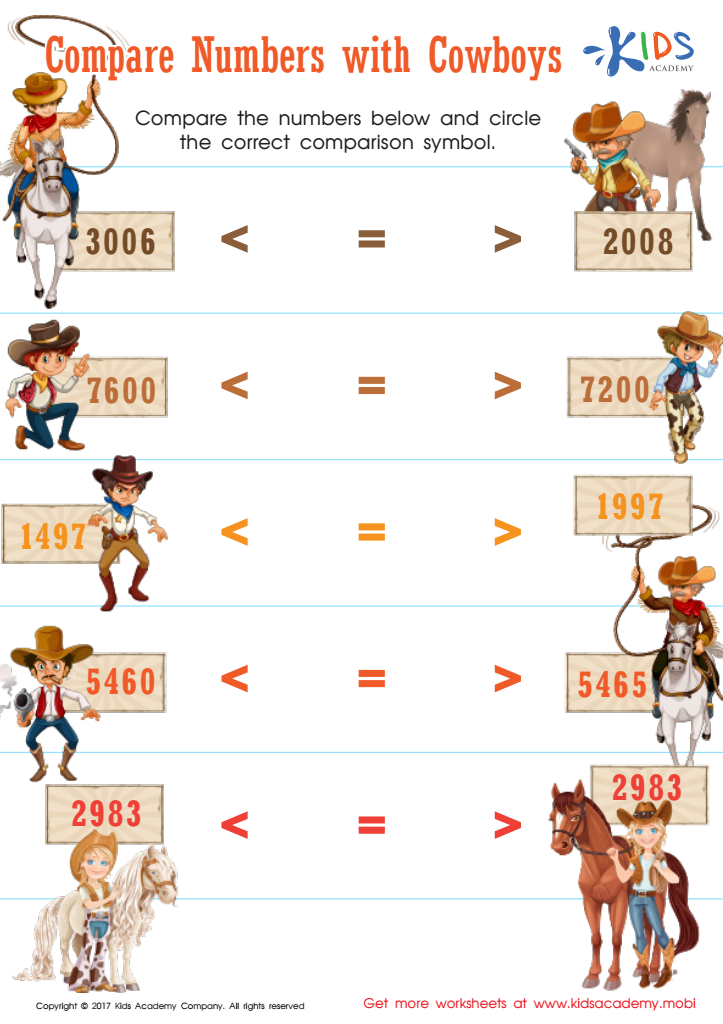
Compare Numbers Worksheet for 3rd Grade







Understanding greater and less than numbers is a fundamental mathematical concept crucial for children aged 3-9. During these formative years, children begin developing their number sense, the ability to perceive and relate quantities. Mastering concepts of greater than and less than nurtures critical thinking skills, enabling children to compare numbers and make sense of their ordering.
Early recognition of these relationships also helps children with various practical life skills, such as organizing items or making decisions based on quantity preferences. By grasping these concepts, children develop a strong foundational understanding of mathematics, which supports later learning in more complex topics like addition, subtraction, and even algebra.
Moreover, this understanding encourages language development as kids learn to articulate comparisons, enhancing communication skills. For parents and teachers, instilling a robust conception of comparison not only fosters cognitive development but also builds confidence in young learners. This encourages a positive attitude towards mathematics, reducing anxiety associated with the subject in future years.
Overall, a solid grasp of greater and less than numbers is essential for children’s holistic development in numeracy, cognitive skills, and emotional readiness to engage with math confidently throughout their educational journey.








