Understanding skip-counting Numbers Worksheets for Ages 3-9
3 filtered results
-
From - To
Our "Understanding Skip-Counting Numbers Worksheets" are designed for children ages 3-9, providing engaging activities that enhance early math skills. Skip-counting is a vital concept that helps kids recognize number patterns and develop a strong foundation for addition and multiplication. Our worksheets feature a variety of fun exercises, such as filling in the blanks, coloring, and number sequences, making learning enjoyable and interactive. Ideal for homeschool or classroom settings, these resources foster critical thinking and boost confidence in math. Explore our printable worksheets, ensuring your child grasps skip-counting while building essential arithmetic skills! Empower young learners with this fun approach to math today.
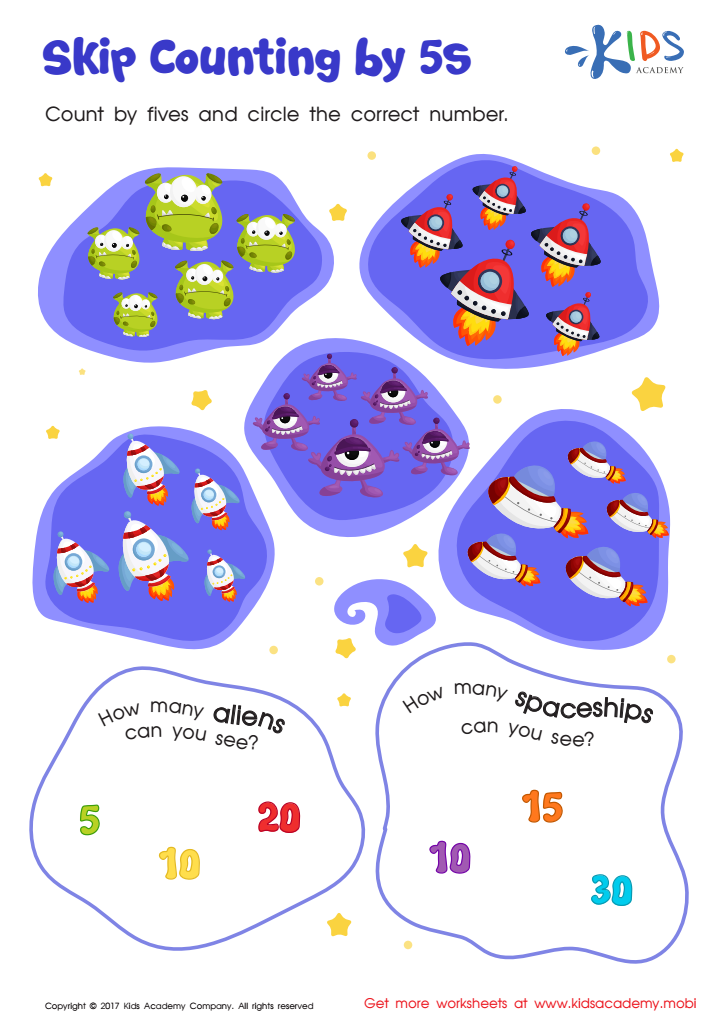
Skip Counting by 5s: Aliens and Spaceships Printable
 Assign to My Students
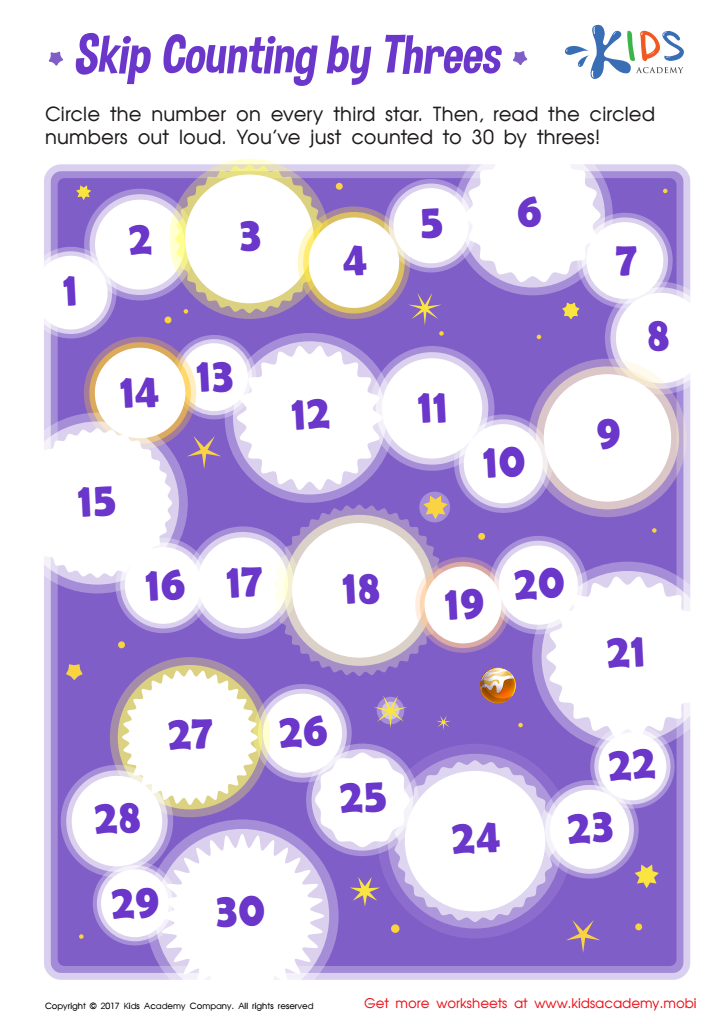
Skip Counting By Three Printable
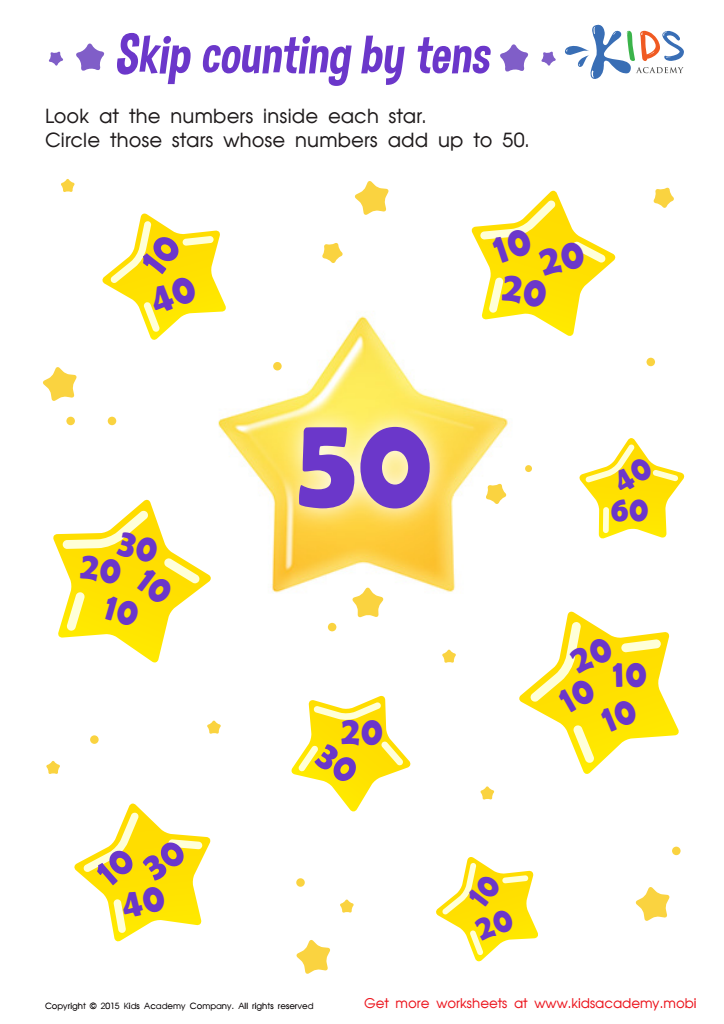
Learn Dozens: Skip Counting by Tens Printable








Understanding skip-counting is essential for children aged 3-9, as it lays the foundation for several crucial mathematical concepts. First, skip-counting enhances numerical fluency, helping children recognize patterns in numbers, which is the basis for understanding more complex math such as addition, subtraction, and ultimately multiplication. This skill supports their ability to tackle math problems efficiently and confidently.
Moreover, skip-counting introduces concepts of grouping and factors. For example, by skip-counting by twos, fives, or tens, children begin to grasp multiplication's underlying principles, setting the stage for later arithmetic and problem-solving abilities. It fosters a deeper understanding of number relationships and helps develop their mathematical reasoning skills.
Beyond academics, mastering skip-counting encourages children to engage with numbers in fun and meaningful ways. Games involving skip-counting can make learning interactive, promoting collaboration and communication among peers. Participation in such activities can boost their social skills and foster enthusiasm for learning.
In summary, both parents and teachers should prioritize helping children understand skip-counting, as it is a valuable skill that not only strengthens mathematical abilities but also cultivates a love for numbers and a positive learning environment.








