
Analog clock reading Math Worksheets for Ages 3-9
4 filtered results
Difficulty Level
Grade
Age
-
From - To
Subject
Activity
Standards
Discover engaging and educational Analog Clock Reading Math Worksheets for Ages 3-9 designed to transform learning to tell time into a fun adventure. Available at Kids Academy, these printable worksheets help young learners practice reading and understanding analog clocks. Targeting essential skills, each worksheet captivates children's attention with delightful illustrations while reinforcing the concepts of hours and minutes. Perfect for both classroom and at-home learning, these resources provide step-by-step guidance to ensure kids grasp the fundamentals of telling time with confidence. Enhance your child's math skills and understanding of time with our expertly crafted worksheets.
Favorites
With answer key
Interactive
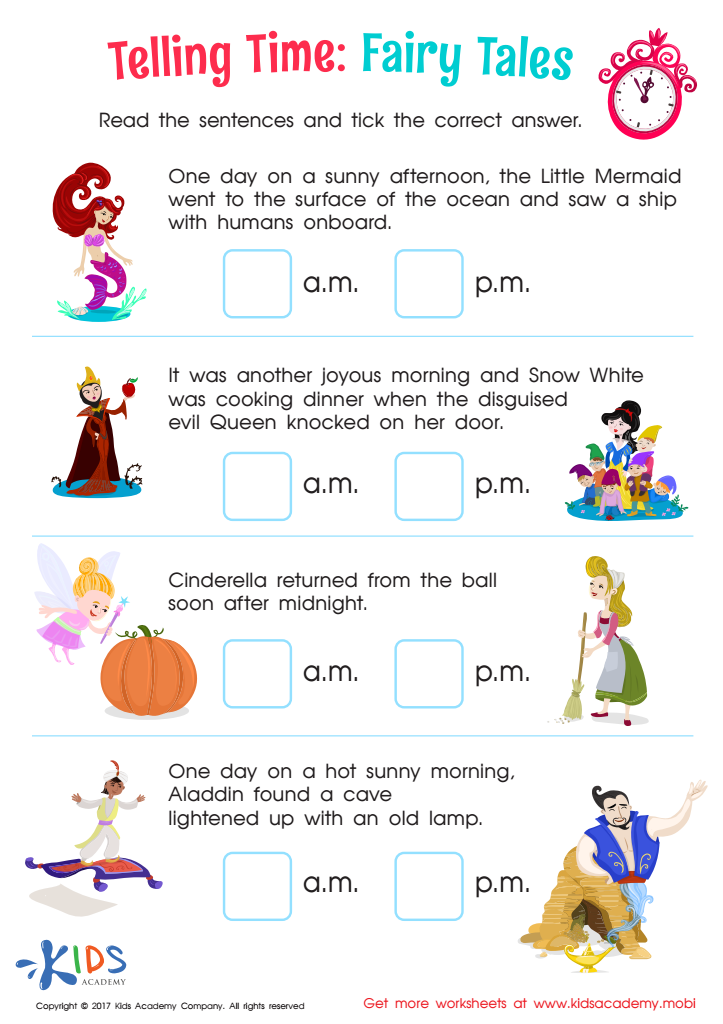
Telling Time: Fairy Tales Worksheet
Bring your child's imagination to life with classic fairy tales! This colorful telling time worksheet has it all: The Little Mermaid, Cinderella, and more! Plus, your child will have fun learning to distinguish a.m. from p.m. with this charming worksheet.
 Assign to My Students
Telling Time: Fairy Tales Worksheet
Worksheet
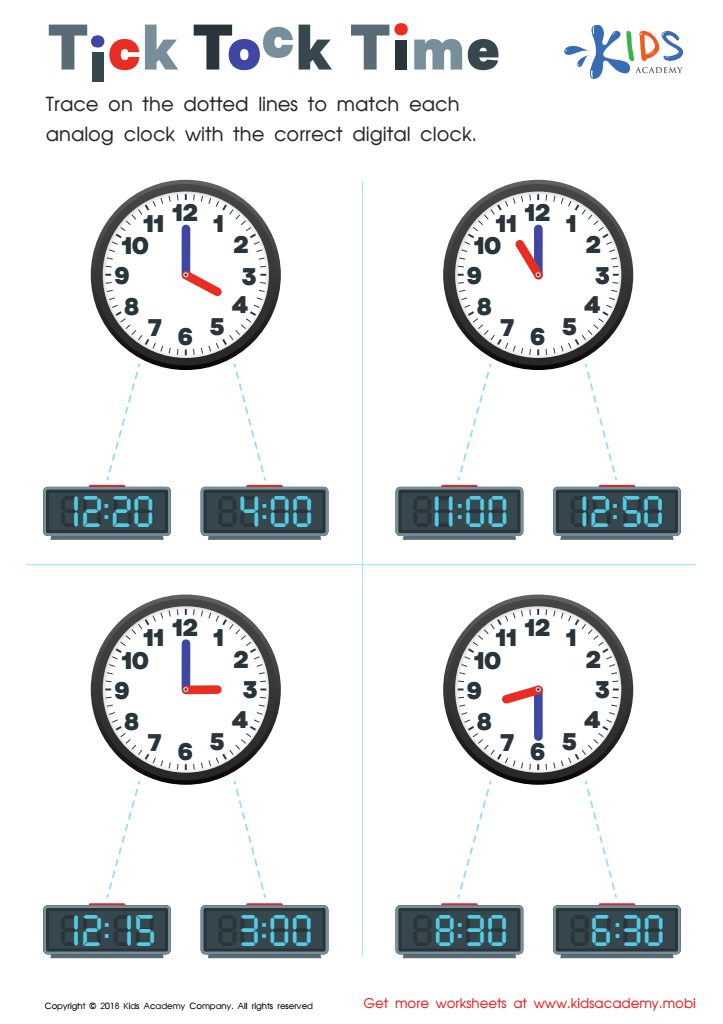
Tick Tock Time Worksheet
Trace the dotted lines on this worksheet to match analog and digital clocks! It's a great way to help your kids learn time-telling. They'll get better at converting analog to digital, and vice versa. Get your children to try it - it's a fun way to practice!
Tick Tock Time Worksheet
Worksheet
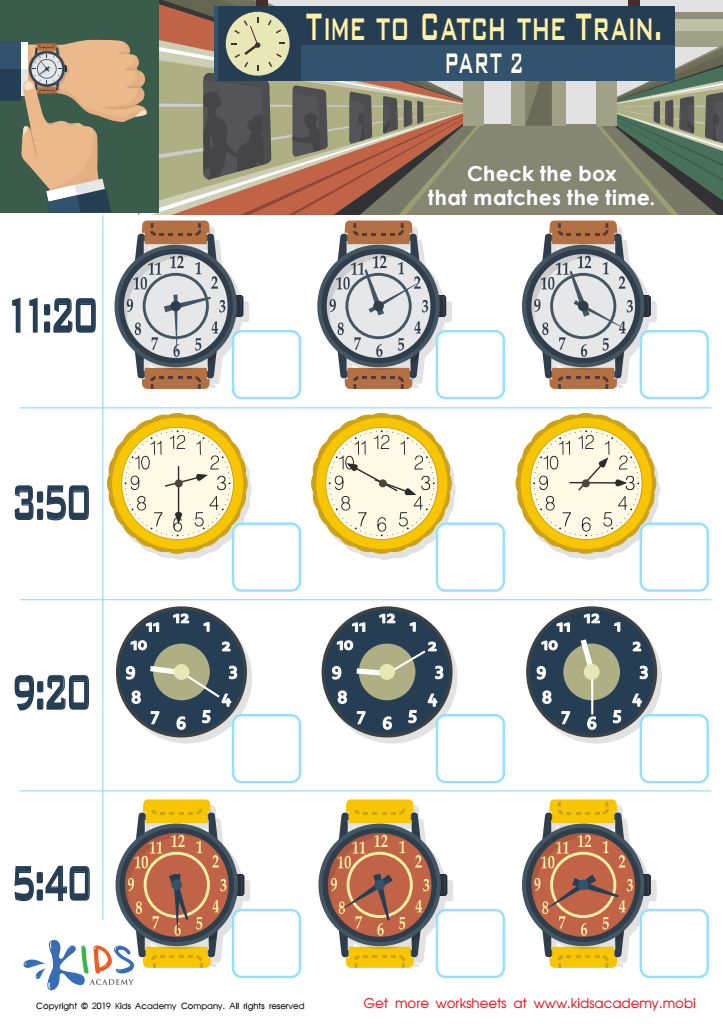
Time to Catch the Train Part 2 Worksheet
Teach your kids the importance of telling time and how to do it. Explain that there are multiple ways to show the time, such as written on the left side or watches in the picture. Guide them to check the box that matches the time. Knowing the time is essential to get things done and create order. Ensure your kids understand this and they will reap the benefits.
Time to Catch the Train Part 2 Worksheet
Worksheet
Join Kids Academy for Free
Who is primarily going to use this learning content?




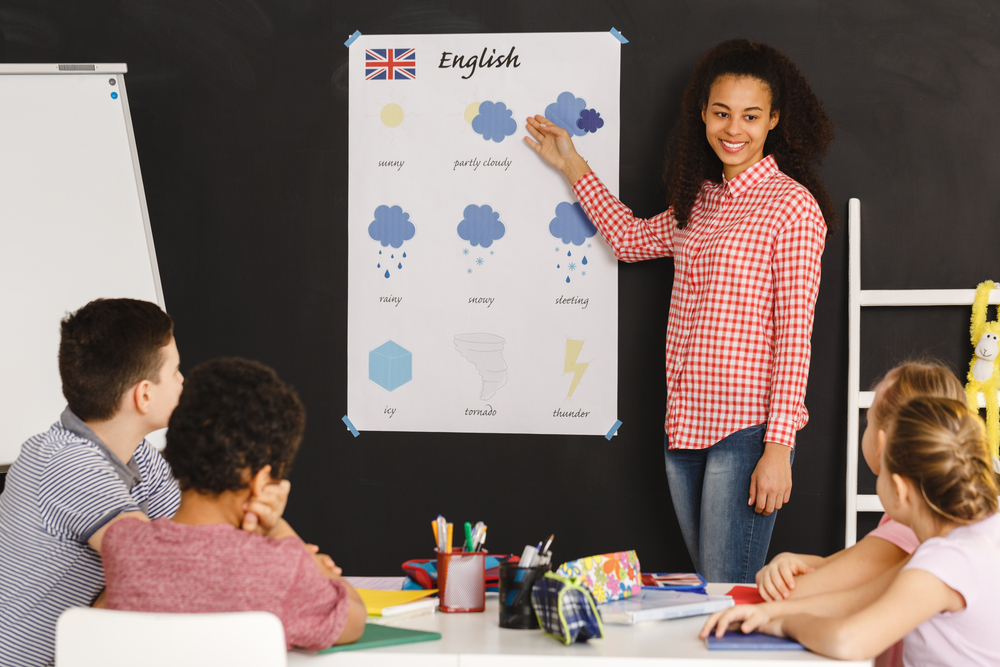



Analog clock reading is an essential skill for young children, providing a strong foundation in both mathematics and daily time management. For ages 3-9, parents and teachers should emphasize learning to read analog clocks to promote cognitive development and practical life skills.
Understanding an analog clock encourages children to grasp fundamental mathematical concepts such as recognizing numbers, understanding intervals, and learning sequences. By distinguishing between the minute and hour hands, children develop a timeline awareness that translates to greater comprehension of fractions, addition, and subtraction. Moreover, analog clock reading bolsters their ability to understand concepts like time estimation and the cyclic nature of time.
From a practical standpoint, reading an analog clock is crucial for time management and daily routines. It helps children establish a sense of order and responsibility, as they learn to recognize when it’s time for various activities, such as school, play, and bedtime. This skill fosters independence, allowing children to participate actively in schedule planning.
Early proficiency in analog clock reading also prepares children for real-world scenarios where analog clocks are still prevalent, including educational environments, public spaces, and specific testing settings. Parents and teachers, by integrating analog clock lessons into everyday activities, provide children with tools essential for their academic success and future life skills.








