
Identifying fractions Math Worksheets for Ages 3-9
5 filtered results
Difficulty Level
Grade
Age
-
From - To
Subject
Activity
Standards
Discover our engaging "Identifying Fractions Math Worksheets" designed for children aged 3-9. Perfect for early learners, these worksheets make mastering fractions fun and straightforward. Filled with colorful visuals and relatable examples, kids can easily grasp the concept of fractions. From halves and thirds to quarters, the exercises gradually increase in complexity to suit their developing skills. Each worksheet provides ample practice to build confidence and solidify understanding. Ideal for both classroom and home use, these resources support a foundational math journey, fostering a love for numbers and precision in your young student. Start their fraction adventure today!
Favorites
With answer key
Interactive
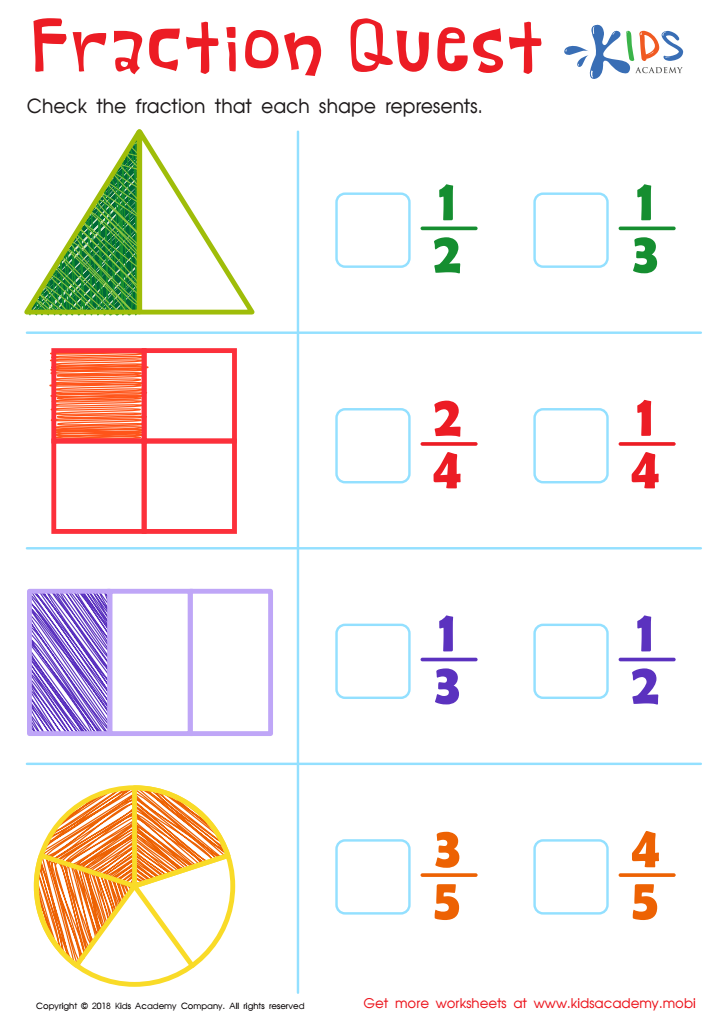
Fraction Quest Worksheet
This colorful and educative worksheet can help kids conquer their fractions struggles. Ask them to identify the four shapes, then the fractions they represent. They can then check the correct answers from the options given.
 Assign to My Students
Fraction Quest Worksheet
Worksheet
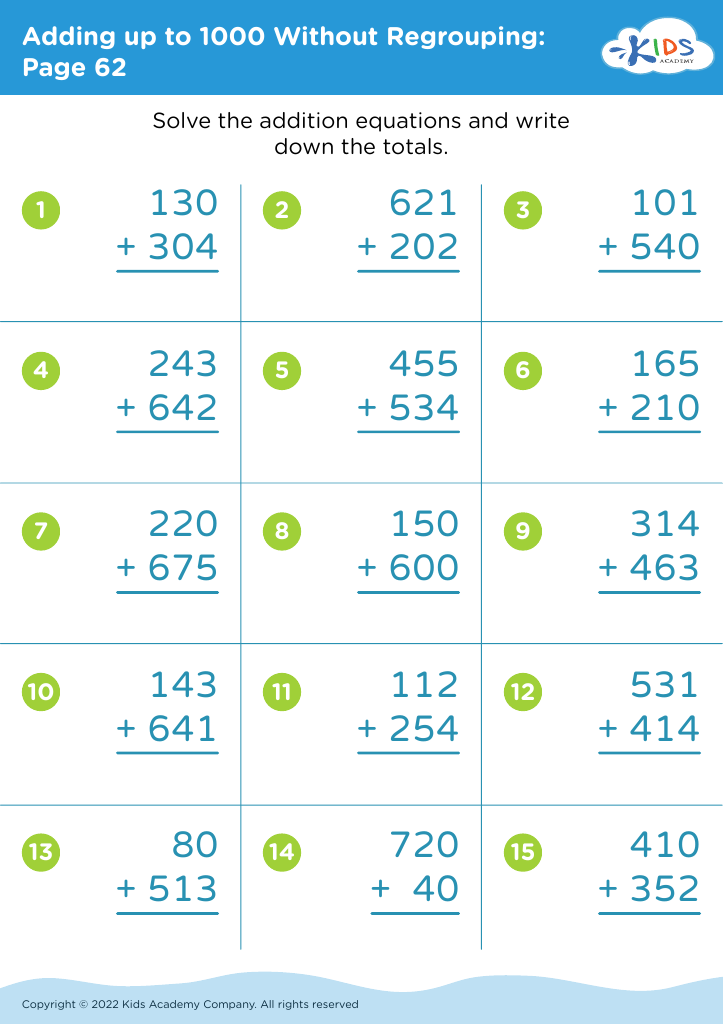
Join Kids Academy for Free
Who is primarily going to use this learning content?







Identifying fractions in early childhood (ages 3-9) is crucial for developing a strong mathematical foundation. Understanding fractions is not just about recognizing parts of a whole; it's fundamental to numerical literacy and problem-solving skills that children will use throughout their education and daily lives.
First, early exposure to fractions helps children grasp more complex mathematical concepts in later grades, like division, decimals, and percentages. By understanding that a fraction represents a division of a whole into parts, children develop a concrete understanding of sharing, measuring, and partitioning, which are everyday tasks.
Second, mastering fractions enriches children's critical thinking and reasoning abilities. It encourages them to think about relationships between parts and whole, concepts of fairness, and proportional reasoning, which are essential life skills. Engaging students with fractions using visual aids, such as pie charts or dividing objects, makes learning interactive and meaningful.
Moreover, identifying fractions enhances children's mathematical confidence, leading to a positive attitude towards math. When children feel confident, they are more likely to explore further and challenge themselves in more advanced math topics.
In sum, integrating fractions into early math education promotes foundational numerical understanding, boosts critical thinking, prepares kids for future complexities in math, and builds confidence, empowering them with essential skills for academic and personal success.








