
Map reading skills Math Worksheets for Ages 3-9
5 filtered results
Difficulty Level
Grade
Age
-
From - To
Subject
Activity
Standards
Discover our engaging Map Reading Skills Math Worksheets tailored for ages 3-9, designed to make learning fun and intuitive! These worksheets seamlessly blend math and geography, helping young learners develop essential skills. Excite your child with activities that enhance spatial awareness, problem-solving, and analytical thinking. Our carefully crafted exercises include plotting coordinates, interpreting symbols, and understanding directions. Each worksheet is aligned with educational standards, ensuring effective learning outcomes. Perfect for in-class use or homeschooling, our resources cater to varying skill levels and learning styles. Unlock your child’s potential with Kids Academy's vibrant and interactive map reading worksheets today!
Favorites
With answer key
Interactive
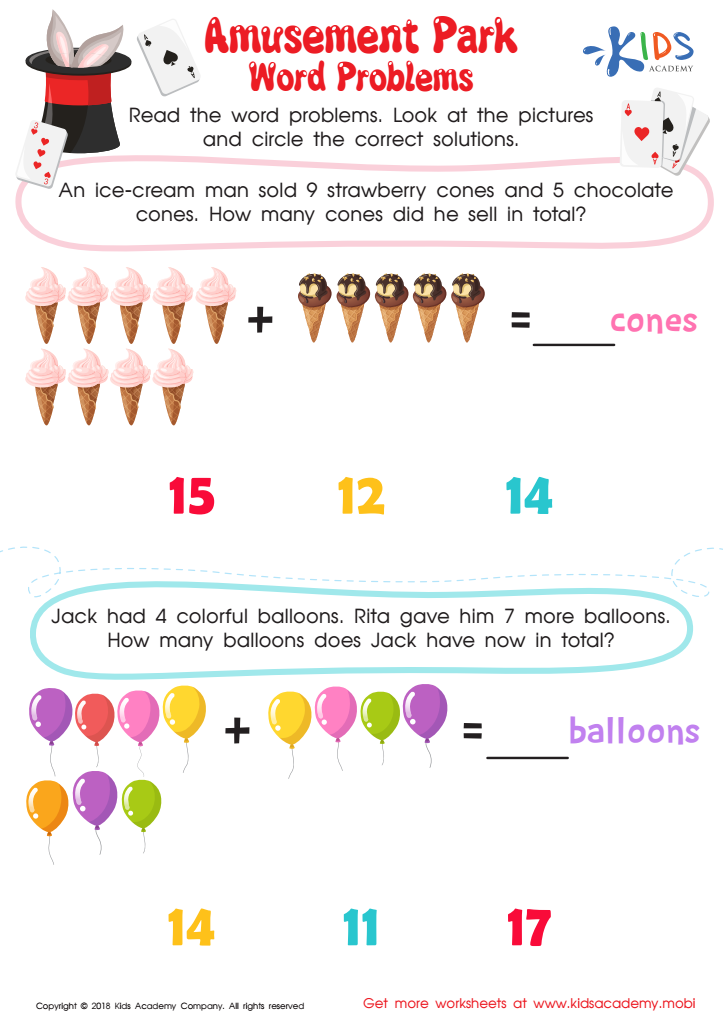
Amusement Park Word Problems Worksheet
Engage kids with math by making it realistic and incorporating manipulatives or pics they like! This worksheet helps kids understand word problems. Read the problem, note numbers and key phrases like "in total," then count the pics to find the total!
 Assign to My Students
Amusement Park Word Problems Worksheet
Worksheet
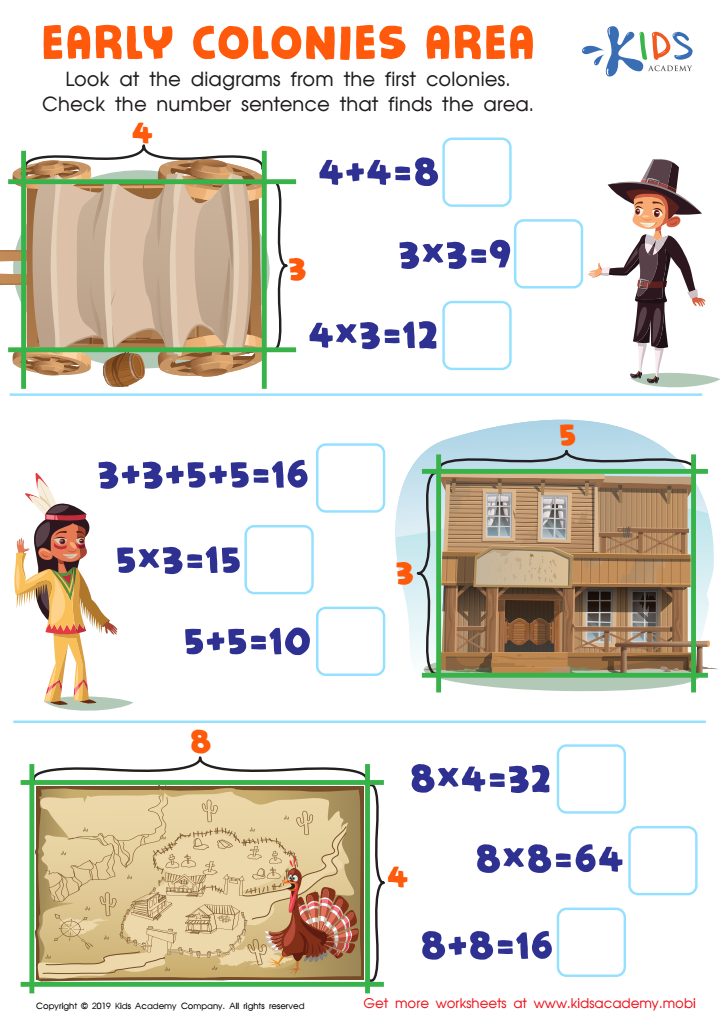
Early Colonies Area Worksheet
Before starting this worksheet, check if your kids know who the early colonizers were. Exercise their addition and subtraction skills by having them solve the equations, then look at the diagrams from the colonies. Guide them to check the number sentence to find the area.
Early Colonies Area Worksheet
Worksheet
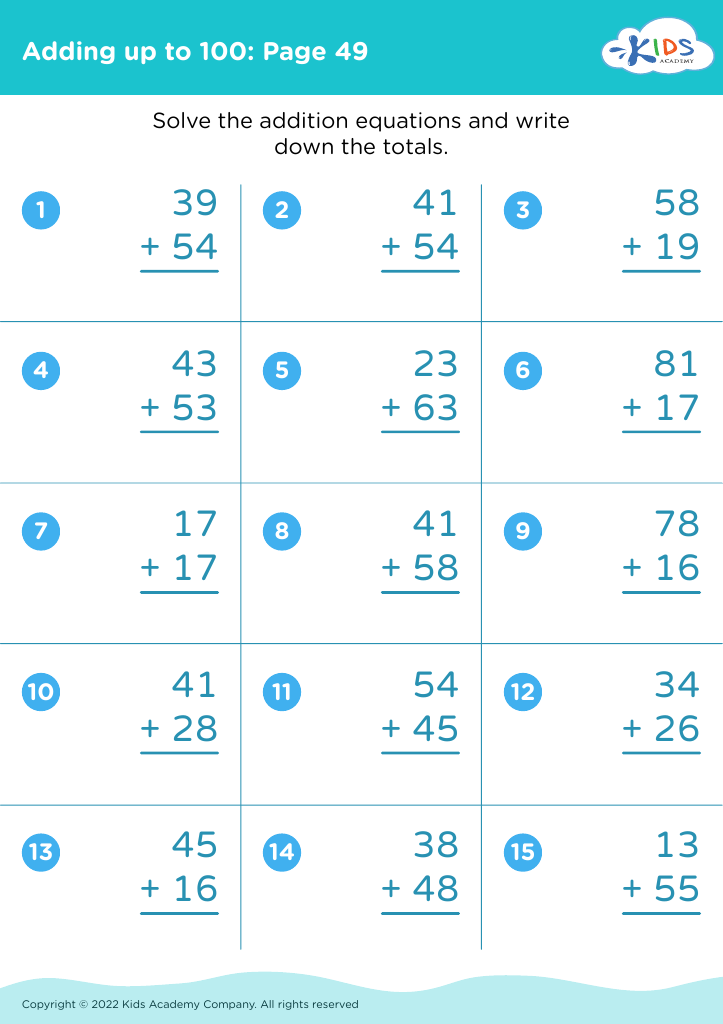
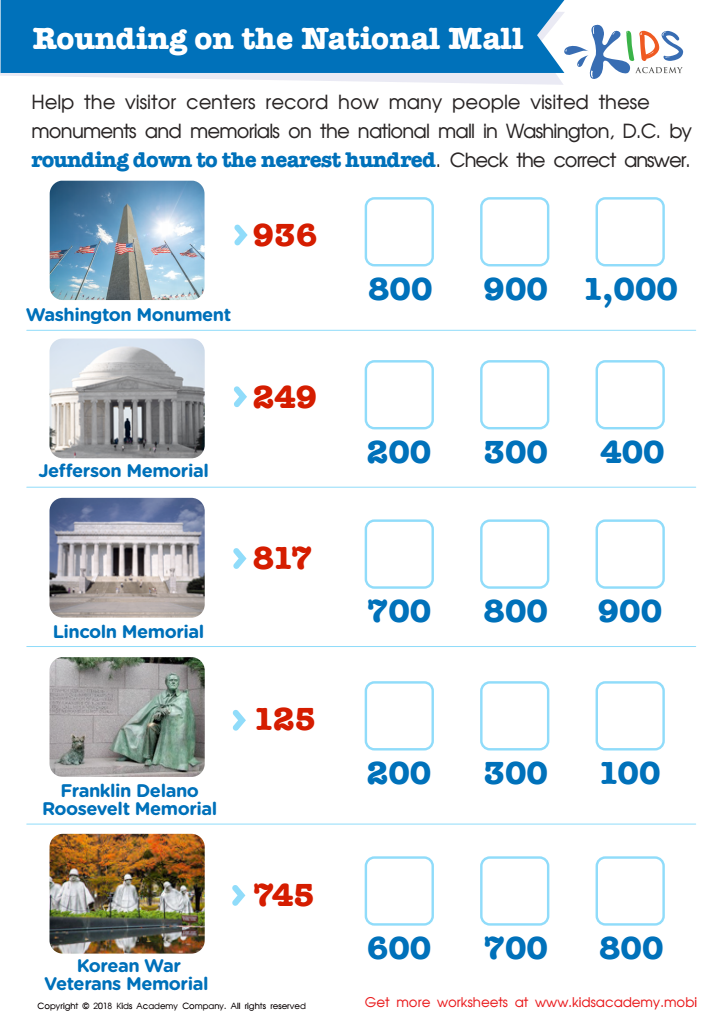
Rounding on the National Mall Worksheet
Math and social studies come together in this worksheet. Learners must round numbers to record attendance at Washington D.C. monuments and memorials. Remind them to round down to the nearest hundred. Extend the lesson by talking about each monument - a great way to teach or refresh your child's knowledge of these national landmarks!
Rounding on the National Mall Worksheet
Worksheet
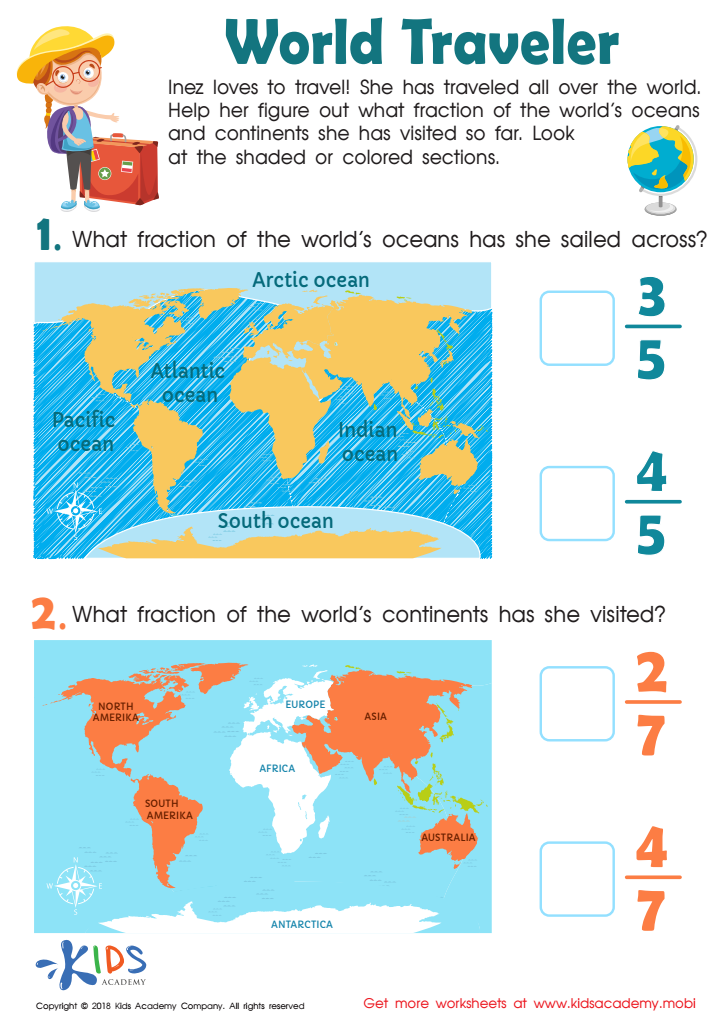
World Traveler Worksheet
Kids love exploring the world? Inez sure does! She's seen oceans and continents around the globe. Your kids can help her figure out what fraction of the world she has visited. Have them name all the countries they've been to, then look at the marked sections on the printout to find out!
World Traveler Worksheet
Worksheet
Join Kids Academy for Free
Who is primarily going to use this learning content?








Map reading skills are essential for young children because they combine crucial elements of spatial awareness, critical thinking, and foundational math skills. For ages 3-9, these skills begin with recognizing shapes, symbols, and simple directions, all of which contribute to cognitive development. Parents and teachers should care deeply about integrating map-reading into their children’s learning experiences for several reasons.
Firstly, map reading fosters spatial reasoning – the ability to understand and remember the relationships between objects in space. This skill is integral not only in geography but also in geometry, problem-solving, and everyday navigation. By interpreting map symbols and directions like ‘left,’ ‘right,’ ‘above,’ and ‘below,’ children build a foundation for more complex mathematical concepts.
Secondly, maps serve as a practical application of mathematical thinking. Tasks such as estimating distances and finding routes teach children to use numbers and measurements in real-world contexts. Learning to read grids and scales on maps can also help early math learners understand concepts related to grids and the Cartesian plane, which are pivotal in advanced mathematics.
Finally, map reading can be enormously engaging, instilling an early curiosity and enthusiasm for learning. Interactive activities such as treasure hunts or drawing their own maps make learning these skills enjoyable and memorable. Overall, honing these abilities supports endless aspects of academic and life success, making it a vital educational focus.








