Check out this FREE Trial Lesson on Math for age 3-9!

D

Favorites
With answer key
Interactive
  • 3-9
  • Recognizing shapes
  • Math
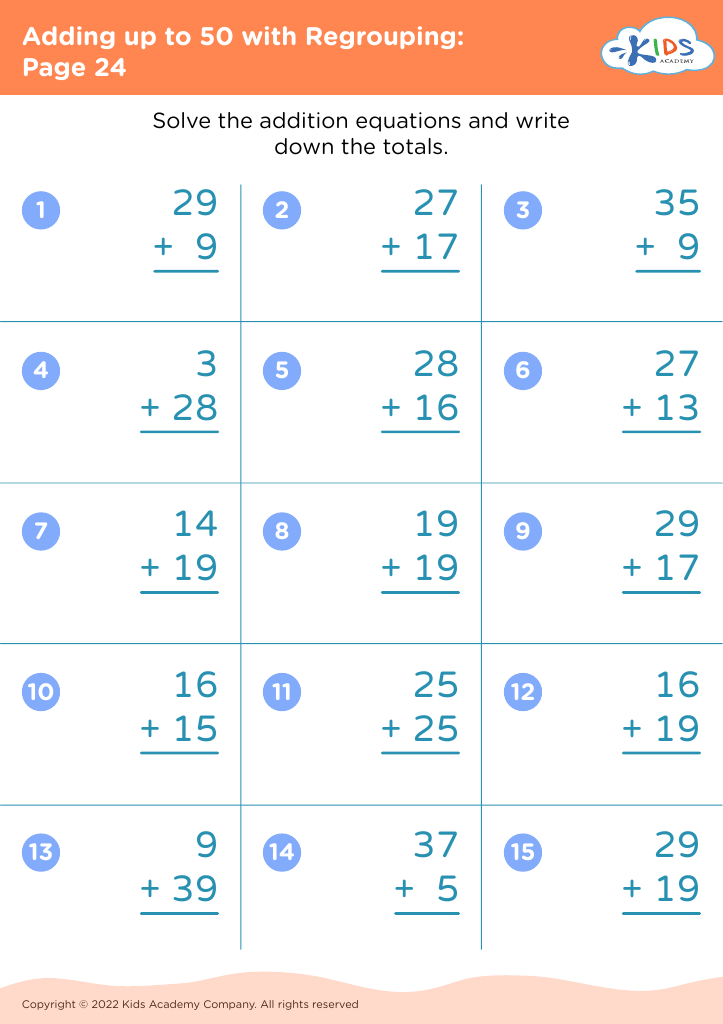
Adding up to 50 with Regrouping: Page 24
Worksheet
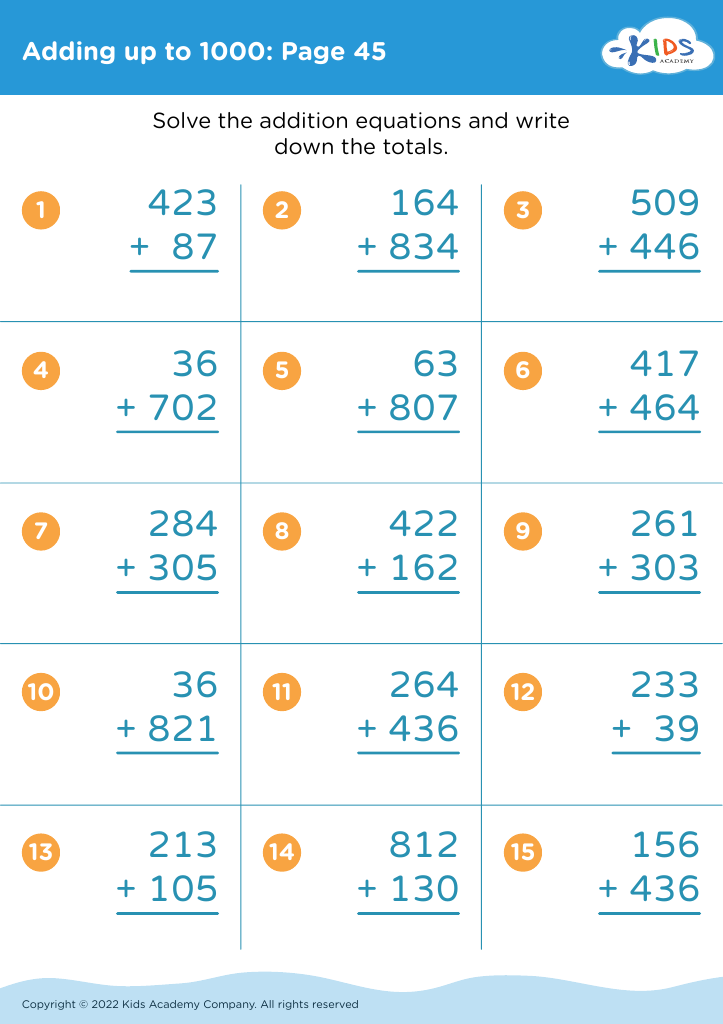
Adding up to 1000: Page 45

Adding up to 1000: Page 45

Adding up to 1000: Page 45
Worksheet
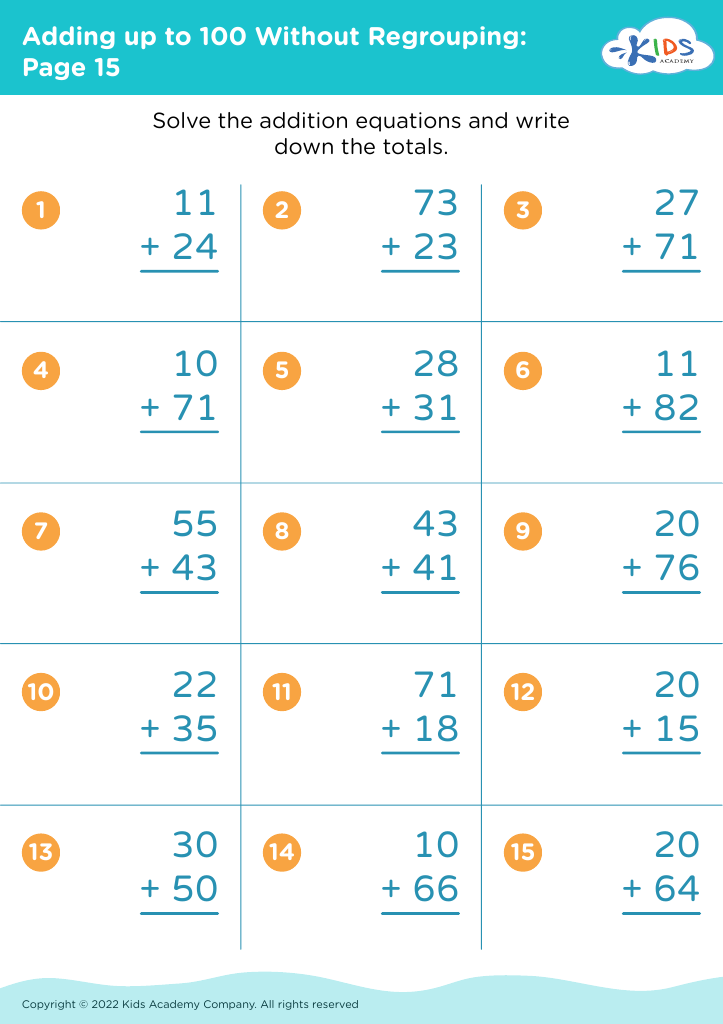
Adding up to 100 Without Regrouping: Page 15
Worksheet
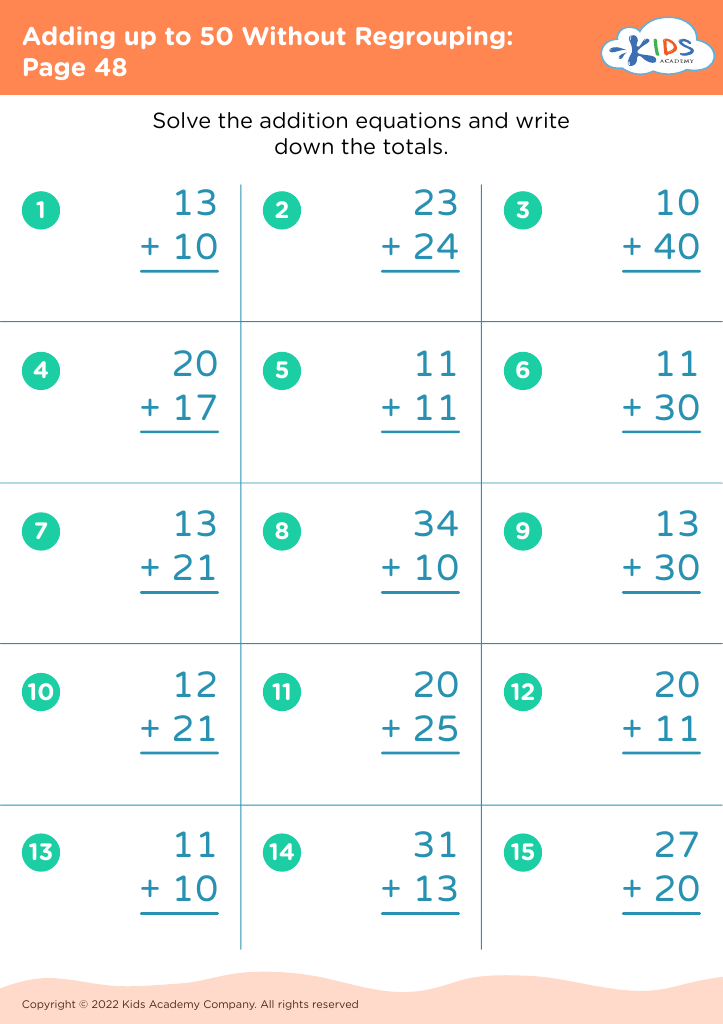
Adding up to 50 Without Regrouping: Page 48
Worksheet
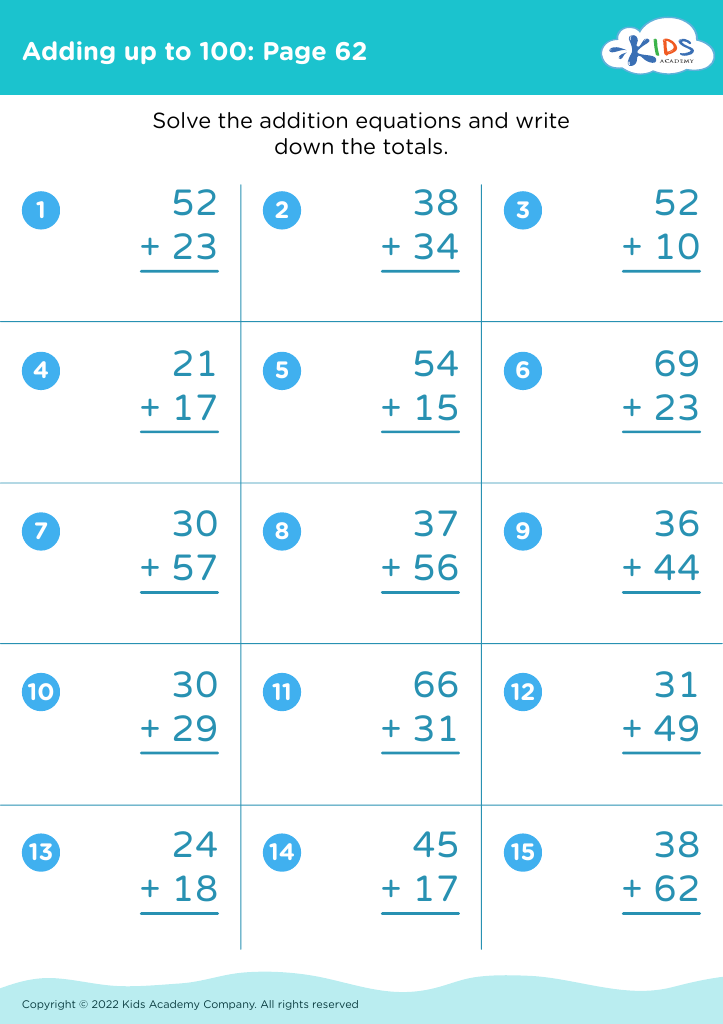
Adding up to 100: Page 62

Adding up to 100: Page 62

Adding up to 100: Page 62
Worksheet
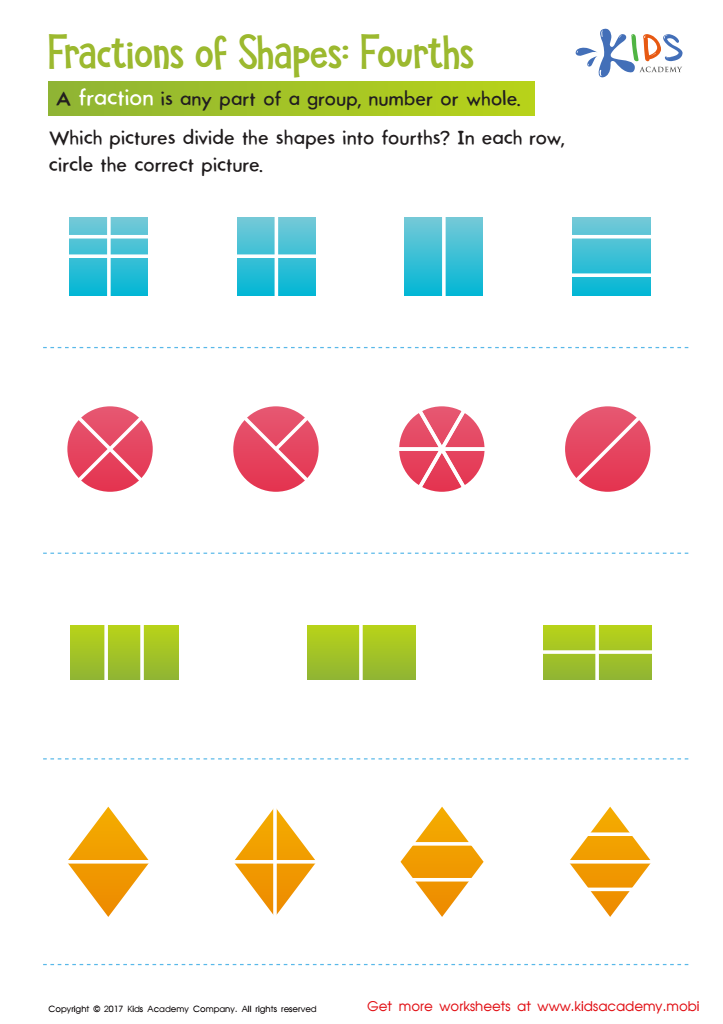
Fractions of Shapes Printable Worksheet

Fractions of Shapes Worksheet

It will also show them how fractions are represented in everyday shapes.
Fractions of Shapes Worksheet
Worksheet
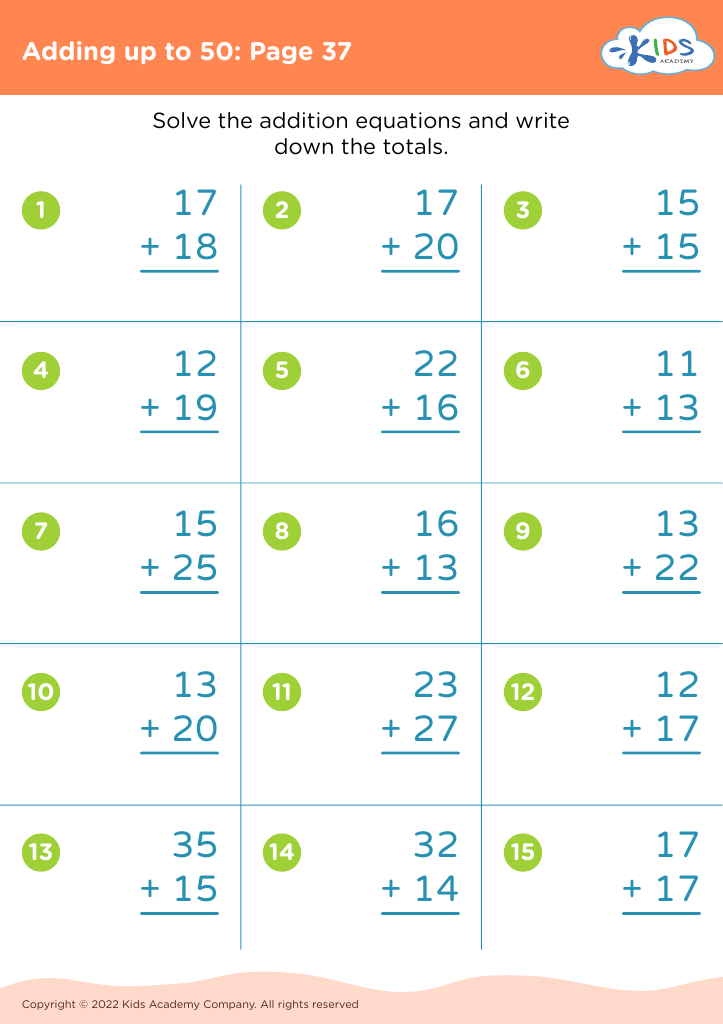
Adding up to 50: Page 37

Adding up to 50: Page 37

Adding up to 50: Page 37
Worksheet
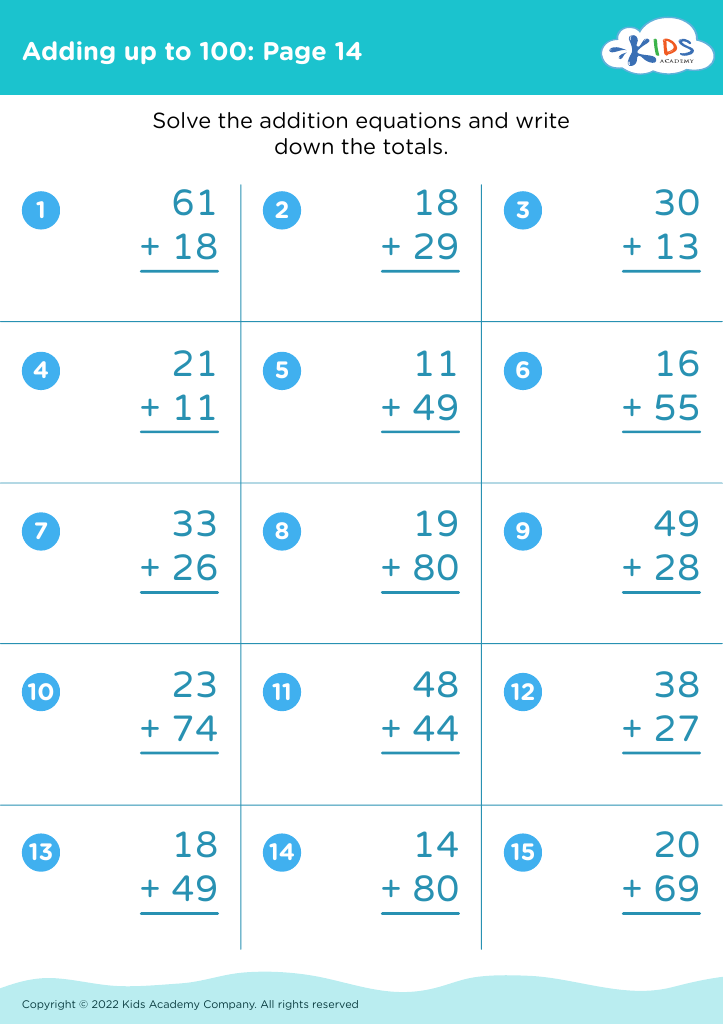
Adding up to 100: Page 14

Adding up to 100: Page 14

Adding up to 100: Page 14
Worksheet
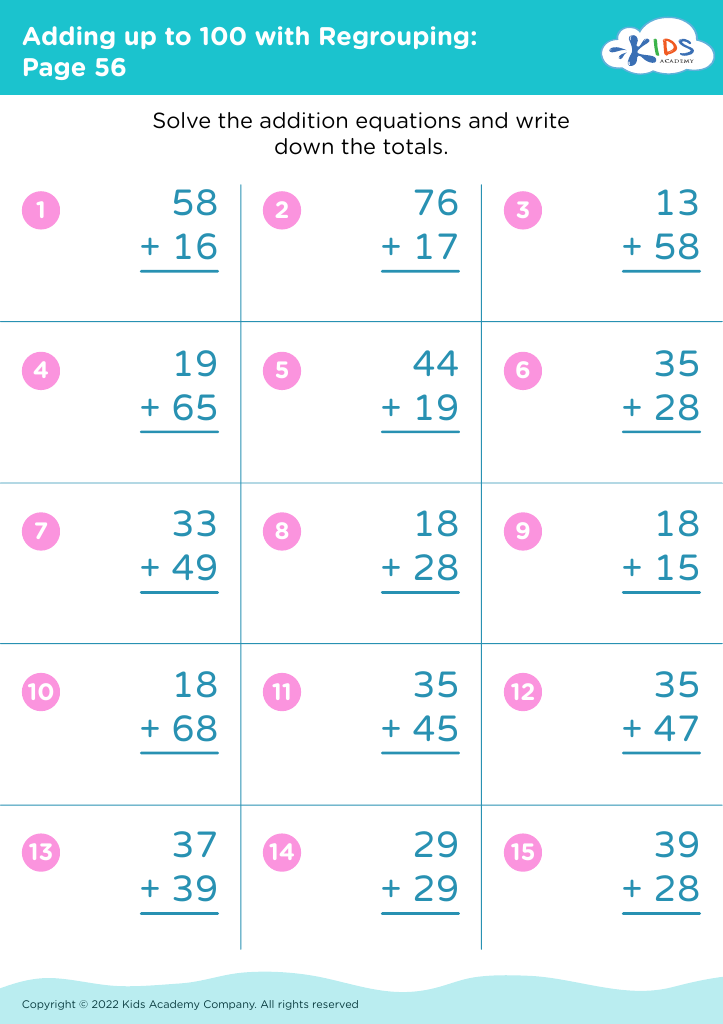
Adding up to 100 with Regrouping: Page 56
Worksheet
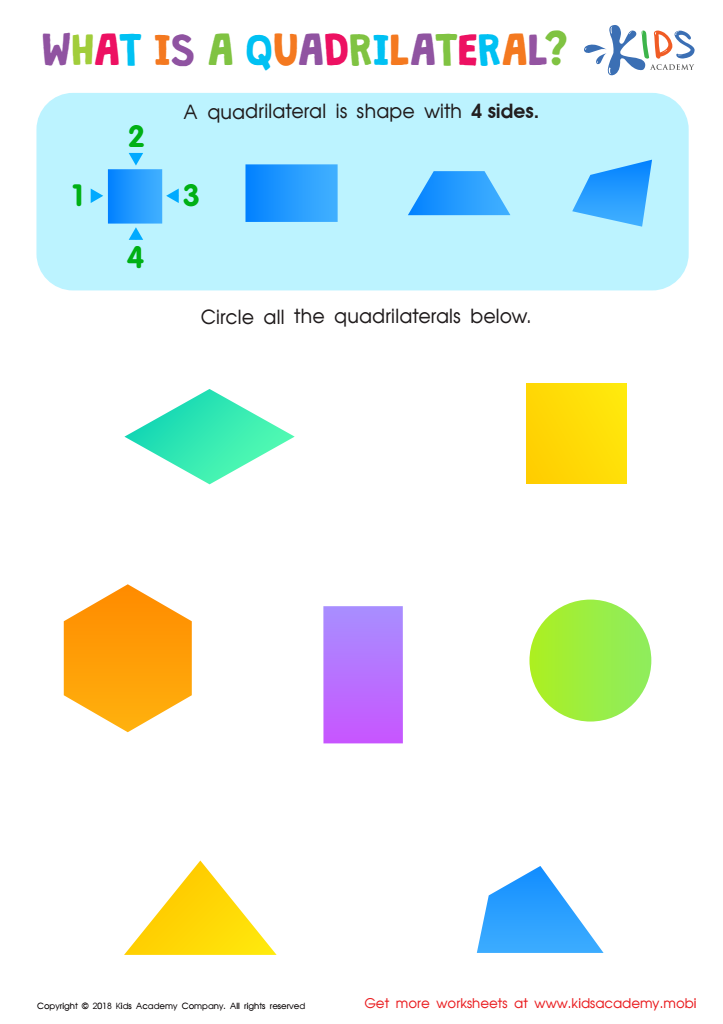
What Is a Quadrilateral? Worksheet

What Is a Quadrilateral? Worksheet

Does your kid know what a quadrilateral is? If not, this worksheet can help teach them. Explain that a quadrilateral is a shape with four sides and give examples, like a square or a rectangle. Then ask them to circle the quadrilaterals in the pictures. If they already know what a quadrilateral is, this task might be too easy.
What Is a Quadrilateral? Worksheet

Worksheet
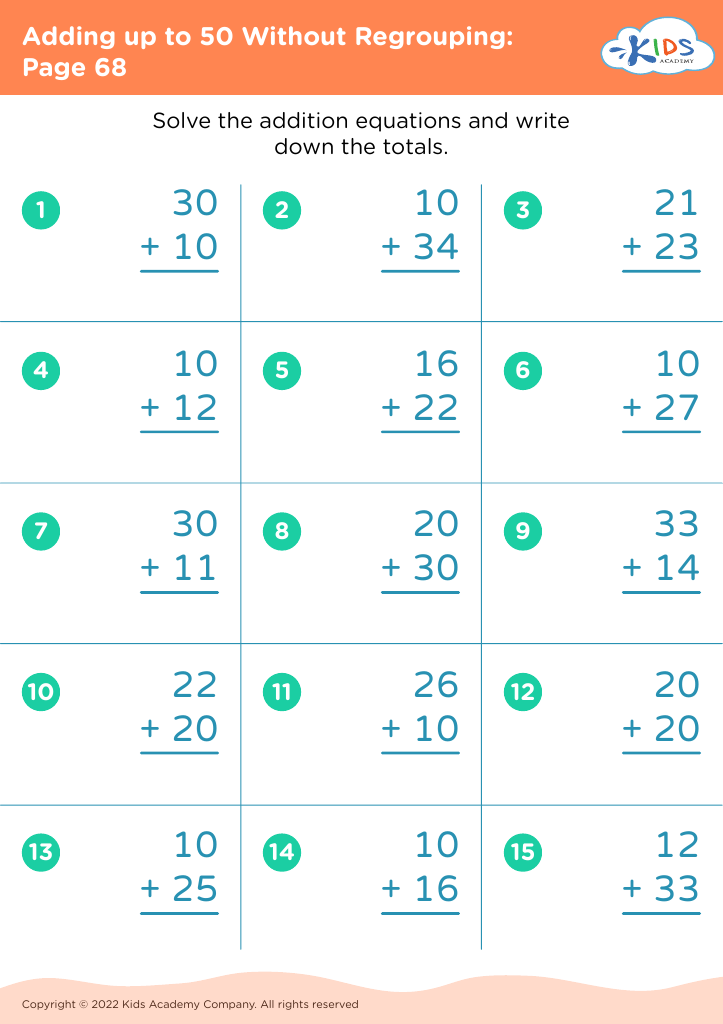
Adding up to 50 Without Regrouping: Page 68
Worksheet


Recognizing shapes is a fundamental mathematical skill that lays the foundation for a child’s overall cognitive development, particularly in children aged 3-9. For parents and teachers, understanding the significance of this skill is crucial for fostering a love for math and improving problem-solving abilities.

Firstly, shape recognition enhances spatial awareness. When children learn to identify different shapes—such as circles, squares, and triangles—they begin to understand their properties and how they relate to objects in the real world. This knowledge supports further concepts in geometry, which they will encounter in later grades.

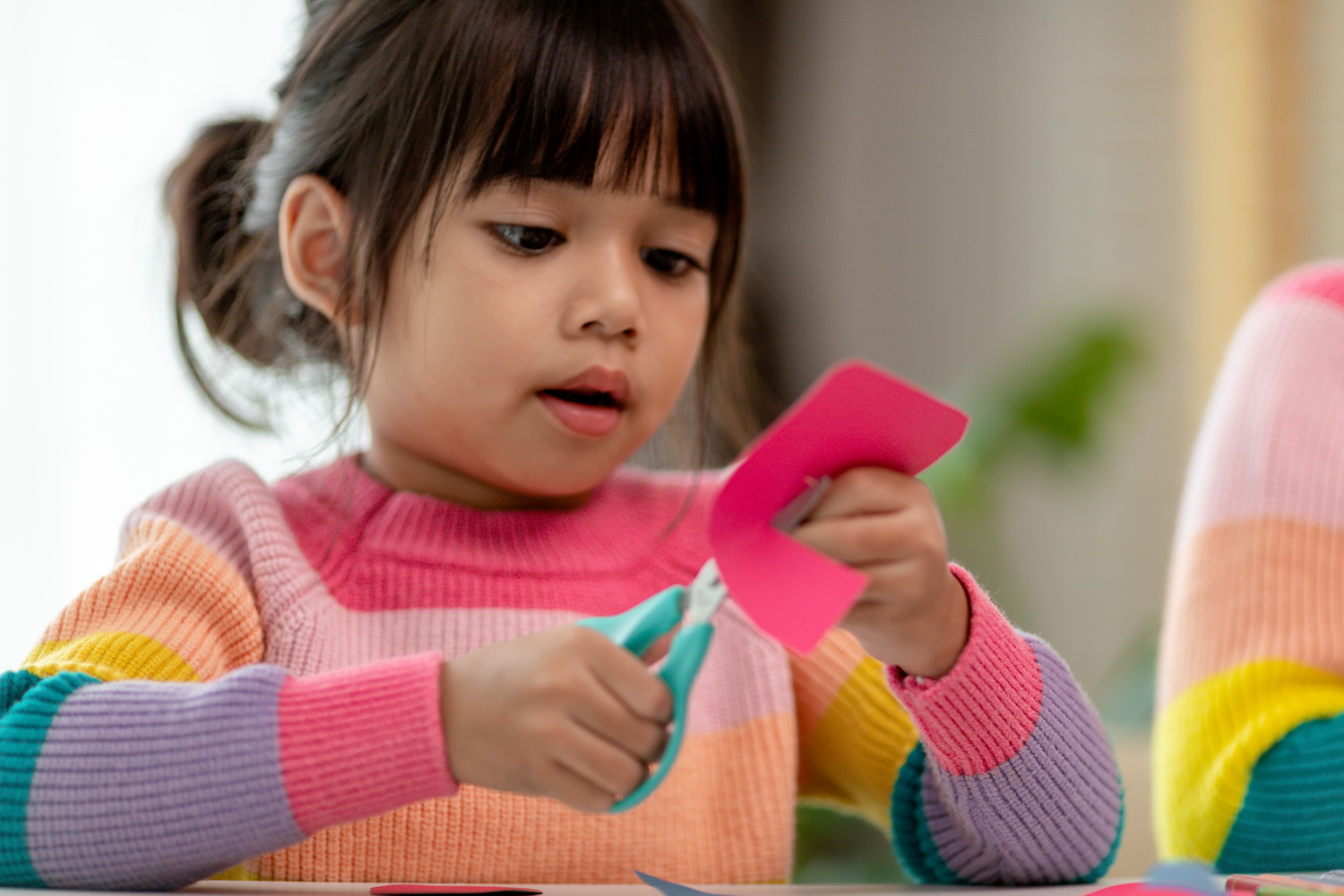
Secondly, shape recognition aids in the development of fine motor skills. Activities like drawing, cutting, and building with shapes promote hand-eye coordination, essential for writing and other tasks.

Furthermore, shape recognition encourages critical thinking. By comparing and contrasting shapes, children learn to categorize and make connections, building their analytical abilities.

Finally, incorporating shape recognition into everyday activities makes learning fun. Engaging children through games and creative projects fosters a positive attitude toward math, setting the stage for lifelong learning. By prioritizing shape recognition, parents and teachers can significantly contribute to a child's readiness for future academic challenges and daily problem-solving experiences.