
Solve word problems Math Worksheets for Ages 3-9
3 filtered results
Difficulty Level
Grade
Age
-
From - To
Subject
Activity
Standards
Our engaging Solve Word Problems Math Worksheets cater to children aged 3-9, blending fun and learning effortlessly. These printable resources are meticulously designed to build critical thinking and problem-solving skills through real-world scenarios. Each worksheet enables young learners to apply mathematical concepts, such as addition, subtraction, multiplication, and division, in context, honing both computation and comprehension abilities. With captivating visuals and age-appropriate challenges, kids will stay motivated while strengthening their math proficiency. Perfect for home or classroom use, our worksheets turn problem-solving into an adventure, laying a solid foundation for future math success. Explore, learn, and excel with confidence!
Favorites
With answer key
Interactive
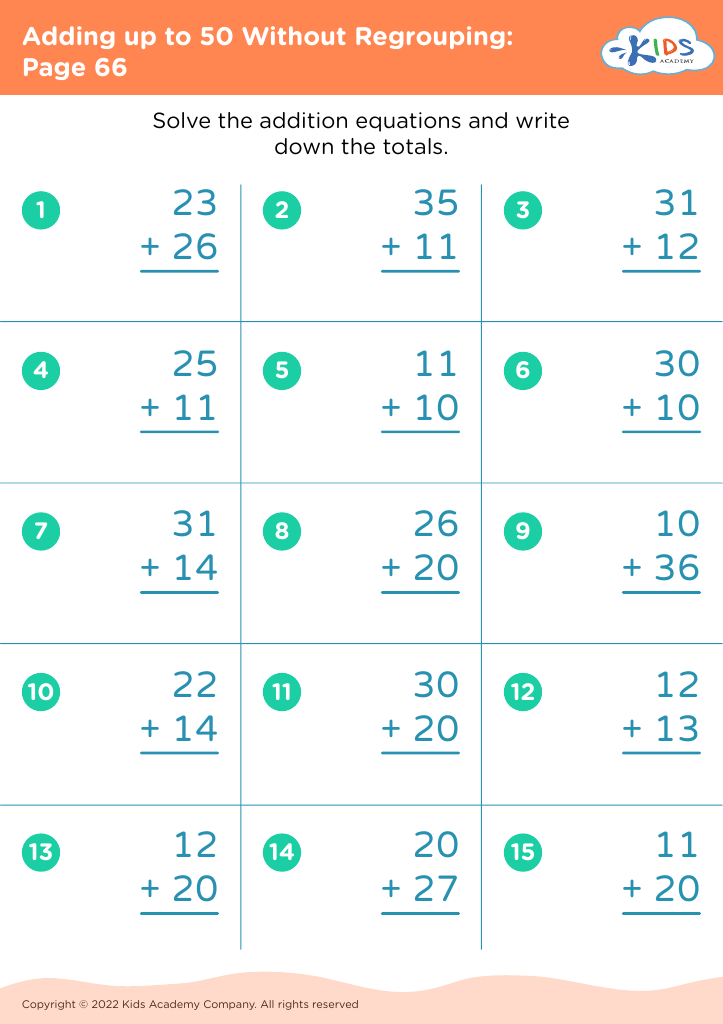
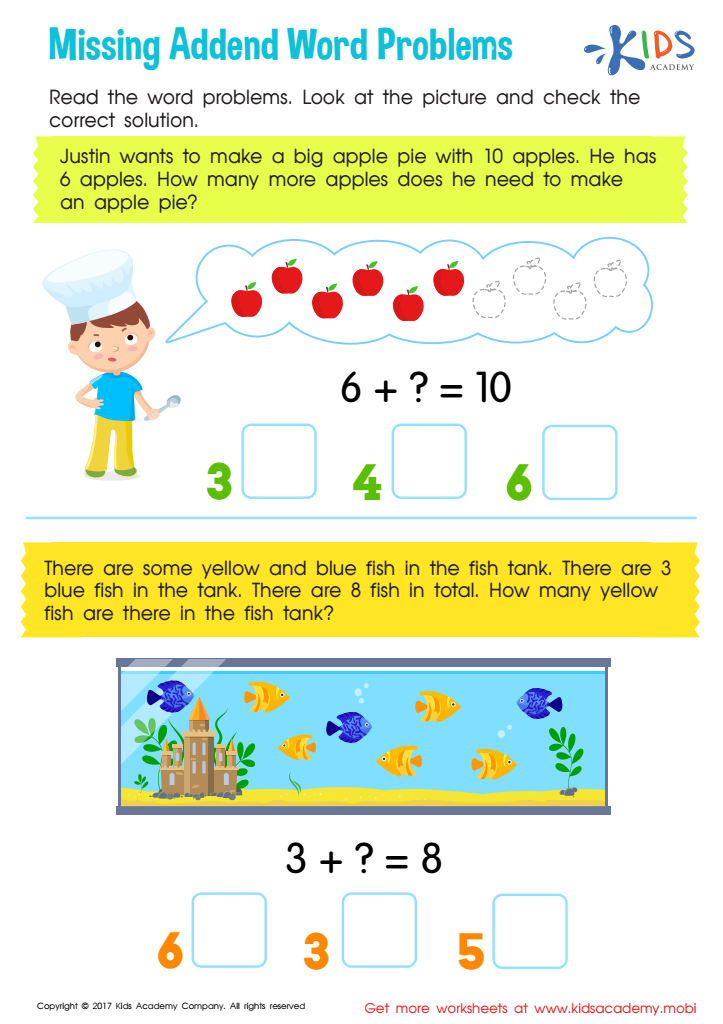
Missing Addend Word Problems Worksheet
Doing many addition and subtraction problems is key for fluency and mastery. Word problems can help kids understand how math works in everyday life. Our math worksheet uses fun scenarios and pictures to teach how to find the missing addend. It's the perfect tool to help kids understand math better!
 Assign to My Students
Missing Addend Word Problems Worksheet
Worksheet
Join Kids Academy for Free
Who is primarily going to use this learning content?






Parents and teachers should care about teaching children ages 3-9 to solve word problems in math because it forms a foundational building block for their cognitive and academic development. During these formative years, children's brains are highly moldable, making it an ideal time to introduce concepts that encourage logical thinking and problem-solving.
Solving word problems helps children make connections between math and real-life scenarios, thereby illustrating the practical relevance of math skills. This connection fosters an enduring interest and curiosity in the subject, which can translate to better performance and enthusiasm in later academic stages.
Additionally, word problems enhance a child's reading comprehension and analytical skills. When children decode the text of a word problem, they are simultaneously practicing literacy and numeracy, integrating multiple skills necessary for holistic educational development.
Moreover, tackling word problems aids in developing a growth mindset. Kids learn that it’s acceptable to struggle and make mistakes, which builds resilience and perseverance. These skills are crucial not just in academics but in everyday life as well.
In short, teaching children to solve word problems equips them with critical thinking abilities, improves literacy and numeracy, and makes learning math an engaging, contextually meaningful, and cognitively enriching experience.








