
Understanding gravity Math Worksheets for Ages 3-9
3 filtered results
Difficulty Level
Grade
Age
-
From - To
Subject
Activity
Standards
Explore the fascinating world of gravity with our expertly designed math worksheets tailored for children ages 3-9! At Kids Academy, our "Understanding Gravity Math Worksheets" help young learners grasp the concept of gravity through interactive and engaging activities. These printable worksheets not only foster a love for math but also enhance critical thinking, problem-solving skills, and scientific curiosity. With age-appropriate content, vivid illustrations, and hands-on exercises, your child will discover how gravity impacts their everyday life in a fun and educational way. Boost your child's math skills today with our comprehensive gravity worksheets!
Favorites
With answer key
Interactive
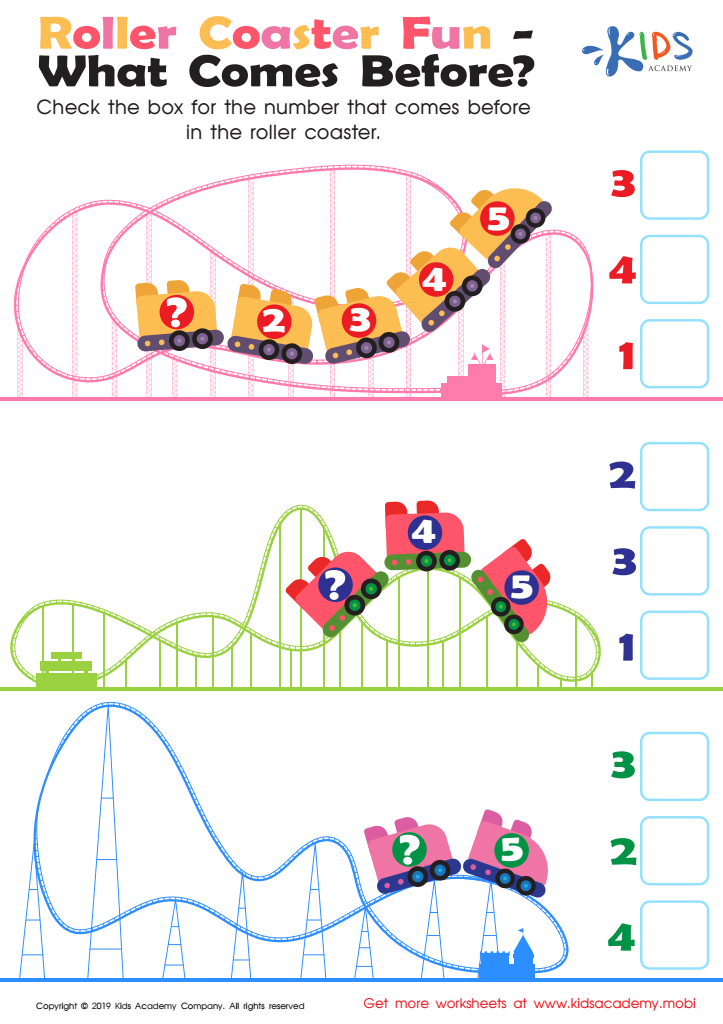
Roller Coaster Fun Worksheet
Ride a roller coaster and experience the thrill! Kids will love checking off the number that comes before each one on the worksheet. With three roller coasters to choose from, the fun never stops! Ask your kids if they've been on a roller coaster and where. Let them explore the excitement and joy of this thrilling ride!
 Assign to My Students
Roller Coaster Fun Worksheet
Worksheet
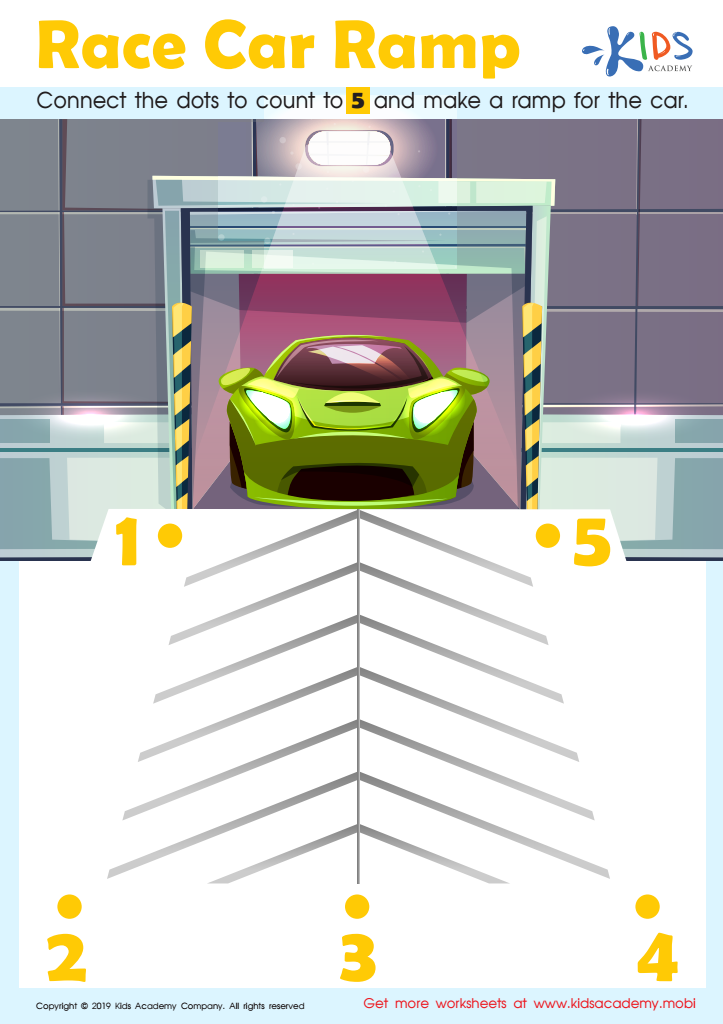
Race Car Ramp Worksheet
Kids can learn numbers quickly and have fun with this worksheet! It teaches preschoolers counting to 5 and allows them to draw a car ramp. It's a creative way to learn numbers, making them fun and easy to remember.
Race Car Ramp Worksheet
Worksheet
Join Kids Academy for Free
Who is primarily going to use this learning content?







Understanding gravity is crucial for young children because it lays the foundation for scientific inquiry and mathematical reasoning, which are essential skills in both academics and everyday life. For ages 3-9, integrating basic gravitational concepts into learning experiences engenders curiosity and helps children relate to the world around them. Gravity is a simple yet profound concept that children naturally observe when objects fall, providing a palpable entry point into exploring math and science.
For educators and parents, introducing gravity through playful, hands-on activities makes abstract ideas tangible. For example, dropping various objects and timing how fast they fall can nurture an early love for experimentation while also fostering a basic understanding of weight, mass, and measurement. These activities support developmental milestones, such as fine motor skills and visual tracking.
Moreover, early exposure to gravity-related concepts encourages critical thinking and problem-solving abilities. When children ask why an apple falls to the ground instead of floating, they’re engaging in cause-and-effect reasoning, which is a foundational element of scientific thought. Seamlessly blending gravity with basic math, such as counting, measuring distance, and comparing weights, not only reinforces mathematical concepts but also nurtures inquisitiveness about how the world works.
Therefore, caring about teaching gravity math to young children helps build a robust framework for future learning, fostering a lifelong appreciation for science and mathematics.








