Color Identification Matching Worksheets for Ages 3-9
3 filtered results
-
From - To
Enhance your child’s learning with our engaging Color Identification Matching Worksheets for ages 3-9. These fun, educational printables are designed to help young learners identify and match colors, boosting their cognitive development through interactive activities. Perfect for preschool and elementary students, our worksheets cater to various skill levels and incorporate vibrant visuals to keep children excited about learning. Each worksheet fosters color recognition, fine motor skills, and concentration, making learning both effective and enjoyable. Visit our website today to download and print our free, expertly crafted worksheets and watch your child thrive in their early educational journey.
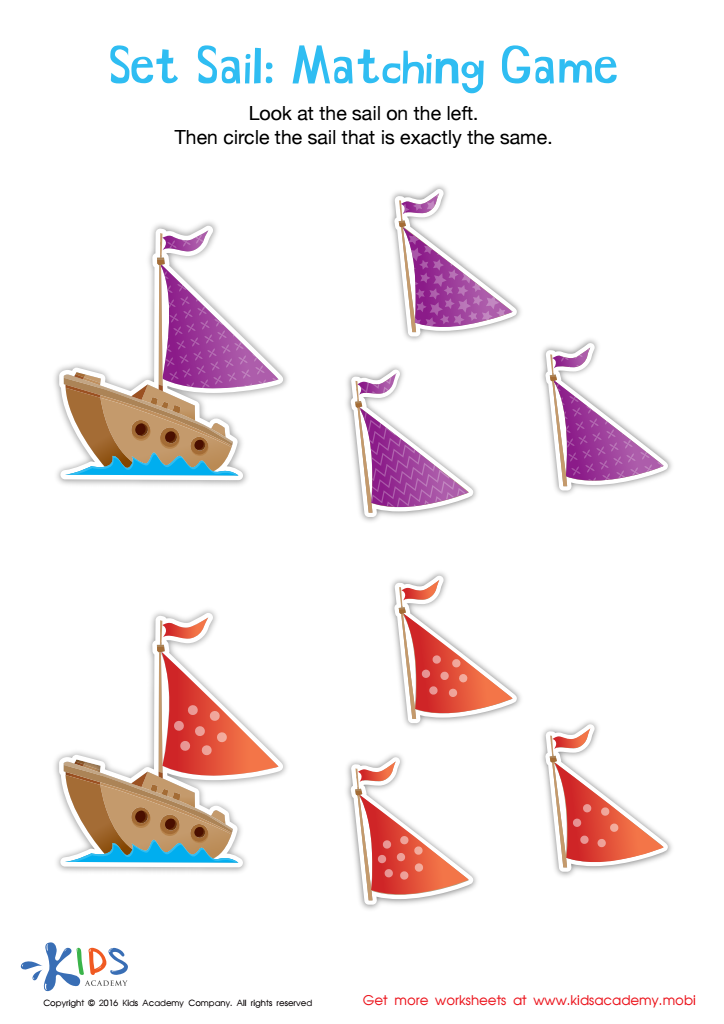
Set Sail Worksheet
 Assign to My Students
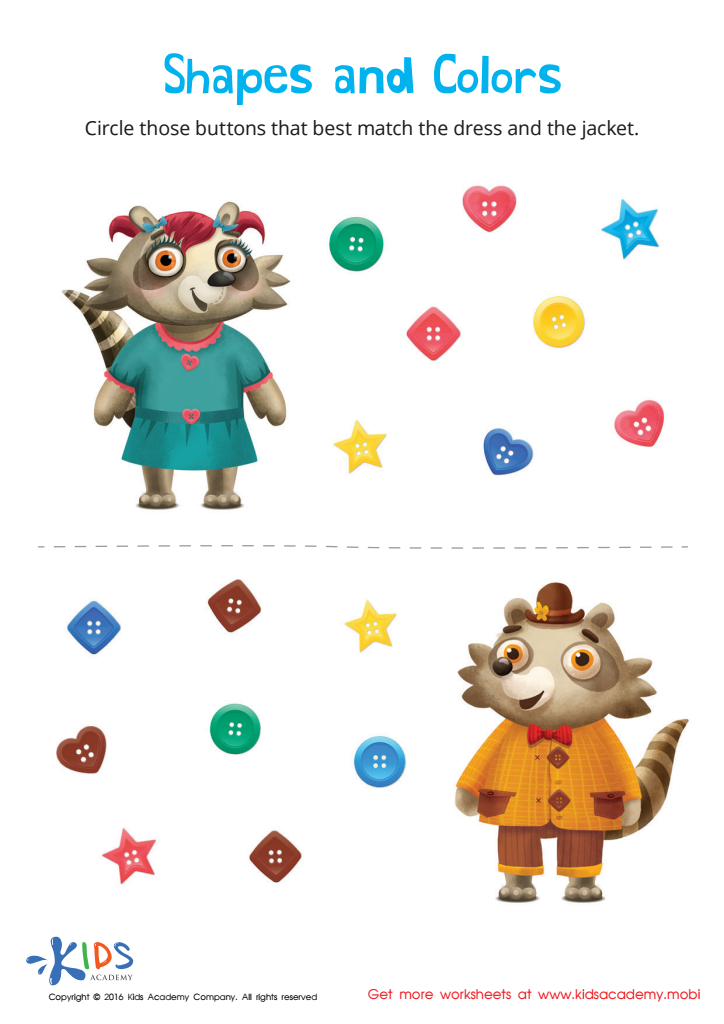
Matching: Shapes and Colors Worksheet
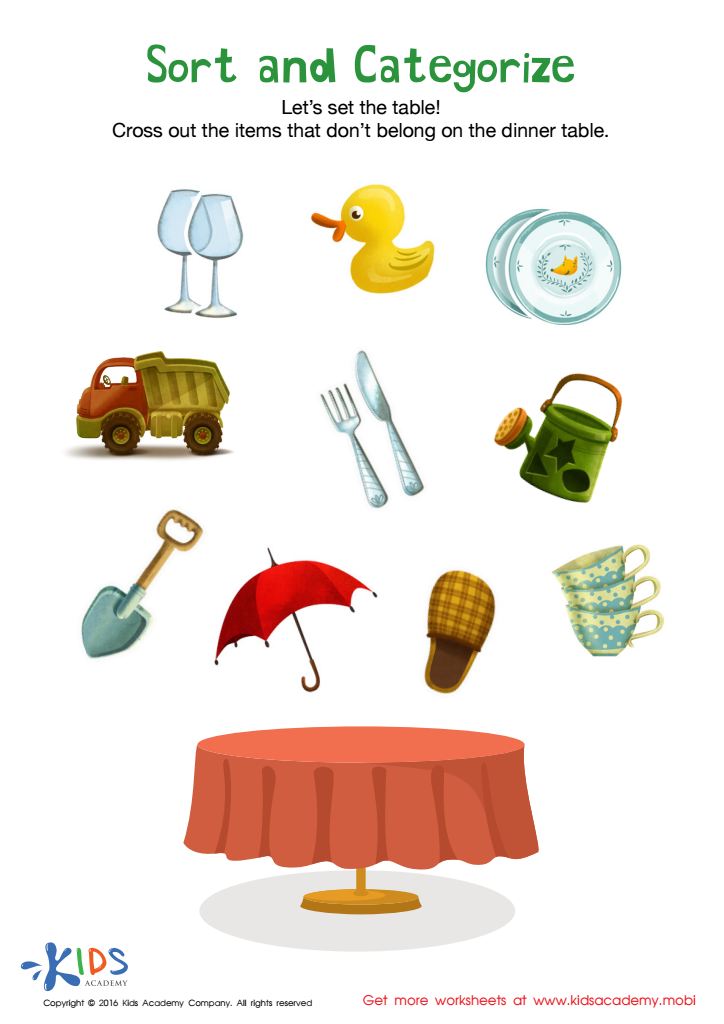








Color identification and matching for children ages 3-9 form a vital part of early childhood development and education. At this critical stage, young minds are expanding their basic understanding of shapes, objects, and the world around them. By learning to identify and match colors, children enhance their cognitive abilities, which includes the improvement of memory, classification, and sorting skills.
It’s beneficial as these activities also foster critical pre-reading and pre-math skills. By recognizing and distinguishing between colors, children lay the groundwork for future learning areas like sequencing, patterning, and organizing—competencies essential for reading and mathematical understanding.
Moreover, focusing on color identification and matching aids in refining motor skills. Simple tasks like sorting blocks based on color improve hand-eye coordination and fine motor control. Additionally, color- focused activities can bolster creativity and artistic expression, allowing children to explore and engage with their environment in meaningful ways.
Finally, engaging in color-based activities provides social and emotional advantages. It encourages interactive and cooperative play, important for social development. Positive feedback during such tasks can also raise confidence and self-esteem, contributing to a child's growth both academically and personally. This multi-faceted approach underscores why parents and teachers should actively incorporate color identification and matching into early education.








